

Intentional Living for Women: Cultivating a Purposeful & Fulfilling Life
By thecontextuallife Editorial Team — Senior editors with 10+ years of subject-matter experience.
Published 2026-05-26 · Last Updated 2026-05-26
Affiliate disclosure: This article may contain affiliate links. Recommendations are independent and editorially driven.
In a world that constantly demands our attention, pulls us in countless directions, and often dictates our pace, finding a path to genuine fulfillment can feel like an elusive quest. For women, this challenge is often amplified by societal expectations, caregiving roles, and the pervasive pressure to “do it all.” Yet, amidst this beautiful chaos, a growing movement offers a powerful antidote: intentional living for women. This isn’t about rigid rules or a minimalist aesthetic, but rather a profound journey of self-discovery and conscious choice-making that empowers you to design a life aligned with your deepest desires and values.
Intentional living is a philosophy that encourages you to step back from autopilot and actively decide how you want to live, what truly matters to you, and where you want to invest your precious time and energy. It’s about being deliberate, purposeful, and fully present in every facet of your existence – from your daily routines and relationships to your career and personal growth. For women, embracing intentional living can be transformative, allowing you to shed external pressures, honor your intuition, and build a life that feels authentic, sustainable, and joyful.
This comprehensive guide is designed to be your compass on this journey. We’ll delve into the core principles of intentional living, offering practical strategies, insightful reflections, and actionable steps to help you cultivate a life of purpose, peace, and profound fulfillment. From uncovering your core values to crafting mindful routines, decluttering your physical and mental spaces, nurturing your well-being, and building meaningful connections, we will explore how you can thoughtfully design a life that truly resonates with who you are and who you aspire to be.
The Foundation: Unearthing Your Core Values
Before you can intentionally design your life, you must first understand the blueprints that guide your decisions: your core values. These are the fundamental beliefs and principles that dictate your behavior, shape your perspective, and ultimately define what is most important to you. Without a clear understanding of your values, you risk living a life dictated by external forces, striving for goals that don’t truly resonate, and feeling a persistent sense of misalignment.
Why Values Matter for Intentional Living
Imagine trying to navigate without a compass. You might move, but without a sense of direction, you’re likely to get lost or end up somewhere you never intended. Your values serve as that essential compass for your life. When your actions, choices, and commitments align with your core values, you experience greater peace, satisfaction, and a deep sense of purpose. Conversely, when there’s a disconnect, you may feel stressed, unfulfilled, or like you’re constantly fighting an uphill battle.
For women, who often juggle multiple roles and responsibilities, understanding values is particularly crucial. It empowers you to say “no” to commitments that drain your energy and “yes” to opportunities that fuel your soul. It provides a framework for making difficult decisions, setting healthy boundaries, and prioritizing what truly enriches your life, rather than what society expects of you.
Practical Steps to Identify Your Values
Uncovering your core values is a process of self-reflection and introspection. It’s not about choosing “good” values, but rather identifying what truly motivates and inspires you. Here’s a guided approach:
- Reflect on Peak Experiences: Think about times in your life when you felt most alive, most joyful, or most proud. What was happening? What qualities were you embodying? What needs were being met? For example, if you felt alive while volunteering, perhaps “contribution” or “community” is a core value.
- Identify Moments of Discomfort: Conversely, consider times when you felt deeply frustrated, angry, or resentful. What value was being violated? If you felt upset by injustice, “fairness” or “integrity” might be important.
- Brainstorm Value Words: Look at a list of value words (e.g., authenticity, courage, creativity, connection, freedom, growth, security, wisdom, compassion). Circle all that resonate with you. Don’t overthink it at this stage.
- Group and Prioritize: From your brainstormed list, start grouping similar values and then narrow them down to your top 5-7. Try to articulate why each value is important to you.
- Define Each Value: What does “freedom” mean to YOU, specifically? What does “growth” look like in your daily life? Defining them concretely makes them actionable.
- Test Your Values: Over the next few days, observe how your identified values show up (or don’t show up) in your choices and reactions. Does your top value truly guide your behavior? Adjust as needed.
This isn’t a one-time exercise. Your values may evolve slightly over time, especially during significant life transitions. Revisit them periodically to ensure they still accurately reflect who you are.
Living Aligned: Integrating Values into Daily Choices
Once you’ve identified your core values, the real work—and joy—begins: integrating them into your daily life. This means consciously making choices that reflect what you hold dear.
- Decision-Making Filter: Before making a significant decision (job change, new commitment, large purchase), ask yourself: “Does this align with my top values?” If your value is “simplicity,” a new complex commitment might not fit.
- Time Allocation: Review your calendar and schedule. Does the way you spend your time reflect your values? If “connection” is important, but your social calendar is empty, there’s a misalignment.
- Boundary Setting: Use your values to inform your boundaries. If “well-being” is a core value, you might set a boundary around working late or over-committing.
- Goal Setting: Ensure your goals are rooted in your values. Rather than just aiming for a promotion, aim for a promotion that allows for “impact” or “creativity” if those are your values.
Living from your values provides an inner strength and clarity, allowing you to navigate life’s complexities with greater authenticity and less internal conflict.
Decluttering for Clarity: Space, Schedule, and Spirit
Intentional living thrives in spaces of clarity and calm. Just as a cluttered desk can hinder productivity, a cluttered life—be it physical, digital, or mental—can impede your ability to live purposefully. Decluttering isn’t just about throwing things away; it’s about making space for what truly matters, reducing friction, and creating environments that support your well-being and aspirations.
Physical Decluttering: Creating Sacred Spaces
Our physical surroundings significantly impact our mood, focus, and energy. A chaotic home often leads to a chaotic mind. Physical decluttering is an act of self-care and respect for your living environment.
- Start Small, Think Big: Don’t try to declutter your entire house in one weekend. Begin with one drawer, one shelf, or one counter. Build momentum.
- The “Why” Before the “What”: Before you even touch an item, ask yourself: What kind of energy do I want this room to have? What do I want this space to enable me to do?
- Question Each Item: Pick up each item and ask: “Does this serve a purpose? Does it bring me joy? Does it align with my vision for this space?” If the answer is consistently no, consider letting it go.
- The One-In, One-Out Rule: To prevent future clutter, adopt this simple rule. When you buy something new, get rid of something similar.
- Create Homes for Everything: Clutter often results from items not having a designated place. Establish a “home” for every item you keep.
Digital Decluttering: Reclaiming Focus Online
In our hyper-connected world, digital clutter can be as overwhelming as physical clutter, if not more so. Notifications, endless emails, and social media scrolls can fragment our attention and steal our precious time.
- Email Inbox Zero (or Near-Zero): Unsubscribe from unnecessary newsletters. Create folders for essential emails. Schedule specific times to check and respond to emails, rather than constantly reacting.
- App Audit: Go through your phone and delete apps you don’t use or that drain your time. Turn off non-essential notifications.
- Desktop Clean-Up: Organize digital files into clear folders. Delete old documents and downloads. Use cloud storage efficiently.
- Social Media Boundaries: Set time limits for social media use. Curate your feeds to follow accounts that inspire, educate, or genuinely connect you, rather than those that provoke comparison or anxiety. Consider regular “digital detox” days or weekends.
Mental Decluttering: Quieting the Inner Noise
Perhaps the most challenging, yet most rewarding, form of decluttering is tending to our minds. The constant stream of thoughts, worries, to-do lists, and self-criticism can create immense mental clutter, preventing clarity and peace.
- Brain Dump: When your mind feels overwhelmed, grab a pen and paper (or open a document) and write down every single thought, concern, and task running through your head. Get it all out.
- Prioritize and Plan: Once externalized, you can then organize your brain dump. Identify urgent tasks, delegate what you can, and schedule time for important but non-urgent items.
- Mindfulness & Meditation: Regular mindfulness practices, even just 5-10 minutes a day, can train your mind to observe thoughts without getting swept away by them. This creates mental space and calm.
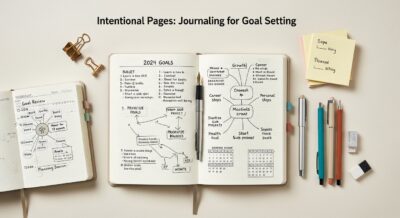
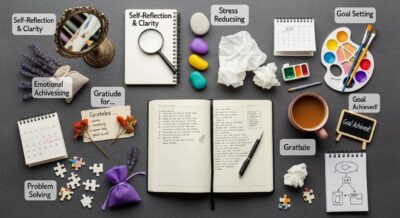
- Journaling: Journaling is a powerful tool for processing emotions, gaining perspective, and understanding recurring thought patterns. It helps to externalize and therefore reduce the burden of internal chatter.
- Limit Information Overload: Be selective about the news, podcasts, and conversations you engage with. Protect your mental space from negativity and sensationalism.
Decluttering in all its forms is an ongoing practice, not a one-time event. It’s about creating a conscious filter that allows you to bring more intention into your life.
[INLINE IMAGE 1: place after second H2 | alt=”Woman journaling in a calm, decluttered living room, reflecting on her values and intentions. Concept illustration of clarity and purpose.”]
Crafting Mindful Routines & Habits for a Slow Lifestyle
Intentional living is less about grand gestures and more about the consistent, small choices we make every day. Routines and habits, when consciously designed, become the scaffolding of a purposeful and slow lifestyle, allowing you to automate positive behaviors and free up mental energy for deeper engagement.
The Power of Morning & Evening Rituals
The way you begin and end your day significantly impacts your overall mood, productivity, and sense of well-being. Mindful rituals are not about strict schedules but about creating sacred pockets of time that nourish you.
- Mindful Mornings:
- Resist the Scroll: Avoid checking your phone or email immediately upon waking. Give yourself 15-30 minutes of screen-free time.
- Hydrate & Nourish: Start with a glass of water, followed by a wholesome breakfast.
- Movement: Even 5-10 minutes of gentle stretching, yoga, or a short walk can energize your body.
- Intention Setting: Spend a few minutes journaling, meditating, or simply sitting in quiet reflection to set an intention for your day. What do you want to feel? What’s one thing you want to accomplish?
- Light Exposure: Get natural light early to regulate your circadian rhythm.
- Calming Evening Rituals:
- Wind-Down Hour: Create a buffer between your day’s demands and sleep. Avoid work, intense exercise, or stimulating content at least an hour before bed.
- Digital Sunset: Put away all screens (phone, tablet, computer, TV) an hour or more before sleep.
- Relaxing Activities: Read a physical book, take a warm bath, listen to calming music, or engage in gentle conversation.
- Gratitude Practice: Reflect on 3 things you’re grateful for from the day. This shifts your mindset to positivity.
- Prepare for Tomorrow: Lay out clothes, pack your bag, or jot down a few priorities for the next day to reduce morning stress.
Incorporating Mindfulness Throughout Your Day
Mindfulness isn’t just for meditation cushions; it’s a practice of bringing conscious awareness to everyday moments. Integrating it into your day helps you stay grounded and present.
- Mindful Eating: Slow down, savor each bite, notice the flavors, textures, and smells of your food. Put away distractions while eating.
- Walking Meditation: Pay attention to the sensation of your feet on the ground, the rhythm of your breath, and the sights and sounds around you during a walk.
- Single-Tasking: Challenge the urge to multitask. Focus on one activity at a time, giving it your full attention. When you’re washing dishes, just wash dishes. When you’re talking to a friend, just listen.
- The Pause Button: Throughout your day, take 30-second “mini-pauses.” Close your eyes, take a few deep breaths, and notice what’s happening in your body and mind without judgment.
Breaking Bad Habits, Building Better Ones
Intentional living often involves consciously letting go of habits that no longer serve you and cultivating new ones that do. This requires self-awareness and consistent effort.
- Identify the Cue: What triggers the unwanted habit? (e.g., boredom, stress, a specific time of day).
- Recognize the Craving: What do you feel before engaging in the habit?
- Choose a New Response: Instead of the old habit, what positive behavior can you substitute? (e.g., instead of checking social media out of boredom, read a book or go for a walk).
- Reward Yourself: Acknowledge your efforts and small wins.
- Start Small: Make new habits so easy that you can’t say no. Want to read more? Start with one page a day. Want to exercise? Start with 5 minutes. Consistency beats intensity.
- Stack Habits: Pair a new habit with an existing one. “After I brush my teeth, I will write one sentence in my journal.”
- Be Patient and Compassionate: Relapses happen. Don’t let one slip-up derail your progress. Learn from it and get back on track.
By intentionally designing your routines and cultivating mindful habits, you create a structure that supports your desired slow and purposeful lifestyle, making intentionality less about effort and more about flow.
Intentional Self-Care: Nurturing Your Well-being
For women especially, self-care is often misunderstood as an indulgence rather than a fundamental necessity for sustainable, intentional living. True self-care is not selfish; it’s the conscious and deliberate act of prioritizing your physical, mental, emotional, and spiritual well-being so that you can show up fully for yourself and others. It’s a non-negotiable component of a life lived with purpose and vitality.
Beyond Bubble Baths: Holistic Self-Care Pillars
While relaxing baths and treats have their place, holistic self-care extends much deeper. It encompasses a broad range of practices that nourish every aspect of your being:
- Physical Self-Care:
- Nourishing Food: Fueling your body with wholesome, balanced meals.
- Adequate Sleep: Prioritizing 7-9 hours of quality sleep each night.
- Regular Movement: Engaging in physical activity that you enjoy, not just as a chore.
- Hydration: Drinking enough water throughout the day.
- Doctor’s Visits: Attending regular check-ups and preventative care.
- Mental Self-Care:
- Learning & Growth: Engaging in activities that stimulate your mind, like reading, learning a new skill, or taking a class.
- Limiting Overload: Reducing exposure to negative news or information that causes distress.
- Mindfulness & Meditation: Practicing presence to calm the mind.
- Creative Expression: Engaging in hobbies like painting, writing, or playing music.
- Emotional Self-Care:
- Processing Emotions: Allowing yourself to feel and acknowledge emotions without judgment (e.g., through journaling or talking to a trusted friend).
- Therapy/Counseling: Seeking professional support when needed.
- Self-Compassion: Treating yourself with the same kindness and understanding you would offer a friend.
- Healthy Outlets: Finding constructive ways to express and release stress or anger.
- Spiritual Self-Care (broadly defined):
- Connection to Purpose: Engaging in activities that give your life meaning and align with your values.
- Time in Nature: Spending time outdoors to feel connected to something larger than yourself.
- Reflection: Practicing gratitude, prayer, or meditation.
- Community: Connecting with like-minded individuals or a spiritual community.
Setting Boundaries: Protecting Your Energy
One of the most powerful acts of intentional self-care is learning to set and maintain healthy boundaries. Women are often conditioned to be nurturers and people-pleasers, making boundary-setting a challenging but essential skill. Boundaries are not about keeping others out; they’re about defining what you will and will not allow in your life, protecting your time, energy, and emotional space.
- Identify Your Limits: What are your non-negotiables? How much can you realistically give without depleting yourself? Where do you feel resentment building?
- Communicate Clearly: Express your boundaries calmly and directly. Use “I” statements: “I need to decline this request because I’ve committed to prioritizing my rest tonight.”
- Be Consistent: Setting a boundary once isn’t enough; you must consistently reinforce it. People will test them, often unconsciously.
- Practice Saying “No”: “No” is a complete sentence. You don’t always need to provide lengthy explanations. Learning to say no gracefully is a vital skill.
- Expect Resistance (and prepare for it): Some people may not like your new boundaries. This is okay. Your well-being is your responsibility.
Prioritizing Rest and Rejuvenation
In a culture that often glorifies busyness, prioritizing rest can feel counter-intuitive. However, rest is not a reward for productivity; it is a vital component of it. Rejuvenation allows your body and mind to repair, integrate, and restore themselves, leading to greater clarity, creativity, and resilience. For women, who often bear a disproportionate load of emotional and domestic labor, scheduling intentional rest is an act of defiance against exhaustion.
- Schedule Rest Like an Appointment: Block out time in your calendar specifically for rest, just as you would for a work meeting or a doctor’s appointment.
- Vary Your Rest: Rest isn’t just sleep. It can be active (a walk in nature), creative (a hobby), emotional (talking to a trusted friend), or sensory (disconnecting from screens).
- Listen to Your Body: Pay attention to signals of fatigue, overwhelm, or burnout. Don’t push through them constantly.
- Embrace Downtime: Allow for unstructured time where you don’t have a specific agenda. This is where insights often emerge.
Intentional self-care is a continuous practice of checking in with yourself and providing what you need to thrive. It’s the fuel that powers your intentional life.
[INLINE IMAGE 2: place after fourth H2 | alt=”Comparison illustration of a chaotic, overscheduled woman versus a calm, focused woman practicing self-care. Visual metaphor for intentional living benefits.”]
Building Intentional Relationships & Community
While intentional living often begins with personal reflection, it naturally extends to how we connect with others. Our relationships are vital to our well-being and sense of belonging. Intentional relationships are those that are consciously nurtured, deeply valued, and built on authenticity, mutual respect, and clear communication. For women, who often play central roles in family and community, cultivating these connections is a cornerstone of a truly fulfilling life.
Cultivating Deeper Connections
In an era of superficial digital interactions, creating genuinely deep relationships requires conscious effort. It’s about quality over quantity.
- Be Present: When you’re with someone, give them your full, undivided attention. Put away your phone. Listen actively, not just waiting for your turn to speak.
- Practice Empathy: Try to understand their perspective and feelings, even if they differ from your own.
- Show Vulnerability: Share your authentic self—your hopes, fears, and struggles—in appropriate contexts. Vulnerability fosters true connection.
- Engage in Meaningful Activities: Instead of just casual encounters, plan activities that allow for deeper conversation or shared experiences, like a long walk, cooking together, or volunteering.
- Regular Check-ins: Make an effort to regularly connect with people who matter to you, even if it’s just a quick text or call to say you’re thinking of them.
Communicating Your Needs and Boundaries
Just as we establish personal boundaries for self-care, clear communication is essential for healthy, intentional relationships. This means expressing your needs, expectations, and limits respectfully.
- Be Direct and Kind: When communicating a need or boundary, be clear and assertive, but also gentle and considerate of the other person’s feelings.
- Use “I” Statements: Focus on your feelings and experiences rather than blaming: “I feel overwhelmed when I’m asked to take on too many tasks at work,” rather than “You always ask too much of me.”
- Listen Actively to Others: A healthy relationship is a two-way street. Be open to hearing and understanding the other person’s needs and boundaries as well.
- Choose Your Moments: Discuss important topics when both parties are calm and have enough time to talk thoroughly, not in the heat of an argument or when rushed.
Finding Your Tribe: Supporting & Being Supported
Humans are social beings, and a strong sense of community is crucial for mental and emotional health. An intentional life often includes a supportive “tribe” of people who uplift, inspire, and understand you.
- Identify What You Need: Are you looking for intellectual stimulation, emotional support, shared hobbies, or a sense of belonging?
- Seek Out Like-Minded Individuals: Join clubs, classes, volunteer groups, or online communities centered around your interests or values.
- Be Open to New Connections: Step outside your comfort zone and initiate conversations. Attend workshops or events that align with your growth.
- Nurture Existing Friendships: Don’t overlook the friends you already have. Invest time and energy into deepening those bonds.
- Be a Supportive Friend: Reciprocity is key. Offer your support, presence, and genuine care to others. The more you give, the more you often receive.
Intentional relationships are built over time through consistent effort, open communication, and a genuine desire to connect. They are a powerful source of resilience and joy in your intentional life.
Navigating Challenges: Resilience in Intentional Living
The journey of intentional living is not a straight, smooth path; it’s a winding trail with inevitable bumps, detours, and even moments of doubt. Life happens, and even with the best intentions, challenges will arise. Developing resilience—the ability to bounce back from adversity—is a core skill for sustaining an intentional life, especially for women navigating complex modern realities. It’s about adapting, learning, and continuing to move forward, even when things don’t go according to plan.
Overcoming Perfectionism and Self-Doubt
Many women are particularly susceptible to perfectionism and self-doubt, fueled by societal pressures to excel in every role. These can be significant roadblocks to intentional living, as they often lead to procrastination, burnout, and a fear of failure that prevents us from taking authentic risks.
- Recognize the Pattern: Become aware of when perfectionism or self-doubt is creeping in. Is it preventing you from starting something, or causing you to endlessly tweak it?
- Embrace “Good Enough”: Understand that done is often better than perfect. Focus on progress, not absolute flawlessness.
- Challenge Negative Self-Talk: When self-doubt whispers, question its validity. Is it a fact, or just a fear? Talk to yourself as you would a dear friend.
- Celebrate Small Wins: Acknowledge and appreciate every step forward, no matter how small. This builds confidence and momentum.
- Seek External Perspective: Talk to a trusted mentor, friend, or coach who can offer an objective viewpoint and remind you of your capabilities.
Embracing Imperfection and Flexibility
Intentional living is about living purposefully, not perfectly. Life is inherently messy, unpredictable, and full of variables outside our control. Holding onto rigid expectations of perfection can lead to frustration and a sense of failure when things inevitably go awry. Flexibility, on the other hand, allows for graceful adaptation.
- Let Go of “Shoulds”: Release the external and internal “shoulds” that dictate how your life “ought” to look. Focus on what truly serves you.
- Practice Self-Compassion: When you make a mistake or fall short of an intention, respond with kindness and understanding, not harsh criticism.
- View Challenges as Opportunities: Instead of setbacks, see unexpected difficulties as chances to learn, grow, and strengthen your resilience. What can this teach you?
- Build in Buffer Time: When planning, always overestimate how long things will take. This reduces stress when unforeseen issues arise.
- Cultivate a Growth Mindset: Believe that your abilities and intelligence can be developed through dedication and hard work. Imperfections become learning curves.
Re-evaluating and Adapting Your Intentions
An intentional life is a living, breathing entity, not a static blueprint. As you grow, learn, and experience new things, your values and priorities may shift. What was important a year ago might not hold the same weight today, and that’s perfectly normal. Regular re-evaluation is a hallmark of truly intentional living.
- Schedule Regular Check-ins: Set aside time quarterly or semi-annually to review your values, goals, and daily practices. Are they still aligned?
- Ask Reflective Questions:
- “What’s working well in my intentional life right now?”
- “Where do I feel resistance or misalignment?”
- “Have my core values shifted in any way?”
- “What adjustments can I make to better align with my current self and circumstances?”
- Be Open to Pivoting: Don’t be afraid to change direction, let go of old goals, or embrace new aspirations. This isn’t failure; it’s evolution.
- Trust Your Intuition: Your inner wisdom often knows when something feels off. Pay attention to those subtle cues and give yourself permission to explore them.
By embracing imperfection, cultivating flexibility, and regularly re-evaluating your path, you build a resilient foundation for an intentional life that can gracefully weather any storm and continuously evolve with you.
Resources & Tools for Your Intentional Journey
Embarking on or deepening your intentional living journey is a continuous process, and having the right tools and resources can make a significant difference. From reflective practices to insightful readings, there are many ways to support your personal growth and maintain your commitment to a purposeful life. Here are some categories of resources to explore:
Journaling Prompts & Practices
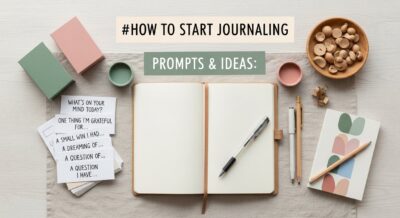
Journaling is a cornerstone of self-reflection and a powerful tool for intentional living. It helps to clarify thoughts, process emotions, track progress, and deepen self-awareness. Here are some practices and prompts:
- Morning Pages: Inspired by Julia Cameron’s “The Artist’s Way,” this involves writing three pages of stream-of-consciousness prose first thing in the morning to clear your mind.
- Gratitude Journaling: Each day, list 3-5 things you are grateful for. This shifts your perspective towards positivity and abundance.
- Values-Aligned Prompts:
- “How did I live my core value of [e.g., ‘connection’] today?”
- “What decision did I make recently, and how did it align (or not align) with my values?”
- “If I had one hour completely free, how would I spend it to honor my most important value?”
- Future Self Journaling: Write a letter to yourself from the perspective of your future self, living the intentional life you desire. What advice would she give you?
- Emotional Check-in: “What am I feeling right now? What might be underneath that feeling? What does this feeling need?”
Recommended Books & Podcasts
Learning from others who have explored intentional living, mindfulness, and personal growth can provide inspiration, new perspectives, and practical strategies.
- Books:
- “Essentialism: The Disciplined Pursuit of Less” by Greg McKeown: A powerful guide on how to identify what is truly essential and eliminate everything else.
- “The Power of Now” by Eckhart Tolle: A foundational text on living in the present moment and overcoming mental noise.
- “Atomic Habits” by James Clear: Practical, science-backed strategies for building good habits and breaking bad ones.
- “Decluttering at the Speed of Life” by Dana K. White: Realistic approaches to decluttering for busy individuals.
- Podcasts:
- “The Minimalists Podcast”: Discussions on living a meaningful life with less.
- “Ten Percent Happier”: Dan Harris and guests explore meditation, mindfulness, and the science of happiness.
- “The Slow Living Podcast”: Exploring practical ways to slow down and savor life.
- “The Purposeful Living Podcast”: Interviews and insights on creating a life of intention and impact.
Simple Practices for Daily Intention
Integrating small, intentional practices into your day can create significant shifts over time.
- One-Breath Meditation: Pause, take one deep, conscious breath, and notice its sensation. Do this several times a day.
- Mindful Sips: When drinking water, tea, or coffee, take a moment to truly taste and feel the beverage.
- Choose One Task: Before starting your workday or a busy period, consciously choose the ONE most important task you want to complete and focus on it first.
- Micro-Breaks: Every hour, stand up, stretch, and look away from your screen for a minute or two.
- Daily Reflection Question: At the end of the day, ask yourself: “What one moment did I feel most present today?” or “What’s one thing I did intentionally
Intentional Living for Women: Cultivating a Purposeful & Fulfilling Life
By thecontextuallife Editorial Team — Senior editors with 10+ years of subject-matter experience.
Published 2026-05-26 · Last Updated 2026-05-26Affiliate disclosure: This article may contain affiliate links. Recommendations are independent and editorially driven.
In a world that constantly demands our attention, pulls us in countless directions, and often dictates our pace, finding a path to genuine fulfillment can feel like an elusive quest. For women, this challenge is often amplified by societal expectations, caregiving roles, and the pervasive pressure to “do it all.” Yet, amidst this beautiful chaos, a growing movement offers a powerful antidote: intentional living for women. This isn’t about rigid rules or a minimalist aesthetic, but rather a profound journey of self-discovery and conscious choice-making that empowers you to design a life aligned with your deepest desires and values.
Intentional living is a philosophy that encourages you to step back from autopilot and actively decide how you want to live, what truly matters to you, and where you want to invest your precious time and energy. It’s about being deliberate, purposeful, and fully present in every facet of your existence – from your daily routines and relationships to your career and personal growth. For women, embracing intentional living can be transformative, allowing you to shed external pressures, honor your intuition, and build a life that feels authentic, sustainable, and joyful.
This comprehensive guide is designed to be your compass on this journey. We’ll delve into the core principles of intentional living, offering practical strategies, insightful reflections, and actionable steps to help you cultivate a life of purpose, peace, and profound fulfillment. From uncovering your core values to crafting mindful routines, decluttering your physical and mental spaces, nurturing your well-being, and building meaningful connections, we will explore how you can thoughtfully design a life that truly resonates with who you are and who you aspire to be.
The Foundation: Unearthing Your Core Values
Before you can intentionally design your life, you must first understand the blueprints that guide your decisions: your core values. These are the fundamental beliefs and principles that dictate your behavior, shape your perspective, and ultimately define what is most important to you. Without a clear understanding of your values, you risk living a life dictated by external forces, striving for goals that don’t truly resonate, and feeling a persistent sense of misalignment.
Why Values Matter for Intentional Living
Imagine trying to navigate without a compass. You might move, but without a sense of direction, you’re likely to get lost or end up somewhere you never intended. Your values serve as that essential compass for your life. When your actions, choices, and commitments align with your core values, you experience greater peace, satisfaction, and a deep sense of purpose. Conversely, when there’s a disconnect, you may feel stressed, unfulfilled, or like you’re constantly fighting an uphill battle.
For women, who often juggle multiple roles and responsibilities, understanding values is particularly crucial. It empowers you to say “no” to commitments that drain your energy and “yes” to opportunities that fuel your soul. It provides a framework for making difficult decisions, setting healthy boundaries, and prioritizing what truly enriches your life, rather than what society expects of you.
Practical Steps to Identify Your Values
Uncovering your core values is a process of self-reflection and introspection. It’s not about choosing “good” values, but rather identifying what truly motivates and inspires you. Here’s a guided approach:
- Reflect on Peak Experiences: Think about times in your life when you felt most alive, most joyful, or most proud. What was happening? What qualities were you embodying? What needs were being met? For example, if you felt alive while volunteering, perhaps “contribution” or “community” is a core value.
- Identify Moments of Discomfort: Conversely, consider times when you felt deeply frustrated, angry, or resentful. What value was being violated? If you felt upset by injustice, “fairness” or “integrity” might be important.
- Brainstorm Value Words: Look at a list of value words (e.g., authenticity, courage, creativity, connection, freedom, growth, security, wisdom, compassion). Circle all that resonate with you. Don’t overthink it at this stage.
- Group and Prioritize: From your brainstormed list, start grouping similar values and then narrow them down to your top 5-7. Try to articulate why each value is important to you.
- Define Each Value: What does “freedom” mean to YOU, specifically? What does “growth” look like in your daily life? Defining them concretely makes them actionable.
- Test Your Values: Over the next few days, observe how your identified values show up (or don’t show up) in your choices and reactions. Does your top value truly guide your behavior? Adjust as needed.
This isn’t a one-time exercise. Your values may evolve slightly over time, especially during significant life transitions. Revisit them periodically to ensure they still accurately reflect who you are.
Living Aligned: Integrating Values into Daily Choices
Once you’ve identified your core values, the real work—and joy—begins: integrating them into your daily life. This means consciously making choices that reflect what you hold dear.
- Decision-Making Filter: Before making a significant decision (job change, new commitment, large purchase), ask yourself: “Does this align with my top values?” If your value is “simplicity,” a new complex commitment might not fit.
- Time Allocation: Review your calendar and schedule. Does the way you spend your time reflect your values? If “connection” is important, but your social calendar is empty, there’s a misalignment.
- Boundary Setting: Use your values to inform your boundaries. If “well-being” is a core value, you might set a boundary around working late or over-committing.
- Goal Setting: Ensure your goals are rooted in your values. Rather than just aiming for a promotion, aim for a promotion that allows for “impact” or “creativity” if those are your values.
Living from your values provides an inner strength and clarity, allowing you to navigate life’s complexities with greater authenticity and less internal conflict.
Decluttering for Clarity: Space, Schedule, and Spirit
Intentional living thrives in spaces of clarity and calm. Just as a cluttered desk can hinder productivity, a cluttered life—be it physical, digital, or mental—can impede your ability to live purposefully. Decluttering isn’t just about throwing things away; it’s about making space for what truly matters, reducing friction, and creating environments that support your well-being and aspirations.
Physical Decluttering: Creating Sacred Spaces
Our physical surroundings significantly impact our mood, focus, and energy. A chaotic home often leads to a chaotic mind. Physical decluttering is an act of self-care and respect for your living environment.
- Start Small, Think Big: Don’t try to declutter your entire house in one weekend. Begin with one drawer, one shelf, or one counter. Build momentum.
- The “Why” Before the “What”: Before you even touch an item, ask yourself: What kind of energy do I want this room to have? What do I want this space to enable me to do?
- Question Each Item: Pick up each item and ask: “Does this serve a purpose? Does it bring me joy? Does it align with my vision for this space?” If the answer is consistently no, consider letting it go.
- The One-In, One-Out Rule: To prevent future clutter, adopt this simple rule. When you buy something new, get rid of something similar.
- Create Homes for Everything: Clutter often results from items not having a designated place. Establish a “home” for every item you keep.
Digital Decluttering: Reclaiming Focus Online
In our hyper-connected world, digital clutter can be as overwhelming as physical clutter, if not more so. Notifications, endless emails, and social media scrolls can fragment our attention and steal our precious time.
- Email Inbox Zero (or Near-Zero): Unsubscribe from unnecessary newsletters. Create folders for essential emails. Schedule specific times to check and respond to emails, rather than constantly reacting.
- App Audit: Go through your phone and delete apps you don’t use or that drain your time. Turn off non-essential notifications.
- Desktop Clean-Up: Organize digital files into clear folders. Delete old documents and downloads. Use cloud storage efficiently.
- Social Media Boundaries: Set time limits for social media use. Curate your feeds to follow accounts that inspire, educate, or genuinely connect you, rather than those that provoke comparison or anxiety. Consider regular “digital detox” days or weekends.
Mental Decluttering: Quieting the Inner Noise
Perhaps the most challenging, yet most rewarding, form of decluttering is tending to our minds. The constant stream of thoughts, worries, to-do lists, and self-criticism can create immense mental clutter, preventing clarity and peace.
- Brain Dump: When your mind feels overwhelmed, grab a pen and paper (or open a document) and write down every single thought, concern, and task running through your head. Get it all out.
- Prioritize and Plan: Once externalized, you can then organize your brain dump. Identify urgent tasks, delegate what you can, and schedule time for important but non-urgent items.
- Mindfulness & Meditation: Regular mindfulness practices, even just 5-10 minutes a day, can train your mind to observe thoughts without getting swept away by them. This creates mental space and calm.
- Journaling: Journaling is a powerful tool for processing emotions, gaining perspective, and understanding recurring thought patterns. It helps to externalize and therefore reduce the burden of internal chatter.
- Limit Information Overload: Be selective about the news, podcasts, and conversations you engage with. Protect your mental space from negativity and sensationalism.
Decluttering in all its forms is an ongoing practice, not a one-time event. It’s about creating a conscious filter that allows you to bring more intention into your life.
[INLINE IMAGE 1: place after second H2 | alt=”Woman journaling in a calm, decluttered living room, reflecting on her values and intentions. Concept illustration of clarity and purpose.”]
Crafting Mindful Routines & Habits for a Slow Lifestyle
Intentional living is less about grand gestures and more about the consistent, small choices we make every day. Routines and habits, when consciously designed, become the scaffolding of a purposeful and slow lifestyle, allowing you to automate positive behaviors and free up mental energy for deeper engagement.
The Power of Morning & Evening Rituals
The way you begin and end your day significantly impacts your overall mood, productivity, and sense of well-being. Mindful rituals are not about strict schedules but about creating sacred pockets of time that nourish you.
- Mindful Mornings:
- Resist the Scroll: Avoid checking your phone or email immediately upon waking. Give yourself 15-30 minutes of screen-free time.
- Hydrate & Nourish: Start with a glass of water, followed by a wholesome breakfast.
- Movement: Even 5-10 minutes of gentle stretching, yoga, or a short walk can energize your body.
- Intention Setting: Spend a few minutes journaling, meditating, or simply sitting in quiet reflection to set an intention for your day. What do you want to feel? What’s one thing you want to accomplish?
- Light Exposure: Get natural light early to regulate your circadian rhythm.
- Calming Evening Rituals:
- Wind-Down Hour: Create a buffer between your day’s demands and sleep. Avoid work, intense exercise, or stimulating content at least an hour before bed.
- Digital Sunset: Put away all screens (phone, tablet, computer, TV) an hour or more before sleep.
- Relaxing Activities: Read a physical book, take a warm bath, listen to calming music, or engage in gentle conversation.
- Gratitude Practice: Reflect on 3 things you’re grateful for from the day. This shifts your mindset to positivity.
- Prepare for Tomorrow: Lay out clothes, pack your bag, or jot down a few priorities for the next day to reduce morning stress.
Incorporating Mindfulness Throughout Your Day
Mindfulness isn’t just for meditation cushions; it’s a practice of bringing conscious awareness to everyday moments. Integrating it into your day helps you stay grounded and present.
- Mindful Eating: Slow down, savor each bite, notice the flavors, textures, and smells of your food. Put away distractions while eating.
- Walking Meditation: Pay attention to the sensation of your feet on the ground, the rhythm of your breath, and the sights and sounds around you during a walk.
- Single-Tasking: Challenge the urge to multitask. Focus on one activity at a time, giving it your full attention. When you’re washing dishes, just wash dishes. When you’re talking to a friend, just listen.
- The Pause Button: Throughout your day, take 30-second “mini-pauses.” Close your eyes, take a few deep breaths, and notice what’s happening in your body and mind without judgment.
Breaking Bad Habits, Building Better Ones
Intentional living often involves consciously letting go of habits that no longer serve you and cultivating new ones that do. This requires self-awareness and consistent effort.
- Identify the Cue: What triggers the unwanted habit? (e.g., boredom, stress, a specific time of day).
- Recognize the Craving: What do you feel before engaging in the habit?
- Choose a New Response: Instead of the old habit, what positive behavior can you substitute? (e.g., instead of checking social media out of boredom, read a book or go for a walk).
- Reward Yourself: Acknowledge your efforts and small wins.
- Start Small: Make new habits so easy that you can’t say no. Want to read more? Start with one page a day. Want to exercise? Start with 5 minutes. Consistency beats intensity.
- Stack Habits: Pair a new habit with an existing one. “After I brush my teeth, I will write one sentence in my journal.”
- Be Patient and Compassionate: Relapses happen. Don’t let one slip-up derail your progress. Learn from it and get back on track.
By intentionally designing your routines and cultivating mindful habits, you create a structure that supports your desired slow and purposeful lifestyle, making intentionality less about effort and more about flow.
Intentional Self-Care: Nurturing Your Well-being
For women especially, self-care is often misunderstood as an indulgence rather than a fundamental necessity for sustainable, intentional living. True self-care is not selfish; it’s the conscious and deliberate act of prioritizing your physical, mental, emotional, and spiritual well-being so that you can show up fully for yourself and others. It’s a non-negotiable component of a life lived with purpose and vitality.
Beyond Bubble Baths: Holistic Self-Care Pillars
While relaxing baths and treats have their place, holistic self-care extends much deeper. It encompasses a broad range of practices that nourish every aspect of your being:
- Physical Self-Care:
- Nourishing Food: Fueling your body with wholesome, balanced meals.
- Adequate Sleep: Prioritizing 7-9 hours of quality sleep each night.
- Regular Movement: Engaging in physical activity that you enjoy, not just as a chore.
- Hydration: Drinking enough water throughout the day.
- Doctor’s Visits: Attending regular check-ups and preventative care.
- Mental Self-Care:
- Learning & Growth: Engaging in activities that stimulate your mind, like reading, learning a new skill, or taking a class.
- Limiting Overload: Reducing exposure to negative news or information that causes distress.
- Mindfulness & Meditation: Practicing presence to calm the mind.
- Creative Expression: Engaging in hobbies like painting, writing, or playing music.
- Emotional Self-Care:
- Processing Emotions: Allowing yourself to feel and acknowledge emotions without judgment (e.g., through journaling or talking to a trusted friend).
- Therapy/Counseling: Seeking professional support when needed.
- Self-Compassion: Treating yourself with the same kindness and understanding you would offer a friend.
- Healthy Outlets: Finding constructive ways to express and release stress or anger.
- Spiritual Self-Care (broadly defined):
- Connection to Purpose: Engaging in activities that give your life meaning and align with your values.
- Time in Nature: Spending time outdoors to feel connected to something larger than yourself.
- Reflection: Practicing gratitude, prayer, or meditation.
- Community: Connecting with like-minded individuals or a spiritual community.
Setting Boundaries: Protecting Your Energy
One of the most powerful acts of intentional self-care is learning to set and maintain healthy boundaries. Women are often conditioned to be nurturers and people-pleasers, making boundary-setting a challenging but essential skill. Boundaries are not about keeping others out; they’re about defining what you will and will not allow in your life, protecting your time, energy, and emotional space.
- Identify Your Limits: What are your non-negotiables? How much can you realistically give without depleting yourself? Where do you feel resentment building?
- Communicate Clearly: Express your boundaries calmly and directly. Use “I” statements: “I need to decline this request because I’ve committed to prioritizing my rest tonight.”
- Be Consistent: Setting a boundary once isn’t enough; you must consistently reinforce it. People will test them, often unconsciously.
- Practice Saying “No”: “No” is a complete sentence. You don’t always need to provide lengthy explanations. Learning to say no gracefully is a vital skill.
- Expect Resistance (and prepare for it): Some people may not like your new boundaries. This is okay. Your well-being is your responsibility.
Prioritizing Rest and Rejuvenation
In a culture that often glorifies busyness, prioritizing rest can feel counter-intuitive. However, rest is not a reward for productivity; it is a vital component of it. Rejuvenation allows your body and mind to repair, integrate, and restore themselves, leading to greater clarity, creativity, and resilience. For women, who often bear a disproportionate load of emotional and domestic labor, scheduling intentional rest is an act of defiance against exhaustion.
- Schedule Rest Like an Appointment: Block out time in your calendar specifically for rest, just as you would for a work meeting or a doctor’s appointment.
- Vary Your Rest: Rest isn’t just sleep. It can be active (a walk in nature), creative (a hobby), emotional (talking to a trusted friend), or sensory (disconnecting from screens).
- Listen to Your Body: Pay attention to signals of fatigue, overwhelm, or burnout. Don’t push through them constantly.
- Embrace Downtime: Allow for unstructured time where you don’t have a specific agenda. This is where insights often emerge.
Intentional self-care is a continuous practice of checking in with yourself and providing what you need to thrive. It’s the fuel that powers your intentional life.
[INLINE IMAGE 2: place after fourth H2 | alt=”Comparison illustration of a chaotic, overscheduled woman versus a calm, focused woman practicing self-care. Visual metaphor for intentional living benefits.”]
Building Intentional Relationships & Community
While intentional living often begins with personal reflection, it naturally extends to how we connect with others. Our relationships are vital to our well-being and sense of belonging. Intentional relationships are those that are consciously nurtured, deeply valued, and built on authenticity, mutual respect, and clear communication. For women, who often play central roles in family and community, cultivating these connections is a cornerstone of a truly fulfilling life.
Cultivating Deeper Connections
In an era of superficial digital interactions, creating genuinely deep relationships requires conscious effort. It’s about quality over quantity.
- Be Present: When you’re with someone, give them your full, undivided attention. Put away your phone. Listen actively, not just waiting for your turn to speak.
- Practice Empathy: Try to understand their perspective and feelings, even if they differ from your own.
- Show Vulnerability: Share your authentic self—your hopes, fears, and struggles—in appropriate contexts. Vulnerability fosters true connection.
- Engage in Meaningful Activities: Instead of just casual encounters, plan activities that allow for deeper conversation or shared experiences, like a long walk, cooking together, or volunteering.
- Regular Check-ins: Make an effort to regularly connect with people who matter to you, even if it’s just a quick text or call to say you’re thinking of them.
Communicating Your Needs and Boundaries
Just as we establish personal boundaries for self-care, clear communication is essential for healthy, intentional relationships. This means expressing your needs, expectations, and limits respectfully.
- Be Direct and Kind: When communicating a need or boundary, be clear and assertive, but also gentle and considerate of the other person’s feelings.
- Use “I” Statements: Focus on your feelings and experiences rather than blaming: “I feel overwhelmed when I’m asked to take on too many tasks at work,” rather than “You always ask too much of me.”
- Listen Actively to Others: A healthy relationship is a two-way street. Be open to hearing and understanding the other person’s needs and boundaries as well.
- Choose Your Moments: Discuss important topics when both parties are calm and have enough time to talk thoroughly, not in the heat of an argument or when rushed.
Finding Your Tribe: Supporting & Being Supported
Humans are social beings, and a strong sense of community is crucial for mental and emotional health. An intentional life often includes a supportive “tribe” of people who uplift, inspire, and understand you.
- Identify What You Need: Are you looking for intellectual stimulation, emotional support, shared hobbies, or a sense of belonging?
- Seek Out Like-Minded Individuals: Join clubs, classes, volunteer groups, or online communities centered around your interests or values.
- Be Open to New Connections: Step outside your comfort zone and initiate conversations. Attend workshops or events that align with your growth.
- Nurture Existing Friendships: Don’t overlook the friends you already have. Invest time and energy into deepening those bonds.
- Be a Supportive Friend: Reciprocity is key. Offer your support, presence, and genuine care to others. The more you give, the more you often receive.
Intentional relationships are built over time through consistent effort, open communication, and a genuine desire to connect. They are a powerful source of resilience and joy in your intentional life.
Navigating Challenges: Resilience in Intentional Living
The journey of intentional living is not a straight, smooth path; it’s a winding trail with inevitable bumps, detours, and even moments of doubt. Life happens, and even with the best intentions, challenges will arise. Developing resilience—the ability to bounce back from adversity—is a core skill for sustaining an intentional life, especially for women navigating complex modern realities. It’s about adapting, learning, and continuing to move forward, even when things don’t go according to plan.
Overcoming Perfectionism and Self-Doubt
Many women are particularly susceptible to perfectionism and self-doubt, fueled by societal pressures to excel in every role. These can be significant roadblocks to intentional living, as they often lead to procrastination, burnout, and a fear of failure that prevents us from taking authentic risks.
- Recognize the Pattern: Become aware of when perfectionism or self-doubt is creeping in. Is it preventing you from starting something, or causing you to endlessly tweak it?
- Embrace “Good Enough”: Understand that done is often better than perfect. Focus on progress, not absolute flawlessness.
- Challenge Negative Self-Talk: When self-doubt whispers, question its validity. Is it a fact, or just a fear? Talk to yourself as you would a dear friend.
- Celebrate Small Wins: Acknowledge and appreciate every step forward, no matter how small. This builds confidence and momentum.
- Seek External Perspective: Talk to a trusted mentor, friend, or coach who can offer an objective viewpoint and remind you of your capabilities.
Embracing Imperfection and Flexibility
Intentional living is about living purposefully, not perfectly. Life is inherently messy, unpredictable, and full of variables outside our control. Holding onto rigid expectations of perfection can lead to frustration and a sense of failure when things inevitably go awry. Flexibility, on the other hand, allows for graceful adaptation.
- Let Go of “Shoulds”: Release the external and internal “shoulds” that dictate how your life “ought” to look. Focus on what truly serves you.
- Practice Self-Compassion: When you make a mistake or fall short of an intention, respond with kindness and understanding, not harsh criticism.
- View Challenges as Opportunities: Instead of setbacks, see unexpected difficulties as chances to learn, grow, and strengthen your resilience. What can this teach you?
- Build in Buffer Time: When planning, always overestimate how long things will take. This reduces stress when unforeseen issues arise.
- Cultivate a Growth Mindset: Believe that your abilities and intelligence can be developed through dedication and hard work. Imperfections become learning curves.
Re-evaluating and Adapting Your Intentions
An intentional life is a living, breathing entity, not a static blueprint. As you grow, learn, and experience new things, your values and priorities may shift. What was important a year ago might not hold the same weight today, and that’s perfectly normal. Regular re-evaluation is a hallmark of truly intentional living.
- Schedule Regular Check-ins: Set aside time quarterly or semi-annually to review your values, goals, and daily practices. Are they still aligned?
- Ask Reflective Questions:
- “What’s working well in my intentional life right now?”
- “Where do I feel resistance or misalignment?”
- “Have my core values shifted in any way?”
- “What adjustments can I make to better align with my current self and circumstances?”
- Be Open to Pivoting: Don’t be afraid to change direction, let go of old goals, or embrace new aspirations. This isn’t failure; it’s evolution.
- Trust Your Intuition: Your inner wisdom often knows when something feels off. Pay attention to those subtle cues and give yourself permission to explore them.
By embracing imperfection, cultivating flexibility, and regularly re-evaluating your path, you build a resilient foundation for an intentional life that can gracefully weather any storm and continuously evolve with you.
Resources & Tools for Your Intentional Journey
Embarking on or deepening your intentional living journey is a continuous process, and having the right tools and resources can make a significant difference. From reflective practices to insightful readings, there are many ways to support your personal growth and maintain your commitment to a purposeful life. Here are some categories of resources to explore:
Journaling Prompts & Practices
Journaling is a cornerstone of self-reflection and a powerful tool for intentional living. It helps to clarify thoughts, process emotions, track progress, and deepen self-awareness. Here are some practices and prompts:
- Morning Pages: Inspired by Julia Cameron’s “The Artist’s Way,” this involves writing three pages of stream-of-consciousness prose first thing in the morning to clear your mind.
- Gratitude Journaling: Each day, list 3-5 things you are grateful for. This shifts your perspective towards positivity and abundance.
- Values-Aligned Prompts:
- “How did I live my core value of [e.g., ‘connection’] today?”
- “What decision did I make recently, and how did it align (or not align) with my values?”
- “If I had one hour completely free, how would I spend it to honor my most important value?”
- Future Self Journaling: Write a letter to yourself from the perspective of your future self, living the intentional life you desire. What advice would she give you?
- Emotional Check-in: “What am I feeling right now? What might be underneath that feeling? What does this feeling need?”
Recommended Books & Podcasts
Learning from others who have explored intentional living, mindfulness, and personal growth can provide inspiration, new perspectives, and practical strategies.
- Books:
- “Essentialism: The Disciplined Pursuit of Less” by Greg McKeown: A powerful guide on how to identify what is truly essential and eliminate everything else.
- “The Power of Now” by Eckhart Tolle: A foundational text on living in the present moment and overcoming mental noise.
- “Atomic Habits” by James Clear: Practical, science-backed strategies for building good habits and breaking bad ones.
- “Decluttering at the Speed of Life” by Dana K. White: Realistic approaches to decluttering for busy individuals.
- Podcasts:
- “The Minimalists Podcast”: Discussions on living a meaningful life with less.
- “Ten Percent Happier”: Dan Harris and guests explore meditation, mindfulness, and the science of happiness.
- “The Slow Living Podcast”: Exploring practical ways to slow down and savor life.
- “The Purposeful Living Podcast”: Interviews and insights on creating a life of intention and impact.
Simple Practices for Daily Intention
Integrating small, intentional practices into your day can create significant shifts over time.
- One-Breath Meditation: Pause, take one deep, conscious breath, and notice its sensation. Do this several times a day.
- Mindful Sips: When drinking water, tea, or coffee, take a moment to truly taste and feel the beverage.
- Choose One Task: Before starting your workday or a busy period, consciously choose the ONE most important task you want to complete and focus on it first.
- Micro-Breaks: Every hour, stand up, stretch, and look away from your screen for a minute or two.
- Daily Reflection Question: At the end of the day, ask yourself: “What one moment did I feel most present today?” or “What’s one thing I did intentionally