


Understanding Depression and the Transformative Power of Self-Care
Depression is far more than just feeling sad; it’s a pervasive illness that affects your thoughts, feelings, behavior, and physical health. It can manifest as persistent sadness, loss of interest or pleasure in activities, changes in appetite or sleep patterns, fatigue, feelings of worthlessness or guilt, difficulty concentrating, and even physical aches and pains without a clear cause. For many women, it can also present as irritability, anxiety, or a profound sense of emptiness. The insidious nature of depression lies in its ability to distort perception, making the world seem grayer, and our own capabilities feel diminished. It whispers lies about our worthiness and convinces us that effort is futile.
When you’re caught in the grip of depression, the concept of “self-care” can feel like a cruel joke. The typical advice – “take a bubble bath,” “go for a run,” “meditate for an hour” – can feel utterly out of reach, adding another layer of guilt for not being able to “just do it.” This is where a fundamental shift in understanding is required. Self-care, in the context of depression, is not about adding more to your plate or forcing happiness. It is about reducing harm, offering yourself compassion, and taking tiny, manageable steps to nourish your depleted mind and body. It is an act of defiance against the illness, a quiet assertion that you deserve care, even when you feel you don’t. It’s about recognizing that you are experiencing an illness, and just like any illness, it requires attention, patience, and gentle intervention. The transformative power of self-care here isn’t in curing depression instantly, but in creating a supportive internal and external environment that fosters healing, resilience, and eventual recovery. It’s about building a foundation, however fragile at first, upon which more significant healing can occur. It’s about understanding that even the smallest act of kindness towards yourself can be a profound victory, a ripple effect that gradually expands into greater well-being.
The Challenge of Initiating Self-Care When Depressed
One of the biggest hurdles in practicing self-care during depression is the profound lack of motivation and energy. Depression drains your reserves, leaving you feeling utterly exhausted, both physically and mentally. The mental fog makes it difficult to plan, prioritize, or even remember simple tasks. Furthermore, feelings of low self-worth can make you believe you don’t deserve care, or that any effort would be pointless. This internal resistance is a symptom of the illness itself, not a personal failing. It’s crucial to acknowledge this challenge without judgment. Understanding that this inertia is part of the illness, rather than a lack of willpower, is the first step towards breaking its hold. It gives you permission to start incredibly small, to redefine what self-care looks like, and to celebrate micro-victories that might otherwise go unnoticed. The goal isn’t perfection; it’s presence, patience, and persistent, gentle effort.
Gentle Beginnings: Micro Self-Care When Energy is Low
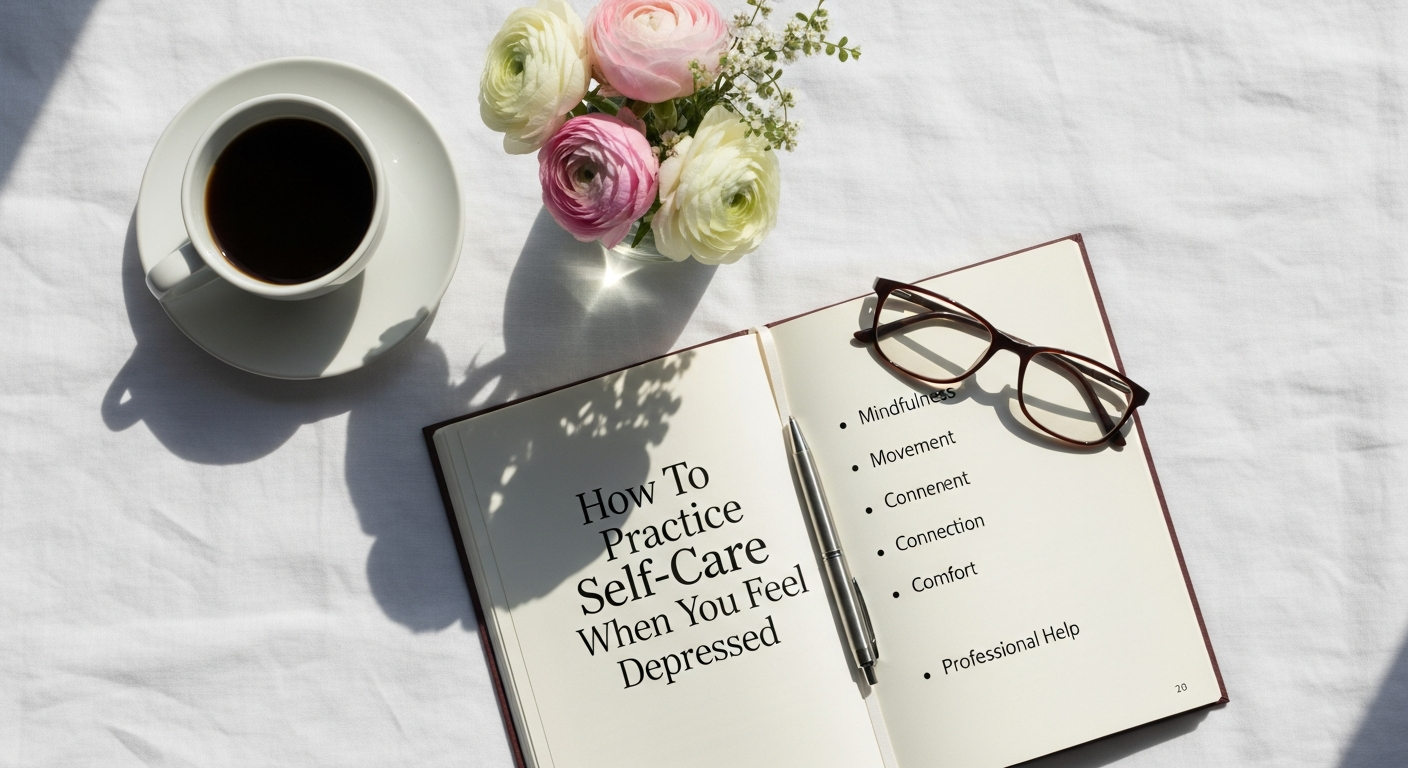
When the weight of depression makes even lifting your head feel like a monumental effort, the idea of a comprehensive self-care routine is overwhelming. This is precisely when micro self-care becomes your most powerful tool. These are tiny, almost imperceptible acts of kindness towards yourself that require minimal energy but can offer significant, albeit subtle, shifts in your state. The key is not to aim for perfection or even a noticeable mood boost immediately, but to consistently offer yourself small doses of nourishment. Think of it as placing tiny, life-sustaining droplets into a vast, empty well.
Hydration and Nourishment: The Fundamental Fuel
It sounds simple, but dehydration and poor nutrition can significantly exacerbate depressive symptoms, including fatigue, brain fog, and irritability. When depressed, we often neglect basic needs. Your first micro self-care act could be as simple as drinking a glass of water. Keep a water bottle by your bed or wherever you spend most of your time. Don’t pressure yourself to drink a gallon; just one glass is a win. Similarly, when it comes to food, aim for something nourishing. If cooking feels impossible, grab a piece of fruit, a handful of nuts, or a pre-made smoothie. The goal is to interrupt the cycle of deprivation, not to prepare a gourmet meal. Consider having easy-to-grab, nutrient-dense snacks readily available, like yogurt, boiled eggs, or whole-grain crackers with cheese. These small acts prevent further depletion and send a signal to your body that it is being cared for, however minimally.
Exposure to Natural Light: A Ray of Hope
Sunlight plays a crucial role in regulating our circadian rhythm, boosting serotonin levels, and improving mood. Even a few minutes of natural light exposure can make a difference. If getting outside feels too much, simply open your curtains and sit near a window. Let the light wash over your face. If you can manage a short walk, even just to the mailbox or around the block, the combination of light and gentle movement can be incredibly beneficial. Don’t underestimate the power of simply perceiving the outside world, even if it’s from within the comfort of your home. This practice doesn’t require energy; it merely requires positioning yourself to receive. Many find that even on cloudy days, the ambient light can have a subtle uplifting effect.
Deep Breaths and Sensory Anchors: Grounding in the Present
When your mind is racing with depressive thoughts, bringing yourself back to the present moment can be grounding. You don’t need to commit to a 30-minute meditation session. Instead, try three slow, deep breaths. Inhale deeply through your nose, hold for a few seconds, and exhale slowly through your mouth. Focus entirely on the sensation of your breath. This simple act can calm your nervous system and create a tiny pause in the mental chatter.
Sensory anchors are another powerful micro self-care tool. These are simple sensations that can pull you out of your head and into your body. This is where the power of scent can be incredibly impactful. Consider how to choose the right perfume not just for special occasions, but for its therapeutic properties. A spritz of a comforting lavender mist on your pillow, the invigorating scent of citrus from an essential oil diffuser, or even a subtle dab of your favorite perfume on your wrist can create a momentary shift. Scents are powerfully linked to memory and emotion, and a carefully chosen aroma can offer a gentle, non-demanding form of comfort or a subtle reminder of better times. Similarly, touch can be grounding: stroke a soft blanket, hold a warm mug, or simply place a hand on your chest and feel your own heartbeat. These small sensory inputs are not demanding; they are simply present, offering a gentle invitation to connect with reality outside of your depressive thoughts.
One Small Task: The Power of Accomplishment
Depression often robs us of a sense of accomplishment, leading to feelings of inadequacy. Counteract this by completing one, truly tiny task. This isn’t about productivity; it’s about proving to yourself that you are capable of action. This could be making your bed, washing one dish, sending one email, or brushing your teeth. The task should be so small that it feels almost impossible to fail. Once completed, acknowledge it. Don’t dismiss it as trivial. You did something. You took action. This small win can create a ripple effect, building a tiny spark of momentum that can be incredibly valuable in navigating the inertia of depression. Celebrate this small victory, however quietly. It’s a testament to your resilience.
Crafting a Supportive Daily Framework: The 2026 Approach
Adapting Your Morning Routine For Women 2026
The concept of a robust morning routine for women in 2026 often conjures images of high-energy workouts, complex meal prep, and intense journaling sessions. While these are wonderful aspirations for many, when you’re feeling depressed, such routines are simply unsustainable and can lead to further feelings of failure. Instead, adapt your morning routine to prioritize gentleness and achievable self-care. Your ideal morning routine when depressed might look like:
- Waking Gently: If possible, avoid jarring alarms. Allow yourself to wake naturally or use a gentle sunrise alarm clock. Resist the urge to immediately check your phone.
- Hydration & Light: As discussed, a glass of water and opening the curtains are fundamental first steps.
- Gentle Movement: Instead of a high-impact workout, consider 5-10 minutes of gentle stretching in bed or a slow walk to the kitchen. The goal is to awaken your body, not exhaust it.
- Mindful Moment: This could be three deep breaths, listening to a calming piece of music, or simply sitting quietly with a warm beverage. It’s about creating a peaceful transition into the day, rather than rushing headlong into it.
- Basic Hygiene: Brushing your teeth, washing your face, and getting dressed, even if it’s just into clean loungewear, can significantly impact your sense of self-respect and readiness for the day.
The emphasis here is on consistency over intensity. Each small act you complete is a victory, a commitment to yourself. This adapted 2026 morning routine acknowledges your current capacity and provides a reliable, comforting rhythm without judgment.
Prioritizing Sleep Hygiene: The Foundation of Well-being
Sleep is profoundly affected by depression, often manifesting as insomnia or hypersomnia (sleeping too much). Establishing good sleep hygiene is paramount. Aim for a consistent bedtime and wake-up time, even on weekends, to regulate your circadian rhythm. Create a relaxing bedtime routine: dim the lights, avoid screens an hour before bed, read a book, listen to calming music, or take a warm bath. Ensure your bedroom is dark, quiet, and cool. Even if sleep doesn’t come easily, adhering to the routine sends a powerful signal to your body that rest is valued and prioritized.
Nourishing Your Body: Simple, Sustaining Meals
While the temptation might be to rely on comfort food or skip meals entirely, consistent nourishment is crucial for brain function and energy levels. Again, simplicity is key. Focus on balanced meals that include protein, healthy fats, and complex carbohydrates. If cooking feels overwhelming, prioritize easy-to-prepare options: pre-cut vegetables, rotisserie chicken, frozen meals, or simple sandwiches. Don’t strive for culinary perfection; aim for sustenance. Consider meal prepping on a good day, or asking for help from a supportive friend or family member to prepare easy meals for you. Your body needs fuel to heal.
Limiting Overstimulation and Setting Boundaries
When depressed, your nervous system is often in overdrive, making you more susceptible to overstimulation. This can come from excessive screen time, constant news consumption, social media scrolling, or even too many social obligations. Be kind to yourself by setting boundaries. Limit your exposure to triggers. Turn off notifications, schedule specific times for checking emails or social media, and don’t feel guilty about saying “no” to social events that feel draining. Your energy reserves are limited, and protecting them is a crucial act of self-care. Create a sanctuary within your home – a quiet corner where you can retreat from the demands of the world, even for a few minutes.
Nurturing Your Inner World: Emotional & Mental Self-Care

While physical self-care provides the foundation, true healing from depression requires diligent attention to your emotional and mental landscape. This involves practices that help you acknowledge, process, and gently shift your internal experience, rather than suppressing or ignoring it. It requires courage to look inward, even when it feels uncomfortable, but it’s a vital step towards reclaiming your inner peace.
Mindfulness and Gentle Journaling: Observing Without Judgment
Mindfulness is the practice of being present and aware, observing your thoughts and feelings without judgment. When depressed, your mind can be a very noisy, critical place. Mindfulness isn’t about emptying your mind, but about creating a little distance from your thoughts. Simple mindfulness exercises include focusing on your breath, observing sensations in your body, or mindfully engaging your senses during a routine activity like drinking tea or washing your hands. Apps like Calm or Headspace offer guided meditations that can be helpful, often with short, accessible options for beginners.
Journaling can also be a powerful tool, but it’s important to approach it without pressure. Don’t feel obligated to write profound insights or solve all your problems. Sometimes, simply getting thoughts and feelings out of your head and onto paper can be incredibly cathartic. You might try “stream of consciousness” writing, where you just write whatever comes to mind without editing. Or, focus on gratitude, even for the smallest things (“I’m grateful for this warm blanket,” “I’m grateful for the sun shining through the window”). The goal is to externalize your internal experience, giving it a form without necessarily needing to analyze or fix it. It’s an act of self-witnessing, acknowledging your experience without judgment.
Setting Boundaries: Protecting Your Energy and Peace
Depression often makes us vulnerable to external demands, leading to people-pleasing or allowing others to drain our limited energy. Setting boundaries is an essential act of self-care. This means learning to say “no” to requests that feel overwhelming, limiting interaction with toxic individuals, and defining what you are and are not capable of at this time. It’s not selfish; it’s self-preservation. Communicate your needs gently but firmly to loved ones. For example, “I appreciate the invitation, but I’m not feeling up to it right now, but I’d love to connect another time.” Protecting your emotional space is just as important as protecting your physical space.
Seeking Professional Help: A Courageous Step
While self-care strategies are incredibly valuable, it is crucial to understand that they are complementary to, not a replacement for, professional help when dealing with depression. If you suspect you are experiencing depression, or if your symptoms are severe and persistent, reaching out to a mental health professional (a therapist, counselor, psychiatrist, or doctor) is one of the most courageous and impactful acts of self-care you can undertake. They can offer diagnosis, therapy (such as Cognitive Behavioral Therapy or Dialectical Behavior Therapy), medication, or a combination of approaches tailored to your specific needs. There is no shame in seeking help; it demonstrates strength and a commitment to your well-being. Think of it as seeking expert guidance on a challenging journey. A professional can provide tools, insights, and support that are difficult to access on your own.
Connecting with Supportive People: Curated Connections
While depression can lead to isolation, meaningful connection with supportive individuals is vital. This doesn’t mean forcing yourself into large social gatherings. Instead, focus on curated connections: a phone call with a trusted friend, a quiet cup of tea with a family member who understands, or reaching out to a support group. Choose people who listen without judgment, validate your feelings, and offer genuine comfort. Be honest about your capacity; you don’t need to put on a brave face. Just knowing you’re not alone in your struggle can be a powerful antidote to the isolating nature of depression.
Reclaiming Joy and Connection: Beyond the Basics
As you slowly build a foundation of micro self-care and daily frameworks, and perhaps engage with professional support, there will be moments, however fleeting, when you might feel a flicker of interest or a whisper of joy. These are opportunities to gently reintroduce activities that once brought you pleasure, adapting them to your current capacity. This phase of self-care is about slowly expanding your world, testing the waters of engagement, and nurturing those fragile sparks of connection to life.
Revisiting Hobbies (Modified): Gentle Re-engagement
Depression often strips away interest in hobbies we once loved. The thought of engaging in them can feel overwhelming. Instead of abandoning them entirely, consider modifying them. If you loved painting, perhaps just sketch for five minutes. If you enjoyed reading, pick up a short story or listen to an audiobook. If you enjoyed gardening, tend to one houseplant. The goal isn’t to achieve a masterpiece or finish a novel; it’s to re-establish a gentle connection with activities that once brought you a sense of purpose or pleasure. These small acts can remind you of who you are beyond the depression and offer a sense of continuity. Don’t pressure yourself to “enjoy” it; simply engage in the process without judgment.
Nature Therapy: The Healing Embrace of the Outdoors
Spending time in nature has profound benefits for mental health, reducing stress hormones and improving mood. Even if a strenuous hike is out of the question, simply being outdoors can be therapeutic. Sit on a park bench, observe the trees from your window, or take a slow walk through a local garden. Focus on sensory details: the sound of birds, the feel of the breeze, the sight of changing leaves. Nature offers a sense of perspective and interconnectedness that can be deeply grounding when you feel isolated by depression. It’s a gentle reminder of the world’s enduring beauty and resilience, even when yours feels diminished.
Creative Expression: A Non-Verbal Outlet
Sometimes, words fail to capture the depth of what we’re experiencing. Creative expression offers a powerful non-verbal outlet. This doesn’t mean you need to be an artist; it means finding a way to express your inner world. This could be doodling, coloring in an adult coloring book, listening to music and letting yourself feel the emotions it evokes, writing poetry (even if it’s just a few lines), or simply moving your body to music. The act of creation, however small or imperfect, can be incredibly cathartic and offer a sense of release. It’s about giving form to the formless emotions that depression can bring, without the pressure of explanation or judgment.
The Power of a Self-Care Sunday, Reimagined for Ongoing Well-being
The concept of “How To Build Self Care Sunday Routine” is often about dedicating a specific day to rejuvenation and self-indulgence. While a dedicated Self-Care Sunday can be a beautiful goal to work towards when your energy allows, when you’re navigating depression, the principles of a Self-Care Sunday can be woven into your daily life. Instead of waiting for Sunday, think about what elements of that routine can be adapted and sprinkled throughout your week. Could you dedicate 15 minutes each evening to a relaxing ritual? Could you choose one day for a slightly longer, more intentional self-care activity, even if it’s just an hour? This might involve a soothing bath with essential oils, a quiet afternoon with a book, or a gentle walk in a beautiful park. The key is to integrate moments of intentional, compassionate self-care into your regular rhythm, rather than viewing it as an isolated event. It’s about making self-care an ongoing practice, not just a weekend luxury. The foundational elements of a Self-Care Sunday – rest, reflection, nourishment, and gentle indulgence – are precisely what you need when grappling with depression, and finding ways to access these on a smaller, more frequent scale can be profoundly beneficial.
Sustaining Self-Care: Building Resilience for the Long Haul
Practicing self-care when you feel depressed is not a one-time fix; it’s an ongoing journey of commitment, patience, and self-compassion. The path to recovery from depression is rarely linear, and setbacks are a normal part of the process. Sustaining your self-care practices, and adapting them as your needs evolve, is crucial for building long-term resilience and maintaining your well-being.
Recognizing Progress, Even the Smallest Victories
When you’re depressed, it’s easy to focus on what you haven’t done or how far you still have to go. Actively challenge this negative bias by consciously recognizing and celebrating every small step forward. Did you drink that glass of water? That’s a win. Did you get out of bed, even if it was late? That’s a win. Did you manage to respond to one text message? That’s a win. Keep a “win journal” or simply acknowledge these moments internally. This practice helps to retrain your brain to see progress and build a sense of accomplishment, which is vital for motivation and self-esteem. It reinforces the idea that your efforts, however small, are meaningful and impactful.
Being Kind to Yourself During Setbacks
There will be days when self-care feels impossible, when you regress into old patterns, or when the weight of depression feels heavier than ever. These are not failures; they are moments of challenge. During these times, practice radical self-compassion. Instead of criticizing yourself, offer the same kindness and understanding you would offer a dear friend. Acknowledge that you are struggling, and remind yourself that it’s okay. Don’t abandon your self-care routine entirely; instead, scale it back to the absolute bare minimum. Return to micro self-care. The goal is not to be perfect, but to be persistent in your kindness towards yourself. A setback is an opportunity to learn what you need more of, not a reason to give up entirely. It’s a reminder that healing is a process, not a destination.
Regular Check-ins with Self and Professionals
Just as you would monitor a physical illness, regularly check in with your mental and emotional state. How are you feeling today? What do you need? What self-care practices are working, and which need adjustment? This self-awareness is a form of self-care in itself. If you are working with a mental health professional, maintain regular appointments. Be honest with them about your struggles and triumphs. They can help you adjust your treatment plan, offer new coping strategies, and provide ongoing support. These check-ins are vital for ensuring your self-care approach remains effective and responsive to your evolving needs.
Adjusting Self-Care as Needs Change
Your self-care routine won’t look the same throughout your entire journey with depression. What you needed on your lowest days will be different from what you need as you begin to feel better, and different again when you are in a maintenance phase. Be flexible and willing to adapt. As your energy increases, you might gradually introduce more challenging activities, like a longer walk, a more involved hobby, or increased social engagement. When stress levels rise, you might need to temporarily scale back and focus on grounding practices. Self-care is a dynamic process; it’s about listening to your body and mind, and consciously choosing practices that support you in your current context. This continuous adjustment is a powerful demonstration of self-love and self-awareness, ensuring your self-care remains a relevant and effective tool for long-term well-being and resilience.
Frequently Asked Questions
Recommended Resources
You might also enjoy Thyroid Health Guide For Women from Veralyn Media.
Learn more about this topic in Best Face Moisturizer For Dry Skin 2026 at Fashion Goggled.