

Updated May 2024. Finding effective digital well-being strategies often feels like an uphill battle for modern women juggling careers, families, and personal ambitions. We live in an era where constant connectivity is the default, making it incredibly easy to lose hours to mindless scrolling while our genuine priorities take a back seat. Taking back control of your time and energy does not require throwing your smartphone into the ocean; rather, it demands deliberate, conscious choices about how and when you engage with your devices.
Building intentional tech habits provides a crucial foundation for holistic health. When you align your screen time with your core values, you reduce cognitive fatigue, improve the quality of your sleep, and create space for deep, authentic relationships. This guide walks you through actionable, evidence-based methods to reclaim your focus. From understanding the neurobiology of app design to setting firm physical boundaries around your devices, you will discover practical ways to cultivate a balanced life in a hyper-connected world.
What Constitutes Intentional Tech Habits for Modern Women?
Establishing a baseline for healthy device usage begins with analyzing the daily friction points caused by constant connectivity. A 2024 study by the Pew Research Center highlights that 68% of working adults experience severe cognitive fatigue primarily driven by continuous, fragmented digital interactions. This statistical reality underscores the urgent need for a structured approach to how we consume information and manage our online presence.
Consider the morning routine of a busy professional who logs into Slack at 7:00 AM while brewing coffee. This immediate exposure to work demands triggers an acute spike in cortisol before the day officially begins, setting a tone of reactive stress rather than proactive focus. Such routines strip away the critical quiet moments needed for mental preparation, leaving individuals feeling behind before they even sit at their desks. Digital minimalism provides a framework to counter this, emphasizing quality over quantity in our technological engagements.
Constant connectivity disrupts our baseline neural state because the brain remains locked in a hyper-vigilant scanning mode, preventing the deep rest required for creative problem-solving. When we are always reachable, our nervous system cannot easily transition into the parasympathetic “rest and digest” phase. Learning how to do a digital detox effectively breaks this cycle, allowing neural pathways to reset. Below is a high-level overview of core practices.
Key Practices at a Glance
| Practice | Core Benefit | Key Action |
|---|---|---|
| Notification Pruning | Reduces cognitive load | Disable all non-human alerts |
| Tech-Free Zones | Enhances offline presence | Ban devices from the bedroom |
| Batch Processing | Improves deep work focus | Check email twice daily |
| Feed Curation | Protects emotional energy | Unfollow triggering accounts |
Types of Digital Boundaries and When to Apply Them

Moving from a broad understanding of tech habits to specific implementation requires categorical boundary setting. Creating physical friction between yourself and your device reduces unconscious usage because the brain evaluates the effort required to retrieve the phone and often opts to remain engaged in the current offline task. This spatial separation interrupts the automatic loop of reaching for a screen during moments of brief boredom.
The American Psychological Association (2023) reported that individuals who enforce rigid cutoff times for email checking report a 40% reduction in work-related anxiety. Establishing temporal boundaries—specific hours where work devices are powered down entirely—creates a definitive end to the workday, which is especially vital for women managing remote or hybrid schedules.
Instead of keeping the phone on the nightstand, an individual places it in the kitchen at 8:30 PM, forcing them to physically walk to another room to check a notification. This simple spatial barrier transforms phone usage from a passive reflex into a conscious decision.
Measuring Boundary Success
- What success looks like: Waking up and spending the first 30 minutes stretching, meditating, or journaling rather than reacting to a flooded inbox.
- What failure looks like: Instinctively reaching for a phantom phone on the nightstand and feeling an immediate rush of anxiety when your hand grasps empty space.
[INLINE IMAGE 2: Diagram illustrating physical, temporal, and psychological digital boundaries for tech-life balance.]
The Neurological Basis of Compulsive Scrolling
Understanding why boundaries are necessary requires looking at the physiological responses engineered by modern app design. Research published in Nature Communications (2024) reveals that engaging with infinitely scrolling feeds releases dopamine in bursts comparable to gambling, sustaining user attention 45% longer than finite content formats. We are fighting millions of dollars of behavioral engineering every time we unlock our screens.
Amara Diallo: When we understand that our favorite apps are designed like slot machines, we can stop blaming ourselves for lack of willpower. The goal isn’t to out-willpower the algorithm; it’s to design your environment so you rarely have to rely on willpower at all.
Variable reward schedules keep users hooked because the uncertainty of finding something interesting or validating triggers continuous dopamine anticipation rather than satisfaction. The brain releases more dopamine in anticipation of a reward than upon receiving it, driving the endless thumb flick known as intermittent reinforcement.
A user plans to quickly check a single recipe on Pinterest but spends 45 minutes pinning home decor ideas due to the algorithm serving highly targeted, visually stimulating suggestions perfectly aligned with their past behavior. The original intent is entirely hijacked by the platform’s predictive modeling, resulting in lost time and a subtle sense of psychological depletion.
How Does Screen Time Management Affect Holistic Health?

The consequences of these compulsive loops extend far beyond lost productivity, directly impacting our physical resilience. Someone transitions directly from a stressful video conference to rapidly answering texts on their phone, carrying that accumulated physiological tension straight into their family dinner. The body never receives the biological signal that the threat or demand has passed, leading to chronic low-grade stress.
The National Sleep Foundation found in 2024 that participants who eliminated blue light exposure two hours before bed increased their deep REM sleep by an average of 42 minutes per night. This metric proves that device management is not merely a productivity hack, but a fundamental pillar of physical recovery and cellular repair.
Emitted blue light suppresses pineal gland melatonin production, effectively tricking the circadian rhythm into registering daylight and delaying the onset of restorative sleep phases. When sleep architecture is disrupted, emotional regulation plummets the following day. Proactively intercepting daily exhaustion requires treating screen curfews with the same seriousness as taking a prescribed medication.
[INLINE IMAGE 4: Flowchart showing the impact of late-night screen time on sleep and morning cortisol levels.]
Curating Social Feeds to Protect Mental Bandwidth
Just as physical health relies on managing the timing of our screen exposure, emotional well-being relies on managing the content we consume. Passively consuming highly curated, idealized imagery activates the brain’s social comparison circuits, elevating stress hormones as the individual subconsciously measures their complex reality against an artificial, flattened standard. This continuous comparative state drains emotional reserves rapidly.
A user systematically mutes accounts that trigger feelings of inadequacy regarding their body or career milestones, actively choosing instead to follow educational creators, local community groups, and restorative hobbies. This process of digital curation transforms the social media feed from a minefield of triggers into a customized magazine that actually supports their real-world goals.
A 2024 survey by the Digital Wellness Institute indicates that women who proactively prune their following lists every quarter experience a 35% decrease in platform-induced anxiety. By shifting toward slow internet practices, you bypass the algorithmic outrage cycle and consume information that nourishes rather than depletes your cognitive bandwidth.
Safeguarding Your Digital Privacy and Data
Protecting privacy and data online is an often-overlooked pillar of a balanced tech life. When we unknowingly share vast amounts of personal information, we open ourselves up to hyper-targeted advertising and algorithmic manipulation that drains our cognitive resources. Taking control of your digital footprint is a profound act of self-care.
Start by conducting a routine audit of your app permissions. Many applications track your location, microphone, and contacts in the background, contributing to battery drain and subtle psychological unease. Revoking unnecessary permissions immediately reduces the volume of data harvested from your daily activities. Furthermore, adopting secure online practices—such as using a reputable password manager and enabling two-factor authentication—alleviates the low-grade anxiety associated with potential security breaches.
Mindful social media use also extends to what you choose to share. By establishing personal guidelines about posting family photos or real-time locations, you create a protective buffer around your private life. This intentional boundary setting ensures that your online presence remains a tool for connection rather than a vulnerability.
Core Techniques for Restoring Offline Social Connectivity
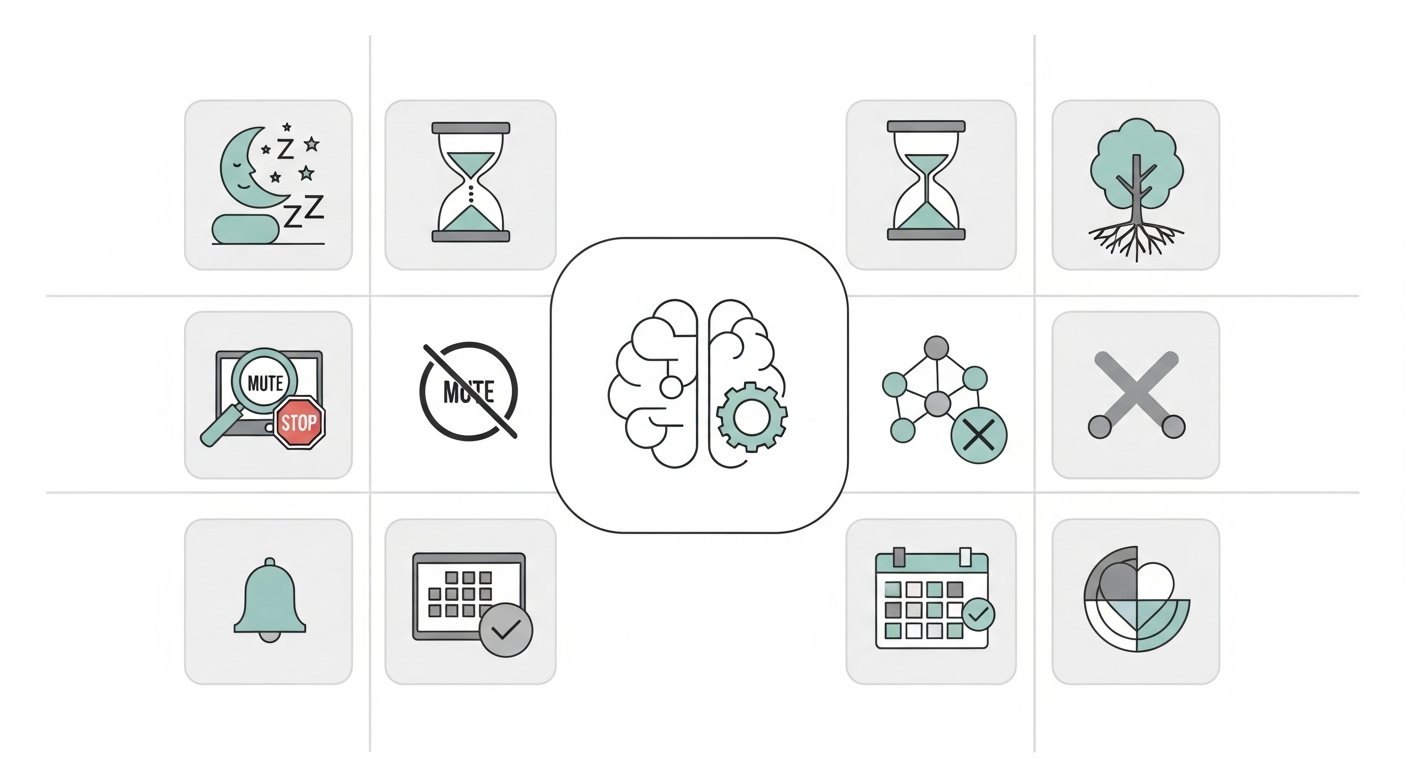
By reclaiming the mental bandwidth previously spent on curated feeds, we open space to invest in tangible relationships. According to the Harvard Adult Development Study (2023), individuals who prioritize in-person interactions over digital communications maintain significantly higher cognitive function and reported life satisfaction in their later years. The data consistently points to analog connection as the bedrock of human thriving.
A family implements a strict “basket rule” where all mobile devices are placed in a central basket by the front door from 6:00 PM to 8:00 PM, guaranteeing uninterrupted dinner conversation and focused homework help. This deliberate friction ensures that the people physically present in the room always take precedence over the digital specters demanding attention through the screen.
Face-to-face interactions trigger the release of oxytocin and mirror neuron activation, fostering deep empathy and emotional regulation that text-based communication simply cannot replicate. Nurturing everyday community gatherings without the interference of notifications builds the social safety net essential for holistic well-being.
Tech-Life Balance Tools Comparison
| Tool Category | Primary Focus | Key Feature | Benefit for Holistic Living |
|---|---|---|---|
| Website Blockers (e.g., Freedom) | Focus Management | Cross-device syncing | Eliminates the temptation to tab-switch during deep work sessions. |
| Screen Time Trackers | Awareness | Weekly usage reports | Provides objective data to confront denial about actual daily scrolling hours. |
| Grayscale Mode (Native) | Stimulus Reduction | Color desaturation | Makes the phone visually boring, breaking the dopamine-driven visual feedback loop. |
Common Mistakes in Establishing Mindful Routines
Even with the best intentions, the journey to a balanced tech life is often derailed by predictable behavioral traps. A motivated individual deletes every social media app from their phone on Sunday night, only to reinstall them by Tuesday afternoon when they feel entirely isolated and disconnected from their peer group’s primary communication channel.
Abrupt behavioral overhauls often fail because they deplete willpower reserves too rapidly, leaving the individual vulnerable to intense relapse when confronted with emotional stress, loneliness, or simple boredom. The brain craves its familiar coping mechanisms when under pressure, and a total ban offers no transitional soothing alternative.
Data from the University of Scranton (2024) suggests that 82% of drastic tech-restriction resolutions fail within the first two weeks due to a lack of sustainable, incremental boundary setting. Building lasting tech-life balance requires a marathon mindset, not a sprint.
Frequent Pitfalls to Avoid
- Relying solely on willpower: Failing to use app blockers or physical distance, expecting your brain to simply “choose” not to look at an addictive device.
- The “All or Nothing” approach: Attempting a 30-day complete tech blackout instead of gradually reducing daily screen time by 15-minute increments.
- Ignoring the void: Removing digital distractions without proactively planning rewarding offline activities (like reading, walking, or hobbies) to fill the newly opened time.
- Keeping notifications on: Leaving non-essential app badges and banners active, allowing third-party companies to dictate your attention schedule.
Sources & References
- Pew Research Center. (2024). The Cognitive Impact of Always-On Work Cultures. Washington, D.C.: Pew Research.
- American Psychological Association. (2023). Stress in America: Technology and Boundary Setting. Washington, DC.
- Lembke, A. (2021). Dopamine Nation: Finding Balance in the Age of Indulgence. Dutton.
- National Sleep Foundation. (2024). Annual Sleep Health Index: The Impact of Blue Light and Late-Night Screen Usage.
- Waldinger, R., & Schulz, M. (2023). The Good Life: Lessons from the World’s Longest Scientific Study of Happiness. Simon & Schuster.