

The Life You Actually Love: A Comprehensive Guide for 2026 and Beyond
My dear friend, have you ever felt that quiet whisper, or perhaps a not-so-quiet roar, suggesting that something in your life isn’t quite right? Maybe you’ve achieved what you thought you wanted, but still feel a sense of emptiness. Or perhaps you’re caught in a relentless cycle, ticking off to-do lists but never truly feeling alive. In our fast-paced world, it’s easy to drift, to live by default rather than by design. We absorb societal expectations, chase external validation, and often find ourselves on a path that, while perhaps successful by some metrics, doesn’t actually resonate with our deepest desires.
If you’re reading this, chances are you’re ready for a change. You’re ready to stop settling and start building. This isn’t about achieving a picture-perfect, Instagram-filtered existence devoid of challenges. That’s toxic positivity, and it’s not what we do here. Instead, this is about forging a life that feels authentic, fulfilling, and genuinely yours. It’s about waking up most days with a sense of purpose, joy, and peace – even when things get tough. It’s a journey of self-discovery, intentional action, and unwavering self-compassion. And it’s one of the most powerful, transformative journeys you’ll ever embark on. Let’s dive in.
1. Laying the Foundation: Unearthing Your True North
You can’t build a house without a blueprint, and you can’t build a life you love without understanding what “love” actually means to you. This first step is perhaps the most crucial: a deep dive into self-discovery. We’re often so busy doing that we forget to be, to pause and ask ourselves what truly lights us up, what we value above all else, and what kind of legacy we want to create. This isn’t a one-time exercise; it’s an ongoing conversation with yourself.
What Truly Matters? Your Core Values
Our values are our internal compass. They guide our decisions, shape our priorities, and dictate what feels right (or wrong) to us. When we live in alignment with our values, we experience greater contentment and less internal conflict. When we don’t, we feel a nagging sense of unease, even if everything “looks” good on paper.
Actionable Step: The Values Compass
Take a moment right now. List 5-7 words that describe what is most important to you in life. Don’t overthink it. Is it freedom, connection, creativity, security, growth, kindness, adventure, integrity, peace, contribution? Once you have your list, write a short paragraph for each, explaining what that value means to you and why it’s essential. This isn’t about generic definitions; it’s about your personal interpretation. Keep this list somewhere visible. Refer to it when making big decisions or feeling lost.
Envisioning Your Life by Design: Beyond the Vision Board
Vision boards can be powerful, but often they focus on material possessions or external achievements. To truly build a life you love, we need to go deeper. What does your ideal life feel like? What emotions are you experiencing on a daily basis? What kind of person are you becoming?
Real Scenario: Sarah, a successful lawyer, had a vision board filled with luxury cars and exotic travel. Yet, she felt perpetually stressed and unfulfilled. When she shifted her focus to how she wanted to feel – present, connected, calm, creative – she realized her current path wasn’t aligned. She began exploring ways to integrate more creativity and community service into her life, even considering a career pivot, because those were the feelings she truly craved.
Actionable Step: The “Ideal Day” Exercise
Close your eyes and imagine your ideal day, one year from now, or in 2026. Don’t focus on what you “should” be doing. What time do you wake up? How do you feel? Who are you with? What kind of work are you doing, if any? What activities fill your leisure time? What emotions dominate your day? Write it all down in vivid detail, focusing on sensations and feelings. This becomes your North Star, a powerful motivator rooted in genuine desire.
2. Cultivating Your Inner Garden: Mindset, Beliefs, and Resilience
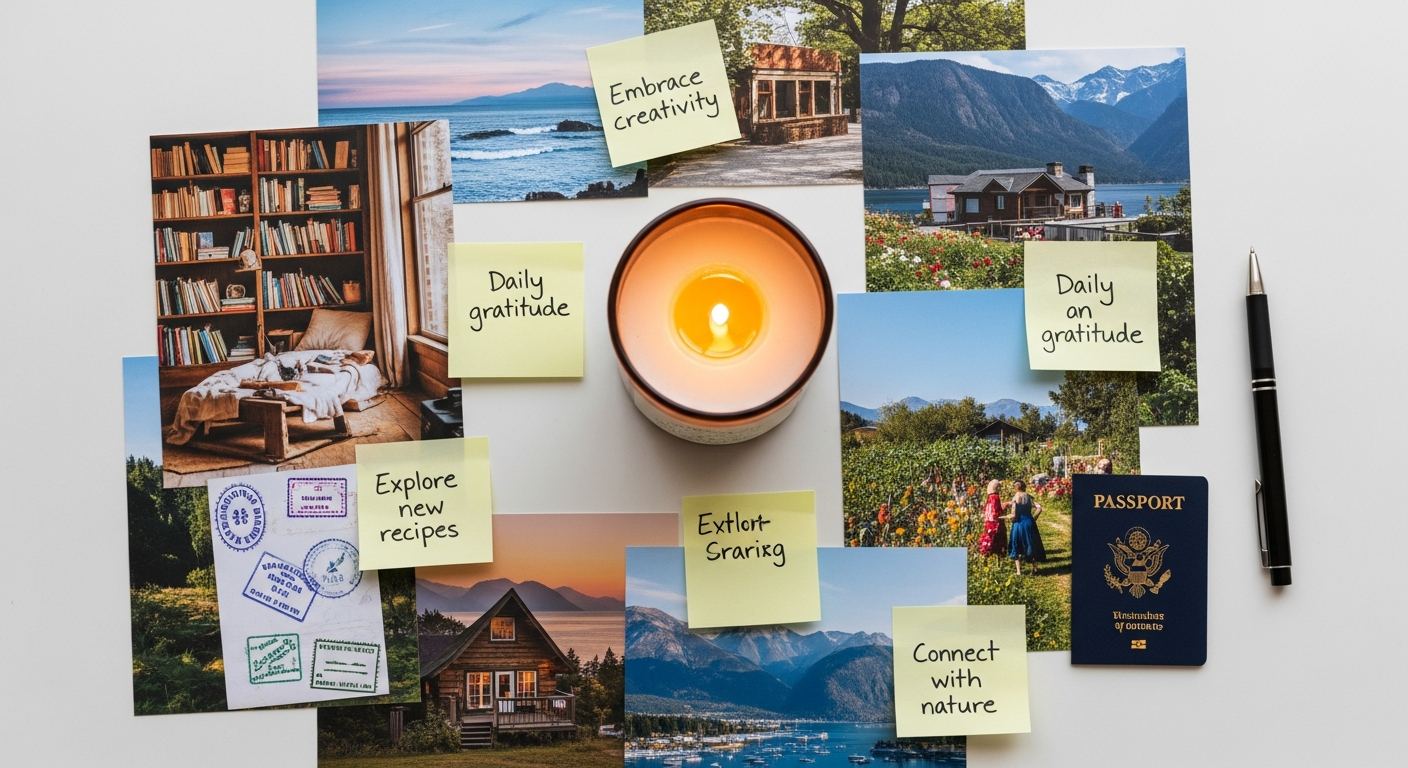
Our external reality is often a reflection of our internal landscape. Before we can build a life we love, we must tend to the garden within – our thoughts, beliefs, and emotional patterns. This is where real, sustainable change begins. Without this inner work, any external changes will likely be temporary, like building a beautiful house on shaky ground.
Unmasking Limiting Beliefs
We all carry beliefs about ourselves and the world that hold us back. These often originate in childhood, from past experiences, or from societal conditioning. “I’m not smart enough,” “I’m not worthy of great love,” “It’s too late for me to change careers,” “I’m too busy to pursue my passions.” These thoughts become self-fulfilling prophecies, creating invisible barriers to the life we desire.
Actionable Step: Belief Detective
When you feel resistance or self-doubt, pause and ask: “What belief is driving this feeling?” Write it down. Then, challenge it: “Is this absolutely true? Where did this belief come from? What evidence do I have against it? What would I tell a friend who held this belief?” Begin to consciously reframe these beliefs into empowering truths. For example, “I’m not good enough” becomes “I am capable of learning and growing, and my worth is inherent.”
The Power of Self-Compassion
Let’s be real: building a life you love isn’t always easy. There will be setbacks, moments of doubt, and times when you stumble. In these moments, our natural inclination is often to criticize ourselves, to push harder, or to give up. Research by Dr. Kristin Neff and others shows that self-compassion – treating yourself with the same kindness, understanding, and care you would offer a good friend – is a far more effective motivator than self-criticism. It builds resilience and reduces anxiety.
Actionable Step: The Self-Compassion Break
Next time you’re struggling, pause. Place a hand over your heart or gently cup your face. Silently say to yourself:
1. “This is a moment of suffering.” (Acknowledge the pain.)
2. “Suffering is a part of life.” (Connect to common humanity.)
3. “May I be kind to myself in this moment. May I give myself the compassion I need.” (Offer yourself kindness.)
This simple practice can shift your internal state dramatically.
Embracing a Growth Mindset
Carol Dweck’s concept of a growth mindset teaches us that our abilities and intelligence are not fixed; they can be developed through dedication and hard work. When faced with a challenge, someone with a fixed mindset might say, “I can’t do this, I’m not good at it.” Someone with a growth mindset would say, “I can’t do this yet, but I can learn and improve.” This perspective shift turns obstacles into opportunities for learning and expansion, which is essential for any journey of building and transformation.
3. Intentional Architecture: Designing Your Days with Purpose
Once you know your True North and have begun cultivating a supportive inner landscape, it’s time to move into action. Building a life you love isn’t just about dreaming; it’s about making conscious choices and taking consistent steps. This is where intentional living truly comes into play – designing your days, weeks, and months in alignment with your vision and values.
Values-Aligned Goal Setting
We’ve all set goals before, but how often have they truly resonated with our deepest selves? Instead of just setting SMART goals (Specific, Measurable, Achievable, Relevant, Time-bound), let’s add a crucial layer: Values-Aligned. A goal to “get a promotion” might be SMART, but if it clashes with your value of “work-life balance” or “family time,” it will likely lead to burnout rather than fulfillment.
Actionable Step: Reverse Engineering Your Vision
Look at your “Ideal Day” and your core values. What are the big, overarching goals that would move you closer to that vision? Break these down into smaller, manageable steps. For example, if “connection” is a value and your ideal day involves more quality time with friends, a goal might be “plan one meaningful social gathering per month.” Then, break that down: “Research local events,” “text 3 friends,” “send calendar invite.”
The Power of Micro-Habits and Consistent Action
The journey of building a life you love isn’t about grand, sweeping gestures. It’s about the accumulation of small, consistent actions. As James Clear illustrates in “Atomic Habits,” tiny changes compound over time to produce remarkable results. Don’t underestimate the power of a 5-minute daily meditation, 10 minutes of journaling, or a quick walk around the block.
Real Scenario: Maya wanted to write a book but felt overwhelmed. Instead of aiming for an hour a day, she committed to writing just 100 words every morning before coffee. Some days she wrote more, some days exactly 100. Within a year, she had a first draft. The key was consistency, not intensity, and making the habit so small it felt impossible to fail.
Actionable Step: Habit Stacking for Your Vision
Identify one micro-habit that aligns with your vision. Pair it with an existing habit. “After I brush my teeth, I will write one sentence in my gratitude journal.” “Before I check social media, I will do 5 minutes of stretching.” Start small, celebrate consistency, and gradually increase the intensity if it feels right.
Mastering Your Energy, Not Just Your Time
In our always-on culture, time management often feels like a losing battle. A more effective approach is energy management. What activities drain your energy? What recharges you? Are you spending your peak energy hours on tasks that truly matter, or on distractions and low-value work?
Actionable Step: The Energy Audit
For a week, keep an “energy journal.” Note down what activities you do and how they make you feel – energized, drained, neutral. At the end of the week, analyze your patterns. Can you delegate or eliminate energy-draining tasks? Can you intentionally schedule more energy-boosting activities, especially during times when you typically feel a dip?
The Art of Setting Boundaries
This is non-negotiable for building a life you love. Boundaries are the invisible fences that protect your time, energy, and emotional well-being. Without them, you’re constantly susceptible to others’ demands, expectations, and energy drains. This isn’t selfish; it’s self-preservation and allows you to show up more fully for those you care about and for your own aspirations.
Actionable Step: Practice Your “No”
Identify one area where you frequently overcommit or feel resentful. It could be saying “yes” to an extra work project, attending an event you don’t want to, or lending money you don’t have. Craft a polite, firm “no” script. “Thank you for thinking of me, but I can’t commit to that right now.” No need for elaborate excuses. Practice saying it out loud. Start with low-stakes situations and build your confidence.
4. The Fabric of Connection: Nurturing Your Relationships

Humans are inherently social creatures. The longest-running study on happiness, the Harvard Study of Adult Development, consistently points to one overarching factor for a long, happy life: meaningful, supportive relationships. You can have all the success and personal fulfillment in the world, but without genuine connection, something vital will be missing. Building a life you love absolutely includes the people who share it with you.
Prioritizing Quality Over Quantity
In the age of social media, it’s easy to confuse a large network with deep connection. True connection comes from vulnerability, mutual respect, and consistent effort. It’s better to have a few deep, trusting relationships than a hundred superficial acquaintances.
Actionable Step: Relationship Audit
Think about the 5-7 people you spend the most time with. Do they uplift you? Do they respect your boundaries? Do you feel safe being your authentic self with them? Do they challenge you to grow? If a relationship consistently drains your energy or makes you feel small, it might be time to gently re-evaluate its place in your life. This doesn’t necessarily mean cutting ties, but perhaps creating healthier boundaries or reducing the frequency of interaction.
Cultivating Conscious Communication
Healthy relationships thrive on clear, honest, and empathetic communication. This means not just speaking your truth, but also actively listening to understand others. Misunderstandings often arise from assumptions or a failure to express needs clearly.
Real Scenario: Maria felt her partner wasn’t supporting her new business venture. Instead of stewing in resentment, she used “I” statements: “I feel unsupported when I talk about my business and you change the subject. I need to feel heard and encouraged, even if you don’t fully understand it.” This opened a dialogue where her partner could explain his own anxieties and they could find a way to connect.
Actionable Step: Practice Active Listening
When someone is speaking, resist the urge to interrupt, formulate your response, or offer advice. Instead, focus entirely on what they’re saying, both verbally and non-verbally. Reflect back what you hear: “So, what I’m hearing is that you’re feeling frustrated because…” This validates their experience and ensures you’ve understood correctly.
Building Your Community
Beyond your closest circle, a sense of belonging to a broader community can significantly enhance your well-being. This could be a hobby group, a volunteer organization, a spiritual community, or even an online forum focused on a shared passion. Finding your tribe reinforces your identity and provides a sense of collective support.
Actionable Step: Intentional Outreach
Think about an interest or cause you care about. Search for local groups, classes, or volunteer opportunities. Attend one meeting or event. It can feel awkward at first, but remember, everyone there shares a common interest. Small steps can lead to profound connections.
5. Holistic Harmony: Prioritizing Your Well-being
You are the vessel through which you experience life. If that vessel is depleted, neglected, or constantly running on empty, it’s impossible to truly love the life you’re building. Prioritizing your well-being across all dimensions – physical, mental, emotional, and spiritual – isn’t selfish; it’s foundational. It’s the ultimate act of self-love and self-respect.
The Pillars of Physical Health
This isn’t about chasing fleeting trends or punishing yourself. It’s about honoring your body as your home. The basics are often overlooked in our busy lives, but they are non-negotiable for sustained energy and mental clarity.
- Sleep: Aim for 7-9 hours of quality sleep. It impacts everything from mood and cognitive function to immune health.
- Nutrition: Fuel your body with whole, unprocessed foods that make you feel good. Listen to your body’s signals.
- Movement: Find forms of exercise you genuinely enjoy. It doesn’t have to be a grueling gym session; a brisk walk, dancing, or gardening all count.
Actionable Step: Non-Negotiable Self-Care List
Identify 3-5 non-negotiable physical self-care practices. These are things you commit to every single day or week, no matter what. It could be “walk 30 minutes,” “drink 8 glasses of water,” “be in bed by 10 PM,” “eat a healthy breakfast.” Block them out in your calendar as sacred appointments.
Nurturing Mental and Emotional Health
Our minds are powerful tools, but they also need care and attention. Just as we exercise our bodies, we need to exercise our minds and process our emotions in healthy ways.
- Mindfulness & Meditation: Even 5-10 minutes a day can reduce stress, improve focus, and cultivate inner peace.
- Emotional Regulation: Learn to identify, understand, and manage your emotions without suppressing them. Techniques like journaling, talking to a trusted friend, or deep breathing can help.
- Therapy/Coaching: There’s no shame in seeking professional support. A good therapist or coach can provide invaluable tools and insights for navigating challenges and fostering growth.
- Digital Detox: Consciously disconnect from screens and social media to reconnect with yourself and the present moment.
Actionable Step: The Emotional Check-in
Several times a day, pause and ask yourself: “What am I feeling right now? Where do I feel it in my body?” Simply noticing and naming your emotions without judgment can reduce their intensity and help you respond more thoughtfully rather than react impulsively.
Connecting to Your Spirit
This doesn’t necessarily mean organized religion (though it certainly can for some). Spiritual well-being is about finding meaning and purpose, connecting to something larger than yourself, and cultivating awe and wonder. This can manifest as spending time in nature, engaging in creative pursuits, practicing gratitude, or volunteering for a cause you believe in.
Actionable Step: Gratitude Practice
Every evening, write down 3-5 things you are genuinely grateful for that day. Be specific. It could be as simple as “the warm cup of tea” or “a kind word from a colleague.” This practice rewires your brain to notice the good, shifting your perspective towards abundance and joy.
6. Embracing the Ebb and Flow: The Journey, Not the Destination
Let’s be unequivocally clear: building a life you love is not a one-time project with a definitive finish line. It’s an ongoing, dynamic process. Life is unpredictable; there will be twists, turns, setbacks, and moments where you feel completely lost. The beauty lies in learning to navigate these waves with grace, resilience, and a commitment to continuous growth. The goal isn’t perfection, but progress and presence.
Flexibility and Adaptability: Your Superpowers
The rigid pursuit of a “perfect” plan can lead to intense disappointment when life inevitably throws a curveball. Instead, cultivate flexibility. When an unexpected challenge arises, see it not as a failure, but as an opportunity to pivot, learn, and adapt. The ability to adjust your sails rather than fight the wind is a hallmark of a life well-lived.
Real Scenario: Chloe meticulously planned a year of travel, but a global event forced her to cancel everything. Instead of despairing, she adapted. She used the time to deepen local connections, learn a new skill online, and rediscover her own city with fresh eyes. It wasn’t the life she planned, but it became a profoundly rich and unexpected chapter.
Actionable Step: “What If?” Resilience Planning
For one of your current goals, brainstorm a potential obstacle. Then, instead of dwelling on the fear, ask: “If this happened, what are three different ways I could respond or adapt?” This builds proactive resilience and reduces anxiety about the unknown.
Celebrating Small Wins and Learning from Setbacks
In our drive for improvement, we often overlook how far we’ve come. Acknowledging and celebrating small victories reinforces positive behavior and keeps motivation high. Conversely, viewing setbacks as failures paralyzes us. Reframe them as invaluable learning opportunities, data points on your path to mastery.
Actionable Step: The Progress Journal
Once a week, take 10 minutes to review your “wins” – big or small. Did you stick to a micro-habit? Did you set a boundary? Did you handle a difficult situation with grace? Write them down. Then, reflect on any challenges: “What did I learn from this? What could I do differently next time?” This practice cultivates gratitude for progress and growth from difficulty.
The Power of Regular Reflection
Just as a captain consults their map, you need to regularly check in with your True North. Are your actions still aligned with your values and vision? Is there anything you need to adjust? This isn’t about judgment, but about conscious course correction.
Actionable Step: Quarterly Life Review
Every three months, dedicate an hour to review your core values, your “Ideal Day” vision, your goals, and your current reality. Ask yourself:
- Am I living in alignment with my values? Where am I thriving? Where am I drifting?
- What progress have I made towards my vision?
- What lessons have I learned in the past quarter?
- What adjustments do I need to make for the next three months?
This structured reflection ensures you remain the conscious architect of your life, not just a passenger.
Frequently Asked Questions About Building a Life You Love
Building a deeply fulfilling life is a journey, and it’s natural to have questions along the way. Here are some common ones:
Q1: What if I truly don’t know what I love or what my purpose is?
A1: That’s perfectly normal, especially if you’ve been living on autopilot. Start small. Engage in curiosity. Try new things without pressure or expectation. Pay attention to what sparks even a tiny bit of joy, energy, or interest. What did you love doing as a child? What problems do you care about solving? Purpose isn’t always a grand, singular thing; it can be found in small acts of service, creativity, or connection. The “Values Compass” and “Ideal Day” exercises are excellent starting points to uncover clues.
Q2: How do I deal with resistance or procrastination when I know what I want to do?
A2: Resistance often stems from fear (of failure, success, judgment) or overwhelm. Break down your desired actions into incredibly tiny, non-intimidating steps (micro-habits). Focus on showing up consistently, not on perfection. Use self-compassion, not self-criticism. Understand that motivation often follows action, rather than preceding it. Just start, even if it’s imperfectly.
Q3: Is it selfish to focus so much on my own happiness and desires?
A3: Absolutely not. In fact, it’s the opposite. When you are genuinely fulfilled, you have more energy, patience, and love to give to others. You become a better partner, friend, parent, and community member. Prioritizing your well-being allows you to show up more authentically and contribute more meaningfully to the world. Remember the airplane oxygen mask analogy: secure your own before helping others.
Q4: What if my loved ones don’t support my changes or try to hold me back?
A4: This can be one of the hardest parts. People in your life may be comfortable with the “old you” and fear change, or your growth might challenge their own status quo. Communicate openly and honestly about your journey, using “I” statements to express your needs and feelings. Set clear, kind boundaries. Understand that while you can explain your choices, you cannot control their reactions. Focus on your path, and remember that true love and support mean wanting what’s best for you, even if it means some discomfort for them.
Q5: How long does this process of building a life I love take?
A5: This isn’t a race with a finish line. It’s a lifelong journey of evolution, learning, and growth. Some changes can happen quickly, while others unfold over years. The key is consistency, patience, and continuous self-awareness. Embrace the process, celebrate every step, and trust that with intentional effort, you are always moving closer to a life that truly feels like home.
Your Life, Your Masterpiece: The Journey Begins Now
My dearest reader, the vision of a life you truly love isn’t a fantasy; it’s a blueprint waiting for your courageous hand to bring it to fruition. It won’t be without its challenges, its moments of doubt, or its detours. But that’s the beauty of it – it’s real, it’s messy, and it’s gloriously human. Every step you take, every boundary you set, every moment of self-compassion, every intentional choice, is a stroke on the canvas of your unique masterpiece.
You have the power within you to design, build, and inhabit a life that resonates with your deepest desires, a life filled with purpose, connection, and authentic joy. Don’t wait for permission. Don’t wait for perfection. Start small, start now, and trust the process. Your authentic, joyful life is not just a dream for 2026; it’s a journey that begins with your very next intentional breath. You’ve got this.
<