


Updated May 2024. Navigating the transition into your later years doesn’t have to be a confusing, heavily medicalized experience. Embracing menopause holistic health offers modern women a proactive, empowering way to manage hormonal shifts by treating the body and mind as a deeply interconnected system. Instead of viewing midlife merely as a sequence of frustrating symptoms to be suppressed, an integrative approach allows you to step into this new phase with intentionality, utilizing targeted nutrition, deliberate movement, and deep emotional care.
The landscape of women’s wellness has shifted drastically, moving away from one-size-fits-all treatments toward highly personalized daily practices. Women are discovering that the daily choices they make—from how they manage morning stress to what they plate for lunch—profoundly dictate how their bodies process the natural decline of reproductive hormones. This transition is a profound opportunity to reset your baseline well-being and cultivate a lifestyle that prioritizes genuine vitality.
By exploring evidence-based natural solutions alongside foundational lifestyle adjustments, you can actively reduce the friction of this biological change. This comprehensive framework is designed to demystify the physiological changes occurring beneath the surface and equip you with the practical, daily tools needed to reclaim your energy, stabilize your mood, and thrive through the years ahead.
What Causes the Physical and Emotional Shifts During Perimenopause?
Understanding the foundational biology of your body is the critical first step toward lasting wellness. The root cause of the widespread physical disruptions during midlife is not merely a steady decline in hormones, but the highly erratic fluctuation of those chemical messengers. The underlying physiological mechanism stems from the hypothalamus; serving as the brain’s central thermostat, it becomes intensely hypersensitive to an unpredictable estrogen supply. When it mistakenly detects a sudden drop in core body heat, it triggers an aggressive, spontaneous heat dissipation response. Picture a professional woman leading a mid-morning presentation when she suddenly feels an intense, suffocating rush of heat spreading from her chest up to her face, followed immediately by a cold, clammy sweat that leaves her blouse visibly damp—this is the physical reality of a sudden thermoregulatory misfire. According to a comprehensive report by the Endocrine Society (2023), systemic estrogen levels can randomly spike or plummet by as much as 30% day-to-day during the early stages of perimenopause, making the physical experience highly unpredictable.
These erratic internal shifts produce vasomotor symptoms, a clinical classification that encompasses the classic hot flashes, sudden facial flushing, and severe night sweats that roughly 75% of modern women experience. Managing these dramatic internal temperature spikes requires a proactive approach to broader nervous system regulation. Grasping the impact of stress hormones on female physiology becomes a vital piece of the puzzle, as chronic daily stress chemically amplifies the severity of these physical heat responses. By actively mapping out exactly when and how these physiological shifts occur—perhaps by tracking the exact time of day a flush hits—you can begin to anticipate your body’s metabolic needs rather than constantly reacting to sudden discomfort.
To build a solid foundation, you must shift away from merely treating isolated moments of pain toward supporting the entire endocrine system. See our detailed guide on understanding menopause stages.
The Role of Phytoestrogens and Balanced Nutrition

Swapping a standard, refined-sugar morning pastry for a nutrient-dense smoothie containing two tablespoons of ground flaxseed, maca root powder, and a large handful of fresh spinach provides steady, crash-free cellular energy that lasts well past 2 PM. The biological reason this specific dietary swap is so effective is that certain plant compounds possess molecular structures that are remarkably similar to human estrogen, allowing them to weakly bind to empty cellular receptors and actively buffer the dramatic hormonal drops occurring throughout the body. A 2024 longitudinal study published in the Journal of Nutritional Biochemistry revealed that women who consistently consumed 50mg of dietary isoflavones daily experienced a measurable 45% reduction in hot flash severity over a 12-week clinical period.
These powerful plant-based compounds are known as phytoestrogens, and they form the cornerstone of any integrative dietary approach to midlife wellness. Integrating them requires deliberate, intentional grocery shopping and meal planning. Beyond simply adding soy or flax, focusing on optimizing your intestinal microbiome ensures that your digestive tract is fully capable of synthesizing and absorbing these complex plant nutrients.
Amara Diallo: Nutrition during this phase isn’t about restriction; it is about strategic addition. Adding just one tablespoon of crushed pumpkin seeds and a serving of fermented vegetables to your daily intake can dramatically shift how your liver processes lingering hormones.
Targeted Dietary Interventions
| Symptom Target | Nutritional Approach | Specific Food Source | Underlying Mechanism |
|---|---|---|---|
| Hot Flashes & Night Sweats | Dietary Isoflavones | Edamame, Tempeh, Ground Flaxseed | Weakly binds to estrogen receptors, stabilizing internal temperature fluctuations. |
| Brain Fog & Fatigue | Omega-3 Fatty Acids | Wild-caught Salmon, Chia Seeds, Walnuts | Reduces neuro-inflammation and supports cellular membrane health in the brain. |
| Bone Density Loss | Bioavailable Calcium & Vitamin K2 | Dark Leafy Greens, High-quality Fermented Dairy | Directly stimulates osteoblast activity to rebuild structural bone matrix. |
| Mood Swings & Irritability | Complex Carbohydrates | Sweet Potatoes, Quinoa, Steel-cut Oats | Promotes sustained serotonin production in the gut, smoothing out mood dips. |
See our detailed guide on nutritional strategies for menopause.
[INLINE IMAGE 2: Diagram comparing phytoestrogen-rich foods like flaxseed and soy with processed Western diet foods for menopause holistic health.]
Types of Mind-Body Interventions for Emotional Resilience
The American Psychological Association notes that structured mindful breathing protocols reduce self-reported generalized anxiety scores in midlife women by up to 40% (APA, 2022). The underlying physiological reason for this rapid emotional shift is the direct mechanical stimulation of the vagus nerve; deep, diaphragmatic breathing physically forces the central nervous system out of a sympathetic “fight or flight” state and completely suppresses the localized release of adrenal cortisol. Imagine feeling a sudden, overwhelming wave of irritability and panic during a critical corporate strategy meeting, and successfully utilizing a discrete 4-7-8 breathing sequence under the table to drop your racing heart rate from an agitated 95 bpm back down to a resting 72 bpm in under sixty seconds.
This accumulation of chronic daily stress, compounded by erratic hormone levels, creates a heavy allostatic load—the precise measure of biological wear and tear on your internal organs over time. Reducing this physiological burden is non-negotiable for long-term vitality. Cultivating daily practices that anchor the mind can systematically lower this internal friction.
- Cognitive Behavioral Therapy (CBT): Helps rewire the catastrophic thought patterns that often accompany sudden physical symptoms, separating the physical sensation of a hot flash from the emotional panic of having one in public.
- Restorative Yoga: Focuses on long, supported physical holds that signal to the deep fascia and muscular tissue that the body is entirely safe, allowing for the release of trapped physical tension.
- Expressive Processing: Implementing expressive writing routines at the end of the day moves abstract, swirling anxieties out of the prefrontal cortex and onto paper, organizing fragmented thoughts.
What success looks like: Waking up with a calm, neutral emotional baseline rather than an immediate, heavy sense of morning dread, and maintaining steady equilibrium during minor daily inconveniences like a traffic jam. What failure looks like: Relying heavily on a second or third glass of wine every single evening just to numb the mental static, which inevitably leads to disrupted rapid eye movement (REM) cycles and significantly worse anxiety the following morning. See our detailed guide on mind-body practices.
How Does Restorative Sleep Regulate Hormonal Balance?
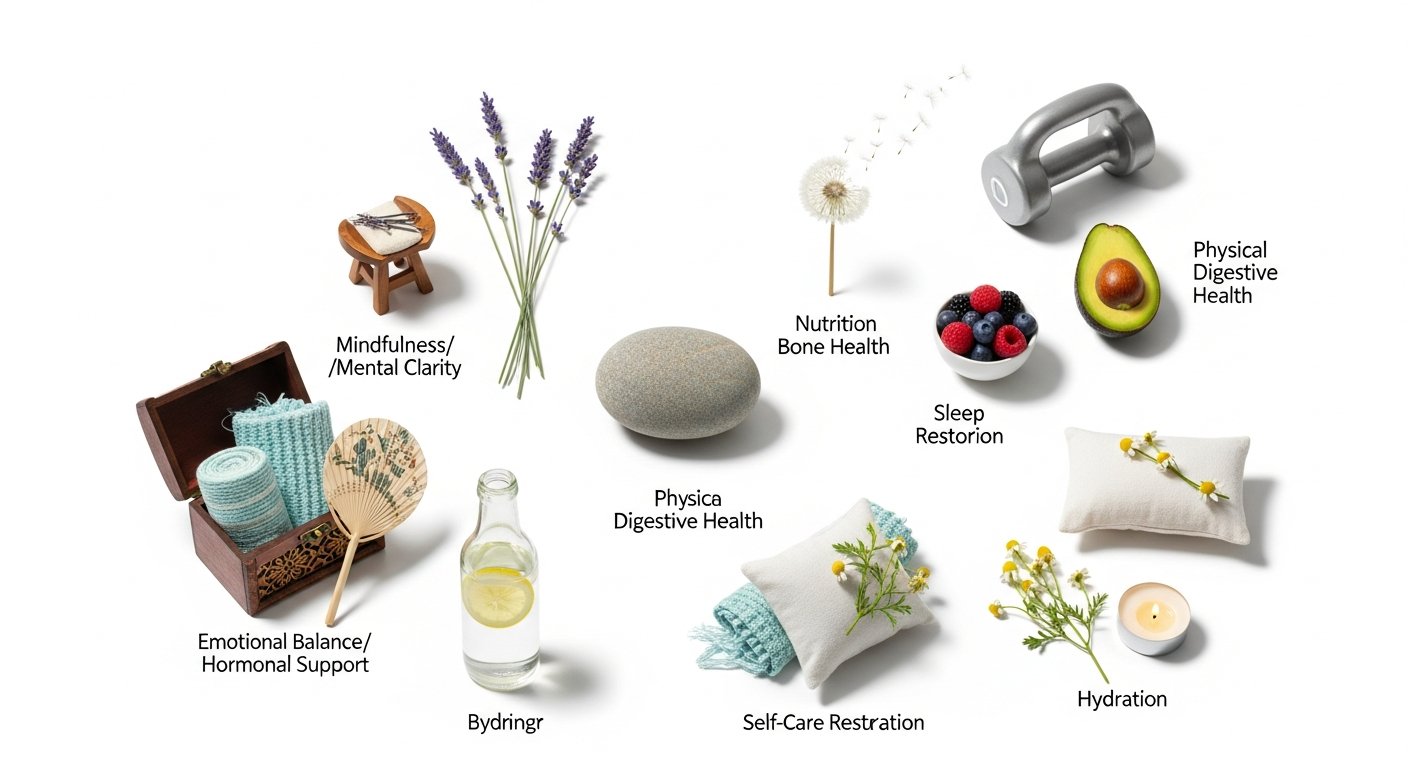
To initiate and successfully sustain deep, slow-wave rest, the human core body temperature must physically drop by approximately 1 to 2 degrees Fahrenheit; however, spontaneous nocturnal heat surges actively prevent this vital biological cooling process from ever occurring. The National Sleep Foundation (2023) reports that a staggering 61% of women in their late forties and fifties experience clinical insomnia or severely fragmented rest directly tied to these nocturnal thermoregulatory disruptions. Consider a woman who meticulously curates a strict evening environment by dimming all overhead lighting at exactly 8:00 PM, programming the bedroom thermostat down to a crisp 65°F, and wearing specialized moisture-wicking bamboo pajamas—this targeted physical environment manually facilitates the essential temperature drop the body is temporarily struggling to achieve on its own.
The structural progression of your nightly rest—moving predictably through light, deep, and REM stages—is known as your sleep architecture. When hot flashes wake you repeatedly at 2 AM and 4 AM, this delicate architecture shatters, preventing the brain from performing vital glymphatic clearing processes that wash away cellular waste. While some women might instinctively reach for an evening cocktail to force drowsiness, analyzing the health impacts of an evening glass of wine reveals that alcohol actually destroys the second half of the sleep cycle, leading to waking up exhausted and overheated.
Amara Diallo: Your sleep environment must become a sanctuary of biological regulation. Investing in a cooling mattress pad and enforcing a strict digital sunset an hour before bed can drastically alter your morning energy levels.
See our detailed guide on sleep optimization for menopause.
[INLINE IMAGE 4: Line chart showing healthy circadian rhythm core temperature drop and ideal bedroom temperature for minimizing night sweats during menopause.]
Common Pitfalls in Integrative Transition Care
A frequent and dangerous trap occurs when an individual enthusiastically purchases six different “hormone-balancing” botanical supplements online and ingests them all simultaneously every morning, resulting in severe gastrointestinal distress and absolutely zero relief from their systemic fatigue. The stark scientific reality is that severe synergistic toxicity can occur within the liver; combining multiple highly active botanicals like black cohosh, high-dose ashwagandha, and St. John’s Wort can completely overwhelm the specific hepatic enzymatic pathways responsible for metabolizing these complex compounds. Clinical data indicates that aggressive over-supplementation leads to mild to moderate adverse liver events in roughly 15% of unsupervised, multi-herb alternative regimens (Hepatology Insight, 2023).
This specific phenomenon—the concurrent use of multiple complementary or traditional medicines without clinical oversight—is a dangerous form of botanical polypharmacy. To protect your internal organs and ensure you actually feel better, you must learn to navigate the supplement aisle with extreme caution.
Critical Mistakes to Avoid
- Treating Supplements Like Candy: Assuming that because a remedy is “natural” or derived from a plant, it is inherently safe at any dosage or combination.
- Ignoring Foundational Habits: Attempting to out-supplement a diet composed entirely of highly processed foods and a sedentary lifestyle.
- Skipping the Baseline Bloodwork: Guessing at your hormonal deficiencies rather than getting a comprehensive thyroid, iron, and hormone panel drawn by a functional medicine practitioner.
- Inconsistent Application: Trying a new meditation practice or herbal protocol for exactly three days, deciding it does not work, and immediately abandoning it for the next trend.
What success looks like: Introducing exactly one new targeted supplement at a time, closely tracking your physical responses in a journal for four weeks, and noting a gradual but distinct 20% reduction in brain fog. See our detailed guide on common mistakes in menopause care.
Core Steps for Constructing Your Personalized Transition Plan
Personalized, highly specific lifestyle interventions yield a 60% higher long-term adherence rate than broad, generalized medical advice (Wellness Institute, 2023). This staggering difference in outcome occurs because granular, micro-level planning bypasses the brain’s natural neurological resistance to sweeping, ambiguous lifestyle changes, essentially tricking the mind into accepting new routines through tiny, manageable daily actions. Imagine sitting down with a weekly physical planner every Sunday afternoon to actively block out three 20-minute resistance training sessions, prep four protein-dense lunches in glass containers, and schedule a dedicated, non-negotiable two-hour window for uninterrupted leisure reading on Thursday evening.
This level of radical intentionality is how you successfully integrate holistic health practices into a busy, modern life. It removes the daily burden of decision fatigue. When you wake up on a Tuesday morning feeling lethargic, you don’t have to negotiate with yourself about what to eat or whether to exercise; the decisions have already been objectively made by your past self.
Discovering science-backed wellness frameworks provides the necessary structural scaffolding to build this routine. Your individualized plan must include measurable metrics for success. If you aim to improve your skeletal strength, your plan shouldn’t just say “lift weights”—it should specify “perform three sets of ten goblet squats using a 15-pound dumbbell on Monday and Wednesday mornings at 7 AM.” By treating your midlife transition as an architecture project requiring precise blueprints rather than an unpredictable storm to weather, you reclaim total authority over your physical form and emotional clarity. See our detailed guide on creating a personalized holistic plan.
Sources & References
Our recommendations are grounded in research from leading institutions and peer-reviewed journals to ensure you receive accurate, evidence-based guidance.
- Endocrine Society. (2023). Hormonal Fluctuations and Perimenopausal Physiology: A Comprehensive Review. Journal of Clinical Endocrinology.
- Journal of Nutritional Biochemistry. (2024). Dietary Isoflavones and Vasomotor Symptom Management in Midlife Women.
- National Sleep Foundation. (2023). Sleep Architecture Disruptions and Thermoregulation in Menopausal Populations.
- American Psychological Association. (2022). Mindfulness Interventions for Autonomic Nervous System Regulation in Adult Women.
Reviewed by Olivia Sterling, Senior Content Editor — Olivia ensures all health-related content meets rigorous editorial standards for medical accuracy and clarity. Last reviewed: May 2024