
Empower Your Wellness Journey: How to Start Working Out at Home for Women Beginners
The good news? Your fitness journey doesn’t require a gym membership or an elaborate home setup. It can begin right where you are, in the comfort and privacy of your own space. This comprehensive guide will walk you through precisely how to start working out at home for women beginners, transforming your wellness aspirations into an achievable reality. We’ll cover everything from cultivating the right mindset and setting up your space to designing effective routines, mastering form, and staying motivated for the long haul. Get ready to discover the power and freedom of a home-based fitness routine tailored just for you.
Laying the Foundation: Mindset & Setting Realistic Goals
Before you even think about squats or push-ups, the most crucial step in embarking on your home workout journey is to cultivate a supportive mindset and establish clear, achievable goals. This isn’t just about physical changes; it’s about building a sustainable, positive relationship with movement.
- Embrace Your “Why”: What truly motivates you? Is it more energy to keep up with your kids, relief from stress, increased self-confidence, better sleep, or the simple joy of feeling strong and capable? Dig deep and identify your core motivation. Write it down and keep it visible. This “why” will be your anchor on days when motivation wanes.
- Shift Your Perspective: Movement as Self-Care: Instead of viewing exercise as a punishment for what you ate or a chore you have to complete, reframe it as a vital act of self-care. It’s an investment in your physical and mental health, a dedicated time to nurture your body and calm your mind. This shift in perspective can transform resistance into anticipation.
- Start Small, Dream Big: The biggest mistake beginners make is trying to do too much too soon. You don’t need to commit to an hour-long, high-intensity workout from day one. Start with 15-20 minutes, 2-3 times a week. Focus on consistency over intensity. As you build strength and confidence, you can gradually increase duration, frequency, or intensity. Remember, small, consistent steps lead to significant, lasting results.
- Set SMART Goals: For truly effective goal-setting, use the SMART framework:
- Specific: Instead of “I want to get fit,” try “I want to be able to complete 10 full push-ups on my knees by the end of 8 weeks.”
- Measurable: How will you track your progress? (e.g., number of reps, duration of plank, weight lifted, consistency of workouts).
- Achievable: Is your goal realistic given your current fitness level and time constraints?
- Relevant: Does this goal align with your personal “why” and overall wellness vision?
- Time-bound: Set a realistic deadline to create a sense of urgency and accountability.
- Practice Patience and Self-Compassion: There will be good days and challenging days. Your body will adapt, and progress won’t always be linear. Be kind to yourself, acknowledge your efforts, and understand that consistency is more important than perfection. Celebrate every small victory along the way.
Crafting Your Home Workout Sanctuary
One of the beauties of working out at home is the ability to create an environment that truly supports your fitness journey. You don’t need a dedicated gym room; even a small, intentional space can make a huge difference in your motivation and focus.
- Designate Your Space: Whether it’s a corner of your living room, a cleared area in your bedroom, or a quiet spot in a spare room, having a consistent place for your workouts signals to your brain that it’s time to move. This helps build a routine and reduces procrastination.
- Declutter and Clear the Path: Before each session, ensure your designated workout area is free of tripping hazards like toys, shoes, or loose rugs. A clear space allows for unrestricted movement and minimizes the risk of injury.
- Optimize Your Ambiance:
- Lighting: Natural light is ideal, but if that’s not possible, ensure your space is well-lit and feels inviting, not dim or dingy.
- Music: Create a playlist that energizes and motivates you. Music can be a powerful tool for boosting mood and pushing through tough moments.
- Temperature: Aim for a comfortable room temperature. You’ll warm up quickly, so slightly cool is often better than too hot.
- Aromatherapy (Optional): A diffuser with invigorating essential oils like peppermint or citrus can add to the positive atmosphere.
- Keep Essentials Handy: Store your mat, resistance bands, or small weights nearby so you don’t have to hunt for them. The less friction there is to start, the more likely you are to get your workout done.
- Consider a Mirror: If space allows, a full-length mirror can be incredibly useful for checking your form, ensuring proper alignment, and preventing injuries. Seeing your progress can also be a great motivator!
Essential Equipment: What You Need (and What You Don’t!)
A common misconception about working out at home is the need for expensive, bulky equipment. For women beginners, this couldn’t be further from the truth. You can achieve fantastic results with minimal or even no equipment at all!
Start with Bodyweight (Zero Equipment Needed!)
- Squats: Work your glutes, quads, and hamstrings.
- Lunges: Target each leg individually, improving balance.
- Glute Bridges: Strengthen your glutes and hamstrings while being gentle on your back.
- Push-ups (modified): Start against a wall, on your knees, or with hands elevated on a chair/table.
- Planks: Engage your entire core, shoulders, and glutes.
- Bird-Dog: Improves core stability and balance.
- Tricep Dips (using a sturdy chair): Targets the back of your arms.
- Calf Raises: Strengthens calf muscles.
- Jumping Jacks (modified or full): A great cardio burst.
- High Knees / Marching in Place: Elevates heart rate without complex movements.
Smart Starter Investments (Under $100 for all!)
Once you’ve built a consistent bodyweight routine, a few inexpensive items can significantly enhance your workouts.
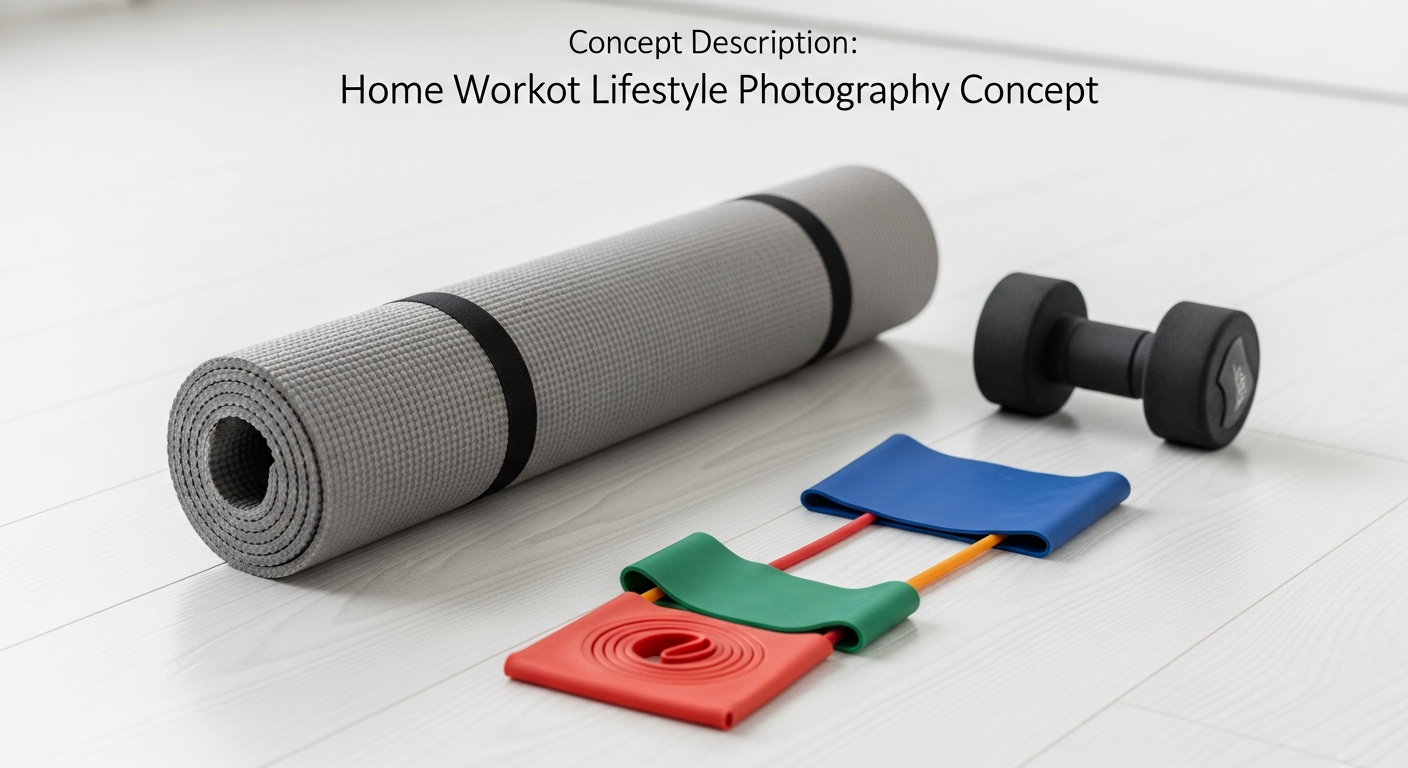
- Yoga Mat: Provides cushioning and grip for floor exercises, making them more comfortable.
- Resistance Bands:
- Mini Loop Bands: Excellent for activating glutes and adding resistance to squats, lunges, and glute bridges.
- Long Resistance Bands (with handles): Versatile for simulating weightlifting exercises like rows, bicep curls, and chest presses.
- Light Dumbbells (or household alternatives):
- Start with a pair of 3-5 lb dumbbells. As you get stronger, you might invest in 8-10 lb ones.
- Household Alternatives: Cans of food, water bottles, or laundry detergent jugs can serve as temporary weights.
- Jump Rope: An incredibly effective and space-efficient cardio tool.
- Stability Ball (Optional but beneficial): Great for core work, balance, and making certain exercises more challenging.
Tech Tools: Don’t forget your smartphone! It’s an invaluable resource for timers, fitness apps (e.g., Nike Training Club, Peloton App, Down Dog Yoga), and access to a vast library of free workout videos on YouTube (e.g., FitnessBlender, Pamela Reif, Popsugar Fitness).
Designing Your Beginner-Friendly Home Workout Plan
Now that your mindset is primed and your space is ready, it’s time to build a workout plan that feels manageable, enjoyable, and effective. The key for women beginners working out at home is simplicity and consistency.
Frequency & Duration
- Start with 3-4 days a week: Allow for rest days in between to prevent burnout and allow muscle recovery.
- Aim for 20-30 minutes per session initially: This duration is long enough to be effective but short enough to be sustainable. As you gain stamina, you can gradually increase this.
The Structure of a Great Home Workout
Every effective workout should include three key components:
- Warm-up (5 minutes): Dynamic movements to prepare your muscles and joints.
- Examples: Arm circles, leg swings, torso twists, marching in place, light jogging, cat-cow stretches.
- Main Workout (15-20 minutes): Focus on full-body movements when you’re starting.
- Strength Training: Compound exercises that work multiple muscle groups.
- Aim for 8-12 repetitions per exercise, 2-3 sets.
- Examples: Bodyweight squats, lunges, push-ups (modified), glute bridges, planks.
- Cardio Bursts: Incorporate short intervals to elevate your heart rate.
- Examples: 30-60 seconds of jumping jacks, high knees, or marching in place between strength sets, or as a dedicated 5-minute block.
- Strength Training: Compound exercises that work multiple muscle groups.
- Cool-down & Stretching (5 minutes): Static stretches to improve flexibility and aid recovery.
- Hold each stretch for 20-30 seconds.
- Examples: Hamstring stretch, quad stretch, tricep stretch, chest stretch, child’s pose.
Sample 20-Minute Beginner Home Workout Routine
Here’s an example of how to start working out at home for women beginners with a balanced, full-body routine. Perform each exercise for the recommended reps/duration, then move to the next. Complete 2-3 rounds of the circuit, with a short rest (60-90 seconds) between rounds if needed.
- Warm-up (5 minutes):
- Marching in place with arm circles (1 minute)
- Torso twists (30 seconds each side)
- Leg swings (15 each leg)
- Cat-Cow stretch (1 minute)
- Main Workout Circuit (15 minutes):
- Bodyweight Squats: 10-12 reps
- Kneeling Push-ups (or Wall Push-ups): 8-10 reps
- Reverse Lunges: 8-10 reps per leg
- Plank: Hold for 20-30 seconds
- Glute Bridges: 12-15 reps
- Tricep Dips (using a chair): 8-10 reps
- Jumping Jacks (or marching): 30-45 seconds (as a cardio burst)
(Rest 60-90 seconds, then repeat circuit 1-2 more times)
- Cool-down & Stretch (5 minutes):
- Hamstring Stretch (30 seconds per leg)
- Quad Stretch (30 seconds per leg)
- Chest Stretch (30 seconds)
- Child’s Pose (60 seconds)
Remember to adjust the reps, sets, and duration based on how you feel. The goal is to feel challenged but not completely exhausted. As you get stronger, you can increase reps, add sets, or incorporate light weights/bands.
Mastering Form and Preventing Injury
Proper form is paramount, especially when you’re just starting. It ensures you’re working the correct muscles, maximizing effectiveness, and significantly reducing your risk of injury.
- Quality Over Quantity: It’s far better to do 5 squats with perfect form than 20 sloppy ones. Focus on slow, controlled movements, feeling the muscle engagement.
- Utilize Visual Resources:
- Mirror: If you have one, use it to observe your form.
- Phone Camera: Record yourself doing exercises and watch playback. You’ll be surprised at what you learn!
- YouTube Tutorials: Search for “how to do [exercise name] for beginners” and watch certified trainers demonstrate proper form. Pause and re-watch as needed.
- Listen to Your Body: Learn the difference between muscle fatigue/soreness (a good sign of work) and sharp, sudden pain (a warning sign of injury). If something hurts, stop immediately, reassess your form, or choose a modified version of the exercise.
- Don’t Be Afraid to Modify or Progress:
- Regression (make it easier): If an exercise is too challenging, modify it. For example, do push-ups against a wall instead of on your knees, or squats to a chair instead of full depth.
- Progression (make it harder): As you get stronger, you can increase reps, add sets, slow down the movement, add resistance bands or light weights, or try more challenging variations (e.g., knee push-ups to full push-ups).
- Breathe! It sounds simple, but many beginners hold their breath during exertion. Generally, exhale during the hardest part of the movement (e.g., pushing up during a squat) and inhale during the easier part (e.g., lowering into a squat). Proper breathing supports your core and provides oxygen to your working muscles.
Staying Motivated and Consistent on Your Journey
Starting is often easier than sticking with it. Consistency is the secret sauce to seeing results and truly embedding fitness into your lifestyle. Here’s how to keep the momentum going when you’re learning how to start working out at home for women beginners:
- Schedule Your Workouts: Treat your home workouts like important appointments you can’t miss. Block out specific times in your calendar. Whether it’s first thing in the morning, during a lunch break, or after the kids are in bed, commit to that slot.
- Track Your Progress: Seeing how far you’ve come is incredibly motivating. Keep a simple workout journal (notebook or app) where you note the exercises, sets, reps, and weights used. You’ll love looking back and seeing your strength grow.
- Find Your “Workout Buddy” (Even if Virtual): Share your goals with a friend or family member. Even a text message accountability partner can make a huge difference. Consider joining an online fitness community or following trainers who offer encouraging content.
- Vary Your Routine: Doing the same workout day after day can lead to boredom and plateaus. Explore different types of home workouts: try a dance cardio video, a yoga flow, a Pilates session, or a different strength circuit. YouTube is a treasure trove of variety!
- Create a Reward System: Set small, non-food-related rewards for hitting milestones (e.g., after 10 consistent workouts, buy yourself new workout socks; after a month, treat yourself to a new book or a relaxing bath).
- Set the Scene: Make your workout space appealing. Put on your favorite playlist, light a candle (carefully!), or wear workout clothes that make you feel good.
- Don’t Let One Missed Workout Derail You: Life happens. You’ll miss a workout. Don’t let it become an excuse to give up entirely. Forgive yourself, and simply get back on track with your next scheduled session. Consistency over perfection is always the mantra.
- Focus on How You Feel: While aesthetic changes are often a goal, pay attention to the non-scale victories: increased energy, better mood, improved sleep, reduced stress, and newfound strength. These intrinsic rewards are powerful motivators.
Fueling Your Body: Nutrition, Hydration, and Recovery
Exercise is only one piece of the wellness puzzle. To truly thrive and see results from your home workouts, you need to support your body with proper nutrition, adequate hydration, and sufficient rest.
- Nourish with Whole Foods: Focus on a balanced diet rich in whole, unprocessed foods.
- Lean Protein: Essential for muscle repair and growth (chicken, fish, eggs, beans, lentils, tofu).
- Complex Carbohydrates: Provide sustained energy for your workouts (oats, brown rice, sweet potatoes, whole-grain bread).
- Healthy Fats: Important for hormone production and overall health (avocado, nuts, seeds, olive oil).
- Fruits and Vegetables: Packed with vitamins, minerals, and antioxidants to support recovery and immunity.
You don’t need a restrictive diet; aim for mindful eating that supports your energy levels and fitness goals.
- Hydration is Key: Water plays a crucial role in almost every bodily function, including muscle performance, joint lubrication, and temperature regulation.
- Drink plenty of water throughout the day.
- Hydrate before, during, and after your workouts.
- Keep a water bottle handy in your workout space.
- Prioritize Sleep: This is where your body repairs itself. Aim for 7-9 hours of quality sleep per night. Poor sleep can hinder recovery, impact energy levels, and even increase your risk of injury. Create a relaxing bedtime routine to improve your sleep hygiene.
- Active Recovery: On your rest days, don’t just sit still. Engage in light activities like a leisurely walk, gentle yoga, stretching, or foam rolling. This helps improve blood flow, reduce muscle soreness, and maintain flexibility without overtraining.
Listening to Your Body and Adapting Your Routine
Your body is an incredibly intelligent machine, constantly sending signals. Learning to interpret these signals is a vital part of a sustainable fitness journey, especially when you’re just learning how to start working out at home for women beginners.
- Recognize Fatigue vs. Laziness: There’s a difference between not feeling like working out and genuine physical or mental fatigue. If you’re consistently feeling exhausted, excessively sore, or experiencing persistent low energy, it might be a sign you need more rest, better nutrition, or a lighter workout day.
- Embrace Flexibility: Life is unpredictable. There will be days when your scheduled workout just isn’t feasible due to illness, unexpected commitments, or simply needing a mental health break. Be flexible with your routine. A shorter workout is always better than no workout, and sometimes, a rest day is exactly what your body needs.
- Don’t Fear Rest Days: Rest days are not a sign of weakness; they are crucial for muscle repair, growth, and preventing overtraining. Incorporate at least 1-2 full rest days into your weekly schedule.
- Progressive Overload: To continue seeing results, your muscles need to be challenged more over time. This is called progressive overload. As you get stronger, find ways to increase the difficulty:
- Increase the number of reps or sets.
- Increase the weight (if using dumbbells) or resistance (if using bands).
- Shorten rest times between sets.
- Try more challenging variations of exercises (e.g., full push-ups instead of knee push-ups).
- Increase the duration of your workouts.
- Celebrate Your Wins: Acknowledge every step of your journey. Did you complete all your scheduled workouts this week? Did you finally hold a plank for 45 seconds? Did you feel stronger during a certain exercise? These small victories add up and reinforce your commitment.
Working out at home isn’t just about transforming your body; it’s about building resilience, confidence, and a deeper connection with yourself. It’s about taking ownership of your health on your own terms.
Frequently Asked Questions About Home Workouts for Beginners
Here are some common questions women beginners have about how to start working out at home.
Q: How often should a beginner workout at home?
Q: Do I need equipment to start working out at home?
A: Absolutely not! You can achieve significant results with just your bodyweight. Exercises like squats, lunges, push-ups (modified), and planks are incredibly effective. Once you’re consistent, you might consider small, affordable investments like a yoga mat and resistance bands.
Q: How long should my home workouts be?
A: For beginners, 20-30 minutes per session is an excellent starting point. This duration is long enough to be effective but short enough to be sustainable and fit into busy schedules. As you build stamina, you can gradually extend the duration.
Q: What if I don’t have much space?
A: Minimal space is often all you need! Clear a small area (even 4×4 feet) in your living room or bedroom. Focus on bodyweight exercises that don’t require large movements or equipment. YouTube offers many “small space” or “apartment friendly” workout videos that are perfect for this.
Q: How do I stay motivated when working out alone?
A: Motivation can ebb and flow. To stay consistent, try scheduling your workouts like non-negotiable appointments, tracking your progress to see improvements, creating a motivating playlist, joining an online fitness community, or finding a virtual accountability partner. Remember your “why” and celebrate small victories.
Embrace Your Strength, One Home Workout at a Time
Embarking on a fitness journey, especially when you’re learning how to start working out at home for women beginners, is a profound act of self-love and empowerment. It’s about reclaiming your time, listening to your body, and building a foundation of strength and well-being that radiates into every other area of your life. You don’t need fancy gyms or expensive gear; you simply need a clear intention, a little space, and the willingness to show up for yourself.
Remember, this is your unique journey. There will be days when you feel strong and invigorated, and days when simply getting started feels like a monumental task. On those challenging days, lean into the gentle wisdom of consistency over perfection. Focus on the feeling of movement, the breath in your lungs, and the growing sense of accomplishment that comes from honoring your commitment to yourself. The power to transform your health and vitality lies within you, right in your own home. Take that first step, be patient, celebrate your progress, and watch as you become stronger, more confident, and more vibrantly you.