
Setting Healthy Boundaries: Your Compass for Intentional Relationships
Oh, darling, let’s talk about boundaries. It’s a word we hear a lot, but what does it really mean to set them, especially in the messy, beautiful, sometimes chaotic landscape of our relationships? If you’ve ever found yourself feeling resentful, depleted, or like you’re constantly giving more than you have, chances are, your boundaries might be a little… porous. Maybe you feel guilty saying no, or you worry about hurting someone’s feelings. Perhaps you’ve tried to set a boundary only to be met with confusion, anger, or even outright disregard.
You’re not alone. For many of us, especially women, the idea of drawing lines can feel counter-intuitive to our nurturing instincts. We’re often taught to be agreeable, to prioritize harmony, to put others first. But here’s the truth: setting healthy boundaries isn’t about building walls; it’s about building bridges – bridges that are strong enough to support genuine connection without collapsing under the weight of imbalance. It’s about honoring your needs, protecting your energy, and cultivating relationships that are rooted in mutual respect, not obligation or resentment.
This isn’t about being harsh or selfish. It’s about self-respect, self-preservation, and ultimately, self-love. It’s about recognizing that you are a whole, complete person with your own needs, feelings, and limits, and that these are just as valid as anyone else’s. And here at The Contextual Life, we believe that understanding and implementing boundaries is one of the most transformative steps you can take on your journey toward intentional living and truly fulfilling relationships. Consider this your comprehensive, heartfelt guide to reclaiming your space, your energy, and your peace.
Understanding What Boundaries Really Are (And Aren’t)
Before we dive into the “how-to,” let’s demystify what boundaries truly are. Think of boundaries not as rigid fences designed to keep people out, but as the invisible lines that define where you end and another person begins. They are the limits we set for ourselves in relationships – emotionally, physically, mentally, and spiritually – to protect our well-being and maintain our sense of self. They communicate what is acceptable and what is not in your interactions.
Psychologically, healthy boundaries are a cornerstone of emotional intelligence. They reflect a strong sense of self-worth and enable individuals to maintain their identity and autonomy within a relationship. Without them, we risk enmeshment, where personal identities become blurred, leading to feelings of being overwhelmed, controlled, or resentful. As Dr. Brené Brown often reminds us, “Daring to set boundaries is about having the courage to love ourselves, even when we risk disappointing others.”
So, what aren’t boundaries?
- They aren’t walls: Walls keep people out permanently. Boundaries create a safe space within which connection can thrive.
- They aren’t about controlling others: You can’t control what others do, but you can control how you respond and what you will accept. Boundaries are about your actions and responses, not dictating theirs.
- They aren’t ultimatums (unless necessary): While some boundaries might have clear consequences, the primary goal is communication and mutual understanding, not issuing demands.
- They aren’t selfish: This is perhaps the biggest myth. Protecting your energy and well-being allows you to show up more fully and genuinely for others, not less. Resentment, on the other hand, is a true joy-killer.
Ultimately, boundaries are an act of self-love that benefits everyone. They clarify expectations, reduce misunderstandings, and foster relationships built on respect and authenticity.
Identifying Your Boundary Needs: The Inner Work
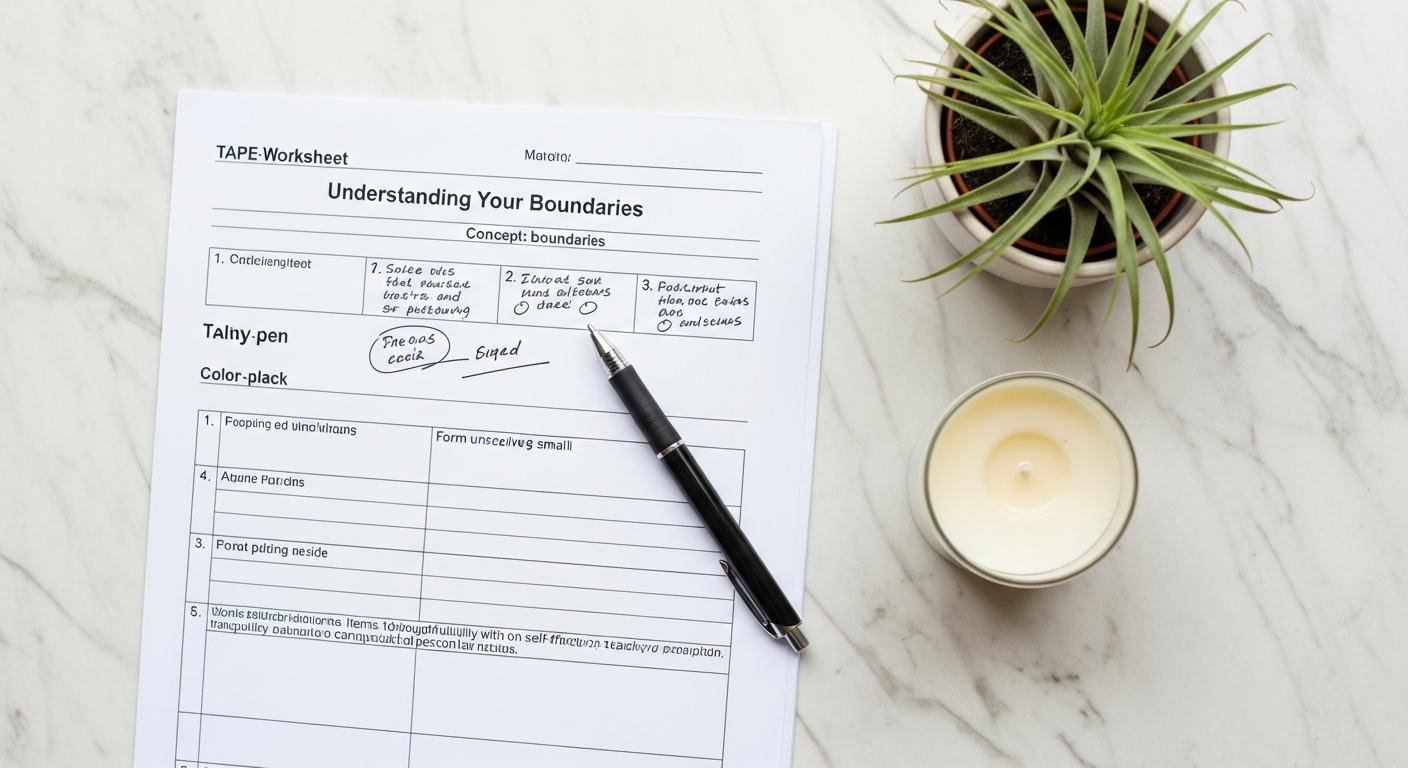
Before you can communicate your boundaries to others, you need to understand them yourself. This is the crucial inner work, and it requires tuning into your own feelings and experiences. Think of it as mapping your internal landscape.
Step 1: Tune into Your Feelings
Your emotions are powerful indicators. Pay attention to moments when you feel:
- Resentment: This is a huge red flag. If you consistently feel resentful towards someone after interacting with them or doing something for them, it’s often a sign that a boundary has been crossed or needs to be established.
- Depletion or Exhaustion: Do certain interactions leave you feeling drained, tired, or overwhelmed? Your energy is finite.
- Anxiety or Dread: Do you feel a knot in your stomach when a particular person calls or when a certain situation arises?
- Guilt or Obligation: Do you find yourself saying “yes” when you desperately want to say “no,” simply out of a sense of duty or fear of disappointing someone?
- Invaded or Disrespected: Do you feel like your space (physical, emotional, mental) is being encroached upon?
Step 2: Reflect on Past Experiences
Think about specific situations where you felt uncomfortable, taken advantage of, or unhappy in a relationship. What exactly happened? What did you wish you had said or done differently?
Scenario Example: Your friend consistently calls you late at night to vent for an hour, even though you have an early morning. You feel exhausted and resentful, but you never say anything because she’s going through a tough time.
Your Inner Reflection: “I value supporting my friend, but I need my sleep. Her late-night calls are impacting my well-being. My boundary here is about my sleep schedule and availability.”
Step 3: Define Your Non-Negotiables
What are the absolute essentials for your peace, health, and well-being? These might include:
- Time: When are you available, and when are you not? (e.g., “I don’t check work emails after 6 PM.”)
- Energy: How much emotional labor are you willing to expend? (e.g., “I can listen to you vent for 20 minutes, then I need to shift gears.”)
- Physical Space: How much personal space do you need? (e.g., “Please knock before entering my office.”)
- Emotional Space: What topics are off-limits, or how do you want to be spoken to? (e.g., “I won’t tolerate yelling,” or “I’m not comfortable discussing my finances.”)
- Material/Financial: What are you willing or unwilling to lend, share, or spend? (e.g., “I can’t lend you money right now.”)
This internal exploration is not a one-time event. It’s an ongoing process of self-awareness. Journaling can be incredibly helpful here, allowing you to process your feelings and identify patterns.
The Art of Articulating Boundaries: Clear, Kind, and Consistent Communication
Once you know what boundaries you need, the next step is to communicate them. This is often the scariest part, but with practice, it becomes empowering. The goal is to be clear, kind, and firm.
1. Choose the Right Time and Place
Don’t spring a boundary conversation on someone in the middle of an argument or when emotions are running high. Choose a calm moment when you can both speak openly and respectfully. Sometimes, it’s best to address it as soon as the boundary is crossed, but if you’re too emotional, take a moment to compose yourself.
2. Use “I” Statements
This is crucial for taking ownership of your feelings and needs, rather than making the other person feel blamed or attacked.
- Instead of: “You always interrupt me, and it’s so rude.” (Blaming)
- Try: “I feel unheard when I’m interrupted, and I need to finish my thought.” (Ownership)
3. Be Direct and Specific
Vagueness leaves room for misinterpretation. Clearly state what the boundary is.
- Instead of: “You’re always asking me for favors.”
- Try: “I can’t pick up your dry cleaning this week. My schedule is full.”
4. Keep it Concise
You don’t need to over-explain, justify, or apologize profusely. A simple, clear statement is usually most effective.
- Instead of: “I’m so sorry, I know you really need help, and I feel terrible, but I just have so much on my plate right now with work and the kids, and I’m really trying to prioritize my own self-care, so I just can’t make it to your party.”
- Try: “Thank you for the invitation. I won’t be able to make it to the party.”
5. Be Kind, But Firm
You can be empathetic without sacrificing your needs. A soft tone doesn’t mean a weak boundary.
Scenario Example: A family member frequently gives unsolicited advice about your parenting choices.
Communication: “Mom, I know you mean well, and I appreciate your care for [child’s name], but I’ve got this handled. Please trust me to make decisions for my family. I need you to respect that.”
6. Set Expectations and Potential Consequences (When Necessary)
For more significant boundaries, it can be helpful to communicate what will happen if the boundary is repeatedly crossed. These aren’t threats, but rather statements of what you will do to protect yourself.
Scenario Example: A friend consistently makes negative comments about your appearance despite you asking them to stop.
Communication: “I’ve asked you before not to comment on my body. If this continues, I won’t be able to spend time with you.” (And then, you must follow through.)
Remember, communication is a skill. It gets easier with practice, and not everyone will respond perfectly the first time. That’s okay.
Navigating Pushback and Resistance: Holding Your Ground with Grace
Here’s where the “real talk” comes in. When you start setting boundaries, especially with people who are used to you not having them, you might encounter resistance. This can feel incredibly uncomfortable, even painful. You might face:
- Guilt-tripping: “I can’t believe you’re saying no, after everything I’ve done for you!”
- Anger or Frustration: “You’re being selfish! You’ve changed!”
- Disregard or Testing: They might ignore the boundary to see if you’re serious.
- Sadness or Disappointment: Which can be hard to witness.
- Minimizing: “It’s not a big deal, why are you making such a fuss?”
It’s vital to remember that their reaction is their reaction, and it doesn’t invalidate your needs. Their discomfort often stems from their own expectations being challenged, or perhaps a fear of losing something they valued (even if it was at your expense).
Strategies for Holding Your Ground:
- Repeat and Reiterate: Sometimes people need to hear a boundary multiple times. You don’t need to argue or justify, just calmly repeat your boundary. “I understand you’re upset, but my answer remains the same.”
- Don’t J.A.D.E. (Justify, Argue, Defend, Explain): When someone pushes back, it’s tempting to try and explain yourself more. Resist this urge. A boundary stands on its own.
- Validate Their Feelings (Without Giving In): You can acknowledge their emotions without changing your stance. “I hear that you’re disappointed, and I’m sorry you feel that way. However, I still can’t make it.”
- Allow for Discomfort: Both theirs and yours. Setting boundaries is uncomfortable because it often challenges existing dynamics. Lean into the discomfort, knowing you’re protecting yourself.
- Follow Through with Consequences: If you’ve stated a consequence for a boundary violation, you must follow through. This is where your consistency builds credibility (both for yourself and with others). If you say you’ll leave a conversation if someone yells, and they yell, you leave. This isn’t punishment; it’s self-preservation.
- Know When to Disengage: Not everyone will respect your boundaries, no matter how clearly or kindly you set them. In these cases, you might need to limit contact, change the nature of the relationship, or, in extreme cases, end it for your own well-being. This is a difficult but sometimes necessary act of self-love.
Remember, you are teaching people how to treat you. This process is a testament to your self-worth and resilience.
Boundaries in Different Relationships: Tailoring Your Approach
While the core principles of boundary setting remain the same, the specific application can vary depending on the relationship. Here are a few common scenarios:
Romantic Partners
Healthy boundaries are the bedrock of a strong partnership. They ensure both individuals feel respected, autonomous, and secure.
- Emotional: “When you shut down during arguments, I feel disconnected. I need us to take a 20-minute break and then revisit the conversation when we’re both calmer.”
- Time/Space: “I love spending time with you, but I need one evening a week to myself to recharge.”
- Physical: “I’m not comfortable with public displays of affection beyond holding hands.”
- Shared Responsibilities: “I need you to take ownership of half the household chores, and I’d like to sit down to divide them fairly.”
Friends
Friendships thrive on mutual support, but they can quickly become draining without boundaries.
- Emotional Energy: “I care about you deeply, but I’m not able to be your therapist. I can listen for a bit, but then I need to shift the conversation, or suggest you seek professional support.”
- Time/Availability: “I can’t answer work calls during my personal time. If it’s urgent, please text me first.”
- Financial: “I can’t lend money right now. I have to prioritize my own savings goals.”
Family Members (Especially Parents/In-Laws)
These can be the trickiest due to long-standing patterns and emotional history.
- Unsolicited Advice: “Mom, I appreciate your perspective, but I need you to trust me to make my own decisions about my life/children. If I need advice, I’ll ask.”
- Privacy: “Please call before you come over. We need to know when to expect you.”
- Personal Topics: “I’m not going to discuss my weight/relationship status/career choices with you. That’s a private matter.”
Work Colleagues/Bosses
Professional boundaries are essential for preventing burnout and maintaining a healthy work-life balance.
- Availability: “I won’t be checking emails after 6 PM or on weekends. Urgent matters can be directed to [colleague’s name] during off-hours, or wait until morning.”
- Workload: “I have a full plate with [current projects]. If you need me to take on [new task], we’ll need to prioritize and reallocate something else.”
- Personal vs. Professional: “I’m happy to grab coffee, but I prefer to keep our conversations professional during work hours.”
The key is to adapt your language and approach to suit the specific relationship while remaining true to your boundary.
The Ongoing Journey: Maintaining and Evolving Your Boundaries
Boundary setting isn’t a one-and-done event. It’s an ongoing practice, a muscle you strengthen over time. Life changes, relationships evolve, and so do your needs. What felt like a firm boundary a year ago might need adjustment today, and vice-versa.
Regular Check-Ins with Yourself
Periodically ask yourself:
- Am I feeling overwhelmed or resentful in any of my relationships?
- Am I honoring my own needs and values?
- Are there any situations where I consistently feel uncomfortable or taken advantage of?
- Do I need to adjust an existing boundary, or create a new one?
Self-Compassion is Key
You won’t always get it right. You might stumble, feel guilty, or back down occasionally. That’s okay. Treat yourself with the same kindness and understanding you would offer a dear friend. Learn from the experience, dust yourself off, and try again. Each attempt, no matter how imperfect, builds your capacity and confidence.
Celebrate Small Wins
Did you say “no” to an extra commitment? Did you calmly express a need? Did you disengage from a draining conversation? Acknowledge these moments. Every small step strengthens your boundary muscle and reinforces your commitment to yourself.
True intimacy isn’t about merging completely; it’s about two whole, separate individuals choosing to connect deeply, respecting each other’s distinctness. By setting and maintaining healthy boundaries, you’re not just protecting yourself; you’re creating the conditions for more authentic, respectful, and fulfilling relationships in every area of your life. This is the essence of The Contextual Life – living intentionally, with courage and self-love, one boundary at a time.
FAQ: Your Boundary Questions Answered
Let’s address some common concerns you might have about setting boundaries.
Q: Isn’t setting boundaries selfish?
A: Absolutely not! This is one of the biggest misconceptions. Setting boundaries is an act of self-care and self-respect, which allows you to show up more fully and genuinely for others. When you operate from a place of resentment or depletion (which often happens when boundaries are absent), you can’t give your best. Protecting your own well-being means you have more to offer, from a place of choice and generosity, rather than obligation.
Q: What if the other person gets angry or upset?
A: It’s natural for people to react with anger or upset when their expectations are challenged, especially if they’re used to a certain dynamic. Remember, their reaction is about them and their feelings, not necessarily about you or the validity of your boundary. You are not responsible for managing their emotions. Your job is to communicate your boundary clearly and kindly, and then allow them to have their feelings. If their anger becomes abusive or disrespectful, that’s a boundary violation in itself, and you may need to disengage.
Q: How do I even start if I’ve never set boundaries before?
A: Start small! Don’t try to tackle your most challenging boundary first. Pick one area where you feel a little drained or resentful, and identify a small, clear boundary you can set. For example, if you always answer texts immediately, try waiting an hour. If you always take calls from a specific person, try letting it go to voicemail and calling back when you’re ready. Practice with low-stakes situations to build your confidence, and remember to use “I” statements.
Q: Can I set boundaries with my parents or older family members?
A: Yes, and often these are some of the most crucial boundaries to set. It can be incredibly challenging due to ingrained family dynamics and a sense of lifelong obligation. The key is to be respectful but firm. Acknowledge their intentions (e.g., “I know you care”), but clearly state your needs (e.g., “However, I need you to respect my decisions about X”). You might need to be prepared for more pushback here, and consistent repetition of your boundary will be essential. Remember, you are an adult, and you have the right to define your adult relationships, even with your parents.
Q: What if I feel guilty after setting a boundary?
A: Guilt is a very common and natural feeling, especially for those of us who are empathetic and people-pleasers. It often stems from a fear of disappointing others or causing them discomfort. Acknowledge the guilt, but don’t let it dictate your actions. Remind yourself why you set the boundary – to protect your well-being, to honor your needs, to create healthier relationships. Over time, as you experience the positive outcomes of your boundaries (more energy, less resentment, greater self-respect), the guilt will likely lessen and be replaced by a sense of peace and empowerment.
Thank you for embarking on this journey with us. We believe in your strength, your wisdom, and your capacity to live a life that truly feels good to you. You are worthy of respect, and your needs matter.