

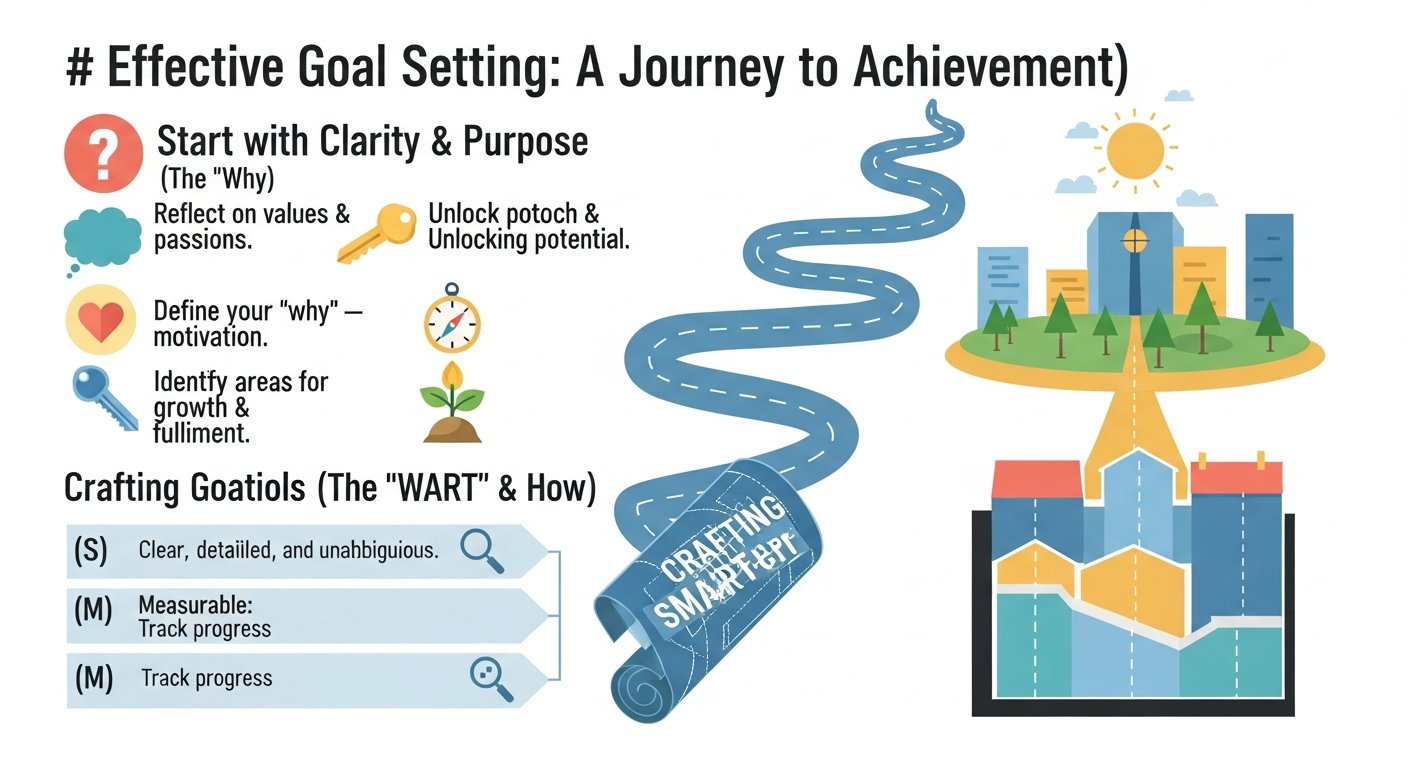
Embarking on a journey of intentional living often begins with a powerful commitment to personal growth, and for many women, this translates into a desire for truly effective goal setting for women. It’s about more than just checking off tasks; it’s about crafting a vision that harmonizes with your holistic well-being, supports your aspirations, and respects the unique rhythm of your life. In a world brimming with demands, learning to set and achieve meaningful objectives becomes an act of self-empowerment, paving the way for sustainable success and profound fulfillment. This comprehensive guide provides a framework designed to help women navigate their personal and professional landscapes with clarity, resilience, and an unwavering commitment to their most authentic selves.
Quick Reference: Your Holistic Goal Setting Journey for Women
This table offers a snapshot of the key areas we’ll explore to empower your journey of intentional goal achievement.
| Topic | Key Takeaway for Women | Impact on Intentional Living & Holistic Well-being |
|---|---|---|
| Unique Landscape | Recognize and address distinct societal, professional, and personal contexts. | Fosters self-awareness, realistic expectations, and tailored strategies. |
| Holistic Approach | Integrate all life domains (career, health, relationships, self-care). | Prevents burnout, promotes balance, and ensures sustainable fulfillment. |
| SMART Adaptation | Customize specific, measurable, achievable, relevant, time-bound goals to fit a woman’s reality. | Increases clarity, motivation, and the likelihood of successful attainment. |
| Growth Mindset | Cultivate resilience, reframe challenges, and overcome self-doubt. | Enhances adaptability, confidence, and continuous personal evolution. |
| Overcoming Obstacles | Develop strategies for time management, guilt, perfectionism, and leveraging support. | Builds practical skills for navigation and maintains momentum towards aspirations. |
| Sustained Progress | Implement flexible tracking, accountability, and celebrate milestones. | Reinforces positive habits, boosts morale, and ensures long-term commitment. |
| Lifestyle Integration | Embed goal-setting practices naturally into daily routines and values. | Makes goal achievement feel less like a chore and more like an inherent part of self-care. |
| Avoiding Mistakes | Learn from common pitfalls like overcommitting, comparing, and neglecting self-compassion. | Refines approach, minimizes frustration, and maximizes effectiveness. |
Understanding the Unique Landscape of Goal Setting for Women
To truly achieve meaningful goal achievement strategies for women, we must first acknowledge the distinct societal, professional, and personal contexts that shape a woman’s journey, influencing her holistic well-being and capacity for intentional living. Historically and presently, women often navigate a complex web of expectations, from career advancement to caregiving responsibilities, societal pressures, and the pursuit of personal passions. These factors can create both unique challenges and powerful opportunities when setting meaningful goals as a woman.
Many women report feeling overwhelmed by the sheer volume of demands on their time and energy. Balancing career ambitions with personal life goals, managing family responsibilities, and carving out space for self-care can make traditional, rigid goal-setting frameworks feel inadequate. A nuanced approach is required—one that recognizes these complexities and empowers women to craft objectives that are not only ambitious but also realistic and deeply supportive of their overall health and happiness.
Understanding this landscape is the foundational step. It encourages self-awareness, allowing women to identify their personal strengths, external influences, and internal biases that might impact their path. This recognition transforms goal setting from a generic task into a personalized, empowering process.
[INLINE IMAGE 1: diagram showing the interconnected challenges women face in balancing career, family, and personal goals]
Why is self-compassion crucial for women’s goal achievement?
Self-compassion is not a luxury; it’s a vital tool for sustainable goal achievement. Women are often conditioned to be perfectionists, holding themselves to impossibly high standards and experiencing intense guilt or shame when they fall short. This harsh inner critic can paralyze progress, leading to burnout and abandonment of even the most important aspirations. Self-compassion allows women to acknowledge setbacks without judgment, treating themselves with the same kindness and understanding they would offer a dear friend. This attribute is empowering because it fosters resilience, encourages learning from mistakes, and supports flexible adaptation to life’s inevitable curveballs. It’s the engine that keeps you moving forward, even when the path gets tough, by protecting your emotional well-being.
Balancing Career Ambitions with Personal Life Goals
For many women, successful strategic planning for women’s success involves a delicate dance between professional aspirations and the rich tapestry of personal life. This isn’t about choosing one over the other, but rather about integrating them harmoniously into a life of holistic well-being. It requires defining what “balance” truly means to you—it’s not a static 50/50 split, but a dynamic allocation of energy that shifts over time. Intentional goal setting for female leaders, for instance, might involve setting clear boundaries at work to protect family time, or delegating household tasks to free up energy for a crucial career project. The key is to view your life as an interconnected system, where progress in one area positively influences others, rather than seeing them as competing forces. This approach supports sustainable goal achievement, preventing the common trap of sacrificing one domain for another.
The Power of Holistic Goal Setting for Women’s Well-being
Embracing a holistic approach to goal development for women means viewing your life as an interconnected ecosystem, where progress in one area can profoundly impact another. Instead of compartmentalizing objectives into isolated categories, holistic goal setting integrates all facets of your existence: career, health, relationships, personal growth, spiritual well-being, and self-care. This interconnected perspective ensures that your aspirations contribute to a balanced and fulfilling life, rather than creating new sources of stress or imbalance. It prioritizes sustainable goal achievement by fostering a sense of harmony and preventing burnout. For a deeper dive into understanding life domains, see our guide on [CLUSTER LINK: Holistic Life Balance].
By intentionally setting objectives across these domains, women can cultivate a life that feels rich, meaningful, and genuinely aligned with their values. This approach inherently builds resilience, as setbacks in one area are cushioned by successes and support systems in others. It’s about designing a life where your ambitions are not just about doing more, but about being more—more present, more vibrant, and more authentically yourself.
Key Principles of Holistic Goal Setting for Women
- Interconnectedness: Recognize how goals in one area (e.g., career) influence others (e.g., self-care).
- Values Alignment: Ensure all goals resonate with your core values and sense of purpose.
- Flexibility & Adaptability: Build in room for life’s inevitable changes and be willing to pivot.
- Self-Compassion: Treat yourself with kindness and understanding, especially during challenges.
- Sustainability: Prioritize practices that can be maintained long-term without leading to burnout.
- Celebration of Progress: Acknowledge and honor every milestone, no matter how small.
| Principle | Description | Why it Matters for Women’s Intentional Living |
|---|---|---|
| Integration | Goals span multiple life domains (career, health, relationships, personal growth). | Prevents tunnel vision and ensures a balanced life, fostering overall well-being. |
| Authenticity | Goals are deeply aligned with personal values, passions, and purpose. | Ignites intrinsic motivation, leading to more fulfilling and sustainable achievement. |
| Self-Care First | Prioritizing physical, mental, and emotional well-being as a foundation for all goals. | Combats burnout, enhances resilience, and provides the energy needed for sustained effort. |
| Flexibility | Goals are adaptable and can evolve as life circumstances or priorities shift. | Reduces stress and guilt, allowing women to navigate dynamic roles without abandoning aspirations. |
| Community & Support | Involves leveraging networks for encouragement, advice, and accountability. | Mitigates feelings of isolation, provides diverse perspectives, and strengthens resolve. |
| Mindfulness | Practicing presence and awareness throughout the goal-setting and achievement process. | Enhances clarity, reduces overwhelm, and deepens appreciation for the journey. |
Crafting SMART Goals with a Woman’s Perspective
The SMART framework (Specific, Measurable, Achievable, Relevant, Time-bound) is a powerful tool for clarity and focus, but when applied to female goal-setting techniques, it benefits from a nuanced interpretation. For women, “Achievable” and “Relevant” often intertwine with considerations of work-life balance, caregiving, and personal energy levels. A goal that is achievable for one person might be overwhelming for another carrying a heavy load of emotional labor or societal expectations. Therefore, adapting SMART goals means infusing them with self-compassion, flexibility, and a deep understanding of your personal context to ensure sustainable goal achievement. For a deeper dive into refining your objectives, see our guide on [CLUSTER LINK: Advanced Goal Refinement Strategies].
By applying a woman’s perspective, we ensure that the goals are not just technically SMART, but also emotionally intelligent and supportive of long-term well-being. This creates a powerful synergy between structure and intuition, leading to goals that are both ambitious and deeply nourishing.
| Attribute | Definition | Example for a Woman’s Goal |
|---|---|---|
| Specific | Clearly defined, leaving no room for ambiguity (Who, What, When, Where, Why). | “I will write for 30 minutes every morning before work to complete my novel draft by October 2026.” |
| Measurable | Quantifiable criteria to track progress and know when the goal is met. | “I will complete 5 pages of my novel draft each week, totaling 100 pages by October.” |
| Achievable | Realistic and attainable given your resources, skills, and current life context. | “Given my current work and family commitments, 30 minutes daily is realistic and allows for unexpected interruptions without derailing my progress.” |
| Relevant | Aligned with your broader values, long-term vision, and other life goals. | “Completing this novel aligns with my lifelong dream of being a published author and contributes to my personal growth and creative expression.” |
| Time-bound | A clear deadline or timeframe for completion, creating urgency and focus. | “I will complete the first draft of my novel by October 31, 2026.” |
[INLINE IMAGE 2: infographic illustrating the SMART goal framework with examples tailored to women’s personal development and career aspirations]
Cultivating a Growth Mindset for Female Achievers
A growth mindset is an empowering goal creation for women because it frames challenges as opportunities for learning and development, rather than insurmountable barriers. For many women, who may have internalized societal messages about limitations or face implicit biases in professional settings, this mindset is transformative. It allows them to embrace new skills, persist through setbacks, and view effort as the path to mastery. Instead of seeing failure as a reflection of innate ability, a growth mindset encourages the perspective that “I haven’t achieved it *yet*.” This shift in perspective is critical for overcoming imposter syndrome, self-doubt, and the fear of judgment that can often stifle female ambition. For more on developing mental resilience, see our guide on [CLUSTER LINK: Building Resilience and Self-Belief].
Cultivating this mindset involves actively seeking feedback, learning from criticism, and celebrating the process of growth as much as the outcome. It’s about building a robust inner world that champions curiosity and continuous improvement, fostering an environment where empowering goal creation for women can truly flourish.
Overcoming Common Obstacles in Women’s Goal Pursuit
Women often encounter specific obstacles on their path to achieving their goals, stemming from unique societal roles, personal responsibilities, and internal pressures. These can include pervasive guilt, the relentless pursuit of perfectionism, the struggle with effective time management amidst competing demands, and the tendency to compare oneself to others. These barriers, if unaddressed, can derail even the most well-intentioned strategic planning for women’s success. Recognizing and proactively developing strategies to navigate these hurdles is paramount for sustainable goal achievement. It transforms potential roadblocks into opportunities for growth and deeper self-understanding. For a deeper dive into managing your time, see our guide on [CLUSTER LINK: Time Management for Busy Women].
How can women leverage their support networks effectively?
Leveraging support networks effectively is a cornerstone of empowering goal creation for women. This involves actively identifying individuals who can offer different forms of support: mentors for professional guidance, friends for emotional encouragement, family for practical assistance (like childcare), and peer groups for shared accountability. It’s not just about having a network, but about intentionally communicating your needs and allowing others to help. This might mean explicitly asking a partner to take on certain tasks to free up your time for a goal, or joining a mastermind group for strategic feedback. Trusting your community and being open to receiving help is an act of strength, not weakness, and dramatically increases the feasibility and joy of goal pursuit.
What failure looks like: A woman consistently sets ambitious career goals but never asks for help with household duties, leading to burnout. She then abandons her professional goals, feeling like she “can’t have it all,” when in reality, she failed to activate her available support system. She isolates herself, internalizing the struggle instead of externalizing solutions.
Strategies for Sustained Progress and Accountability
Sustained progress and robust accountability systems are vital for any journey of goal development for women, ensuring that initial enthusiasm translates into long-term achievement. This means moving beyond simply setting a goal to actively monitoring, adapting, and celebrating your journey. For women, whose lives are often fluid and responsive to the needs of others, flexibility in these systems is key. Rigid tracking methods can quickly become another source of pressure, leading to abandonment. Instead, adaptable strategies that fit into varying life phases and energy levels are essential. These strategies reinforce positive habits, provide necessary course corrections, and maintain momentum towards your aspirations.
The Role of Visualization and Affirmations
Visualization and affirmations are powerful tools in strategic planning for women’s success, tapping into the subconscious mind to reinforce belief and motivate action. Visualization involves vividly imagining yourself having already achieved your goal, engaging all your senses in the experience. This practice builds confidence, clarifies your desired outcome, and can even prime your brain to recognize opportunities. Affirmations, on the other hand, are positive, declarative statements about your capabilities and desired future (e.g., “I am capable of achieving my ambitious career goals”). When regularly repeated, these statements reprogram limiting beliefs and foster a mindset of empowerment. Together, they create a potent mental framework that supports consistent effort and resilience, helping women to see themselves as inherently capable of reaching their highest aspirations. For a deeper dive into mindset techniques, see our guide on [CLUSTER LINK: Harnessing the Power of Positive Affirmations].
What success looks like: A woman consistently tracks her progress on a new fitness goal using a simple habit tracker app. She shares her weekly wins (and minor setbacks) with an accountability partner, allowing her to stay motivated and make small, incremental adjustments to her routine. After three months, she celebrates achieving her 5k running goal, feeling energized and ready to set a new, empowering challenge.
Integrating Goal Setting into an Intentional Lifestyle
True goal achievement strategies for women are not standalone projects, but rather integral components of an intentional lifestyle. This means weaving your objectives seamlessly into your daily routines, values, and overall vision for a holistic life. When goal setting becomes a natural extension of who you are and how you choose to live, it loses its “chore” status and transforms into an empowering practice of self-creation. For instance, if a woman’s goal is to prioritize self-care, it’s not enough to list “meditate daily”; it must be integrated by scheduling it as non-negotiable, just like an important work meeting, and recognizing its direct contribution to her overall well-being and capacity to achieve other goals. This consistent integration fosters sustainable habits and ensures that aspirations are continuously nurtured, leading to profound and lasting transformation. For a deeper dive into intentional living, see our guide on [CLUSTER LINK: Creating Your Intentional Life].
Common Mistakes in Goal Setting for Women (and How to Avoid Them)
Even with the best intentions, women can fall into common pitfalls that hinder their goal development for women. Recognizing these mistakes is the first step toward crafting more effective, sustainable, and empowering strategies for success. By understanding these tendencies, women can proactively adapt their approach, ensuring their journey towards intentional living is both productive and profoundly fulfilling.
- Overcommitting and Over-scheduling: Often driven by a desire to please or societal pressure to “do it all,” women frequently take on too many goals at once, leading to burnout and fragmented effort.
Avoidance: Practice saying “no,” prioritize ruthlessly, and focus on 1-3 core goals at a time. Leave white space in your schedule.
- Perfectionism Paralysis: The belief that goals must be achieved perfectly often prevents women from starting or completing tasks, fearing anything less than flawless execution.
Avoidance: Embrace the 80/20 rule, focus on progress over perfection, and celebrate “good enough.” Action beats inaction.
- Neglecting Self-Care: Viewing self-care as optional or a reward, rather than a non-negotiable foundation for energy and resilience, leads to exhaustion and diminished capacity for goal pursuit.
Avoidance: Schedule self-care proactively, treating it as vital as any other goal-related task. Recognize it as an enabler, not a luxury.
- Comparison Trap: Constantly comparing personal progress to others’ perceived successes, especially on social media, can lead to feelings of inadequacy, demotivation, and a loss of personal vision.
Avoidance: Focus on your own journey and progress. Cultivate gratitude for your unique path and celebrate others without diminishing your own efforts.
- Lack of Flexibility: Sticking rigidly to an initial plan even when circumstances change can cause frustration and lead to abandoning goals altogether.
Avoidance: Build adaptability into your goal-setting process. Regularly review and adjust plans as needed, seeing flexibility as strength.
- Underestimating the Emotional Labor: Many goals, especially those involving personal growth or career shifts, come with significant emotional and mental effort that is often overlooked in planning.
Avoidance: Acknowledge and plan for the emotional journey. Incorporate self-compassion, breaks, and emotional support into your strategy.
| Common Mistake | Impact on Women’s Goal Achievement | Best Practice for Women | How it Supports Holistic Well-being |
|---|---|---|---|
| Over-scheduling & Overcommitting | Leads to burnout, fragmented attention, and feeling perpetually behind or inadequate. | Prioritize 1-3 core goals; learn to say “no” to non-essential demands. | Protects energy, reduces stress, and allows for deeper engagement with chosen objectives. |
| Perfectionism & Fear of Failure | Prevents starting new ventures, delays progress, and fosters self-criticism. | Embrace “good enough”; focus on consistent action and learning from iterative attempts. | Builds resilience, reduces anxiety, and fosters a growth-oriented mindset. |
| Neglecting Self-Care | Depletes physical and mental resources, making sustained effort impossible and increasing health risks. | Integrate self-care as a non-negotiable part of your goal-setting strategy and daily routine. | Ensures sustained energy, mental clarity, and emotional balance needed for long-term success. |
| Isolation & Lack of Support | Leads to feelings of loneliness, overwhelm, and lack of external accountability or perspective. | Actively build and leverage a supportive network of mentors, peers, and family. | Provides encouragement, practical help, diverse insights, and shared accountability. |
| Rigid Plans, No Flexibility | Frustration and abandonment of goals when life inevitably throws curveballs or priorities shift. | Adopt an agile approach; regularly review and adjust goals and plans as needed. | Reduces stress, promotes adaptability, and allows goals to evolve with your life. |
| Comparing to Others | Fosters inadequacy, jealousy, and can lead to abandoning unique, authentic aspirations. | Focus on your personal progress and unique journey; celebrate your own milestones. | Cultivates self-acceptance, boosts confidence, and protects mental peace. |
Mastering these challenges is not about eradicating them entirely, but about developing robust strategies and a compassionate mindset to navigate them effectively. By doing so, women can ensure their journey of goal achievement is one of empowerment, joy, and sustainable growth, contributing significantly to their intentional living and holistic well-being.
Conclusion: Charting Your Course with Intentional Goals
The journey of effective goal setting for women is a dynamic, empowering process, deeply intertwined with the pursuit of intentional living and holistic well-being. It’s about more than just aspirations; it’s about crafting a life that resonates with your deepest values, leveraging your unique strengths, and navigating challenges with grace and resilience. By embracing a holistic perspective, adapting frameworks like SMART goals to your personal context, cultivating a growth mindset, and proactively addressing common obstacles, you are laying a robust foundation for sustainable achievement. Remember, your goals are not merely destinations; they are powerful tools for self-discovery and transformation. As you chart your course, commit to self-compassion, celebrate every milestone, and allow your aspirations to unfold in alignment with your most authentic self. The path to a fulfilling life is built one intentional goal at a time.
For a deeper dive into understanding life domains, see our guide on [CLUSTER LINK: Holistic Life Balance]. To refine your objectives further, explore [CLUSTER LINK: Advanced Goal Refinement Strategies]. To master your time, check out [CLUSTER LINK: Time Management for Busy Women]. For developing mental resilience, visit [CLUSTER LINK: Building Resilience and Self-Belief]. To harness the power of positive thinking, explore [CLUSTER LINK: Harnessing the Power of Positive Affirmations]. And for creating your overarching vision, see [CLUSTER LINK: Creating Your Intentional Life].
Sources & References
- Dweck, Carol S. (2006). Mindset: The New Psychology of Success. Random House.
- Brown, Brené. (2012). Daring Greatly: How the Courage to Be Vulnerable Transforms the Way We Live, Love, Parent, and Lead. Gotham Books.
- Kristin Neff, Ph.D. (n.d.). Self-Compassion.org. Retrieved from https://self-compassion.org
- Clear, James. (2018). Atomic Habits: An Easy & Proven Way to Build Good Habits & Break Bad Ones. Avery.
About the Author
Amara Diallo, Wellness & Empowerment Coach — I’m dedicated to guiding women towards joyful, balanced lives through mindful practices and empowering self-discovery.
Reviewed by Olivia Sterling, Senior Content Editor — Last reviewed: April 05, 2026