

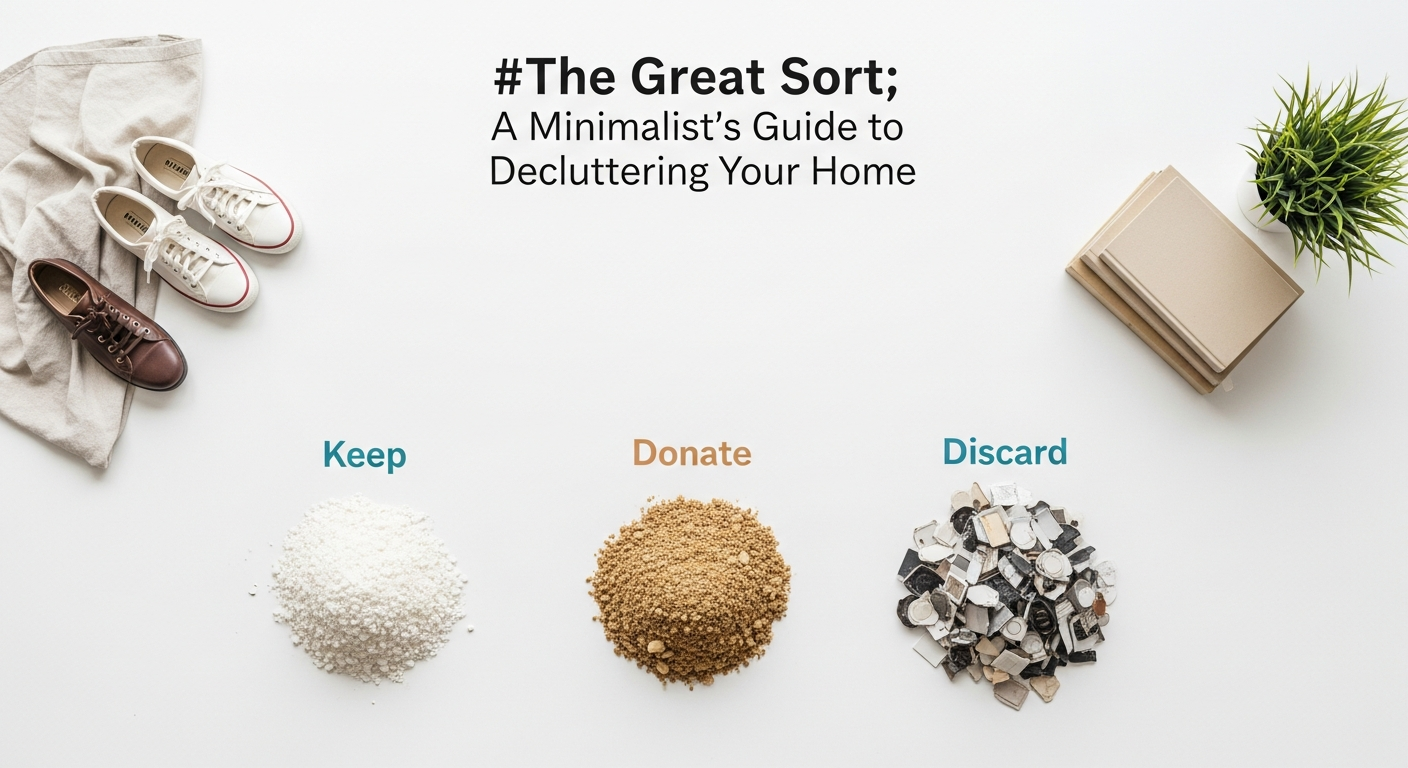
Updated March 2024.
In the whirlwind of modern life, our homes often become reflections of our busy schedules and overflowing to-do lists. The accumulation of possessions, while sometimes comforting, can also lead to stress, overwhelm, and a feeling of being constantly behind. If you want to declutter your life for a simplified home and life, you are not alone. Imagine walking into a space where everything has a purpose, where serenity reigns, and where you feel a sense of calm control.
This isn’t just a pipe dream; it’s an achievable reality when you employ effective organizational strategies. This comprehensive guide will explore popular and proven techniques to help you reclaim your space, simplify your surroundings, and ultimately, enrich your daily routine. From profound philosophical shifts to practical, step-by-step strategies, we’ll delve into the various approaches that can transform your home into a sanctuary.
The Philosophy and Practice of the KonMari Method
Perhaps one of the most globally recognized organizational frameworks, the KonMari Method, developed by Japanese organizing consultant Marie Kondo, transcends mere tidying. It is a philosophy centered on gratitude, mindfulness, and valuing what truly brings joy into your life. Kondo’s approach is revolutionary because it does not focus on what to get rid of, but rather what to keep.
The KonMari Philosophy and Principles:
- Category-Based Sorting: Instead of going room by room, you tackle items by category. This ensures you do not miss anything and can truly assess the volume of what you own. The prescribed order is: clothes, books, papers, komono (miscellany), and sentimental items.
- Does It Spark Joy?: This is the cornerstone question. Hold each item in your hands and truly ask yourself if it evokes a feeling of joy. If it does not, thank it for its service, and let it go.
- A Place for Everything: Once you have decided what to keep, every item must have a designated home.
- Folding, Not Piling: Kondo advocates for vertical folding, especially for clothes, which saves space and makes items more visible.
Practical Steps for Implementation:
- Commit to the Process: Set aside significant time, perhaps a whole weekend, to tackle categories.
- Gather Everything: For each category, pull every single item out and place it in one large pile.
- Handle Each Item: Pick up each garment or book. Ask yourself if it sparks joy.
- Organize and Store: Neatly store the kept items in their designated places using drawer dividers and vertical folding.
- Maintain: Commit to returning items to their homes daily.
Who it is for: Individuals who feel overwhelmed by excess and are ready for a transformative, deep-dive approach to their possessions.
Types of Sorting Categories in the Four-Box Method
For those who prefer a more straightforward, hands-on approach, the Four-Box Method offers an immediate and actionable strategy. This technique is excellent for tackling specific rooms, closets, or even smaller areas like a desk or pantry. It breaks down the decision-making process into easily digestible categories, making the task less daunting.
Understanding the Categories:
The core of this method involves creating four distinct zones or using four actual boxes labeled:
- Keep: Items that you regularly use, genuinely love, or absolutely need. These will return to your home in an organized fashion.
- Donate or Sell: Items that are still in good condition but no longer serve a purpose for you.
- Trash or Recycle: Items that are broken, expired, stained, or unusable. Be honest and ruthless here.
- Relocate: Items that belong in another room or a specific designated spot within the same room but are currently misplaced.
Practical Steps for the Four-Box Method:
- Choose Your Zone: Select a specific area to organize, such as a single bedroom or kitchen cabinet.
- Gather Your Supplies: Get your four boxes or clear out four distinct areas on the floor. Label them clearly.
- Start Sorting: Go through every item in your chosen zone, one by one. Hold each item and make a quick decision.
- Take Immediate Action: Immediately take the trash out, put donations in your car, relocate misplaced items, and organize what you are keeping.
- Repeat: Move on to the next zone when you are ready.
Who it is for: Anyone looking for a practical, low-barrier-to-entry method. It is great for beginners or people who want to tackle organization in manageable chunks.
[INLINE IMAGE 2: Four-Box Method for decluttering a room, sorting items into keep, donate, trash, and relocate boxes]
How Does Minimalism Transform Your Living Space?
Minimalism is more than just an aesthetic; it is a lifestyle philosophy that advocates living with less to make room for what truly matters. Popularized by figures like The Minimalists, it encourages intentionality in consumption and a conscious shedding of excess. While not strictly a step-by-step tactic, understanding minimalist living principles and practical application provides the overarching framework and motivation for ongoing home simplification.
The Core Principles of Minimalism:
- Intentionality: Every item you own should serve a purpose or bring you joy. Acquisitions are deliberate, not impulsive.
- Value Experiences Over Possessions: Minimalists often prioritize travel, relationships, personal growth, and experiences. Learn more about the benefits of minimalism.
- Freedom from Excess: By reducing possessions, you reduce the time and energy spent organizing, cleaning, and maintaining them.
- Financial Freedom: Less spending on unnecessary items often leads to greater savings and financial security.
- Environmental Consciousness: Buying less and choosing durable, sustainable items reduces waste.
Practical Steps for Adopting a Minimalist Approach:
- Define Your Why: What do you hope to gain by living with less? Your underlying reason will be your driving force.
- Start Small, Get Ruthless: Begin with one area, like a junk drawer. Practice letting go.
- Question Every Purchase: Before buying something new, pause and ask if you truly need it or if it brings lasting value.
- Digitize Where Possible: Reduce paper trails by scanning documents, photos, and receipts.
- Embrace Empty Space: Do not feel the need to fill every surface or corner. Empty space can be calming.
Who it is for: Those seeking a holistic lifestyle change that goes beyond just tidying. It appeals to individuals who crave more freedom and less stress.
The Gentle Art of Swedish Death Cleaning
Döstädning is about preparing for your exit from life. It is about letting go of things so that your loved ones do not have to deal with a lifetime of accumulation. – Margareta Magnusson
Swedish Death Cleaning, or Döstädning, is a unique and increasingly popular approach that is designed to be undertaken while you are very much alive. Introduced by Swedish artist Margareta Magnusson, this method encourages individuals to organize their homes and lives to ease the burden on their loved ones later. However, its principles are valuable for anyone looking to organize their possessions with intentionality.
The Philosophy Behind Döstädning:
- Consideration for Others: The primary motivation is to spare family and friends the overwhelming task of sifting through decades of accumulated belongings.
- Living Lighter, Living Better: While focused on the future, the act of Döstädning also brings immediate benefits: a lighter, more organized home.
- Emotional Processing: It encourages a thoughtful review of one’s life through possessions, allowing for emotional processing.
- Starting with the Least Sentimental: Magnusson suggests starting with items that hold little emotional value to build momentum.
Practical Steps for Swedish Death Cleaning:
- Start Early, Work Gradually: Döstädning is not meant to be a rapid process; it is a gradual, thoughtful journey that can take years.
- Begin with Non-Sentimental Items: Do not start with old photos or love letters. Begin with clothes, books, or kitchenware.
- Ask Will Anyone Else Want This?: For each item, consider if anyone you know or love would genuinely want or need it.
- Create a Throw Away Box: Create a box specifically for private items you want discarded immediately after your passing.
- Talk to Your Loved Ones: Discuss what items they might genuinely want and share the stories behind them.
Who it is for: Anyone who wants to organize with a sense of foresight and responsibility, ensuring their legacy is one of ease rather than burden.
[INLINE IMAGE 4: Margareta Magnusson’s Swedish Death Cleaning concept with organized belongings and a throw away box]
What Is the One-In, One-Out Rule for Home Maintenance?
Among the simplest and most effective strategies for maintaining an organized home is the One-In, One-Out rule. This is not a method for a grand overhaul, but rather a powerful strategy for preventing new excess from accumulating. It is a discipline that, once adopted, ensures your possessions remain at a manageable level.
Understanding the Rule:
The concept is straightforward: every time a new item comes into your home, a similar item must leave. For example:
- Buy a new shirt? Donate or discard an old shirt.
- Purchase a new novel? Donate a book you have already read.
- Acquire a new kitchen gadget? Get rid of an old one you rarely use.
- Receive a new greeting card? Recycle an old one.
The similar item does not have to be identical, but it should occupy roughly the same space or serve the same function. This keeps your overall volume of possessions stable.
Practical Steps for Implementation:
- Commit to the Principle: Make a conscious decision to adopt this rule for specific categories or your entire home.
- Designate a Departure Zone: Have a bag or box ready for items leaving your home.
- Be Immediate: The key to this method’s success is immediate action. The moment a new purchase enters, the old one should be on its way out.
- Apply to All Categories: While clothing is a common starting point, this rule can be applied to books, kitchenware, decorations, and toys.
- Review and Adapt: Periodically check if the rule is working for you and adjust as needed.
Who it is for: Everyone! It is an excellent maintenance strategy for anyone who has already organized their space and wants to prevent future accumulation.
Why Does Gamifying Decluttering Work So Well?
For those who thrive on challenges, gamification, or need a playful push to get started, The Mins Game (or Minimalism Game) is an innovative and engaging approach. Created by The Minimalists, Joshua Fields Millburn and Ryan Nicodemus, it turns the often daunting task of organizing into a fun, competitive exercise.
How The Mins Game Works:
The premise is simple: for 30 days, you get rid of one item on day one, two items on day two, three items on day three, and so on, until you are discarding 30 items on day 30. By the end of the month, you will have removed a total of 465 items from your home. It can be played solo, but it is often more motivating when played with a friend or family member.
Practical Steps for Playing:
- Find an Accountability Partner: Playing with someone else adds a layer of fun and motivation.
- Set Your Start Date: Pick a day to begin the challenge. The first day will be easy, but the later days require more dedication.
- Daily Removal: Get rid of 1 item on Day 1, 2 items on Day 2, scaling up to 30 items on Day 30.
- What Counts: Items must physically leave your home. This means they are donated, sold, recycled, or thrown away.
- Be Creative: As the numbers get higher, look in drawers, cabinets, the garage, or even old digital files. Small items like single socks or expired spices all count.
Who it is for: People who enjoy challenges, need a structured way to start, or benefit from a playful approach to a potentially overwhelming task.
Time-Boxing Techniques: The 20/10 Method and 15-Minute Rule
For many, the idea of committing to a weekend-long marathon or a 30-day challenge feels utterly overwhelming. If you are pressed for time, easily distracted, or prone to decision fatigue, some of the most effective strategies involve short, focused bursts. The 20/10 Method and the general 15-Minute Rule are perfect for making consistent progress without feeling burnt out.
The Philosophy of Small Bursts:
- Overcoming Paralysis: Small, achievable tasks prevent the overwhelm of not knowing where to start.
- Building Momentum: Consistent small wins build confidence and momentum over time.
- Sustainable Progress: It is easier to stick with a routine of short bursts than to repeatedly postpone a massive project.
- Focus and Efficiency: Knowing you only have a short time often makes you more focused and decisive.
Method 1: The 20/10 Method
- Set a Timer: Choose a work interval (e.g., 20 minutes) and a break interval (e.g., 10 minutes).
- Focus Intensely: During the work interval, focus solely on the task. Pick an area and work quickly and decisively.
- Take a Full Break: When the timer goes off, stop immediately. Step away from the area to prevent burnout.
- Repeat: Do 1-3 cycles of this throughout your day or week.
Method 2: The 15-Minute Rule
- Identify One Small Task: Think of a single, small task that can realistically be completed in 15 minutes, like clearing a bedside table.
- Set a Timer: Set a timer for exactly 15 minutes.
- Work with Focus: Dive into your chosen task without getting sidetracked.
- Stop When the Timer Rings: Once the 15 minutes are up, stop. Even if you are not completely finished, you have made progress.
Who it is for: Busy individuals, those with short attention spans, or anyone looking to integrate organization into their daily routine sustainably.
Sustaining Your Journey to a Serene Home
Embarking on this journey is more than just tidying up; it is an act of self-care, a step towards mindful living, and an investment in your mental well-being. By exploring these popular frameworks—from the introspective KonMari to the practical Four-Box, the philosophical minimalism to the forward-thinking Swedish Death Cleaning, the consistent One-In, One-Out rule, the gamified Mins Game, and the sustainable small bursts—you now have a toolkit to transform your home and, by extension, your life.
The key is not to find the perfect method, but to find the one that resonates with you and your lifestyle. Start small, be patient with yourself, and celebrate every item you thoughtfully release. Imagine the clarity, calm, and renewed energy that awaits you in a simplified home. Your sanctuary is within reach.
Frequently Asked Questions
What is the main difference between the KonMari Method and the Four-Box Method?
The KonMari Method is category-based, focusing on keeping only items that spark joy after gathering all items from a single category. The Four-Box Method is typically zone-based and involves sorting items into Keep, Donate/Sell, Trash/Recycle, and Relocate piles for quick, practical decisions.
Can I combine different organizational methods?
Absolutely! Many people find success by blending aspects of different frameworks. For instance, you might use KonMari’s spark joy principle for clothes, the Four-Box Method for your pantry, and the One-In, One-Out rule for ongoing maintenance.
How do I deal with sentimental items?
Sentimental items are often the hardest. KonMari suggests tackling them last, after you have honed your decision-making sensitivity. Swedish Death Cleaning encourages you to consider if loved ones would truly cherish the item. A common tip is to designate a small, specific box for truly treasured items and let go of the rest.
What if I start and get overwhelmed or do not finish?
It is perfectly normal to feel overwhelmed. If this happens, try breaking the task into smaller chunks, using methods like the 15-Minute Rule or the 20/10 Method. Do not aim for perfection, just progress. Even 15 minutes of focused effort can make a difference.
How can I prevent excess from returning?
Sustaining a clear home requires ongoing habits. The One-In, One-Out Rule is highly effective for this. Additionally, regularly putting items back in their designated homes, minimizing new purchases, and periodically doing small, quick bursts can help maintain your simplified space.
Sources & References
- Kondo, Marie. The Life-Changing Magic of Tidying Up: The Japanese Art of Decluttering and Organizing. Ten Speed Press, 2014.
- Magnusson, Margareta. The Gentle Art of Swedish Death Cleaning: How to Free Yourself and Your Family from a Lifetime of Clutter. Scribner, 2018.
- Millburn, Joshua Fields, and Ryan Nicodemus. Minimalism: Live a Meaningful Life. Asymmetrical Press, 2011.
Reviewed by Olivia Sterling, Senior Content Editor — Last reviewed: May 02, 2026