
What is Slow Living? Unpacking the Intentional Pace for Women in 2026
Affiliate disclosure: This article may contain affiliate links. Recommendations are independent and editorially driven.
In a world relentlessly pushing for more, faster, and bigger, a counter-cultural movement has quietly, yet powerfully, taken root: slow living. For women especially, navigating the intricate demands of career, family, personal growth, and societal expectations, the concept of “slow” isn’t about doing less; it’s about doing what matters most with intention, presence, and purpose. It’s a conscious rebellion against the chronic busyness that often leaves us feeling depleted, disconnected, and perpetually behind.
At its heart, slow living is an invitation to reclaim your time, attention, and energy, redirecting them towards experiences and relationships that genuinely nourish your soul. It’s about cultivating a life rich in meaning rather than just packed with activities. This comprehensive guide will delve deep into what slow living truly means, explore its profound benefits for women, dissect its core pillars, and provide actionable strategies to integrate this transformative philosophy into your everyday existence. If you’ve ever felt the quiet whisper of your spirit urging you to slow down, breathe deeper, and live more authentically, then understanding and embracing slow living might just be the pivot point you’ve been seeking.
Deconstructing “Slow Living”: More Than Just a Buzzword
The term “slow living” has permeated modern discourse, often associated with artisanal coffee, rustic cabins, or lengthy meditation retreats. While these elements can certainly be part of a slower lifestyle, they don’t define it. True slow living is a mindset, a philosophy, and a conscious approach to life that extends far beyond aesthetics or isolated activities. It’s an umbrella term for a host of movements that prioritize quality over quantity, depth over breadth, and presence over distraction.
Defining the Core Principles
At its essence, slow living is characterized by several fundamental principles:
- Intentionality: Every choice, action, and commitment is made with conscious thought and alignment with one’s values, rather than by default or external pressure.
- Mindfulness: Being fully present in the moment, savoring experiences, and paying close attention to sensory details and internal states. It’s about experiencing life, not just getting through it.
- Connection: Fostering deeper, more meaningful relationships with oneself, loved ones, community, and the natural world. It involves prioritizing human connection over digital interaction.
- Quality over Quantity: Opting for fewer, higher-quality possessions, experiences, and commitments that bring true value, rather than accumulating more stuff or packing the schedule.
- Sustainability: Living in a way that respects the planet and its resources, both environmentally and personally. This includes sustainable consumption, energy use, and personal energy management.
- Balance: Seeking harmony across various life domains—work, rest, play, relationships, and personal growth—to prevent burnout and promote holistic well-being.
- Reflection: Taking time to pause, observe, and learn from experiences, fostering continuous personal growth and self-awareness.
These principles aren’t rigid rules but rather guiding stars that help orient us away from the frantic pace of modern life towards a more deliberate, fulfilling existence.
Historical Roots and Modern Interpretations
While “slow living” feels like a contemporary concept, its roots stretch back further than you might imagine. The modern “slow movement” largely began with Carlo Petrini’s protest against the opening of a McDonald’s near the Spanish Steps in Rome in 1986, sparking the Slow Food movement. This movement championed traditional cuisine, local production, and the enjoyment of meals, directly opposing fast food culture.
From Slow Food, the philosophy expanded to encompass other aspects of life: Slow Cities (Cittaslow), Slow Design, Slow Travel, Slow Fashion, and even Slow Money. Each iteration applies the core principles of intentionality, quality, and sustainability to specific domains. Today, in an age of constant connectivity, instant gratification, and overwhelming information, slow living serves as a vital antidote, inviting us to disengage from the hamster wheel and consciously design lives that truly resonate with our deepest desires and values. It’s a framework that allows women to push back against the ‘have it all, do it all, be it all, all at once’ narrative, empowering them to define their own pace and priorities.
The Antithesis of the Hectic Modern Pace
The prevailing societal narrative often glorifies busyness, multitasking, and constant productivity. We’re encouraged to fill every moment, optimize every second, and strive for perpetual advancement. This relentless pursuit often leads to chronic stress, anxiety, burnout, and a pervasive feeling of not being enough. Slow living actively challenges this narrative. It’s not about being lazy or unproductive; it’s about redefining what productivity means. Instead of measuring success by the sheer volume of tasks completed, slow living measures it by the depth of engagement, the quality of relationships, and the sense of inner peace and fulfillment achieved.
It means saying “no” to commitments that don’t align with your values, even if they seem prestigious. It means carving out sacred moments for rest and reflection, even when your to-do list looms large. It means consciously choosing to be present with your children, your partner, or yourself, rather than constantly checking your phone or thinking about the next task. For women, who are often disproportionately burdened by emotional labor and societal expectations, this shift from external validation to internal alignment is profoundly liberating.
The Philosophy Behind the Pace: Why Intentionality Matters

[INLINE IMAGE 1: place after second H2 | alt=”what is slow living concept illustration”]
At its core, slow living isn’t simply a collection of practices; it’s a profound philosophy rooted in intentionality. It’s about consciously choosing how you spend your most precious resources: your time, your energy, and your attention. In a world designed to capture and monetize these resources, intentionality becomes an act of self-preservation and empowerment. For women, who often find their boundaries blurred and their energies dissipated across numerous demands, reclaiming intentionality is a powerful pathway to personal agency and well-being.
Mindful Consumption and Conscious Choices
One of the foundational tenets of slow living is mindful consumption. This extends beyond just what we buy; it encompasses what we consume in every sense – from food and fashion to media and information. It’s about stepping away from impulsive, dopamine-driven consumption and instead asking critical questions before engaging:
- Do I truly need this?
- Where did it come from, and what is its true cost (environmental, ethical, personal)?
- Does this add value to my life, or is it just another distraction?
- How will consuming this make me feel, both short-term and long-term?
For example, in slow fashion, this might mean investing in fewer, high-quality, ethically produced garments that stand the test of time, rather than chasing fleeting trends. In slow food, it means choosing local, seasonal produce, understanding its journey from farm to table, and savoring meals prepared with care. This conscious approach to consumption not only reduces waste and supports ethical practices but also frees up mental space and financial resources that would otherwise be tied up in acquiring and managing excess.
Reclaiming Time and Attention
In the digital age, our attention is a commodity constantly under assault. Notifications ping, social media feeds scroll endlessly, and the pressure to be ‘always on’ is immense. Slow living offers a powerful counter-narrative by encouraging us to reclaim our time and attention as sacred resources. This means:
- Setting digital boundaries: Implementing tech-free hours, designating specific times for checking emails, or even taking regular digital detoxes.
- Prioritizing deep work and focused tasks: Minimizing multitasking and dedicating uninterrupted blocks of time to meaningful activities, whether it’s creative work, learning, or simply spending quality time with loved ones.
- Embracing idleness and boredom: Recognizing that moments of unstructured time are crucial for creativity, reflection, and mental rejuvenation.
- Saying “no”: Learning to respectfully decline invitations or commitments that don’t align with your priorities or energy levels. This is especially vital for women who often feel compelled to accommodate everyone else’s needs.
By consciously guarding our time and attention, we create space for what truly matters, moving away from a reactive existence to a proactive one where we are the architects of our days.
Connecting with Self, Others, and Nature
Modern life often isolates us, despite our hyper-connectivity. We might have hundreds of online connections but lack deep, meaningful real-world relationships. Slow living emphasizes the importance of genuine connection:
- Self-connection: Through practices like journaling, meditation, mindful movement, or simply quiet introspection, slow living encourages a deeper understanding of one’s own needs, desires, and emotions. This self-awareness is the bedrock of intentional living.
- Connection with others: Prioritizing quality time over superficial interactions. This could mean sharing a homemade meal with loved ones, engaging in unhurried conversations, or actively participating in your local community. It’s about building a supportive network that enriches your life.
- Connection with nature: Spending time outdoors, whether it’s a walk in the park, gardening, or simply observing the sky. Reconnecting with the natural world grounds us, reduces stress, and reminds us of our place within a larger ecosystem.
These connections are not merely pleasantries; they are essential for psychological well-being, fostering a sense of belonging, meaning, and resilience. For women, who often feel the weight of societal expectations to be everything to everyone, these deliberate connections provide crucial anchors and sources of strength.
The Benefits of Embracing a Slower Lifestyle for Women
The decision to embrace slow living is often driven by a deep yearning for something more fulfilling than the relentless pursuit of speed. For women, the benefits of adopting this intentional pace can be particularly transformative, offering respite from the unique pressures and expectations placed upon them in contemporary society. It’s not just about managing stress; it’s about thriving.
Reducing Stress and Burnout
One of the most immediate and palpable benefits of slow living is a significant reduction in stress and the prevention of burnout. The constant demands of work, family, social commitments, and personal aspirations often leave women feeling perpetually overwhelmed and exhausted. Slow living counteracts this by:
- Encouraging purposeful pauses: Integrating moments of rest and reflection throughout the day and week, rather than viewing them as luxuries.
- Simplifying routines: Streamlining tasks, delegating where possible, and letting go of perfectionism.
- Setting firm boundaries: Protecting personal time and energy by saying “no” to non-essential commitments and digital distractions.
- Prioritizing sleep: Recognizing sleep as a foundational pillar of health, not something to be sacrificed.
By making these intentional shifts, women can move from a state of chronic stress to one of calm resilience, allowing their nervous systems to regulate and their energy levels to replenish.
Enhancing Mental Clarity and Focus
A cluttered schedule often translates to a cluttered mind. The constant barrage of information, notifications, and perceived obligations can make sustained focus and clear thinking incredibly challenging. Slow living fosters an environment conducive to mental clarity by:
- Minimizing distractions: Reducing digital noise and creating designated times for focused work or creative pursuits.
- Practicing mindfulness: Cultivating present-moment awareness, which sharpens attention and reduces rumination.
- Allowing for incubation: Giving thoughts and ideas space to develop naturally, rather than forcing solutions under pressure.
- Decluttering physical and digital spaces: A simplified environment often leads to a more organized mind.
With enhanced mental clarity, women can approach problems with greater insight, make decisions more confidently, and engage more deeply with their work, hobbies, and relationships.
Fostering Deeper Relationships
In a fast-paced world, relationships can become superficial, squeezed into hurried moments between other commitments. Slow living prioritizes the cultivation of deep, meaningful connections with loved ones by:
- Allocating dedicated, quality time: Scheduling unhurried moments for conversation, shared meals, or activities with family and friends.
- Practicing active listening: Being fully present during interactions, truly hearing and understanding others, rather than waiting for your turn to speak.
- Engaging in shared experiences: Creating lasting memories through slow travel, cooking together, or pursuing hobbies side-by-side.
- Limiting digital interference: Putting phones away during meals or conversations to ensure undivided attention.
These practices strengthen bonds, foster empathy, and create a supportive network that is crucial for emotional well-being, especially for women who often play central roles in nurturing family and community ties.
Cultivating Personal Growth and Creativity
True personal growth and creative expression require space—space to think, to experiment, to fail, and to simply be. The relentless pace of modern life often leaves no such space, stifling innovation and self-discovery. Slow living creates this vital breathing room by:
- Encouraging introspection: Providing opportunities for journaling, meditation, or quiet contemplation to understand one’s values, desires, and purpose.
- Allowing for unstructured time: Recognizing that boredom is often the birthplace of creativity, enabling new ideas and insights to emerge.
- Pursuing hobbies for enjoyment, not achievement: Engaging in activities like art, music, writing, or gardening purely for the joy of it, free from performance pressure.
- Embracing continuous learning: Dedicating time to read, research, or acquire new skills out of genuine curiosity.
For women seeking to define themselves beyond external roles, slow living provides the fertile ground necessary for authentic self-expression, innovative thinking, and profound personal evolution. It empowers them to explore their unique talents and passions without the burden of constant external validation.
Learn more about cultivating personal growth through intentional practices.
Key Pillars of Slow Living: Practical Applications

[INLINE IMAGE 2: place after fourth H2 | alt=”what is slow living comparison illustration”]
While the philosophy of slow living is deeply personal, it manifests through various practical pillars that guide our daily choices. These aren’t prescriptive rules but rather areas where we can consciously choose to slow down, be more intentional, and align our actions with our values. For women, integrating these pillars can be profoundly empowering, allowing them to exert control over various aspects of their lives amidst external pressures.
Slow Food: From Farm to Table with Awareness
The Slow Food movement, the genesis of the entire “slow” philosophy, is about savoring meals, appreciating where food comes from, and connecting with the processes of growing, preparing, and sharing. It’s a direct antidote to fast food culture.
- Prioritize local and seasonal: Support local farmers, reduce your carbon footprint, and enjoy fresh, flavorful ingredients. Visit farmers’ markets.
- Cook from scratch: Prepare meals at home, understanding the ingredients and process. This isn’t about gourmet cooking, but intentional preparation.
- Eat mindfully: Sit down, unplug, and savor each bite. Pay attention to flavors, textures, and the company you keep.
- Reduce food waste: Plan meals, use leftovers creatively, and compost when possible.
Slow food encourages us to reclaim the kitchen as a place of nourishment, creativity, and connection, transforming a daily necessity into a joyful ritual.
Slow Fashion: Building a Sustainable Wardrobe
Slow fashion challenges the fast fashion industry’s cycle of disposable trends and exploitative labor. It’s about building a wardrobe that is ethical, sustainable, and truly reflects your personal style.
- Invest in quality over quantity: Choose well-made pieces that last, reducing the need for constant replacements.
- Embrace timeless styles: Opt for classic pieces that won’t go out of style next season.
- Shop mindfully: Ask questions about how and where clothes are made. Support brands with transparent and ethical practices.
- Repair and repurpose: Extend the life of your garments by mending them or transforming them into something new.
- Curate a capsule wardrobe: Build a versatile collection of interchangeable items that suit your lifestyle, reducing decision fatigue and consumption.
This approach not only benefits the planet and garment workers but also simplifies your life and elevates your personal style.
Slow Work: Redefining Productivity and Purpose
Slow work isn’t about working less (though it can be), but about working more effectively, meaningfully, and sustainably. It redefines productivity away from frantic busyness towards focused, high-quality output.
- Prioritize deep work: Carve out uninterrupted blocks of time for your most important tasks, minimizing distractions.
- Set realistic boundaries: Learn to say “no” to non-essential tasks or meetings. Avoid overcommitting.
- Incorporate regular breaks: Step away from your desk, move your body, and allow your mind to rest and recharge.
- Focus on purpose: Connect your work to a larger meaning or value, making it more intrinsically motivating.
- Embrace a sustainable pace: Avoid the cycle of intense sprints followed by exhaustion. Aim for consistent, sustainable effort.
For women, who often feel pressure to constantly prove themselves, slow work empowers them to achieve significant results without sacrificing their well-being.
Slow Travel: Experiencing the Journey, Not Just the Destination
In contrast to ticking off tourist sites at breakneck speed, slow travel is about immersing yourself in a place, connecting with its culture, and savoring the journey.
- Stay longer in fewer places: Instead of rushing through multiple cities, choose one or two destinations and truly get to know them.
- Embrace local experiences: Eat where the locals eat, use public transport, and engage with the community.
- Travel mindfully: Be present in the moment, observe your surroundings, and allow for serendipitous discoveries.
- Reduce your environmental impact: Choose more sustainable transport options like trains over planes where possible.
Slow travel transforms a trip into an enriching, reflective experience, fostering a deeper understanding of the world and yourself.
Slow Parenting: Nurturing Conscious Connections
Slow parenting is about resisting the urge to overschedule children, constantly entertain them, or push for early achievements. Instead, it prioritizes connection, presence, and allowing children space to grow naturally.
- Prioritize presence over perfection: Give your undivided attention to your children during interactions, even if for short periods.
- Allow for unstructured play: Provide opportunities for imaginative, child-led play without constant adult intervention.
- Limit over-scheduling: Resist the pressure to enroll children in too many activities, allowing for downtime and family connection.
- Encourage independence: Empower children to do things for themselves, fostering competence and confidence.
- Model a slower pace: Show your children the value of rest, mindfulness, and quality time.
This approach reduces parental stress and fosters deeper, more authentic relationships within the family, giving children the gift of a childhood less rushed and more rooted.
Slow Tech: Digital Detox and Mindful Usage
Slow tech isn’t about abandoning technology; it’s about using it consciously and intentionally, rather than being passively consumed by it.
- Set boundaries: Establish tech-free zones (e.g., dining table, bedroom) and tech-free times (e.g., first hour of the day, last hour before bed).
- Curate your digital environment: Unfollow accounts that don’t inspire or inform you. Turn off unnecessary notifications.
- Schedule digital time: Instead of constantly checking, designate specific times for email, social media, or news consumption.
- Engage with purpose: Use technology as a tool for connection, learning, or creativity, rather than a source of distraction or comparison.
By taking control of our digital habits, we reclaim our attention and mental space for more meaningful pursuits.
Slow Money: Conscious Spending and Investing
Slow money applies the principles of intentionality and sustainability to financial decisions. It’s about aligning your money with your values.
- Conscious spending: Before making a purchase, ask yourself if it aligns with your values and true needs. Avoid impulsive buying.
- Support local and ethical businesses: Direct your money towards companies that share your values, whether they are local, sustainable, or ethically run.
- Invest with intention: Research where your investments are going. Consider impact investing or socially responsible funds.
- Reduce debt: Strive for financial freedom, which often means consuming less and managing debt responsibly.
Slow money transforms finances from a source of stress into a tool for positive impact and personal liberation.
Overcoming the Challenges: Making Slow Living Achievable
Embracing slow living is a journey, not a destination, and like any transformative path, it comes with its own set of challenges. In a society that largely champions speed and accumulation, choosing a different rhythm requires courage, conscious effort, and often, a willingness to stand apart. For women, these challenges can be particularly acute, given the societal pressures to juggle multiple roles and constantly strive for external validation. However, understanding and proactively addressing these hurdles can make the slow living journey not only achievable but deeply rewarding.
Societal Pressure and the Fear of Missing Out (FOMO)
One of the most significant obstacles to slow living is the pervasive societal pressure to keep up. The glorification of busyness often makes a slower pace seem unproductive or even lazy. There’s an underlying fear that by slowing down, we might miss opportunities, fall behind, or be perceived as less ambitious. This “fear of missing out” (FOMO) is amplified by social media, which constantly showcases curated highlight reels of others’ seemingly vibrant and packed lives.
Strategies to overcome this:
- Redefine success: Consciously shift your metrics of success from external achievements and busyness to internal peace, well-being, and meaningful connections.
- Curate your input: Limit exposure to social media feeds that trigger FOMO. Seek out communities and individuals who champion intentional living.
- Practice JOMO (Joy of Missing Out): Actively find pleasure in saying “no” and choosing quiet, personal time over external engagements. Recognize the value of uninterrupted focus and rest.
- Communicate your choices: Explain your slow living philosophy to friends and family, helping them understand your priorities without feeling judged.
Ultimately, overcoming this challenge requires a strong internal compass and a commitment to your own values, even when they diverge from the mainstream.
Financial Considerations and Practicalities
A common misconception is that slow living is only for the wealthy or those without demanding responsibilities. While some aspects, like organic food or sustainable fashion, can have higher upfront costs, slow living is fundamentally about making conscious choices, not necessarily expensive ones. However, practical considerations do arise, especially when it comes to work and income.
Strategies to address this:
- Start small and incrementally: You don’t need to quit your job or move to the countryside overnight. Begin with small, low-cost changes like cooking more at home, walking instead of driving for short distances, or designating tech-free evenings.
- Budget for values: Reallocate funds from impulsive purchases or unnecessary expenses towards experiences, quality items, or local products that align with your slow living goals.
- Embrace DIY and repair: Learning practical skills can save money and provide a sense of satisfaction. Repairing items instead of replacing them is a core slow living practice.
- Explore flexible work options: If possible, investigate part-time work, remote opportunities, or adjusted schedules that allow for more personal time. This might require careful financial planning and career reevaluation.
- Distinguish needs from wants: Slow living often leads to a natural reduction in consumption, which can ultimately save money and reduce financial stress.
Slow living is less about having endless resources and more about resourcefulness and aligning your spending with your life’s true priorities.
Starting Small: Incremental Shifts, Lasting Impact
The idea of overhauling an entire lifestyle can feel daunting and overwhelming, leading to inaction. The beauty of slow living is that it doesn’t demand a radical transformation all at once. It encourages incremental shifts, recognizing that consistent small changes accumulate into profound long-term impact.
Strategies for starting small:
- Choose one area to focus on first: Pick a pillar that resonates most with you (e.g., slow mornings, slow meals, digital detox an hour before bed) and dedicate your energy there.
- Implement one new habit per week or month: Don’t try to change everything simultaneously. Introduce one new slow living practice, establish it, and then add another.
- Experiment and adjust: What works for one person may not work for another. Be open to trying different approaches and modifying them to fit your unique circumstances and preferences.
- Celebrate small victories: Acknowledge and appreciate every step you take towards a slower, more intentional life. This positive reinforcement builds momentum.
Remember, the goal is not perfection, but progress. Each small, intentional step you take is a powerful act of self-care and a reaffirmation of your commitment to a more fulfilling life.
The Importance of Self-Compassion
The journey to slow living will inevitably have its bumps and detours. There will be days when you fall back into old habits, succumb to external pressures, or simply feel too tired to be intentional. In these moments, self-compassion is absolutely crucial. For women, who often carry heavy loads of self-criticism, this can be particularly challenging but vital.
Strategies for self-compassion:
- Practice self-forgiveness: When you slip up, acknowledge it without judgment, learn from it, and gently guide yourself back to your intentions.
- Treat yourself as you would a friend: Offer yourself the same kindness, understanding, and encouragement you would give to a loved one facing similar challenges.
- Recognize that it’s a process: Slow living is a continuous practice, not a destination. There will always be room for growth and refinement.
- Connect with supportive communities: Share your struggles and triumphs with others who understand and support your slow living journey.
Embracing self-compassion ensures that your pursuit of a slower life is one of kindness and growth, rather than another source of pressure or self-judgment.
Explore strategies for cultivating self-compassion and inner peace.
Slow Living vs. Minimalism vs. Hygge: Understanding the Nuances
The concepts of slow living, minimalism, and hygge often intertwine and share common ground, leading to occasional confusion. While they all advocate for a more intentional and fulfilling life, they each possess distinct core philosophies and primary focuses. Understanding these nuances can help you decide which approach, or combination of approaches, best resonates with your personal goals and lifestyle. For women navigating complex lives, discerning these differences can tailor their approach to intentional living more effectively.
Minimalism: Decluttering for Clarity
Minimalism is primarily a tool for removing excess. Its core tenet is that by owning fewer material possessions, we gain more time, money, and mental energy for what truly matters. It’s often characterized by:
- Focus on decluttering: Systematically reducing possessions to only what is essential or brings joy.
- Emphasis on utility and purpose: Every item owned should serve a clear function or provide significant value.
- Visual simplicity: Often associated with clean lines, neutral colors, and uncluttered spaces.
- Goal of freedom: Freedom from the burden of stuff, debt, and the consumption cycle.
While minimalism can certainly be a pathway to slow living (by freeing up time and space), it’s not the same. One can be a minimalist without actively seeking a slower pace, and one can practice slow living without extreme material reduction. Minimalism is largely about what you have (or don’t have), and its impact on your internal state.
Hygge: Cozy Comfort and Connection
Hygge (pronounced “hoo-gah”) is a Danish and Norwegian concept often translated as “coziness” or “comfort.” It’s an atmosphere and an experience, focusing on warmth, comfort, and connection with loved ones in a peaceful setting. Key aspects include:
- Atmosphere and mood: Creating a warm, cozy, and inviting environment, often with candles, blankets, warm drinks, and soft lighting.
- Social connection: Prioritizing intimate gatherings with close friends and family, fostering a sense of togetherness and belonging.
- Simple pleasures: Finding joy in everyday, gentle experiences like reading by a fireplace, sharing a meal, or enjoying a quiet moment.
- Feeling of security and contentment: A sense of well-being, safety, and comfort.
Hygge is very much about how you feel and how you experience moments, particularly in social and domestic settings. It’s a component that can easily be integrated into slow living, enhancing the quality of downtime and relationships, but it doesn’t encompass the broader philosophical shifts of intentionality across all life domains that slow living does.
Overlap and Distinctive Features
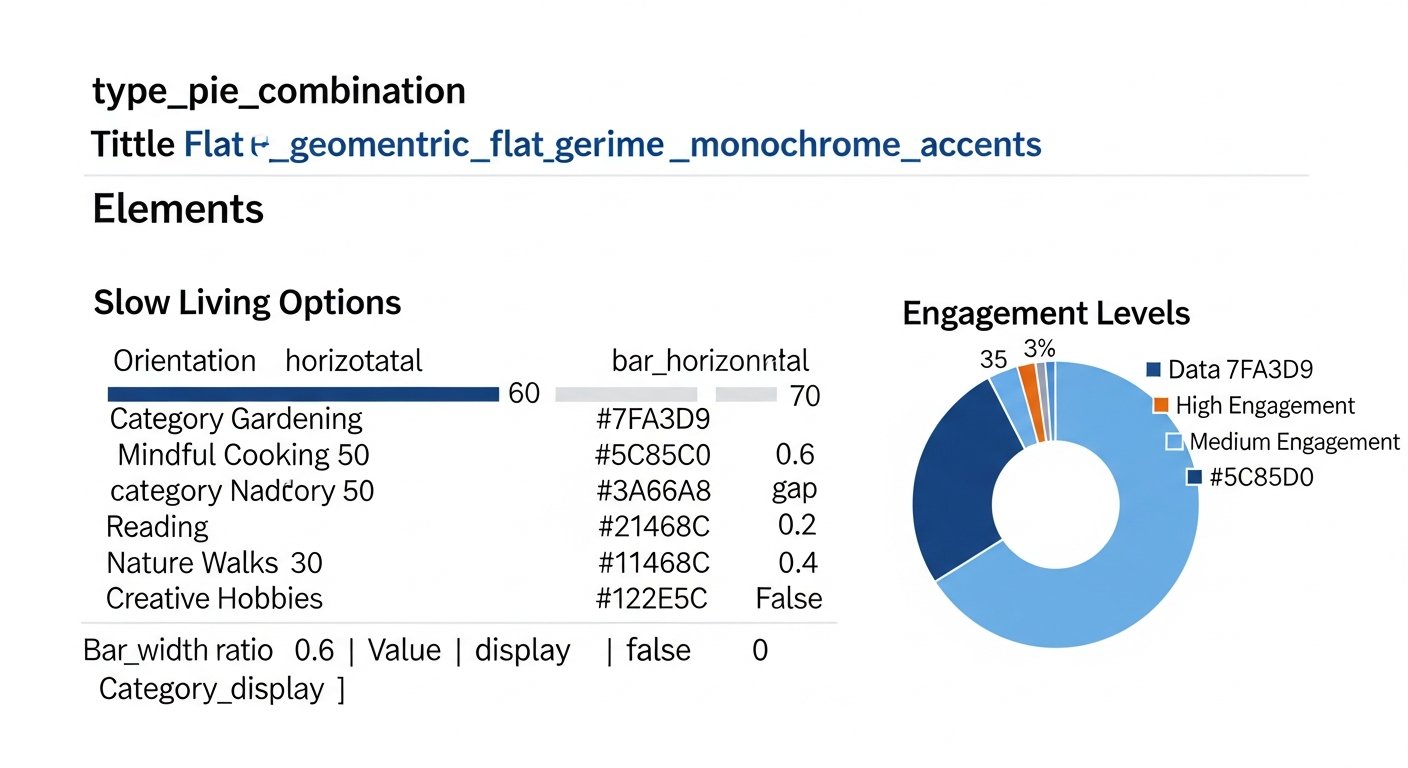
Here’s a comparison table to highlight the similarities and differences:
| Concept | Primary Focus | Key Practices | End Goal |
|---|---|---|---|
| Slow Living | Intentionality, mindfulness, quality over quantity in all life domains. | Mindful consumption, purposeful work, deliberate relationships, presence, connection to nature. | A life rich in meaning, well-being, and authentic fulfillment; reduced stress. |
| Minimalism | Reducing material possessions and distractions. | Decluttering, conscious consumption, focusing on essentials, valuing experiences over things. | Freedom from material burdens, clarity, more time/money for values. |
| Hygge | Cultivating coziness, comfort, and connection. | Lighting candles, enjoying warm drinks, cozying up, intimate gatherings, simple pleasures. | A feeling of warmth, comfort, contentment, and belonging. |
| Intentional Living | Aligning daily actions with core values and purpose. | Setting goals, mindful decision-making, conscious habits, self-reflection. | A purpose-driven life, personal growth, authenticity. |
As the table illustrates, intentional living is perhaps the broadest umbrella, under which slow living, minimalism, and hygge can all be powerful tools. Slow living provides a holistic framework for intentionality across various aspects of life. Minimalism offers a practical methodology for decluttering and simplifying, often paving the way for a slower pace. Hygge enriches the experience of slowness, especially in moments of rest and connection. Many women find that a blended approach—embracing the intentionality of slow living, using minimalism as a tool for simplification, and incorporating hygge for comfort—creates the most harmonious and fulfilling lifestyle.
Discover how intentional living can transform your daily routines.
Crafting Your Personal Slow Living Blueprint: A Step-by-Step Guide
The beauty of slow living is its adaptability. There’s no one-size-fits-all definition, no rigid set of rules you must follow. Instead, it’s a deeply personal journey of discovering what a more intentional, unhurried, and fulfilling life looks like for you. Crafting your personal slow living blueprint involves introspection, experimentation, and a commitment to aligning your actions with your deepest values. For women seeking to design a life that truly supports their well-being and aspirations, this process is an empowering act of self-authorship.
Assessing Your Current Pace and Values
Before you can intentionally slow down, you need to understand where you are currently. This initial assessment is crucial for identifying areas that require the most attention and for setting realistic goals.
- Journaling Exercise: Dedicate time to free-write about your current daily and weekly routines. What feels rushed? What brings you joy? What drains your energy? Where do you feel disconnected?
- Time Audit: For a few days, track how you actually spend your time. Be honest about screen time, passive consumption, and frantic busyness. This can be an eye-opening exercise.
- Identify Core Values: What truly matters to you? Is it connection, creativity, peace, growth, health, community, integrity? List your top 3-5 values. These will be your guiding stars.
- Pinpoint Stressors: What specific aspects of your life consistently cause stress or overwhelm? These are often prime candidates for a “slow” intervention.
This initial reflection creates a baseline and highlights the gap between your current reality and your desired, more intentional pace.
Identifying Your “Why”: Purpose-Driven Slowing
To sustain any significant lifestyle change, you need a strong “why.” What is the deeper motivation behind your desire to embrace slow living? This purpose will serve as your anchor during challenging moments and keep you inspired.
- What problems are you trying to solve? Is it chronic stress, a feeling of emptiness, lack of connection, creative block, or environmental concern?
- What positive outcomes do you envision? More presence with family, better health, deeper self-awareness, creative fulfillment, greater impact in your work?
- How will slow living enrich your life as a woman? Will it empower you to set better boundaries, reclaim your time, nurture your authentic self, or pursue long-held dreams?
Your “why” doesn’t have to be grand; it just needs to be deeply personal and resonate with your authentic self. Write it down and keep it visible.
Setting Realistic Goals and Boundaries
With your assessment and “why” in hand, it’s time to set actionable goals. Remember, slow living is about progress, not perfection, so be realistic and compassionate with yourself.
- Choose 1-3 Focus Areas: Based on your assessment, pick a few key areas to start. Instead of trying to slow down everything, focus on slow mornings, slow meals, or a digital detox, for instance.
- Set SMART Goals: Make your goals Specific, Measurable, Achievable, Relevant, and Time-bound. For example, instead of “be less busy,” try “have a phone-free breakfast with my family three times a week for the next month.”
- Establish Clear Boundaries: This is especially critical for women. Identify where you need to say “no” – to extra commitments, constant digital checking, or social obligations that drain you. Communicate these boundaries clearly and respectfully to others.
- Schedule Downtime: Consciously block out time in your calendar for rest, hobbies, or simply doing nothing. Treat it with the same importance as any other appointment.
Starting with small, achievable goals builds momentum and confidence, preventing burnout and fostering sustainable change.
Building Supportive Habits and Routines
Sustainable slow living is often built upon consistent, intentional habits and routines. These don’t have to be rigid but should provide a framework that supports your desired pace.
- Craft a Mindful Morning Routine: Instead of rushing, incorporate elements like quiet reflection, gentle movement, or a slow cup of coffee.
- Design a Relaxing Evening Routine: Wind down with tech-free activities like reading, journaling, or listening to music to prepare for restful sleep.
- Automate where possible: While slow living isn’t about automation for the sake of speed, automating mundane tasks (e.g., meal planning basics, bill payments) can free up mental space for more intentional living.
- Create “Sacred Spaces” and Times: Designate parts of your home or specific times of day that are conducive to slowness and reflection.
- Seek accountability:
What is Slow Living? Unpacking the Intentional Pace for Women in 2026
Affiliate disclosure: This article may contain affiliate links. Recommendations are independent and editorially driven.
In a world relentlessly pushing for more, faster, and bigger, a counter-cultural movement has quietly, yet powerfully, taken root: slow living. For women especially, navigating the intricate demands of career, family, personal growth, and societal expectations, the concept of “slow” isn’t about doing less; it’s about doing what matters most with intention, presence, and purpose. It’s a conscious rebellion against the chronic busyness that often leaves us feeling depleted, disconnected, and perpetually behind.
At its heart, slow living is an invitation to reclaim your time, attention, and energy, redirecting them towards experiences and relationships that genuinely nourish your soul. It’s about cultivating a life rich in meaning rather than just packed with activities. This comprehensive guide will delve deep into what slow living truly means, explore its profound benefits for women, dissect its core pillars, and provide actionable strategies to integrate this transformative philosophy into your everyday existence. If you’ve ever felt the quiet whisper of your spirit urging you to slow down, breathe deeper, and live more authentically, then understanding and embracing slow living might just be the pivot point you’ve been seeking.
Deconstructing “Slow Living”: More Than Just a Buzzword
The term “slow living” has permeated modern discourse, often associated with artisanal coffee, rustic cabins, or lengthy meditation retreats. While these elements can certainly be part of a slower lifestyle, they don’t define it. True slow living is a mindset, a philosophy, and a conscious approach to life that extends far beyond aesthetics or isolated activities. It’s an umbrella term for a host of movements that prioritize quality over quantity, depth over breadth, and presence over distraction.
Defining the Core Principles
At its essence, slow living is characterized by several fundamental principles:
- Intentionality: Every choice, action, and commitment is made with conscious thought and alignment with one’s values, rather than by default or external pressure.
- Mindfulness: Being fully present in the moment, savoring experiences, and paying close attention to sensory details and internal states. It’s about experiencing life, not just getting through it.
- Connection: Fostering deeper, more meaningful relationships with oneself, loved ones, community, and the natural world. It involves prioritizing human connection over digital interaction.
- Quality over Quantity: Opting for fewer, higher-quality possessions, experiences, and commitments that bring true value, rather than accumulating more stuff or packing the schedule.
- Sustainability: Living in a way that respects the planet and its resources, both environmentally and personally. This includes sustainable consumption, energy use, and personal energy management.
- Balance: Seeking harmony across various life domains—work, rest, play, relationships, and personal growth—to prevent burnout and promote holistic well-being.
- Reflection: Taking time to pause, observe, and learn from experiences, fostering continuous personal growth and self-awareness.
These principles aren’t rigid rules but rather guiding stars that help orient us away from the frantic pace of modern life towards a more deliberate, fulfilling existence.
Historical Roots and Modern Interpretations
While “slow living” feels like a contemporary concept, its roots stretch back further than you might imagine. The modern “slow movement” largely began with Carlo Petrini’s protest against the opening of a McDonald’s near the Spanish Steps in Rome in 1986, sparking the Slow Food movement. This movement championed traditional cuisine, local production, and the enjoyment of meals, directly opposing fast food culture.
From Slow Food, the philosophy expanded to encompass other aspects of life: Slow Cities (Cittaslow), Slow Design, Slow Travel, Slow Fashion, and even Slow Money. Each iteration applies the core principles of intentionality, quality, and sustainability to specific domains. Today, in an age of constant connectivity, instant gratification, and overwhelming information, slow living serves as a vital antidote, inviting us to disengage from the hamster wheel and consciously design lives that truly resonate with our deepest desires and values. It’s a framework that allows women to push back against the ‘have it all, do it all, be it all, all at once’ narrative, empowering them to define their own pace and priorities.
The Antithesis of the Hectic Modern Pace
The prevailing societal narrative often glorifies busyness, multitasking, and constant productivity. We’re encouraged to fill every moment, optimize every second, and strive for perpetual advancement. This relentless pursuit often leads to chronic stress, anxiety, burnout, and a pervasive feeling of not being enough. Slow living actively challenges this narrative. It’s not about being lazy or unproductive; it’s about redefining what productivity means. Instead of measuring success by the sheer volume of tasks completed, slow living measures it by the depth of engagement, the quality of relationships, and the sense of inner peace and fulfillment achieved.
It means saying “no” to commitments that don’t align with your values, even if they seem prestigious. It means carving out sacred moments for rest and reflection, even when your to-do list looms large. It means consciously choosing to be present with your children, your partner, or yourself, rather than constantly checking your phone or thinking about the next task. For women, who are often disproportionately burdened by emotional labor and societal expectations, this shift from external validation to internal alignment is profoundly liberating.
The Philosophy Behind the Pace: Why Intentionality Matters
[INLINE IMAGE 1: place after second H2 | alt=”what is slow living concept illustration”]
At its core, slow living isn’t simply a collection of practices; it’s a profound philosophy rooted in intentionality. It’s about consciously choosing how you spend your most precious resources: your time, your energy, and your attention. In a world designed to capture and monetize these resources, intentionality becomes an act of self-preservation and empowerment. For women, who often find their boundaries blurred and their energies dissipated across numerous demands, reclaiming intentionality is a powerful pathway to personal agency and well-being.
Mindful Consumption and Conscious Choices
One of the foundational tenets of slow living is mindful consumption. This extends beyond just what we buy; it encompasses what we consume in every sense – from food and fashion to media and information. It’s about stepping away from impulsive, dopamine-driven consumption and instead asking critical questions before engaging:
- Do I truly need this?
- Where did it come from, and what is its true cost (environmental, ethical, personal)?
- Does this add value to my life, or is it just another distraction?
- How will consuming this make me feel, both short-term and long-term?
For example, in slow fashion, this might mean investing in fewer, high-quality, ethically produced garments that stand the test of time, rather than chasing fleeting trends. In slow food, it means choosing local, seasonal produce, understanding its journey from farm to table, and savoring meals prepared with care. This conscious approach to consumption not only reduces waste and supports ethical practices but also frees up mental space and financial resources that would otherwise be tied up in acquiring and managing excess.
Reclaiming Time and Attention
In the digital age, our attention is a commodity constantly under assault. Notifications ping, social media feeds scroll endlessly, and the pressure to be ‘always on’ is immense. Slow living offers a powerful counter-narrative by encouraging us to reclaim our time and attention as sacred resources. This means:
- Setting digital boundaries: Implementing tech-free hours, designating specific times for checking emails, or even taking regular digital detoxes.
- Prioritizing deep work and focused tasks: Minimizing multitasking and dedicating uninterrupted blocks of time to meaningful activities, whether it’s creative work, learning, or simply spending quality time with loved ones.
- Embracing idleness and boredom: Recognizing that moments of unstructured time are crucial for creativity, reflection, and mental rejuvenation.
- Saying “no”: Learning to respectfully decline invitations or commitments that don’t align with your priorities or energy levels. This is especially vital for women who often feel compelled to accommodate everyone else’s needs.
By consciously guarding our time and attention, we create space for what truly matters, moving away from a reactive existence to a proactive one where we are the architects of our days.
Connecting with Self, Others, and Nature
Modern life often isolates us, despite our hyper-connectivity. We might have hundreds of online connections but lack deep, meaningful real-world relationships. Slow living emphasizes the importance of genuine connection:
- Self-connection: Through practices like journaling, meditation, mindful movement, or simply quiet introspection, slow living encourages a deeper understanding of one’s own needs, desires, and emotions. This self-awareness is the bedrock of intentional living.
- Connection with others: Prioritizing quality time over superficial interactions. This could mean sharing a homemade meal with loved ones, engaging in unhurried conversations, or actively participating in your local community. It’s about building a supportive network that enriches your life.
- Connection with nature: Spending time outdoors, whether it’s a walk in the park, gardening, or simply observing the sky. Reconnecting with the natural world grounds us, reduces stress, and reminds us of our place within a larger ecosystem.
These connections are not merely pleasantries; they are essential for psychological well-being, fostering a sense of belonging, meaning, and resilience. For women, who often feel the weight of societal expectations to be everything to everyone, these deliberate connections provide crucial anchors and sources of strength.
The Benefits of Embracing a Slower Lifestyle for Women
The decision to embrace slow living is often driven by a deep yearning for something more fulfilling than the relentless pursuit of speed. For women, the benefits of adopting this intentional pace can be particularly transformative, offering respite from the unique pressures and expectations placed upon them in contemporary society. It’s not just about managing stress; it’s about thriving.
Reducing Stress and Burnout
One of the most immediate and palpable benefits of slow living is a significant reduction in stress and the prevention of burnout. The constant demands of work, family, social commitments, and personal aspirations often leave women feeling perpetually overwhelmed and exhausted. Slow living counteracts this by:
- Encouraging purposeful pauses: Integrating moments of rest and reflection throughout the day and week, rather than viewing them as luxuries.
- Simplifying routines: Streamlining tasks, delegating where possible, and letting go of perfectionism.
- Setting firm boundaries: Protecting personal time and energy by saying “no” to non-essential commitments and digital distractions.
- Prioritizing sleep: Recognizing sleep as a foundational pillar of health, not something to be sacrificed.
By making these intentional shifts, women can move from a state of chronic stress to one of calm resilience, allowing their nervous systems to regulate and their energy levels to replenish.
Enhancing Mental Clarity and Focus
A cluttered schedule often translates to a cluttered mind. The constant barrage of information, notifications, and perceived obligations can make sustained focus and clear thinking incredibly challenging. Slow living fosters an environment conducive to mental clarity by:
- Minimizing distractions: Reducing digital noise and creating designated times for focused work or creative pursuits.
- Practicing mindfulness: Cultivating present-moment awareness, which sharpens attention and reduces rumination.
- Allowing for incubation: Giving thoughts and ideas space to develop naturally, rather than forcing solutions under pressure.
- Decluttering physical and digital spaces: A simplified environment often leads to a more organized mind.
With enhanced mental clarity, women can approach problems with greater insight, make decisions more confidently, and engage more deeply with their work, hobbies, and relationships.
Fostering Deeper Relationships
In a fast-paced world, relationships can become superficial, squeezed into hurried moments between other commitments. Slow living prioritizes the cultivation of deep, meaningful connections with loved ones by:
- Allocating dedicated, quality time: Scheduling unhurried moments for conversation, shared meals, or activities with family and friends.
- Practicing active listening: Being fully present during interactions, truly hearing and understanding others, rather than waiting for your turn to speak.
- Engaging in shared experiences: Creating lasting memories through slow travel, cooking together, or pursuing hobbies side-by-side.
- Limiting digital interference: Putting phones away during meals or conversations to ensure undivided attention.
These practices strengthen bonds, foster empathy, and create a supportive network that is crucial for emotional well-being, especially for women who often play central roles in nurturing family and community ties.
Cultivating Personal Growth and Creativity
True personal growth and creative expression require space—space to think, to experiment, to fail, and to simply be. The relentless pace of modern life often leaves no such space, stifling innovation and self-discovery. Slow living creates this vital breathing room by:
- Encouraging introspection: Providing opportunities for journaling, meditation, or quiet contemplation to understand one’s values, desires, and purpose.
- Allowing for unstructured time: Recognizing that boredom is often the birthplace of creativity, enabling new ideas and insights to emerge.
- Pursuing hobbies for enjoyment, not achievement: Engaging in activities like art, music, writing, or gardening purely for the joy of it, free from performance pressure.
- Embracing continuous learning: Dedicating time to read, research, or acquire new skills out of genuine curiosity.
For women seeking to define themselves beyond external roles, slow living provides the fertile ground necessary for authentic self-expression, innovative thinking, and profound personal evolution. It empowers them to explore their unique talents and passions without the burden of constant external validation.
Learn more about cultivating personal growth through intentional practices.
Key Pillars of Slow Living: Practical Applications
[INLINE IMAGE 2: place after fourth H2 | alt=”what is slow living comparison illustration”]
While the philosophy of slow living is deeply personal, it manifests through various practical pillars that guide our daily choices. These aren’t prescriptive rules but rather areas where we can consciously choose to slow down, be more intentional, and align our actions with our values. For women, integrating these pillars can be profoundly empowering, allowing them to exert control over various aspects of their lives amidst external pressures.
Slow Food: From Farm to Table with Awareness
The Slow Food movement, the genesis of the entire “slow” philosophy, is about savoring meals, appreciating where food comes from, and connecting with the processes of growing, preparing, and sharing. It’s a direct antidote to fast food culture.
- Prioritize local and seasonal: Support local farmers, reduce your carbon footprint, and enjoy fresh, flavorful ingredients. Visit farmers’ markets.
- Cook from scratch: Prepare meals at home, understanding the ingredients and process. This isn’t about gourmet cooking, but intentional preparation.
- Eat mindfully: Sit down, unplug, and savor each bite. Pay attention to flavors, textures, and the company you keep.
- Reduce food waste: Plan meals, use leftovers creatively, and compost when possible.
Slow food encourages us to reclaim the kitchen as a place of nourishment, creativity, and connection, transforming a daily necessity into a joyful ritual.
Slow Fashion: Building a Sustainable Wardrobe
Slow fashion challenges the fast fashion industry’s cycle of disposable trends and exploitative labor. It’s about building a wardrobe that is ethical, sustainable, and truly reflects your personal style.
- Invest in quality over quantity: Choose well-made pieces that last, reducing the need for constant replacements.
- Embrace timeless styles: Opt for classic pieces that won’t go out of style next season.
- Shop mindfully: Ask questions about how and where clothes are made. Support brands with transparent and ethical practices.
- Repair and repurpose: Extend the life of your garments by mending them or transforming them into something new.
- Curate a capsule wardrobe: Build a versatile collection of interchangeable items that suit your lifestyle, reducing decision fatigue and consumption.
This approach not only benefits the planet and garment workers but also simplifies your life and elevates your personal style.
Slow Work: Redefining Productivity and Purpose
Slow work isn’t about working less (though it can be), but about working more effectively, meaningfully, and sustainably. It redefines productivity away from frantic busyness towards focused, high-quality output.
- Prioritize deep work: Carve out uninterrupted blocks of time for your most important tasks, minimizing distractions.
- Set realistic boundaries: Learn to say “no” to non-essential tasks or meetings. Avoid overcommitting.
- Incorporate regular breaks: Step away from your desk, move your body, and allow your mind to rest and recharge.
- Focus on purpose: Connect your work to a larger meaning or value, making it more intrinsically motivating.
- Embrace a sustainable pace: Avoid the cycle of intense sprints followed by exhaustion. Aim for consistent, sustainable effort.
For women, who often feel pressure to constantly prove themselves, slow work empowers them to achieve significant results without sacrificing their well-being.
Slow Travel: Experiencing the Journey, Not Just the Destination
In contrast to ticking off tourist sites at breakneck speed, slow travel is about immersing yourself in a place, connecting with its culture, and savoring the journey.
- Stay longer in fewer places: Instead of rushing through multiple cities, choose one or two destinations and truly get to know them.
- Embrace local experiences: Eat where the locals eat, use public transport, and engage with the community.
- Travel mindfully: Be present in the moment, observe your surroundings, and allow for serendipitous discoveries.
- Reduce your environmental impact: Choose more sustainable transport options like trains over planes where possible.
Slow travel transforms a trip into an enriching, reflective experience, fostering a deeper understanding of the world and yourself.
Slow Parenting: Nurturing Conscious Connections
Slow parenting is about resisting the urge to overschedule children, constantly entertain them, or push for early achievements. Instead, it prioritizes connection, presence, and allowing children space to grow naturally.
- Prioritize presence over perfection: Give your undivided attention to your children during interactions, even if for short periods.
- Allow for unstructured play: Provide opportunities for imaginative, child-led play without constant adult intervention.
- Limit over-scheduling: Resist the pressure to enroll children in too many activities, allowing for downtime and family connection.
- Encourage independence: Empower children to do things for themselves, fostering competence and confidence.
- Model a slower pace: Show your children the value of rest, mindfulness, and quality time.
This approach reduces parental stress and fosters deeper, more authentic relationships within the family, giving children the gift of a childhood less rushed and more rooted.
Slow Tech: Digital Detox and Mindful Usage
Slow tech isn’t about abandoning technology; it’s about using it consciously and intentionally, rather than being passively consumed by it.
- Set boundaries: Establish tech-free zones (e.g., dining table, bedroom) and tech-free times (e.g., first hour of the day, last hour before bed).
- Curate your digital environment: Unfollow accounts that don’t inspire or inform you. Turn off unnecessary notifications.
- Schedule digital time: Instead of constantly checking, designate specific times for email, social media, or news consumption.
- Engage with purpose: Use technology as a tool for connection, learning, or creativity, rather than a source of distraction or comparison.
By taking control of our digital habits, we reclaim our attention and mental space for more meaningful pursuits.
Slow Money: Conscious Spending and Investing
Slow money applies the principles of intentionality and sustainability to financial decisions. It’s about aligning your money with your values.
- Conscious spending: Before making a purchase, ask yourself if it aligns with your values and true needs. Avoid impulsive buying.
- Support local and ethical businesses: Direct your money towards companies that share your values, whether they are local, sustainable, or ethically run.
- Invest with intention: Research where your investments are going. Consider impact investing or socially responsible funds.
- Reduce debt: Strive for financial freedom, which often means consuming less and managing debt responsibly.
Slow money transforms finances from a source of stress into a tool for positive impact and personal liberation.
Overcoming the Challenges: Making Slow Living Achievable
Embracing slow living is a journey, not a destination, and like any transformative path, it comes with its own set of challenges. In a society that largely champions speed and accumulation, choosing a different rhythm requires courage, conscious effort, and often, a willingness to stand apart. For women, these challenges can be particularly acute, given the societal pressures to juggle multiple roles and constantly strive for external validation. However, understanding and proactively addressing these hurdles can make the slow living journey not only achievable but deeply rewarding.
Societal Pressure and the Fear of Missing Out (FOMO)
One of the most significant obstacles to slow living is the pervasive societal pressure to keep up. The glorification of busyness often makes a slower pace seem unproductive or even lazy. There’s an underlying fear that by slowing down, we might miss opportunities, fall behind, or be perceived as less ambitious. This “fear of missing out” (FOMO) is amplified by social media, which constantly showcases curated highlight reels of others’ seemingly vibrant and packed lives.
Strategies to overcome this:
- Redefine success: Consciously shift your metrics of success from external achievements and busyness to internal peace, well-being, and meaningful connections.
- Curate your input: Limit exposure to social media feeds that trigger FOMO. Seek out communities and individuals who champion intentional living.
- Practice JOMO (Joy of Missing Out): Actively find pleasure in saying “no” and choosing quiet, personal time over external engagements. Recognize the value of uninterrupted focus and rest.
- Communicate your choices: Explain your slow living philosophy to friends and family, helping them understand your priorities without feeling judged.
Ultimately, overcoming this challenge requires a strong internal compass and a commitment to your own values, even when they diverge from the mainstream.
Financial Considerations and Practicalities
A common misconception is that slow living is only for the wealthy or those without demanding responsibilities. While some aspects, like organic food or sustainable fashion, can have higher upfront costs, slow living is fundamentally about making conscious choices, not necessarily expensive ones. However, practical considerations do arise, especially when it comes to work and income.
Strategies to address this:
- Start small and incrementally: You don’t need to quit your job or move to the countryside overnight. Begin with small, low-cost changes like cooking more at home, walking instead of driving for short distances, or designating tech-free evenings.
- Budget for values: Reallocate funds from impulsive purchases or unnecessary expenses towards experiences, quality items, or local products that align with your slow living goals.
- Embrace DIY and repair: Learning practical skills can save money and provide a sense of satisfaction. Repairing items instead of replacing them is a core slow living practice.
- Explore flexible work options: If possible, investigate part-time work, remote opportunities, or adjusted schedules that allow for more personal time. This might require careful financial planning and career reevaluation.
- Distinguish needs from wants: Slow living often leads to a natural reduction in consumption, which can ultimately save money and reduce financial stress.
Slow living is less about having endless resources and more about resourcefulness and aligning your spending with your life’s true priorities.
Starting Small: Incremental Shifts, Lasting Impact
The idea of overhauling an entire lifestyle can feel daunting and overwhelming, leading to inaction. The beauty of slow living is that it doesn’t demand a radical transformation all at once. It encourages incremental shifts, recognizing that consistent small changes accumulate into profound long-term impact.
Strategies for starting small:
- Choose one area to focus on first: Pick a pillar that resonates most with you (e.g., slow mornings, slow meals, digital detox an hour before bed) and dedicate your energy there.
- Implement one new habit per week or month: Don’t try to change everything simultaneously. Introduce one new slow living practice, establish it, and then add another.
- Experiment and adjust: What works for one person may not work for another. Be open to trying different approaches and modifying them to fit your unique circumstances and preferences.
- Celebrate small victories: Acknowledge and appreciate every step you take towards a slower, more intentional life. This positive reinforcement builds momentum.
Remember, the goal is not perfection, but progress. Each small, intentional step you take is a powerful act of self-care and a reaffirmation of your commitment to a more fulfilling life.
The Importance of Self-Compassion
The journey to slow living will inevitably have its bumps and detours. There will be days when you fall back into old habits, succumb to external pressures, or simply feel too tired to be intentional. In these moments, self-compassion is absolutely crucial. For women, who often carry heavy loads of self-criticism, this can be particularly challenging but vital.
Strategies for self-compassion:
- Practice self-forgiveness: When you slip up, acknowledge it without judgment, learn from it, and gently guide yourself back to your intentions.
- Treat yourself as you would a friend: Offer yourself the same kindness, understanding, and encouragement you would give to a loved one facing similar challenges.
- Recognize that it’s a process: Slow living is a continuous practice, not a destination. There will always be room for growth and refinement.
- Connect with supportive communities: Share your struggles and triumphs with others who understand and support your slow living journey.
Embracing self-compassion ensures that your pursuit of a slower life is one of kindness and growth, rather than another source of pressure or self-judgment.
Explore strategies for cultivating self-compassion and inner peace.
Slow Living vs. Minimalism vs. Hygge: Understanding the Nuances
The concepts of slow living, minimalism, and hygge often intertwine and share common ground, leading to occasional confusion. While they all advocate for a more intentional and fulfilling life, they each possess distinct core philosophies and primary focuses. Understanding these nuances can help you decide which approach, or combination of approaches, best resonates with your personal goals and lifestyle. For women navigating complex lives, discerning these differences can tailor their approach to intentional living more effectively.
Minimalism: Decluttering for Clarity
Minimalism is primarily a tool for removing excess. Its core tenet is that by owning fewer material possessions, we gain more time, money, and mental energy for what truly matters. It’s often characterized by:
- Focus on decluttering: Systematically reducing possessions to only what is essential or brings joy.
- Emphasis on utility and purpose: Every item owned should serve a clear function or provide significant value.
- Visual simplicity: Often associated with clean lines, neutral colors, and uncluttered spaces.
- Goal of freedom: Freedom from the burden of stuff, debt, and the consumption cycle.
While minimalism can certainly be a pathway to slow living (by freeing up time and space), it’s not the same. One can be a minimalist without actively seeking a slower pace, and one can practice slow living without extreme material reduction. Minimalism is largely about what you have (or don’t have), and its impact on your internal state.
Hygge: Cozy Comfort and Connection
Hygge (pronounced “hoo-gah”) is a Danish and Norwegian concept often translated as “coziness” or “comfort.” It’s an atmosphere and an experience, focusing on warmth, comfort, and connection with loved ones in a peaceful setting. Key aspects include:
- Atmosphere and mood: Creating a warm, cozy, and inviting environment, often with candles, blankets, warm drinks, and soft lighting.
- Social connection: Prioritizing intimate gatherings with close friends and family, fostering a sense of togetherness and belonging.
- Simple pleasures: Finding joy in everyday, gentle experiences like reading by a fireplace, sharing a meal, or enjoying a quiet moment.
- Feeling of security and contentment: A sense of well-being, safety, and comfort.
Hygge is very much about how you feel and how you experience moments, particularly in social and domestic settings. It’s a component that can easily be integrated into slow living, enhancing the quality of downtime and relationships, but it doesn’t encompass the broader philosophical shifts of intentionality across all life domains that slow living does.
Overlap and Distinctive Features
Here’s a comparison table to highlight the similarities and differences:
Concept Primary Focus Key Practices End Goal Slow Living Intentionality, mindfulness, quality over quantity in all life domains. Mindful consumption, purposeful work, deliberate relationships, presence, connection to nature. A life rich in meaning, well-being, and authentic fulfillment; reduced stress. Minimalism Reducing material possessions and distractions. Decluttering, conscious consumption, focusing on essentials, valuing experiences over things. Freedom from material burdens, clarity, more time/money for values. Hygge Cultivating coziness, comfort, and connection. Lighting candles, enjoying warm drinks, cozying up, intimate gatherings, simple pleasures. A feeling of warmth, comfort, contentment, and belonging. Intentional Living Aligning daily actions with core values and purpose. Setting goals, mindful decision-making, conscious habits, self-reflection. A purpose-driven life, personal growth, authenticity. As the table illustrates, intentional living is perhaps the broadest umbrella, under which slow living, minimalism, and hygge can all be powerful tools. Slow living provides a holistic framework for intentionality across various aspects of life. Minimalism offers a practical methodology for decluttering and simplifying, often paving the way for a slower pace. Hygge enriches the experience of slowness, especially in moments of rest and connection. Many women find that a blended approach—embracing the intentionality of slow living, using minimalism as a tool for simplification, and incorporating hygge for comfort—creates the most harmonious and fulfilling lifestyle.
Discover how intentional living can transform your daily routines.
Crafting Your Personal Slow Living Blueprint: A Step-by-Step Guide
The beauty of slow living is its adaptability. There’s no one-size-fits-all definition, no rigid set of rules you must follow. Instead, it’s a deeply personal journey of discovering what a more intentional, unhurried, and fulfilling life looks like for you. Crafting your personal slow living blueprint involves introspection, experimentation, and a commitment to aligning your actions with your deepest values. For women seeking to design a life that truly supports their well-being and aspirations, this process is an empowering act of self-authorship.
Assessing Your Current Pace and Values
Before you can intentionally slow down, you need to understand where you are currently. This initial assessment is crucial for identifying areas that require the most attention and for setting realistic goals.
- Journaling Exercise: Dedicate time to free-write about your current daily and weekly routines. What feels rushed? What brings you joy? What drains your energy? Where do you feel disconnected?
- Time Audit: For a few days, track how you actually spend your time. Be honest about screen time, passive consumption, and frantic busyness. This can be an eye-opening exercise.
- Identify Core Values: What truly matters to you? Is it connection, creativity, peace, growth, health, community, integrity? List your top 3-5 values. These will be your guiding stars.
- Pinpoint Stressors: What specific aspects of your life consistently cause stress or overwhelm? These are often prime candidates for a “slow” intervention.
This initial reflection creates a baseline and highlights the gap between your current reality and your desired, more intentional pace.
Identifying Your “Why”: Purpose-Driven Slowing
To sustain any significant lifestyle change, you need a strong “why.” What is the deeper motivation behind your desire to embrace slow living? This purpose will serve as your anchor during challenging moments and keep you inspired.
- What problems are you trying to solve? Is it chronic stress, a feeling of emptiness, lack of connection, creative block, or environmental concern?
- What positive outcomes do you envision? More presence with family, better health, deeper self-awareness, creative fulfillment, greater impact in your work?
- How will slow living enrich your life as a woman? Will it empower you to set better boundaries, reclaim your time, nurture your authentic self, or pursue long-held dreams?
Your “why” doesn’t have to be grand; it just needs to be deeply personal and resonate with your authentic self. Write it down and keep it visible.
Setting Realistic Goals and Boundaries
With your assessment and “why” in hand, it’s time to set actionable goals. Remember, slow living is about progress, not perfection, so be realistic and compassionate with yourself.
- Choose 1-3 Focus Areas: Based on your assessment, pick a few key areas to start. Instead of trying to slow down everything, focus on slow mornings, slow meals, or a digital detox, for instance.
- Set SMART Goals: Make your goals Specific, Measurable, Achievable, Relevant, and Time-bound. For example, instead of “be less busy,” try “have a phone-free breakfast with my family three times a week for the next month.”
- Establish Clear Boundaries: This is especially critical for women. Identify where you need to say “no” – to extra commitments, constant digital checking, or social obligations that drain you. Communicate these boundaries clearly and respectfully to others.
- Schedule Downtime: Consciously block out time in your calendar for rest, hobbies, or simply doing nothing. Treat it with the same importance as any other appointment.
Starting with small, achievable goals builds momentum and confidence, preventing burnout and fostering sustainable change.
Building Supportive Habits and Routines
Sustainable slow living is often built upon consistent, intentional habits and routines. These don’t have to be rigid but should provide a framework that supports your desired pace.
- Craft a Mindful Morning Routine: Instead of rushing, incorporate elements like quiet reflection, gentle movement, or a slow cup of coffee.
- Design a Relaxing Evening Routine: Wind down with tech-free activities like reading, journaling, or listening to music to prepare for restful sleep.
- Automate where possible: While slow living isn’t about automation for the sake of speed, automating mundane tasks (e.g., meal planning basics, bill payments) can free up mental space for more intentional living.
- Create “Sacred Spaces” and Times: Designate parts of your home or specific times of day that are conducive to slowness and reflection.
- Seek accountability: