

Understanding Love Languages in Dating: The Ultimate Guide to Deeper Connections
Have you ever been in a relationship where you felt you were doing everything right, yet your partner still seemed unfulfilled? Or perhaps you’ve experienced the reverse: a partner who showered you with gifts, but all you really wanted was for them to put their phone away and truly listen to you. This disconnect often stems from a fundamental misunderstanding of “love languages.” Originally coined by Dr. Gary Chapman, the concept of love languages has become a cornerstone of modern emotional intelligence.
In the fast-paced world of 2026 dating, where digital interactions often outpace physical ones, understanding these languages is no longer just a “bonus” skill—it is essential for survival. Whether you are navigating the early stages of a dating app match or looking to deepen a long-term commitment, mastering the art of love languages allows you to communicate affection in a way your partner can actually receive. By the end of this guide, you will have the tools to decode emotional needs and build more resilient, satisfying connections.
1. What Are the 5 Love Languages? A Modern Refresh
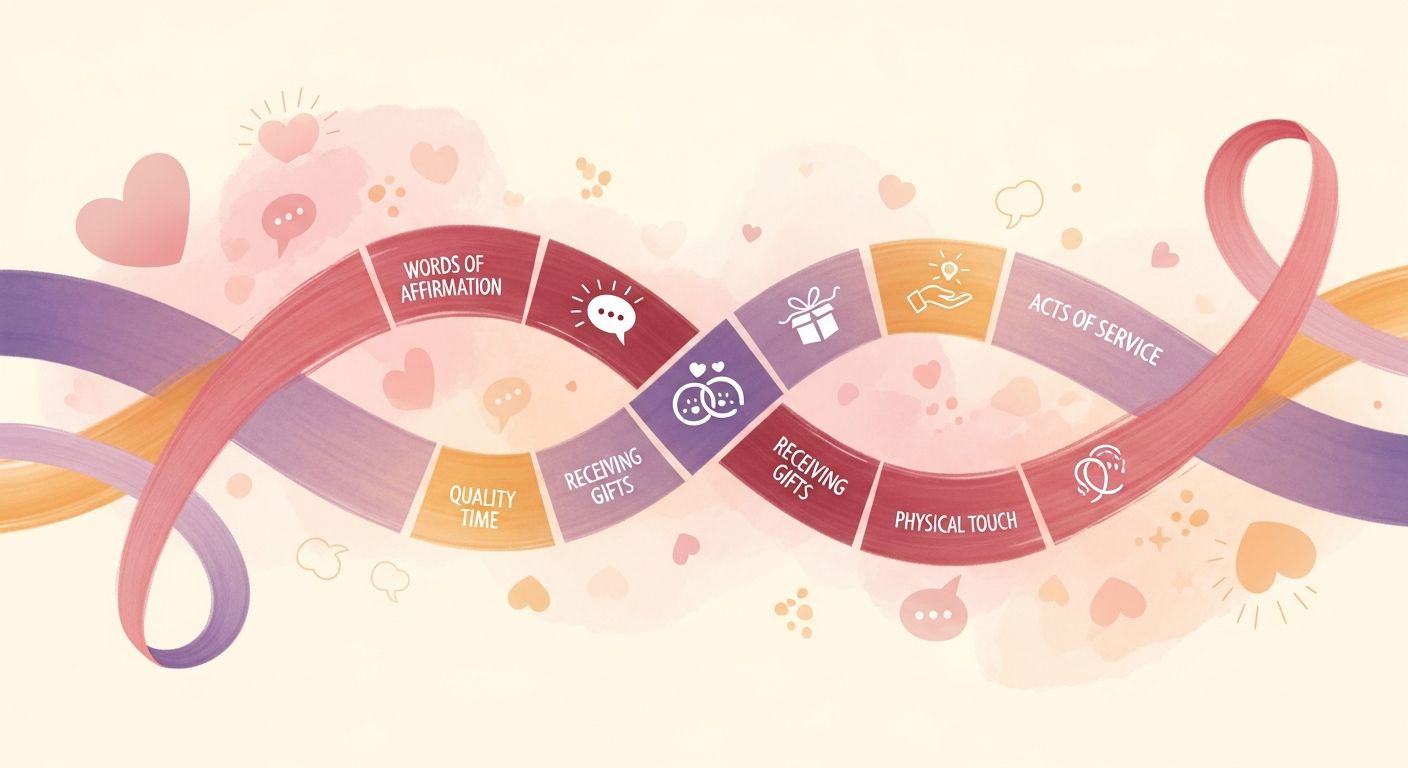
To understand love languages in dating, we must first define the five primary ways people give and receive love. While the core concepts remain the same, the way we express them has evolved alongside technology and social norms in 2026.
**Words of Affirmation**
For these individuals, spoken or written words hold immense power. This isn’t just about empty flattery; it’s about unexpected compliments, verbal expressions of appreciation, and frequent digital “check-ins.” In a dating context, a thoughtful text message saying, “I really admired how you handled that situation today,” can be more valuable than an expensive dinner.
**Acts of Service**
For this group, “actions speak louder than words.” They feel loved when someone eases the burden of their daily responsibilities. This could range from picking up groceries when they’re stressed to helping them troubleshoot a technical issue with their smart home system. It’s about the effort and the “I’m on your team” mentality.
**Receiving Gifts**
Often misunderstood as materialism, this language is actually about the thoughtfulness and the effort behind the gesture. A “gift” to these individuals is a visual representation of love. It’s the “I saw this and thought of you” factor. It doesn’t have to be expensive; even a hand-picked flower or a digital book they mentioned wanting can carry significant emotional weight.
**Quality Time**
This language is about undivided attention. In an era of constant notifications and “phubbing” (phone snubbing), quality time is becoming a rare and precious commodity. It means active listening, eye contact, and shared activities where the focus is entirely on the relationship.
**Physical Touch**
This isn’t limited to the bedroom. It includes holding hands, a squeeze of the arm, a long hug after a hard day, or simply sitting close together on the couch. For these individuals, physical presence and tactile connection are the primary ways they feel secure and grounded in a relationship.
2. Why Love Languages Matter More Than Ever in 2026 Dating
The dating landscape has shifted significantly. With the rise of AI-curated matches and hyper-scheduled lifestyles, the “human” element of dating can sometimes feel lost. Understanding love languages serves as a bridge, bringing intentionality back into the equation.
When you understand love languages, you stop “guessing” what your partner wants. In the early stages of dating, we often default to giving love in the way *we* want to receive it. If your language is “Acts of Service,” you might spend hours helping your date fix their car, only to be confused when they seem distant because you didn’t offer them any “Words of Affirmation” regarding their career goals.
In 2026, emotional burnout is a real concern. By focusing your energy on your partner’s specific love language, you become more efficient and effective in your romantic efforts. You aren’t wasting energy on gestures that don’t land; instead, you are providing the specific “emotional nutrients” your partner needs to feel secure. This builds a foundation of trust and reduces the friction that often leads to “situationships” or early-stage ghosting.
3. How to Identify Your Primary Love Language (and Your Partner’s)
Self-awareness is the first step toward social mastery. Before you can expect a partner to meet your needs, you must be able to articulate what those needs are.
**Reflecting on Your Own Language**
To find your language, ask yourself:
* **What do I complain about most?** If you often say, “We never go out anymore,” your language might be Quality Time. If you say, “You never help around the house,” it’s likely Acts of Service.
* **How do I show love to others?** We naturally give what we want to receive. If you are a prolific compliment-giver, your language is probably Words of Affirmation.
* **What makes me feel most secure?** Think of a time you felt truly “seen.” What was the other person doing in that moment?
**Observing Your Partner**
In the early stages of dating, you might not want to explicitly ask, “What is your love language?” (though in 2026, this is becoming a common and healthy conversation). Instead, observe their behavior. Do they light up when you compliment their outfit? Do they constantly reach out to hold your hand?
Another subtle trick is the “Choice Method.” Offer them two different types of gestures. For example, offer to help them with a chore (Acts of Service) or suggest a 30-minute walk with no phones (Quality Time). Their preference over time will reveal their primary language.
4. Navigating the “Language Gap”: When Styles Clash
It is rare to find a partner who shares your exact love language profile. This is known as the “Language Gap,” and while it can cause friction, it is also an opportunity for growth.
The key to bridging this gap is “Emotional Bilingualism.” Just as you might learn a second language to travel to a new country, you must learn to “speak” your partner’s love language even if it doesn’t come naturally to you.
For instance, if your partner requires Words of Affirmation but you are a “man of few words,” you may need to set reminders to send appreciative texts. Conversely, if you crave Physical Touch but your partner is more reserved, you must communicate that a simple hand-hold during a movie is enough to fill your emotional tank.
The goal isn’t to change who you are; it’s to expand your toolkit of affection. Successful couples in 2026 recognize that love is a verb—it is something you *do* based on the needs of the recipient, not just a feeling you have. This requires a level of selflessness and a willingness to step outside your comfort zone.
5. Love Languages as a Social Skill in Early Dating
While often discussed in the context of long-term marriage, love languages are a powerful tool for the “dating” phase. Using these concepts early on can set you apart from the crowd and demonstrate a high level of social intelligence.
During the first few dates, focus on “The Grand Tour.” This involves lightly testing all five languages to see which ones resonate.
* **Compliment them specifically** (Words of Affirmation).
* **Bring a small, thoughtful item** related to a previous conversation, like their favorite snack (Gifts).
* **Open a door or offer to handle the reservation** (Acts of Service).
* **Engage in deep, uninterrupted eye contact** (Quality Time).
* **Maintain a respectful, warm physical presence** (Physical Touch).
By diversifying your approach, you allow your date to feel “loved” in a way that feels authentic to them, even if they can’t quite put their finger on why they feel so comfortable around you. This creates a “halo effect,” where they associate you with the feeling of being understood. Furthermore, discussing these concepts openly can serve as a great filter. A partner who is willing to talk about emotional needs early on is often a partner who values growth and communication.
6. Avoiding Common Pitfalls: It’s a Tool, Not a Rule
As useful as love languages are, they are not a “fix-all” for relationship problems. There are several pitfalls to avoid when applying these concepts in your dating life.
**Don’t Use Them as an Excuse**
“I don’t do the dishes because my love language is Words of Affirmation” is not a valid argument. We all need a baseline level of all five languages to function in a healthy relationship. Using your “language” to avoid responsibility is a form of emotional manipulation.
**Beware of Over-Categorization**
People are complex. Someone might prefer Quality Time during the work week but crave Physical Touch on the weekends. Love languages can also shift based on stress levels or life stages. Don’t pigeonhole your partner into one category forever; remain curious and continue to observe.
**Compatibility Still Matters**
Love languages help with communication, but they cannot fix fundamental incompatibility in values, life goals, or personality. If you speak the same language but want completely different lives, the relationship will still struggle. Think of love languages as the “oil” that keeps the engine running smoothly, but the “engine” itself (your core values) must be solid first.
FAQ: Frequently Asked Questions about Love Languages
**Q1: Can your love language change over time?**
Yes. While many people have a “base” language that stays consistent, life circumstances can shift your priorities. For example, a new parent might find that their need for “Acts of Service” skyrockets, while someone going through a long-distance relationship might prioritize “Words of Affirmation” or “Quality Time” via digital means.
**Q2: What if my partner and I have the exact same love language?**
This can make things easier initially because you naturally give what the other person wants to receive. However, it can also lead to a “double deficit” if that specific need isn’t being met. For example, if both people value Quality Time but both are workaholics, the relationship will suffer more than if one partner had a different primary language.
**Q3: Is it possible to have two primary love languages?**
Absolutely. Many people have a “primary” and a “secondary” language that are almost equal in importance. It’s also common to have a preferred language for *giving* love and a different one for *receiving* it.
**Q4: How do I tell someone I’m dating that they aren’t meeting my love language needs?**
Use “I” statements and focus on the positive. Instead of saying, “You never compliment me,” try, “I feel so incredibly connected to you when you tell me what you appreciate about me. It really fills my tank.” This invites them to be a hero in your story rather than a villain.
**Q5: Are love languages scientifically proven?**
While the “5 Love Languages” is a conceptual framework rather than a clinical psychological theory, it aligns with many established psychological principles regarding attachment theory and positive reinforcement. Its longevity in the dating world is due to its practical, easy-to-apply nature.
Conclusion: Mastering the Art of Connection
As we navigate the complexities of dating in 2026, the ability to understand and speak different love languages remains one of the most potent social skills an adult can possess. It transforms dating from a game of chance into a practice of intentionality.
By taking the time to identify your own needs and becoming a student of your partner’s emotional world, you move beyond surface-level attraction. You begin to build a relationship based on mutual understanding, where both parties feel seen, valued, and truly loved. Remember, the goal of understanding love languages isn’t just to “keep a partner,” but to foster a deep, meaningful connection that stands the test of time. Start today by observing the people around you—you might be surprised by how much you’ve been missing, and how much closer you can become.