
Navigating your thirties is a unique journey of self-discovery and empowerment, and integrating strength training for women over 30 into your intentional living philosophy can profoundly shape your well-being. Far from being an optional activity, consistent resistance training is truly essential for women in this life stage, offering a powerful defense against age-related decline while boosting metabolic health, hormonal balance, and mental resilience. This isn’t just about looking good; it’s about feeling strong, capable, and vibrant enough to live a fully intentional life, embracing every challenge and opportunity with physical and mental fortitude. By understanding the critical role of building muscle after 30, women can unlock a cornerstone of holistic health, ensuring longevity and an elevated quality of life.
Why is Strength Training Non-Negotiable for Women Over 30?
For women stepping into or already navigating their thirties, the physiological landscape begins to shift. This pivotal decade marks the point where prioritizing physical strength transcends aesthetics and becomes a vital component of holistic health. Regular engagement in female strength and conditioning offers a profound shield against common age-related challenges, directly impacting bone density, muscle mass, metabolic function, and overall vitality. Understanding these profound benefits, the next logical step in your journey toward intentional well-being is to design an effective strength training program tailored to your needs.
Combating Age-Related Muscle Loss and Sarcopenia
As women age, particularly after 30, a natural process called sarcopenia begins, leading to a gradual decline in lean muscle mass. This isn’t just about looking less toned; sarcopenia impacts strength, mobility, and metabolic rate. Regular resistance training helps counteract this process, preserving and even building lean muscle mass. Maintaining muscle ensures your body remains strong and functional, supporting daily activities and preventing frailty later in life.
Boosting Bone Density and Preventing Osteoporosis
Bone mineral density peaks in your late twenties or early thirties and then gradually begins to decline. This decline accelerates significantly during perimenopause and menopause due to decreasing estrogen levels, increasing the risk of osteoporosis – a condition where bones become brittle and fragile. Strength training, particularly weight-bearing exercises, applies stress to the bones, stimulating them to become stronger and denser. This is a critical investment in skeletal health, directly countering age-related bone loss and significantly reducing the risk of fractures.
Enhancing Metabolism and Body Composition
Muscle tissue is metabolically active, meaning it burns more calories at rest than fat tissue. As muscle mass decreases with age, your basal metabolic rate (BMR) naturally slows down, making it easier to gain weight and harder to lose it. Weightlifting for women in their 30s effectively boosts your BMR by increasing lean muscle mass, turning your body into a more efficient fat-burning machine. This not only helps manage body weight and composition but also improves insulin sensitivity, reducing the risk of type 2 diabetes.
Balancing Hormones and Elevating Mood
Hormonal fluctuations, especially in estrogen, can become more noticeable in your thirties, impacting energy levels, mood, and sleep. Regular training for women’s longevity has been shown to positively influence hormonal balance. It can help regulate cortisol (the stress hormone) levels, increase the production of endorphins (natural mood elevators), and improve sleep quality. This holistic effect contributes to reduced stress, improved mental clarity, and a more positive outlook, aligning perfectly with intentional living principles.
Improving Functional Strength and Injury Prevention
Functional strength refers to the strength needed for everyday activities – lifting groceries, playing with children, climbing stairs, or simply maintaining good posture. Resistance training for mature women specifically targets and strengthens the muscles, ligaments, and tendons that support your joints, dramatically improving functional strength, balance, and coordination. This not only makes daily life easier but also significantly reduces the risk of common injuries from falls or repetitive strain, empowering you to move through life with confidence and ease.
| Benefit | Description | Specific Relevance for Women Over 30 |
|---|---|---|
| Combats Sarcopenia | Preserves and builds lean muscle mass. | Directly counters age-related muscle loss, maintaining strength and metabolism. |
| Boosts Bone Density | Increases bone mineral density, reducing fracture risk. | Critically important for preventing osteoporosis, especially post-30 due to hormonal shifts. |
| Enhances Metabolism | Increases basal metabolic rate and improves insulin sensitivity. | Helps manage weight and body composition, countering age-related metabolic slowdown. |
| Balances Hormones | Regulates stress hormones, boosts endorphins, improves sleep. | Alleviates mood swings, stress, and sleep disturbances often experienced in this decade. |
| Improves Functional Strength | Strengthens muscles for daily activities and improves balance. | Prevents injuries, enhances mobility, and supports an active, independent lifestyle. |
| Elevates Mood & Confidence | Releases endorphins, fosters a sense of accomplishment. | Contributes to mental well-being, stress reduction, and overall empowerment. |
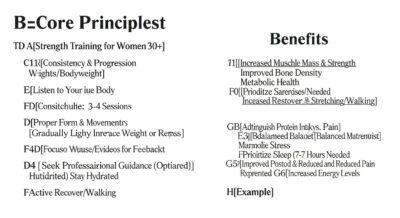
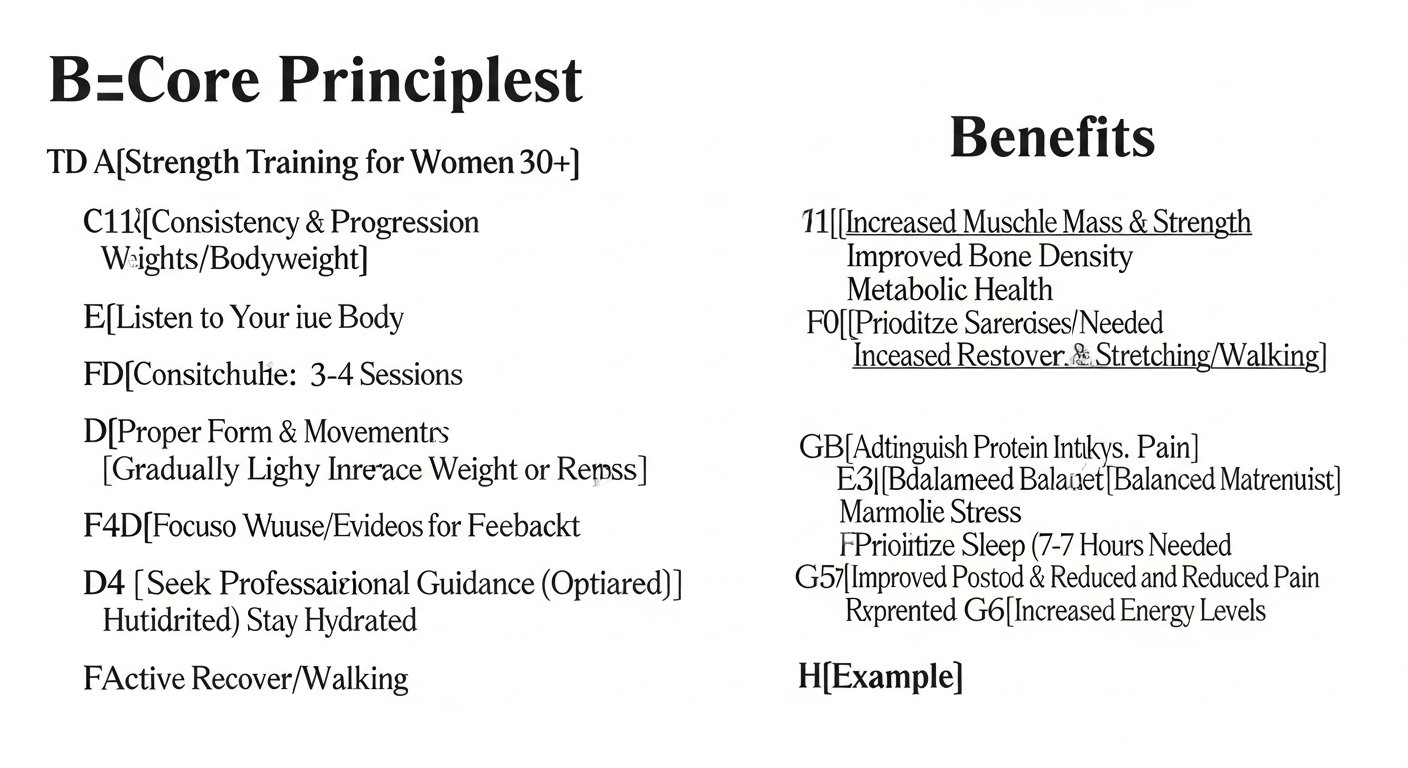
[INLINE IMAGE 1: diagram illustrating the various benefits of strength training for women over 30, such as stronger bones, increased metabolism, and improved posture]
Designing Your Effective Resistance Training Program
Now that the ‘why’ is clear, the ‘how’ becomes the focus. Designing a fitness routine for women post-30 requires a thoughtful approach, focusing on principles that ensure safety, effectiveness, and long-term adherence. The goal is to create a sustainable program that aligns with your life, builds strength progressively, and supports your overall intentional living objectives.
Key Principles: Progressive Overload, Consistency, and Recovery
At the heart of any successful resistance training regimen are three non-negotiable principles:
- Progressive Overload: This is the fundamental driver of adaptation and growth. To get stronger, you must continually challenge your muscles by gradually increasing the demands placed on them. This can be achieved by:
- Increasing the weight lifted (most common).
- Performing more repetitions with the same weight.
- Increasing the number of sets.
- Decreasing rest time between sets.
- Improving exercise form and control.
Without progressive overload, your body will plateau.
- Consistency: Sporadic workouts yield sporadic results. Aim for 2-4 structured resistance training sessions per week. Consistency over intensity, especially when starting, is key. Your body adapts best to regular stimulus.
- Recovery: Muscle growth (hypertrophy) happens not in the gym, but during recovery. This includes adequate sleep (7-9 hours), proper nutrition (especially protein), and active rest days. Over-training can lead to burnout, injury, and hinder progress.
Choosing the Right Exercises: Compound vs. Isolation
For building muscle after 30 (female), a combination of compound and isolation movements is ideal, with an emphasis on compound lifts.
- Compound Movements: These exercises involve multiple joints and muscle groups working together. They are highly efficient, burn more calories, and build functional strength effectively. Examples include:
- Squats: Barbell squats, goblet squats, sumo squats (legs, glutes, core).
- Deadlifts: Conventional deadlifts, sumo deadlifts, Romanian deadlifts (glutes, hamstrings, back, core).
- Presses: Overhead press, bench press, push-ups (shoulders, chest, triceps).
- Rows: Barbell rows, dumbbell rows, seated cable rows (back, biceps, shoulders).
- Lunges: Walking lunges, reverse lunges, lateral lunges (legs, glutes).
- Isolation Exercises: These target a single muscle group at one joint. They are excellent for addressing muscle imbalances, shaping specific areas, and adding volume to your training. Examples include bicep curls, triceps extensions, lateral raises, and hamstring curls.
Sample Weekly Workout Schedule for Beginners to Intermediates
This sample schedule focuses on full-body workouts, which are highly effective for women post-30 as they allow for frequent muscle stimulation and adequate recovery.
| Day | Focus Area | Exercises (3-4 per session) | Sets | Reps | Rest (seconds) | Notes |
|---|---|---|---|---|---|---|
| Monday | Full Body (Lower Focus) | Goblet Squats, Dumbbell Romanian Deadlifts, Push-ups, Bent-over Rows | 3 | 8-12 | 60-90 | Focus on controlled movements. If push-ups are hard, do them on knees or against a wall. |
| Tuesday | Active Recovery/Cardio | Walking, Yoga, Light Cycling | 30-45 min | Promotes blood flow and reduces soreness. | ||
| Wednesday | Full Body (Upper Focus) | Overhead Press (Dumbbells), Lunges (walking or reverse), Pull-aparts (band), Triceps Extensions | 3 | 8-12 | 60-90 | Ensure core engagement for presses and lunges. |
| Thursday | Rest | Prioritize sleep and hydration. | ||||
| Friday | Full Body (Balanced) | Deadlifts (lighter/RDLs), Incline Dumbbell Press, Step-ups, Plank variations | 3 | 8-12 (Plank: 30-60 sec) | 60-90 | Challenging full-body workout. Consider hiring a trainer for deadlift form. |
| Saturday | Active Recovery/Cardio | Hiking, Swimming, Pilates | 45-60 min | Enjoy movement outdoors or with mindful practices. | ||
| Sunday | Rest | Prepare for the week ahead with nourishing food and mental calm. |
What Are the Common Myths About Weightlifting for Mature Women?
Despite the overwhelming evidence supporting the benefits of resistance training for mature women, several stubborn myths persist, often deterring women from embracing this transformative practice. Dispelling these misconceptions is crucial for empowering women to confidently pursue their strength goals and unlock a new level of well-being.
- Myth 1: “Weightlifting will make me bulky.”
This is perhaps the most pervasive myth. Women simply do not have the same levels of testosterone as men, which is the primary hormone responsible for significant muscle hypertrophy. While you will build lean muscle, which gives a toned and defined look, you won’t accidentally become “bulky.” Instead, you’ll develop a stronger, more athletic, and aesthetically pleasing physique.
- Myth 2: “It’s too late to start in my 30s (or 40s, 50s, etc.).”
The human body is remarkably adaptable. Studies consistently show that individuals can build muscle and increase strength at any age, provided they engage in appropriate resistance training. It’s never too late to start reaping the benefits of increased bone density, improved metabolism, and enhanced functional strength.
- Myth 3: “Cardio is better for fat loss.”
While cardio is excellent for cardiovascular health and calorie expenditure, resistance training is superior for long-term body composition changes. By building muscle, you elevate your resting metabolic rate, meaning you burn more calories even when you’re not exercising. A combination of both is optimal for overall health and fat loss.
- Myth 4: “I need to lift heavy to see results.”
While progressive overload (which can involve increasing weight) is key, “heavy” is relative. You can achieve excellent results with moderate weights, higher repetitions, and a focus on perfect form and mind-muscle connection. What’s “heavy” for one person might be light for another; the key is challenging your muscles sufficiently.
- Myth 5: “I’ll get injured.”
Any physical activity carries some risk of injury, but strength training, when done correctly, is incredibly safe and actually helps *prevent* injuries by strengthening joints, ligaments, and tendons. Injuries typically occur due to improper form, attempting too much weight too soon, or neglecting warm-ups and cool-downs. Starting slow, focusing on technique, and listening to your body are paramount.
[INLINE IMAGE 2: infographic debunking common myths about women and weightlifting, with clear, concise counter-arguments]
Avoiding Common Pitfalls in Your Fitness Routines Post-30
Embarking on a journey of training for women’s longevity is exciting, but like any new endeavor, there are common mistakes that can hinder progress or even lead to frustration. Being aware of these pitfalls can help you navigate your fitness path more smoothly and effectively, keeping you aligned with your holistic well-being goals.
Overlooking Proper Form
One of the most frequent and detrimental mistakes is sacrificing proper exercise form for heavier weights or more repetitions. Incorrect form not only reduces the effectiveness of the exercise by failing to adequately target the intended muscles but also significantly increases the risk of injury. This is particularly crucial for compound movements that engage multiple joints and require coordinated effort.
Neglecting Progressive Overload
Many women start an exercise routine and stick to the same weights and reps for weeks or even months. As discussed, without progressively challenging your muscles, your body has no reason to adapt and grow stronger. If you’re not seeing progress, it’s often because you haven’t implemented a consistent strategy for progressive overload. Strive to slightly increase the challenge in some aspect of your workout each week or every other week.
Skipping Recovery and Nutrition
The “no pain, no gain” mentality can lead to overtraining and under-recovery, which is counterproductive. Muscle growth and repair primarily occur outside the gym. Neglecting adequate sleep, failing to consume enough protein, or skipping rest days can lead to chronic fatigue, plateaus, and even hormonal imbalances, especially for active women. Recovery is not passive; it’s an active part of your training plan.
Comparing Yourself to Others
In the age of social media, it’s easy to fall into the trap of comparing your fitness journey to others. Remember that everyone’s body, starting point, and journey are unique. Focus on your own progress, celebrate small victories, and tune into how your body feels rather than striving to emulate someone else’s physique or lifting numbers. Your strength journey is deeply personal and should be a source of empowerment, not comparison.
Nutrition and Lifestyle Support for Optimal Results
A well-structured resistance training program for women in their 30s is just one piece of the puzzle. Its efficacy is significantly amplified when supported by optimal nutrition and a balanced lifestyle. These elements are the cornerstone of holistic health and are crucial for recovery, muscle growth, energy levels, and overall vitality.
Fueling Your Body: Protein, Carbs, and Healthy Fats
- Protein: Essential for muscle repair and growth. Aim for 1.6 to 2.2 grams of protein per kilogram of body weight daily, spread throughout your meals. Sources include lean meats, poultry, fish, eggs, dairy, legumes, and plant-based protein powders.
- Carbohydrates: Your body’s primary energy source, crucial for fueling workouts and replenishing glycogen stores. Focus on complex carbohydrates like whole grains, fruits, and vegetables.
- Healthy Fats: Important for hormonal balance, nutrient absorption, and overall health. Include sources like avocados, nuts, seeds, olive oil, and fatty fish.
The Power of Hydration and Sleep
- Hydration: Water plays a critical role in every bodily function, including nutrient transport, temperature regulation, and joint lubrication. Dehydration can impair performance and recovery. Aim for at least 2-3 liters of water daily, more if you’re very active or in a hot climate.
- Sleep: This is where true recovery and muscle repair happen. During deep sleep, your body releases growth hormone, essential for tissue regeneration. Prioritize 7-9 hours of quality sleep per night. Create a consistent sleep schedule and a relaxing bedtime routine.
Mindset and Stress Management
Your mental state profoundly impacts your physical health. Chronic stress can elevate cortisol levels, which can hinder muscle growth and fat loss. Incorporate stress-reducing practices into your intentional living routine:
- Mindfulness and meditation.
- Regular movement (yoga, walking).
- Spending time in nature.
- Journaling or creative outlets.
- Prioritizing self-care and setting boundaries.
Equipment Options for Building Muscle After 30
Whether you prefer a gym environment or working out at home, there are numerous equipment options to support your fitness journey. The best choice depends on your budget, space, and personal preferences for your strength workouts for women’s health.
| Equipment Type | Pros | Cons | Best Use Case for Women Over 30 |
|---|---|---|---|
| Dumbbells | Versatile, accessible, good for unilateral work, wide range of exercises. | Can be limiting for very heavy lifts, takes up space for full sets. | Home workouts, progressive overload, building foundational strength, addressing imbalances. |
| Kettlebells | Excellent for dynamic, full-body movements (swings, cleans), builds explosive power and endurance. | Requires learning specific techniques, limited weight increments. | Functional fitness, conditioning, adding variety to routines, space-saving. |
| Resistance Bands | Portable, inexpensive, excellent for warm-ups, activation, and added resistance. | Resistance can be inconsistent, not ideal for maximal strength gains alone. | Travel, supplemental work, rehabilitation, home workouts, glute activation. |
| Barbells & Plates | Optimal for heavy compound lifts, allows for significant progressive overload. | Requires more space and investment, needs good form instruction. | Gym environments, serious strength progression, powerlifting-style training. |
| Bodyweight | No equipment needed, highly accessible, builds foundational strength and control. | Progressive overload can be challenging without external resistance. | Beginners, home workouts, travel, developing mastery of movement. |
Sustaining Your Strength Journey for Long-Term Well-being
Integrating a fitness routine into your life isn’t a temporary fix; it’s a long-term commitment to your health and vitality. For women over 30, sustaining your strength journey becomes an integral part of intentional living, allowing you to adapt, grow, and thrive for decades to come.
Adapting Your Training as You Evolve
Life changes, and so should your training. As you progress, your body will adapt, and your goals might shift. Be prepared to:
- Periodize your training: Vary your workout intensity and volume over time to prevent plateaus and reduce injury risk.
- Listen to your body: Some days you’ll feel stronger, others less so. Adjust your workouts accordingly. Don’t be afraid to take an extra rest day or deload if needed.
- Incorporate variety: Try new exercises, change your rep ranges, or explore different training styles (e.g., powerlifting, CrossFit, Pilates) to keep things fresh and continually challenge your body in new ways.
Making Fitness a Cornerstone of Intentional Living
True well-being is holistic. View your resistance training not as a chore, but as a powerful act of self-care and an investment in your future self. It’s a practice that teaches discipline, resilience, and body awareness, all valuable aspects of an intentional life. Empowering women to thrive physically and mentally means recognizing that consistent effort in the gym translates to greater energy, confidence, and capability in every other area of your life.
Embrace the journey. Celebrate your strength, both physical and mental. And remember, the most effective program is the one you can stick to, consistently, for the long haul. Your commitment to your physical strength is a profound declaration of your commitment to a vibrant, full, and intentional life.
Sources & References
- Westcott, W. L. (2012). Resistance training is medicine: effects of strength training on health. Current Sports Medicine Reports, 11(4), 209-216.
- Milanović, Z., Sporiš, D., & Weston, M. (2015). Effectiveness of High-Intensity Interval Training (HIIT) and Continuous Endurance Training for Improving Physical Fitness in Healthy Adults: A Systematic Review and Meta-Analysis. Sports Medicine, 45(10), 1469-1481.
- Roberts, B. M., et al. (2020). Sarcopenia and its implications on physical function, performance, and overall health in middle-aged and older adults. Experimental Gerontology, 140, 111054.
- Layne, J. E., & Nelson, M. E. (1999). The effects of progressive resistance training on bone density: a review. Medicine & Science in Sports & Exercise, 31(1), 25-30.
About the Author
Amara Diallo, Wellness & Empowerment Coach — I’m dedicated to guiding women towards joyful, balanced lives through mindful practices and empowering self-discovery.
Reviewed by Olivia Sterling, Senior Content Editor — Last reviewed: April 06, 2026
For more insights into creating a life of purpose and well-being, explore our broader content on [PILLAR LINK: Holistic Wellness for Women].