


Updated October 2023. Embracing intuitive eating for women is a transformative step toward reclaiming body autonomy and fostering a sustainable, peaceful relationship with food. Rather than relying on external rules, calorie counting, or restrictive regimens, this framework encourages a deep reconnection with internal physiological signals. It asks individuals to pause, listen, and trust their body’s innate wisdom.
For generations, diet culture has disproportionately targeted female bodies, framing natural fluctuations and biological needs as problems to be solved. Shifting away from this paradigm requires more than just changing what is on the plate; it necessitates a complete psychological overhaul. By dismantling the guilt and shame historically tied to nourishment, individuals can free up immense cognitive energy. That reclaimed energy can then be directed toward passions, careers, and genuine holistic well-being, creating a foundation for truly intentional living.
The Core Principles of the Non-Diet Approach
Imagine sitting at a desk at 3:00 PM, overwhelmed by a sudden, intense craving for sugar, despite having eaten a “perfectly portioned” salad for lunch. When caloric intake is artificially suppressed, the human brain interprets the deficit as a famine threat, releasing a cascade of stress hormones that override willpower and trigger primal survival behaviors. Research highlighted by the National Eating Disorders Association (NEDA) indicates that individuals adhering to rigid dietary rules frequently experience reactive binge episodes within a few months of restriction.
Reversing this biological panic requires cultivating interoceptive awareness, which is the ability to perceive physical sensations originating within the body, such as a heartbeat, breath, or genuine hunger pangs. When people systematically ignore these signals in favor of tracking apps or scheduled eating windows, the neural pathways connecting the gut and the brain weaken. Rebuilding this connection is the foundational step of the entire philosophy.
| Core Principle | Traditional Dieting Approach | Body Wisdom Approach |
|---|---|---|
| Relationship to Food | Moralized (Good vs. Bad foods) | Neutral (All foods fit into a balanced life) |
| Measurement of Success | Scale weight, measurements, or clothing size | Energy levels, mental peace, and digestion |
| Response to Hunger | Delay, distract, or suppress with water/caffeine | Honor promptly with satisfying nourishment |
| Exercise Motivation | Burning calories or altering body shape | Joyful movement, strength, and cardiovascular health |
Incorporating practices that cultivate mindful presence can significantly accelerate the process of tuning back into these internal cues. For a deeper dive into these foundational concepts, see our detailed guide on The 10 Principles of Intuitive Eating Explained.
How Do You Honor Physiological Cues Over External Rules?
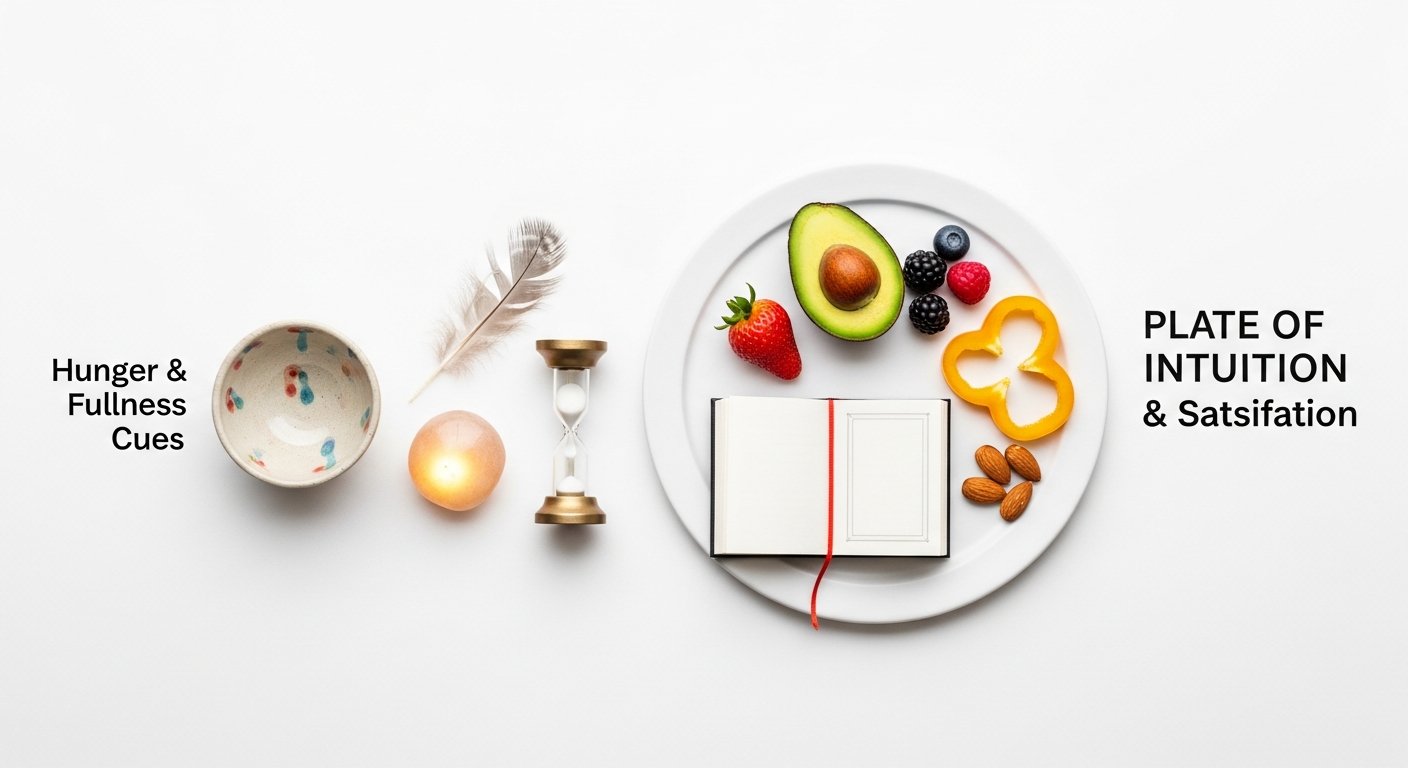
When an individual chronically ignores the physical rumbling of an empty stomach, the endocrine system eventually stops sending the message. Because leptin and ghrelin—the hormones responsible for regulating appetite—function on a delicate feedback loop, continuous disruption creates metabolic confusion. As a result, satiety signals become blunted, making it incredibly difficult to recognize the feeling of comfortable fullness when food is finally consumed.
Research published in the Journal of the Academy of Nutrition and Dietetics observed that restoring prompt responses to early hunger cues significantly reduces episodes of emotional overeating over time. Instead of waiting until extreme, ravenous hunger strikes—which often leads to rapid, disconnected eating—individuals learn to identify subtle, early signs like slight lethargy, loss of focus, or a gentle emptiness in the stomach.
Consider a scenario where a person feels a mild slump in energy mid-morning but decides to push through with black coffee until a culturally prescribed lunch hour. By noon, the physiological drive for quick energy is so intense that they consume their meal rapidly, entirely bypassing the sensory enjoyment of the food and missing the transition from empty to satisfied. Relearning to honor these cues requires patience and a willingness to experiment without judgment.
Recognizing Success and Failure in Cue Response
- What success looks like: Pausing mid-meal to assess flavor and satisfaction, and comfortably leaving food on the plate if the physical sensation of fullness has been reached.
- What failure looks like: Eating strictly according to a clock, consuming a predetermined portion regardless of actual appetite, and feeling physically uncomfortable afterward.
To explore this further, see our detailed guide on Understanding Hunger & Fullness Cues for Women.
[INLINE IMAGE 2: Infographic comparing ignored physiological hunger cues leading to energy crashes versus honored hunger cues leading to steady vitality in women.]
How Do Hormonal Fluctuations Impact Body Wisdom?
According to data from the Endocrine Society, a female’s basal metabolic rate can increase by anywhere from 100 to 300 calories per day during the luteal phase of the menstrual cycle. This physiological shift is not a lack of discipline; it is a measurable, biological demand for increased energy to support endometrial thickening and elevated body temperature.
A woman might notice herself craving dense, carbohydrate-rich foods a week before her cycle begins. Rather than fighting this urge and experiencing subsequent fatigue or mood instability, providing the body with complex carbohydrates and fats meets the hormonal demand efficiently. Because estrogen and progesterone levels heavily influence insulin sensitivity and serotonin production, craving sugar or starch is often the brain’s direct attempt to self-soothe and stabilize mood chemistry.
Ignoring these cyclical needs frequently results in severe energy crashes and exacerbated premenstrual symptoms. By understanding and anticipating these changes, one can focus on preventing cyclical exhaustion through adequate, unapologetic nourishment. The body is not a static machine; it is a dynamic ecosystem that requires different inputs depending on the season of the month or life stage. See our detailed guide on Intuitive Eating and Menopause: Navigating Hormonal Shifts.
What Are the Most Common Mistakes When Transitioning to Body Autonomy?

Because the modern wellness industry frequently co-opts anti-diet terminology, many individuals accidentally turn the philosophy of body autonomy into just another restrictive regimen. This phenomenon, often referred to as the “hunger-fullness diet,” strips away the psychological freedom intended by the practice. When people treat internal cues as strict biological laws rather than gentle suggestions, they inadvertently foster orthorexia, an unhealthy obsession with eating in a perfectly “correct” or “clean” manner.
Imagine a person refusing to eat a slice of birthday cake at a friend’s party solely because their stomach isn’t actively growling. This hyper-fixation on physical hunger entirely dismisses the psychological and social satisfaction factors of eating, which are equally critical to a healthy relationship with food. Studies published in journals like Health Psychology have found that beginners mistakenly utilize satiety cues as a rigid, punishing limit rather than a flexible guide.
Common Mistakes When Transitioning
- Using hunger cues as a deprivation tool: Forcing oneself to wait for extreme physical symptoms before “allowing” food.
- Ignoring practical hunger: Refusing to eat before a long flight or busy shift just because physical hunger isn’t present yet.
- Failing to neutralize all foods: Continuing to mentally label items as “guilt-free” or “cheat meals.”
- Expecting immediate weight loss: Entering the process with the covert goal of shrinking the body, rather than healing the mind.
- Neglecting satisfaction: Eating a massive bowl of raw vegetables when the body actually desires a warm, savory bowl of pasta, resulting in ongoing mental cravings.
For more insights on avoiding these pitfalls, see our detailed guide on The 10 Principles of Intuitive Eating Explained.
[INLINE IMAGE 4: Illustration of a woman untangling diet culture rules, replacing them with flexible ribbons representing body trust and mindful nourishment.]
Types of Societal Pressures and How to Navigate Diet Culture
Picture arriving at a family holiday gathering where a well-meaning relative immediately comments on the amount of food on your plate, or praises a cousin for losing weight. These micro-interactions continuously reinforce the societal narrative that a person’s moral worth is directly tied to their physical size and their ability to restrict sustenance. Reports by the American Psychological Association highlight that a vast majority of adult females experience unsolicited commentary regarding their body size or food choices during social events.
Because media conditioning equates thinness with health, success, and virtue, adopting a non-diet paradigm creates profound cognitive dissonance. It requires actively dismantling deeply ingrained beliefs and establishing strong boundaries to protect one’s mental space. Shifting toward body neutrality—the practice of accepting the body as a vessel for experiencing life rather than an ornament to be judged—is essential for surviving in a weight-obsessed world.
Learning how to articulate these boundaries effectively is crucial for long-term success. Those navigating complex family dynamics may find it helpful to focus on setting boundaries with family members to protect their healing journey. See our detailed guide on Challenging Diet Culture: A Feminist Perspective.
What Does Gentle Nutrition Look Like in Practice?
Findings from the Academy of Nutrition and Dietetics suggest that individuals who practice flexible, non-restrictive eating often consume a wider variety of essential micronutrients over time compared to chronic dieters. This occurs because removing the restrictive scarcity mindset naturally leads to a broader, more diverse intake of food groups over time.
Gentle nutrition involves making food choices that honor both physical health and taste bud satisfaction without relying on rigidity. Because the body naturally seeks homeostasis, a person who truly has unconditional permission to eat all foods will eventually crave fresh produce and lean proteins just as much as they crave sweets. The focus shifts toward nutrient density and how specific foods impact energy, digestion, and cognitive function.
Consider an athlete preparing for an evening workout. While a donut might sound delicious, they know from experience that a mix of complex carbohydrates and protein will prevent a blood sugar crash during their session. They choose a turkey sandwich and an apple—not because the donut is “bad,” but because the sandwich physically serves their immediate goal better. This is especially relevant when fueling muscular recovery and maintaining long-term physical resilience. See our detailed guide on Gentle Nutrition for Women’s Health.
Integrating Mindful Nourishment Into a Holistic Lifestyle
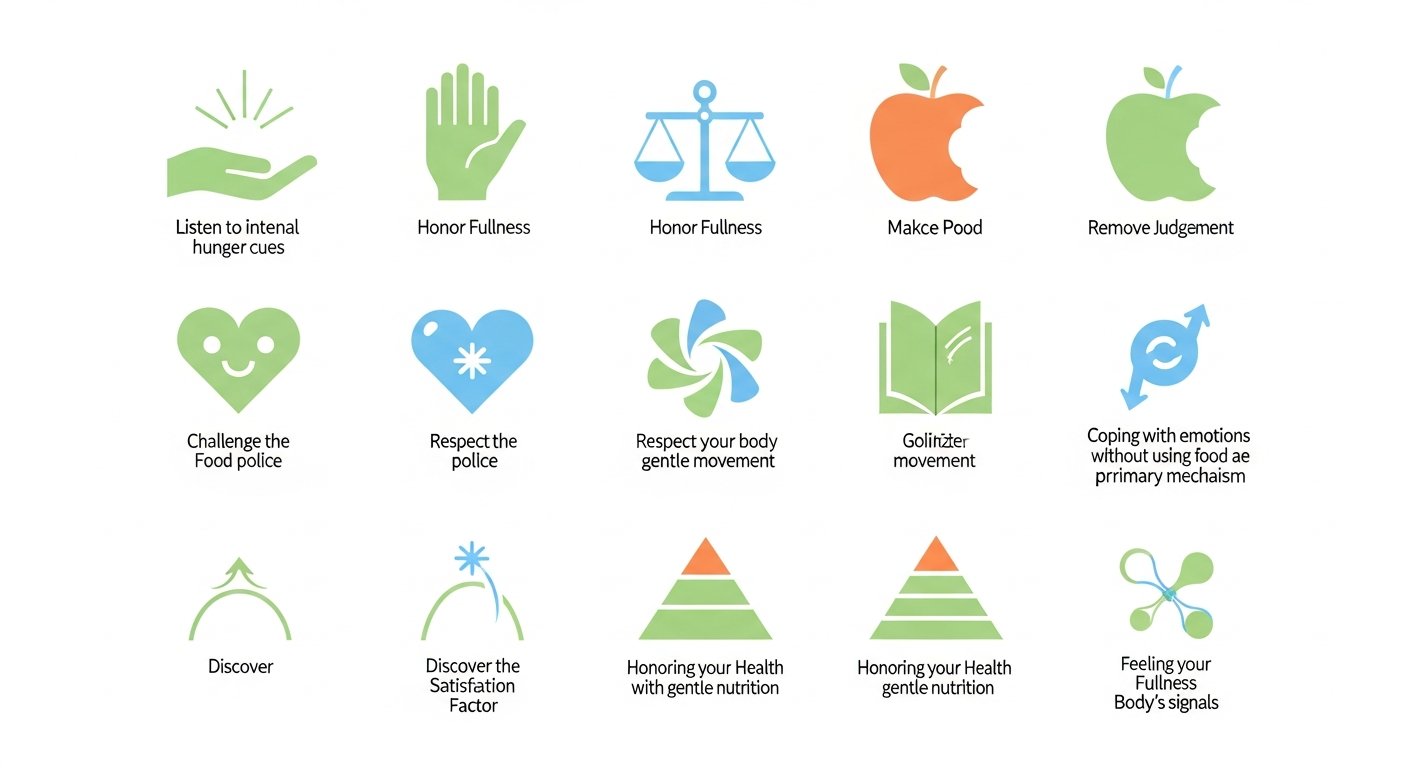
A woman plans a weekend getaway focused on relaxation; previously, this would involve intense anxiety about restaurant menus, tracking macros, and ensuring access to a hotel gym. Now, she wakes up without a mental calculator of yesterday’s intake, orders a breakfast that sounds appealing, and goes for a hike simply because the weather is beautiful and movement feels joyful.
Because holistic integration removes the chronic anxiety associated with eating and body management, it frees up a massive amount of mental bandwidth. This cognitive liberation is perhaps the most profound benefit of the entire practice. Wellbeing indices by organizations like Gallup have consistently demonstrated an increase in overall self-reported life satisfaction among individuals who successfully resolve their internal food anxiety.
Signs of Holistic Integration
- What success looks like: Spontaneously agreeing to go out for ice cream with friends without feeling the need to “earn it” through exercise beforehand or “burn it off” afterward.
- What failure looks like: Obsessively researching restaurant menus days in advance to pre-calculate the lowest-calorie option, ignoring what actually sounds appetizing.
Ultimately, making peace with food is a gateway to broader personal development. As individuals stop fighting their biology, they often seek out immersive restorative experiences that nurture the mind and spirit. To explore how this fits into your broader life goals, see our detailed guide on The Personal Growth Guide for Women.
Next Steps for Your Mindful Eating Journey
Transitioning away from decades of diet culture conditioning is not an overnight process; it requires immense self-compassion, patience, and a willingness to unlearn deeply ingrained habits. The journey toward body autonomy is non-linear. There will be days when old restrictive thoughts resurface, and that is completely normal. The goal is not perfection, but rather a consistent return to trusting your body’s signals.
To begin applying these principles today, start by simply observing your current habits without judgment. Notice when you feel hungry, how different foods impact your energy levels, and what emotions arise when you eat. Gradually introduce unconditional permission to enjoy the foods you have previously restricted, and practice tuning into your satiety cues during meals.
If you find the transition overwhelming, consider seeking support from a certified non-diet dietitian or a therapist specializing in eating behaviors. Building a supportive community and curating your social media feeds to reflect body diversity can also significantly reinforce your new mindset. Remember, reclaiming your relationship with food is ultimately about reclaiming your life, freeing up your energy to focus on what truly matters to you.
Sources & References
- Tribole, E., & Resch, E. (2020). Intuitive Eating: A Revolutionary Anti-Diet Approach (4th ed.). St. Martin’s Essentials.
- National Eating Disorders Association. (2023). Statistics and Research on Eating Disorders.
- Tylka, T. L., et al. (2014). The weight-inclusive versus weight-normative approach to health: evaluating the evidence for prioritizing well-being over weight loss. Journal of Obesity.
- American Psychological Association. (2022). The Impact of Weight Stigma on Psychological Well-being.
- Academy of Nutrition and Dietetics. (2021). Position of the Academy of Nutrition and Dietetics: Interventions for the Treatment of Overweight and Obesity in Adults.
Reviewed by Olivia Sterling, Senior Content Editor — Last reviewed: October 15, 2023