

Raising Emotionally Intelligent Children: A Heartfelt Guide for Intentional Parents
Parenting is a beautiful, bewildering journey. One moment, your heart swells with an almost unbearable love; the next, you’re navigating a tantrum in the cereal aisle, wondering if you’re doing anything right. We pour so much energy into ensuring our children are safe, healthy, and academically prepared, but what about their inner world? What about the skills they need to understand themselves, navigate complex relationships, and bounce back from life’s inevitable curveballs? This is where emotional intelligence (EQ) steps in, not just as a buzzword, but as the foundational superpower we can equip our children with for a truly fulfilling life.
At The Contextual Life, we believe in raising humans who are not just smart, but wise – wise enough to feel deeply, think critically, and connect authentically. This guide is born from that belief, offering practical, evidence-based strategies tempered with the understanding that parenting is messy, glorious, and deeply human. We’re not aiming for perfection, but for progress, for connection, and for building a legacy of resilient, compassionate, and emotionally intelligent individuals. Think of me as your wise friend, here to share what I’ve learned, what the research suggests, and what truly works in the trenches of everyday family life.
Understanding Emotional Intelligence: More Than Just Feelings
Before we dive into the “how,” let’s clarify what emotional intelligence truly means. It’s far more than just “being nice” or “not crying.” Psychologist Daniel Goleman, who popularized the concept, defines EQ as encompassing several key competencies:
- Self-Awareness: The ability to recognize and understand your own emotions, thoughts, values, and how they impact your behavior. For a child, this might look like recognizing their tummy hurts when they’re anxious or their fists clench when they’re angry.
- Self-Regulation: The capacity to manage your emotions, impulses, and adapt to changing circumstances. This is the child who can take a deep breath instead of yelling, or wait their turn even when impatient.
- Motivation: Being driven by internal goals and values, rather than external rewards or pressures. It’s the child who perseveres through a challenge because they genuinely want to master it.
- Empathy: The ability to understand and share the feelings of another. This is crucial for forming deep connections and acting with compassion.
- Social Skills: The proficiency in managing relationships, building networks, and navigating social situations effectively. Think cooperation, conflict resolution, and effective communication.
Why does this matter so much? Research consistently shows that children with higher emotional intelligence tend to perform better academically, build stronger, more stable relationships, exhibit greater resilience in the face of adversity, and experience better overall mental health. They’re less prone to anxiety and depression, more likely to succeed in their careers, and generally lead more contented lives. Simply put, EQ is often a stronger predictor of life success and happiness than IQ. It’s about equipping our children with an internal compass that guides them through the complexities of being human.
The Cornerstone: Emotional Coaching (The Gottman Method)
One of the most powerful, research-backed frameworks for raising emotionally intelligent children comes from Dr. John Gottman and his colleagues. They call it “Emotional Coaching,” and it’s a five-step process that transforms frustrating moments into opportunities for connection and learning. This isn’t about solving all your child’s problems, but about teaching them how to solve their own, while feeling understood and loved.
Step 1: Be Aware of Your Child’s Emotions
This sounds simple, but in our busy lives, it’s easy to miss the subtle cues. Emotional awareness means being present enough to notice when your child seems down, frustrated, or unusually quiet. It’s about observing their body language, listening to their tone of voice, and paying attention to changes in their behavior.
* Real Scenario: Your toddler is usually boisterous after daycare, but today they’re clinging to your leg, looking at the floor.
* Actionable Step: Take a moment to pause. Get down to their eye level. Instead of immediately asking “What’s wrong?”, try a gentle observation: “You seem a little quiet today, sweetie. Is everything okay?”
Step 2: Recognize the Emotion as an Opportunity for Connection and Teaching
This is a pivotal mindset shift. When a child expresses a “negative” emotion – anger, sadness, frustration – our natural inclination might be to fix it, dismiss it, or even get annoyed by it. Emotional coaching reframes these moments as precious opportunities to connect deeply and teach invaluable life skills.
* Real Scenario: Your kindergartner has a meltdown because their drawing didn’t turn out “perfect.” Your first thought might be, “It’s just a drawing!”
* Actionable Step: Instead of minimizing, tell yourself: “This is a chance to show them I care and teach them about big feelings.” Take a deep breath yourself before responding.
Step 3: Listen with Empathy and Validate Feelings
This is the heart of emotional coaching. Validation doesn’t mean agreeing with your child’s actions or even their perspective; it means acknowledging and accepting their feelings as real and understandable from their point of view. Use reflective listening to show you’re truly hearing them.
* Real Scenario: Your pre-teen slams their door after you’ve said they can’t go to a friend’s party.
* Actionable Step: Once things are calmer, approach their door. “I hear you’re really upset about not being able to go to Sarah’s party. It sounds like you feel really disappointed and maybe a bit angry with me right now.” (Notice, you’re not saying “You’re right, you should go!”)
Step 4: Help Your Child Label Emotions with Words
As adults, we have a rich vocabulary for our emotions. Children, especially young ones, often don’t. Helping them name what they’re feeling empowers them and reduces the overwhelming nature of big emotions. It also expands their emotional literacy, which is crucial for self-awareness.
* Real Scenario: Your child is crying uncontrollably after falling and scraping their knee.
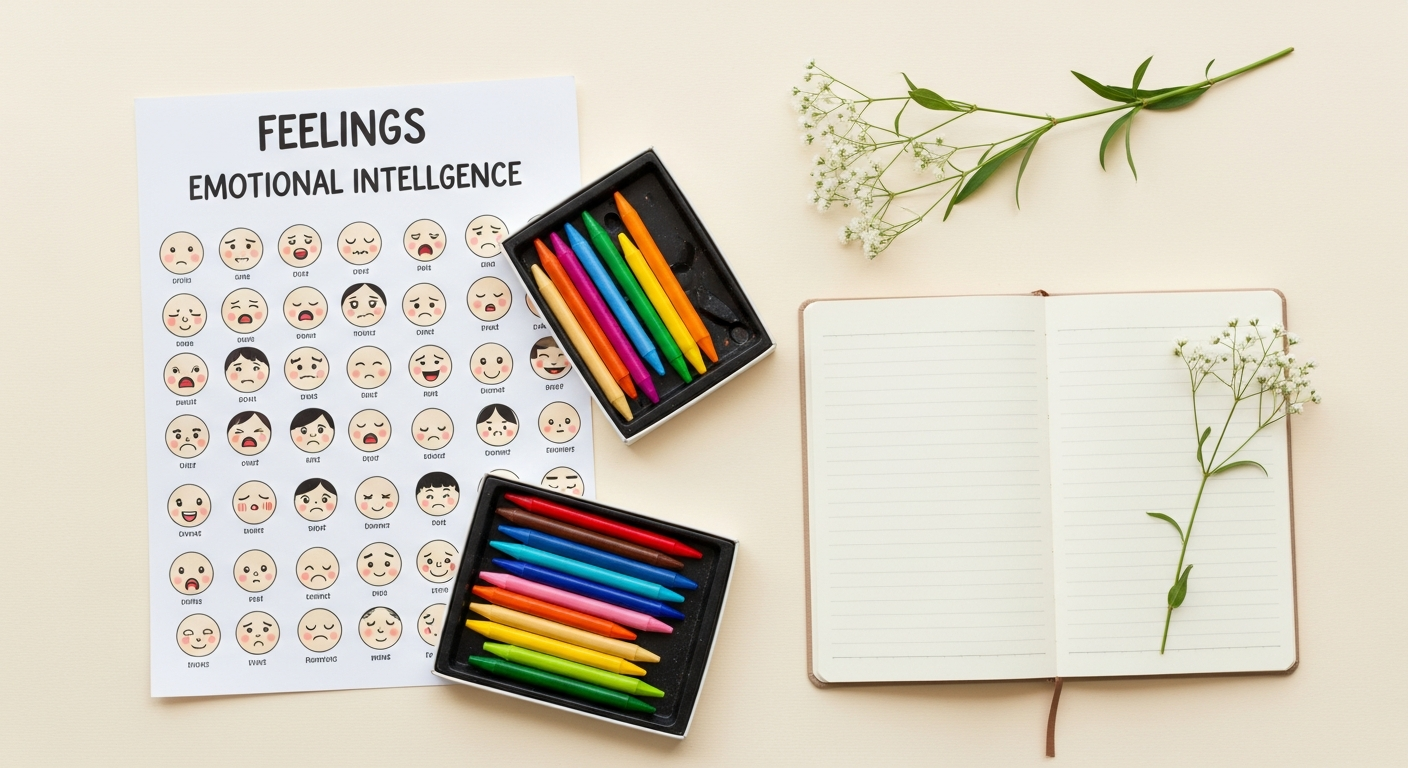
* Actionable Step: After comforting them physically, “Oh, sweetie, that looks like it really hurts. Are you feeling sad, or maybe a little scared too because it was unexpected? Sometimes when we fall, we feel surprised and then a bit angry that it happened.” Use emotion charts or books to help them identify feelings.
Step 5: Set Limits While Helping Them Problem-Solve
This is where structure and guidance come in. All feelings are okay, but not all behaviors are. Once feelings are validated, you can gently guide your child towards acceptable ways of expressing those feelings and, most importantly, help them brainstorm solutions or coping strategies.
* Real Scenario: Your child is furious because their sibling broke their favorite toy and is hitting them.
* Actionable Step: “I see you are SO angry right now because your toy broke. It’s okay to feel angry, but it’s not okay to hit your brother. Let’s take a deep breath together. Now, what could we do when we feel this angry instead of hitting? Could you stomp your feet? Tell me with words? Or maybe we can find a way to fix the toy together?” Guide them to come up with solutions.
Cultivating Self-Awareness and Self-Regulation
Beyond the immediate moments of emotional coaching, we can proactively build our children’s capacity for understanding and managing their inner world. These skills are like muscles that get stronger with consistent practice and gentle guidance.
Building Self-Awareness
Helping children tune into their internal signals is the first step towards managing emotions.
* Teach Body Cues: Talk about how emotions feel in the body. “When I get frustrated, my shoulders get tight,” or “When I’m nervous, I feel butterflies in my tummy.” Ask your child, “Where do you feel that anger?” or “What does your happy feel like?”
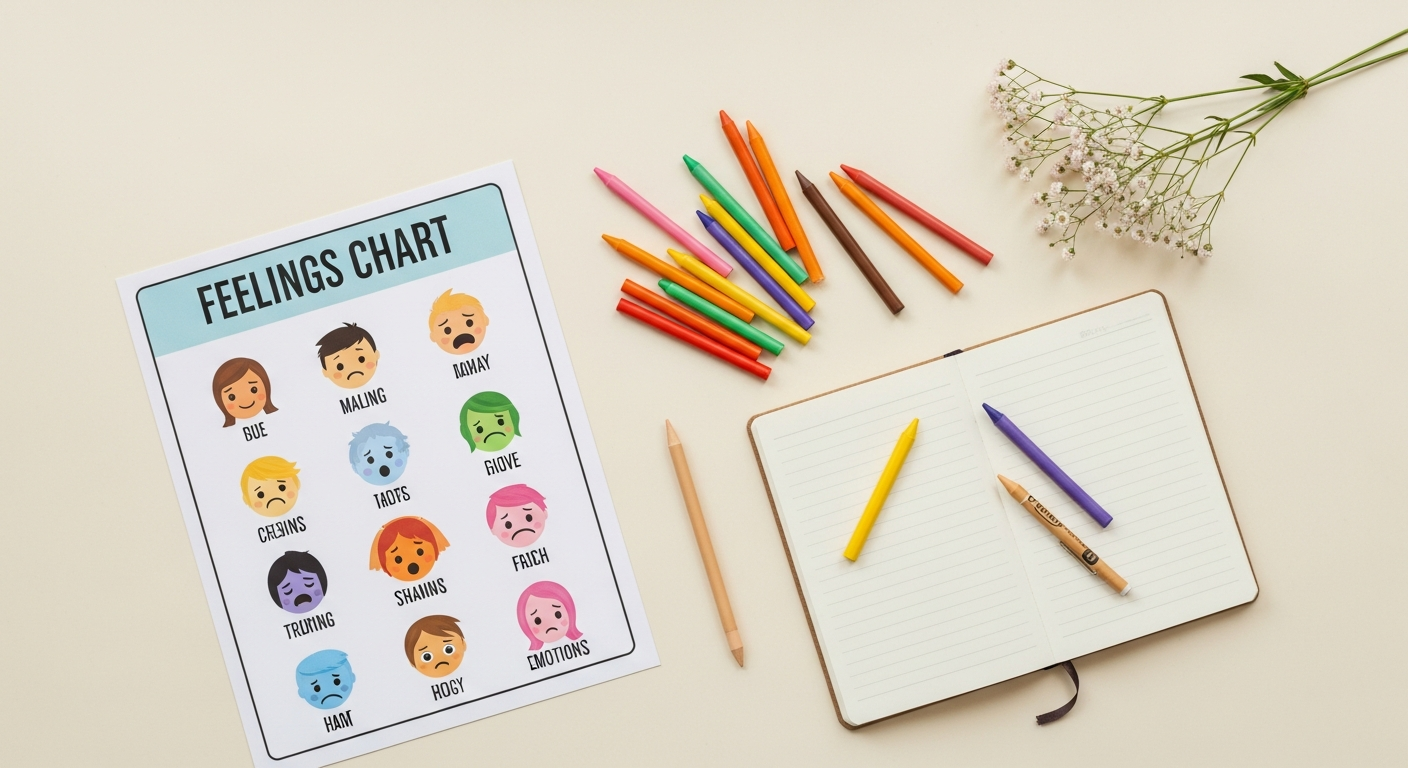
* Emotion Wheels and Charts: Visual aids are fantastic, especially for younger children. Hang an emotion wheel on the fridge and encourage them to point to how they’re feeling.
* Journaling/Drawing: For older children, a feelings journal can be a safe space to explore emotions without judgment. Even young children can draw what their feelings look like.
* Mindfulness for Kids: Simple mindfulness practices, like taking three deep “belly breaths” or doing a “body scan” (noticing each part of their body), can help children connect with their present moment experience and identify their internal state.
Developing Self-Regulation
Once children are aware of their feelings, the next step is learning healthy ways to respond to them.
* Calm-Down Corners/Kits: Create a designated, comfortable space in your home with tools for self-soothing: soft blankets, fidget toys, books, drawing supplies, a weighted lap pad, or glitter jars. This isn’t a “time-out” corner, but a “time-in” space for regulation.
* “Pause and Plan” Techniques: Teach a simple sequence: “Stop, Breathe, Think, Choose.” Practice it when things are calm so it’s accessible during stress.
* Role-Modeling Self-Regulation: Your children are always watching. When you feel overwhelmed, verbalize your own coping strategy: “Wow, I’m feeling really frustrated with this traffic. I’m going to take a few deep breaths and put on some calming music.”
* Teaching Coping Strategies: Brainstorm and practice various tools: deep breathing, counting to ten, going for a walk, listening to music, talking to a trusted adult, drawing, punching a pillow (safely!), or getting a drink of water. Help them build their own toolkit.
Nurturing Empathy and Social Skills
Emotional intelligence isn’t just about managing one’s own world; it’s about understanding and connecting with others. Empathy and strong social skills are the cornerstones of healthy relationships and a compassionate worldview.
Cultivating Empathy
Empathy is the ability to step into someone else’s shoes, to feel with them.
* Read and Discuss: When reading books or watching shows, pause to ask, “How do you think that character felt when that happened? Why do you think they felt that way?” Encourage them to connect it to their own experiences.
* Perspective-Taking: Guide them to consider others’ viewpoints. If they had a disagreement with a friend, ask, “How do you think Maya felt when you took her toy without asking?” or “What might have been going on for your teacher when she seemed a bit grumpy today?”
* Community Involvement: Age-appropriate volunteering or acts of service can broaden their understanding of different life experiences and foster a sense of connection to the wider world. Even simple acts like helping a neighbor can build empathy.
* Model Empathy: Show empathy in your own interactions – with your partner, friends, service staff, and even strangers. Verbalize it: “That person seems to be having a really tough day; I wonder what’s going on for them.”
Building Social Skills
Interacting effectively with others is a learned skill, not an innate talent for most.
* Active Listening: Teach children to truly listen when others are speaking – to make eye contact, nod, and ask clarifying questions instead of just waiting for their turn to talk.
* Conflict Resolution: Equip them with constructive ways to resolve disagreements. Teach “I-statements” (“I feel frustrated when you interrupt me”), compromise, and negotiation. Role-play scenarios to practice.
* Sharing and Cooperation: Create opportunities for collaborative play and tasks. Emphasize the benefits of working together and sharing resources.
* Understanding Social Cues: Discuss body language, facial expressions, and tone of voice. “What do you think that person’s crossed arms might mean?” or “Did you notice how her voice changed when she got upset?”
* Role-Playing: Practice tricky social situations, like joining a group of kids playing, asking for something, or saying “no” politely.
The Parent’s Role: Self-Reflection and Growth
Here’s the real talk: we can only guide our children as far as we’ve journeyed ourselves. Our own emotional intelligence, self-awareness, and self-regulation are the most powerful tools in our parenting toolkit. This isn’t about being perfect; it’s about being authentic and committed to our own growth.
* Manage Your Own Stress: Parenting is incredibly demanding. When we are stressed, overwhelmed, or burnt out, our capacity for emotional coaching diminishes significantly. Prioritize self-care, even in small doses. Seek support from your partner, friends, or a therapist.
Acknowledge Your Triggers: We all have emotional “hot buttons” often rooted in our own childhood experiences. Understanding what triggers your* big reactions (e.g., defiance, disrespect, messiness) allows you to pause and choose a more intentional response rather than reacting impulsively.
* Apologize to Your Children: This is perhaps one of the most powerful lessons we can teach. When you inevitably mess up – yell when you shouldn’t, misinterpret their feelings, or react unfairly – sincerely apologize. “I’m so sorry I yelled earlier. I was feeling overwhelmed, and that wasn’t fair to you. Next time, I’ll try to take a deep breath before responding.” This models humility, repair, and self-regulation.
* Practice Self-Compassion: You will not get this right every time. There will be days you fall short. Instead of self-criticism, practice self-compassion. Remind yourself that you are doing your best, learning, and growing right alongside your children. This journey is a marathon, not a sprint, filled with beautiful, messy progress.
Practical Strategies for Everyday Life
Integrating emotional intelligence into daily life doesn’t require grand gestures; it thrives in the small, consistent moments.
* Family Meetings: Even short, weekly family meetings can be a great forum for discussing feelings, conflicts, and solutions. Everyone gets a voice, and it teaches respectful communication.
* Designated “Feeling Check-ins”: Make it a habit to ask, “How’s your heart feeling today?” or “What was the best part of your day? What was the hardest part?” during dinner, bedtime, or car rides.
* Mindful Media Consumption: When watching movies or shows together, pause and discuss the characters’ emotions, their motivations, and how their actions affect others. This turns passive viewing into an active learning experience.
* Games That Foster EQ: Play games like “feelings charades,” where family members act out emotions for others to guess, or cooperative board games that require teamwork and communication.
* Give Age-Appropriate Responsibilities: Empowering children with tasks around the house builds competence, self-worth, and a sense of contribution, all of which support healthy emotional development.
* Prioritize Quality Connection Time: Even 15-20 minutes of uninterrupted, child-led play or conversation each day can fill their emotional cup and strengthen your bond, making them more receptive to your guidance.
FAQ: Your Emotional Intelligence Parenting Questions Answered
Q: Is it too late to start teaching emotional intelligence if my child is older?
A: Absolutely not! The brain is remarkably plastic, meaning it can continue to learn and adapt throughout life. While starting early is beneficial, you can begin fostering EQ at any age. Older children and teenagers are often more capable of abstract thinking and self-reflection, making them receptive to discussions about emotions, empathy, and problem-solving. Consistency and your willingness to learn alongside them are key.
Q: What if I lose my cool and yell? How do I recover and still teach EQ?
A: We’ve all been there. The most important step is to repair the rupture. Once you’re calm, approach your child and offer a sincere apology. Explain what happened from your perspective (“I was feeling overwhelmed and reacted poorly”), take responsibility, and articulate what you’ll try to do differently next time. This models humility, self-awareness, and the crucial skill of repair, showing your child that even adults make mistakes and can apologize and learn from them. It’s powerful teaching.
Q: My child rarely shows strong emotions. Is that a problem, and how can I encourage them to open up?
A: Every child expresses emotions differently, and some are naturally more reserved. However, consistently suppressing emotions isn’t healthy. Create a safe, non-judgmental space where all feelings are welcome. Avoid phrases like “Don’t be sad” or “Big boys don’t cry.” Instead, validate any small emotional expressions you do see, and gently offer opportunities to talk. Use books, art, or play to explore emotions indirectly. Reassure them that it’s okay to feel whatever they feel, and you’re there to listen without trying to fix it immediately.
Q: How do I deal with big tantrums or meltdowns in public while trying to be an emotional coach?
A: Public meltdowns are incredibly challenging. Your primary goal in that moment should be to ensure safety and connect with your child. If possible, remove them to a quieter, less stimulating environment. Get down to their level, validate their feelings (“I see you’re really upset right now”), and offer comfort. Don’t try to reason or teach in the heat of the moment. Once they’ve calmed down, you can then process what happened, label the emotions, and discuss alternative strategies for next time. Remember, bystanders are secondary to your child’s needs.
Q: How is teaching emotional intelligence different from just teaching my child to be “nice” or “polite”?
A: Being “nice” and “polite” are surface-level behaviors often driven by social rules or a desire to avoid conflict. Emotional intelligence goes much deeper. It involves genuine understanding of oneself and others, authentic empathy, and the ability to manage complex emotions and situations with integrity. An emotionally intelligent child isn’t just polite; they genuinely understand why kindness matters, can advocate for themselves respectfully, and navigate disagreements constructively, rather than just suppressing their true feelings to conform.
Conclusion: A Legacy of Compassion and Resilience
Raising emotionally intelligent children is not about creating perfect, compliant robots. It’s about nurturing authentic, resilient, and compassionate humans who are equipped to thrive in a complex world. It’s about teaching them that all feelings are valid, that challenges are opportunities for growth, and that connection is the antidote to isolation.
This journey won’t be linear, and you will have days where you feel utterly defeated. But remember, every moment you pause to acknowledge a feeling, every time you model a deep breath, every apology you offer, you are laying another brick in the foundation of your child’s emotional well-being. You are teaching them that they are seen, heard, and loved, exactly as they are.
Embrace the messy, beautiful process. Extend grace to yourself and your children. By committing to this path, you’re not just raising kids; you’re cultivating a generation of empathetic leaders, kind friends, and self-aware individuals who will undoubtedly make the world a more contextual, connected, and compassionate place. And what a magnificent legacy that will be.