
Declutter Your Life: Popular Methods for a Simplified Home
Embracing the KonMari Method: Sparking Joy, One Item at a Time
Perhaps one of the most globally recognized decluttering methods, the KonMari Method, developed by Japanese organizing consultant Marie Kondo, transcends mere tidying. It’s a philosophy centered on gratitude, mindfulness, and valuing what truly brings joy into your life. Kondo’s approach is revolutionary because it doesn’t focus on what to get rid of, but rather what to keep.
The KonMari Philosophy and Principles:
- Category-Based Decluttering: Instead of decluttering room by room, you tackle items by category. This ensures you don’t miss anything and can truly assess the volume of what you own. The prescribed order is: clothes, books, papers, komono (miscellany), and sentimental items.
- “Does It Spark Joy?”: This is the cornerstone question. Hold each item in your hands and truly ask yourself if it evokes a feeling of joy. If it doesn’t, thank it for its service, and let it go. This intuitive process helps build a stronger connection with your belongings.
- A Place for Everything: Once you’ve decided what to keep, every item must have a designated home. This prevents future clutter and makes tidying up a breeze.
- Folding, Not Piling: Kondo advocates for vertical folding, especially for clothes, which not only saves space but also makes items more visible and accessible.
Practical Steps for Implementing KonMari:
- Commit to the Process: KonMari is not a quick fix; it requires dedication. Set aside significant time, perhaps a whole weekend or several dedicated days, to tackle categories.
- Gather Everything: For each category, pull every single item out and place it in one large pile. For example, all your clothes on your bed. This visually confronts you with the sheer volume of your possessions.
- Handle Each Item: Pick up each garment, book, or trinket. Ask yourself, “Does this spark joy?” If yes, place it in a “keep” pile. If no, thank it and place it in a “donate/discard” pile.
- Organize and Store: Once you’ve sorted through a category, neatly store the “keep” items in their designated places. Use drawer dividers, boxes, and vertical folding techniques to maximize space and visibility.
- Maintain: After the initial declutter, commit to returning items to their homes daily and resisting the urge to acquire unnecessarily.
Who it’s for: Individuals who feel overwhelmed by clutter and are ready for a transformative, deep-dive approach to their possessions. It’s particularly effective for those who struggle with sentimental attachment but are willing to embrace a new mindset.
The Four-Box Method: A Simple, Strategic Sort
For those who prefer a more straightforward, hands-on approach to decluttering methods, the Four-Box Method offers an immediate and actionable strategy. This technique is excellent for tackling specific rooms, closets, or even smaller areas like a desk or pantry. It breaks down the decision-making process into easily digestible categories, making the task less daunting.
Understanding the Categories:
The core of this method involves creating four distinct zones or using four actual boxes/bins (or even just piles on the floor) labeled:
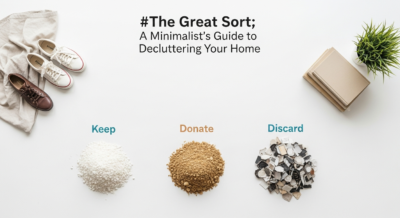
- Keep: Items that you regularly use, genuinely love, or absolutely need. These will return to your home in an organized fashion.
- Donate/Sell: Items that are still in good condition but no longer serve a purpose for you. This includes clothes that don’t fit, books you’ve read, or household items you no longer use.
- Trash/Recycle: Items that are broken, expired, stained, or unusable. Be honest and ruthless here – if it can’t be repaired or repurposed, it’s trash.
- Relocate (or Put Away): Items that belong in another room or a specific designated spot within the same room but are currently misplaced. This box is about immediate action and getting things to their rightful home.
Practical Steps for the Four-Box Method:
- Choose Your Zone: Select a specific area to declutter – a closet, a kitchen cabinet, or a single bedroom. Don’t try to tackle your entire house at once.
- Gather Your Supplies: Get your four boxes or clear out four distinct areas on the floor. Label them clearly.
- Start Sorting: Go through every item in your chosen zone, one by one. Hold each item and make a quick decision about which category it belongs to. Resist the urge to get sidetracked or reminisce too long.
- Take Immediate Action: Once you’ve sorted everything:
- Immediately take the “Trash/Recycle” box to the appropriate bins outside.
- Put the “Donate/Sell” box in your car or by the door, ready for its next destination. Aim to get rid of these items within 24-48 hours.
- Take the “Relocate” items to their proper homes right away.
- Begin to organize the “Keep” items back into your decluttered space, ensuring everything has a clear designated spot.
- Repeat: Move on to the next zone when you’re ready, applying the same method.
Who it’s for: Anyone looking for a practical, low-barrier-to-entry method. It’s great for beginners, those who get easily overwhelmed, or people who want to tackle decluttering in manageable chunks.
Minimalism: Living with Less for a Richer Life
Minimalism is more than just an aesthetic; it’s a lifestyle philosophy that advocates living with less to make room for what truly matters. Popularized by figures like The Minimalists (Joshua Fields Millburn and Ryan Nicodemus), it encourages intentionality in consumption and a conscious shedding of excess. While not strictly one of the decluttering methods in a step-by-step sense, it provides the overarching framework and motivation for ongoing decluttering.
The Core Principles of Minimalism:
- Intentionality: Every item you own should serve a purpose or bring you joy. Acquisitions are deliberate, not impulsive.
- Value Experiences Over Possessions: Minimalists often prioritize travel, relationships, personal growth, and experiences over accumulating material goods. Learn more about the benefits of minimalism.
- Freedom from Clutter: By reducing possessions, you reduce the time and energy spent organizing, cleaning, and maintaining them. This frees up mental space and physical space.
- Financial Freedom: Less spending on unnecessary items often leads to greater savings and financial security.
- Environmental Consciousness: Buying less and choosing durable, sustainable items reduces waste and your environmental footprint.
Practical Steps for Adopting a Minimalist Approach:
- Define Your “Why”: What do you hope to gain by living with less? More time, less stress, financial freedom, a cleaner home? Your “why” will be your driving force.
- Start Small, Get Ruthless: Begin with one area, like a junk drawer or a single closet. Practice letting go. As you gain momentum, apply decluttering methods like KonMari or the Four-Box Method to larger areas, but with a minimalist lens – asking “Is this essential? Does this truly add value?”
- Question Every Purchase: Before buying something new, pause and ask: “Do I truly need this? Can I borrow it? Do I already have something similar? Will it bring lasting value to my life?” A common rule is to wait 24-48 hours before making a non-essential purchase.
- One-In, One-Out Rule: For every new item that comes into your home, one similar item must leave. This helps prevent re-accumulation of clutter. (More on this method below).
- Digitize Where Possible: Reduce paper clutter by scanning documents, photos, and receipts. Embrace digital media over physical copies.
- Embrace Empty Space: Don’t feel the need to fill every surface or corner. Empty space can be calming and aesthetically pleasing.
Who it’s for: Those seeking a holistic lifestyle change that goes beyond just tidying. It appeals to individuals who crave more freedom, less stress, and a deeper connection to their values rather than their belongings.
Swedish Death Cleaning (Döstädning): Decluttering with Purpose and Love
“Döstädning is about preparing for your exit from life. It’s about letting go of things so that your loved ones don’t have to deal with a lifetime of accumulation.” – Margareta Magnusson, “The Gentle Art of Swedish Death Cleaning”
Swedish Death Cleaning, or “Döstädning” (a portmanteau of “dö” meaning death and “städning” meaning cleaning), is a unique and increasingly popular one of the decluttering methods that, despite its name, is designed to be undertaken while you are very much alive. Introduced by Swedish artist Margareta Magnusson, this method encourages individuals, particularly older adults, to declutter their homes and lives to ease the burden on their loved ones after they pass. However, its principles are valuable for anyone looking to organize their possessions with intentionality and foresight.
The Philosophy Behind Döstädning:
- Consideration for Others: The primary motivation is to spare family and friends the overwhelming task of sifting through decades of accumulated belongings during a time of grief.
- Living Lighter, Living Better: While focused on the future, the act of Döstädning also brings immediate benefits: a lighter, more organized home and a clearer mind for the declutterer.
- Emotional Processing: It encourages a thoughtful review of one’s life through possessions, allowing for emotional processing and gratitude for items kept and released.
- Starting with the Least Sentimental: Magnusson suggests starting with items that hold little emotional value to build momentum before tackling more personal belongings.
Practical Steps for Swedish Death Cleaning:
- Start Early, Work Gradually: Döstädning is not meant to be a rapid declutter; it’s a gradual, thoughtful process that can take years. Begin in your 50s or 60s, or even earlier, to give yourself ample time.
- Begin with Non-Sentimental Items: Don’t start with old photos or love letters. Instead, begin with items like clothes, books, kitchenware, or tools that have less emotional attachment. This builds your decision-making muscle.
- Ask “Will Anyone Else Want This?”: For each item, consider if anyone you know or love would genuinely want or need it. If the answer is no, then it’s likely time to let it go. Be realistic, not hopeful.
- Create a “Throw Away” Box: Magnusson suggests creating a box specifically for items you want to be discarded immediately after your death. This might include personal notes, diaries, or other highly private items that you’re not ready to part with now but don’t want others to find.
- Talk to Your Loved Ones: Discuss what items they might genuinely want. Share stories behind significant items. This helps distribute items lovingly and ensures cherished possessions go to appreciative homes.
- Organize Remaining Items: What you keep should be well-organized and clearly labeled, making it easy for others to navigate your home and belongings when the time comes.
- Focus on Experiences: Shift your focus from acquiring more possessions to creating lasting memories and experiences with loved ones.
Who it’s for: Anyone, regardless of age, who wants to declutter with a sense of foresight and responsibility, ensuring their legacy is one of ease and organization rather than burden for their loved ones. It’s particularly powerful for those approaching their later years.
The One-In, One-Out Rule: Sustaining a Clutter-Free Lifestyle
Among the simplest and most effective decluttering methods for maintaining an organized home is the “One-In, One-Out” rule. This isn’t a method for a grand decluttering overhaul, but rather a powerful strategy for preventing new clutter from accumulating. It’s a discipline that, once adopted, ensures your possessions remain at a manageable level and that the hard work of initial decluttering isn’t undone.
Understanding the Rule:
The concept is straightforward: every time a new item comes into your home, a similar item must leave. For example:
- Buy a new shirt? Donate or discard an old shirt.
- Purchase a new novel? Donate a book you’ve already read.
- Acquire a new kitchen gadget? Get rid of an old one you rarely use.
- Receive a new greeting card? Recycle an old one.
The “similar item” doesn’t have to be identical, but it should occupy roughly the same space or serve the same function. This keeps your overall volume of possessions stable.
Practical Steps for Implementing One-In, One-Out:
- Commit to the Principle: Make a conscious decision to adopt this rule for specific categories or your entire home.
- Designate a “Departure Zone”: Have a bag or box ready for items leaving your home. As soon as a new item comes in, identify its counterpart to leave and place it directly into this zone.
- Be Immediate: The key to this method’s success is immediate action. Don’t let the “out” item linger. The moment a new purchase enters, the old one should be on its way out.
- Apply to All Categories: While clothing is a common starting point, this rule can be applied to books, kitchenware, decorations, children’s toys, and even digital files.
- Flexibility (with limits): Sometimes the “similar” item might not be obvious. If you buy a new pair of shoes, perhaps you get rid of an old pair of sandals, even if they’re not the same type of shoe. The goal is to maintain balance.
- Review and Adapt: Periodically check if the rule is working for you. Are you genuinely getting rid of items, or are things still creeping in? Adjust as needed.
Who it’s for: Everyone! It’s an excellent maintenance strategy for anyone who has already decluttered and wants to prevent future accumulation, or for those who want a simple, ongoing way to keep clutter at bay.
The Mins Game (Minimalism Game): A Fun Challenge to Declutter
For those who thrive on challenges, gamification, or need a playful push to get started with decluttering methods, The Mins Game (or Minimalism Game) is an innovative and engaging approach. Created by The Minimalists, Joshua Fields Millburn and Ryan Nicodemus, it turns the often daunting task of decluttering into a fun, competitive exercise.
How The Mins Game Works:
The premise is simple: for 30 days, you get rid of one item on day one, two items on day two, three items on day three, and so on, until you’re discarding 30 items on day 30. By the end of the month, you will have removed a total of 465 items from your home (1+2+3+…+30 = 465). It can be played solo, but it’s often more motivating when played with a friend, partner, or family member.
Practical Steps for Playing The Mins Game:
- Find an Accountability Partner: While not strictly necessary, playing with someone else adds a layer of fun and motivation. You can compare progress and offer encouragement.
- Set Your Start Date: Pick a day to begin the challenge. The first day will be easy, but the later days require more dedication.
- Daily Decluttering:
- Day 1: Get rid of 1 item.
- Day 2: Get rid of 2 items.
- …
- Day 30: Get rid of 30 items.
- What Counts as “Getting Rid Of”: Items must physically leave your home. This means they are donated, sold, recycled, or thrown away. Simply moving them to another room or a storage unit doesn’t count.
- Be Creative: As the numbers get higher, you might need to broaden your search. Don’t just focus on visible clutter. Look in drawers, cabinets, the garage, or even old digital files (though physical items are the primary focus). Small items like single socks, expired spices, or empty lotion bottles all count.
- Document (Optional): Take photos of your daily piles or share your progress with your accountability partner to stay motivated.
- Reflect: At the end of the month, reflect on how much lighter your home feels and how much easier it became to make decisions about your possessions.
Who it’s for: People who enjoy challenges, need a structured way to start decluttering, or benefit from a playful approach to a potentially overwhelming task. It’s especially good for those who struggle with procrastination or decision fatigue.
Decluttering in Small Bursts: The 20/10 Method & 15-Minute Rule
For many, the idea of committing to a weekend-long decluttering marathon or a 30-day challenge feels utterly overwhelming. If you’re pressed for time, easily distracted, or prone to decision fatigue, some of the most effective decluttering methods involve short, focused bursts. The 20/10 Method (or 20/20, 45/15, etc.) and the general 15-Minute Rule are perfect for making consistent progress without feeling burnt out.
The Philosophy of Small Bursts:
- Overcoming Paralysis: Small, achievable tasks prevent the “where do I even start?” overwhelm.
- Building Momentum: Consistent small wins build confidence and momentum over time.
- Sustainable Progress: It’s easier to stick with a routine of short bursts than to repeatedly postpone a massive project.
- Focus and Efficiency: Knowing you only have a short time often makes you more focused and decisive.
Practical Steps for Small Burst Decluttering:
Method 1: The 20/10 Method (or Variations)
- Set a Timer: Choose a work interval (e.g., 20 minutes) and a break interval (e.g., 10 minutes). Popular variations include 20 minutes decluttering/10 minutes break, 45 minutes decluttering/15 minutes break, or 20 minutes decluttering/20 minutes break for those who need more time to reset.
- Focus Intensely: During the “work” interval, focus solely on decluttering. Pick an area (a drawer, a shelf, a small section of a room) and work quickly and decisively. Use your chosen decluttering method (e.g., Four-Box, KonMari questions) within this time.
- Take a Full Break: When the timer goes off, stop immediately. Step away from the area. Stretch, grab water, listen to music, or do something enjoyable that isn’t decluttering or cleaning. This prevents burnout.
- Repeat: Do 1-3 cycles of this throughout your day or week, whatever fits your schedule. Even one cycle a day can make a significant difference over time.
Method 2: The 15-Minute Rule
- Identify One Small Task: Think of a single, small decluttering task that can realistically be completed (or at least significantly progressed) in 15 minutes. Examples: clearing off your bedside table, organizing one kitchen drawer, sorting through your mail, tidying the bathroom counter.
- Set a Timer: Set a timer for 15 minutes.
- Work with Focus: Dive into your chosen task. Don’t get sidetracked. Make quick decisions. If you finish the task before 15 minutes, pick another small task or use the remaining time for a quick tidy.
- Stop When the Timer Rings: Once the 15 minutes are up, stop. Even if you’re not completely finished, you’ve made progress. You can pick it up again tomorrow.
- Consistency is Key: Aim to do at least one 15-minute burst of decluttering daily or several times a week. The cumulative effect of these small efforts is powerful.
Who it’s for: Busy individuals, those with short attention spans, people who get easily overwhelmed, or anyone looking to integrate decluttering into their daily routine without feeling like it’s a monumental chore. It’s a highly sustainable approach.
Conclusion: Your Journey to a Simplified, Serene Home
Embarking on a decluttering journey is more than just tidying up; it’s an act of self-care, a step towards mindful living, and an investment in your mental well-being. By exploring these popular decluttering methods—from the introspective KonMari to the practical Four-Box, the philosophical minimalism to the forward-thinking Swedish Death Cleaning, the consistent One-In, One-Out rule, the gamified Mins Game, and the sustainable small bursts—you now have a toolkit to transform your home and, by extension, your life.
The key is not to find the “perfect” method, but to find the one (or combination of ones) that resonates with you and your lifestyle. Start small, be patient with yourself, and celebrate every item you thoughtfully release. Imagine the clarity, calm, and renewed energy that awaits you in a simplified home. Your sanctuary is within reach. Which method will you choose to begin your journey toward a more contextual and intentional life?
Frequently Asked Questions
Related Articles