

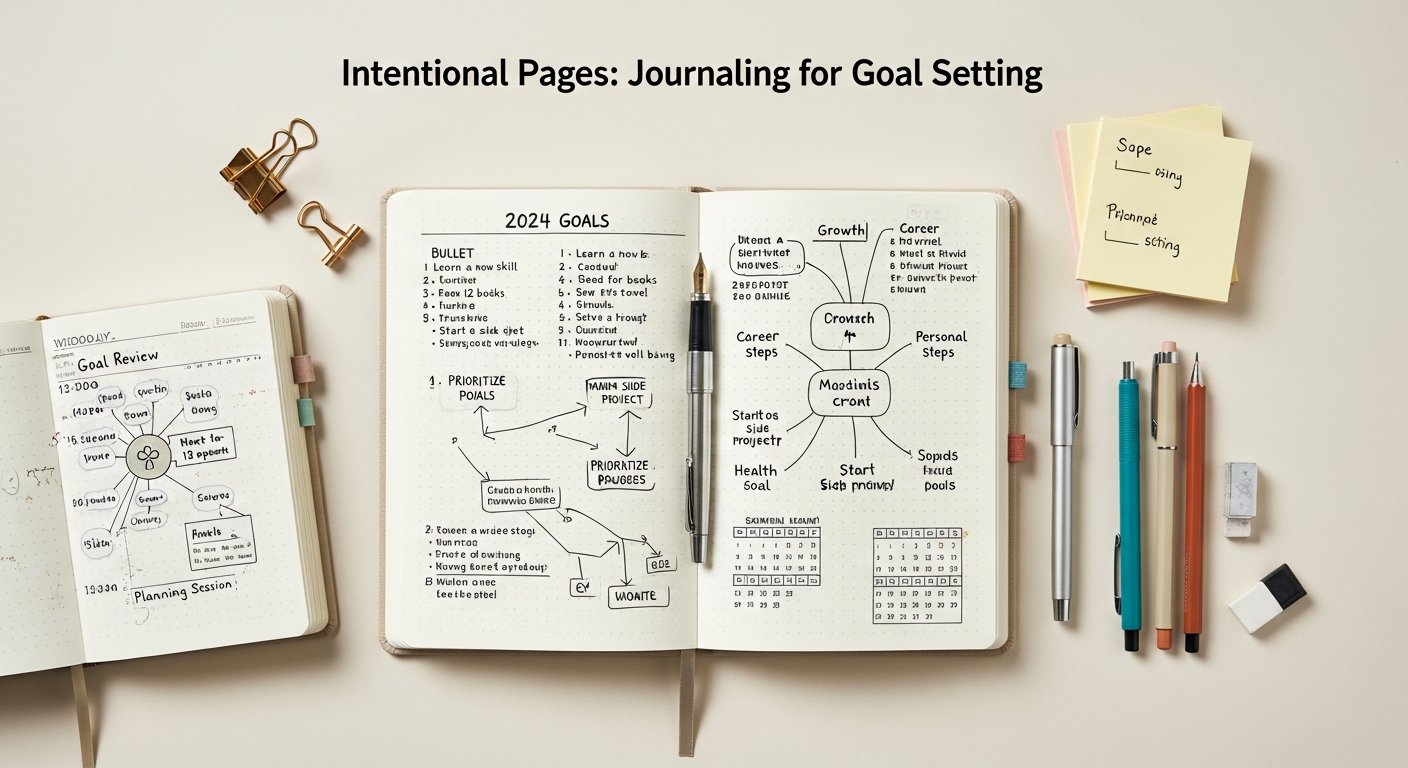
Journaling for Goal Setting: Unlock Your Potential, Live Your Intentional Life
Affiliate disclosure: This article may contain affiliate links. Recommendations are independent and editorially driven.
In the whirlwind of modern life, where aspirations often get lost amidst daily demands, the quiet practice of journaling emerges as a profound anchor. For women seeking to live more intentionally, cultivate genuine personal growth, and manifest their deepest desires, journaling for goal setting isn’t just a trend—it’s a transformative discipline. It’s the sacred space where your scattered thoughts coalesce into concrete visions, where your dreams transcend mere wishes and begin their journey into reality. At thecontextuallife, we believe in empowering women to craft lives of purpose and joy, and there are few tools as potent for this journey as a pen and a blank page.
Imagine a life where your ambitions are not just vague hopes but clearly defined pathways. Picture yourself moving forward with clarity, purpose, and an unshakeable belief in your ability to achieve what you set out to do. This isn’t a fantasy; it’s the tangible outcome of integrating intentional journaling into your goal-setting process. This comprehensive guide will delve into the profound synergy between journaling and goal attainment, providing you with the insights, methods, and inspiration to harness its power for your unique journey. We’ll explore why this practice works, how to cultivate a habit that sticks, and myriad ways to use your journal to clarify, track, and ultimately celebrate your success. Get ready to turn your aspirations into achievements, one heartfelt entry at a time.
The Unseen Power: Why Journaling is Your Ultimate Goal-Setting Ally
For many, goal setting conjures images of spreadsheets, rigid deadlines, and perhaps a touch of anxiety. While structure is valuable, the true magic of sustainable goal achievement lies in understanding your deeper motivations and cultivating a resilient mindset. This is precisely where journaling steps in, offering a unique blend of introspection and strategic planning that traditional methods often overlook.
Beyond Simple To-Do Lists: The Depth of Journaling
A to-do list focuses on tasks; a journal delves into purpose. While jotting down tasks is essential for daily productivity, a journal allows you to explore the “why” behind those tasks. Why do you want to achieve this particular goal? What values does it align with? How will achieving it impact your life and the lives of those around you? This deeper exploration transforms goals from mere obligations into deeply meaningful aspirations. It moves you from simply checking boxes to actively building the life you envision, one thoughtful entry at a time.
Clarifying Your Vision: From Vague Hopes to Concrete Dreams
Our minds are incredibly active spaces, often brimming with ideas, worries, and half-formed dreams. Without a dedicated outlet, these can remain hazy, elusive, and ultimately unpursued. Journaling acts as a powerful clarifying lens. When you commit your thoughts to paper, you force them into a structured format, transforming nebulous desires into tangible, examinable concepts. What started as “I want to be happier” can, through journaling, evolve into “I want to dedicate 30 minutes each morning to meditation to foster inner calm, leading to a greater sense of happiness.” This process of articulation is the first critical step in making any dream a reality.
Cultivating Self-Awareness: Understanding Your ‘Why’
True personal growth stems from deep self-awareness. Your journal becomes a mirror, reflecting your authentic self, your strengths, your fears, and your deepest motivations. As you journal about your goals, you’re not just listing them; you’re interrogating them. You’re asking: Is this truly *my* goal, or is it something I feel pressured to pursue? What fears are holding me back? What beliefs do I hold about my ability to succeed? This profound self-dialogue uncovers unconscious blocks and reinforces your genuine desires, making your goals intrinsically motivated and far more likely to stick. Understanding your ‘why’ is the bedrock of sustainable motivation.
The Neuroscience of Written Goals: Why It Works
The benefits of writing down your goals aren’t just anecdotal; they’re backed by science. Studies consistently show that individuals who write down their goals are significantly more likely to achieve them. This phenomenon can be attributed to several neuroscientific principles:
- Encoding Specificity: The act of physically writing engages multiple senses and motor skills, creating a stronger memory trace in your brain. This makes your goals more concrete and memorable.
- Reticular Activating System (RAS): Writing down a goal signals to your brain that this information is important. Your RAS then acts as a filter, unconsciously highlighting opportunities and resources related to your goal in your environment. You start to “see” possibilities you might have otherwise overlooked.
- Emotional Connection: Journaling allows for emotional expression. When you write about your goals, you connect with the feelings associated with achieving them – excitement, pride, fulfillment. This emotional engagement boosts motivation and resilience.
- Commitment Device: Putting words on paper creates a psychological contract with yourself. It’s a statement of intent that solidifies your commitment, making it harder to simply let goals fade away.
Setting the Foundation: Crafting Your Sacred Journaling Practice
Just as a gardener prepares the soil before planting, cultivating a powerful journaling practice requires intentional setup. This isn’t about rigid rules, but about creating an environment and a mindset that fosters consistent, meaningful engagement with your inner world and your aspirations.
Choosing Your Sanctuary: The Right Space and Time
Your journaling sanctuary doesn’t need to be an entire room; it could be a cozy corner of your living room, a quiet spot in your garden, or even your favorite coffee shop. The key is to find a place where you feel peaceful, undisturbed, and able to focus. Similarly, dedicating a specific time each day or week can transform journaling into a cherished ritual. For some, it’s a few minutes over morning coffee, setting intentions for the day. For others, it’s an evening reflection, processing the day’s events and planning for tomorrow. Experiment to find what resonates most with your natural rhythm and lifestyle. Consistency in location and time helps train your brain to enter a reflective state more easily.
Selecting Your Tools: Journal, Pen, and Digital Options
The tools you choose can significantly impact your experience. While a simple notebook and pen are often all you need, there are myriad options to explore:
- Physical Journals: From elegant leather-bound notebooks to whimsical patterned ones, the tactile experience of a physical journal can be deeply satisfying. Consider factors like paper quality, size, and whether you prefer lined, dotted, or blank pages.
- Pens: A good pen can make all the difference. Find one that feels comfortable in your hand and glides smoothly across the page.
- Digital Apps: For those who prefer typing or need portability, apps like Day One, Journey, or Penzu offer encrypted, searchable digital journals. They can include features like photo embedding, location tags, and reminder notifications.
- Guided Planners: Many planners now integrate journaling prompts and goal-setting sections, offering a structured approach for those who appreciate guidance.
The “right” tool is simply the one you’ll use consistently and joyfully.
Establishing a Routine: Consistency is Key
Like any new habit, journaling thrives on consistency. Start small. Even 5-10 minutes a day can yield profound results. Don’t aim for perfection; aim for presence. If you miss a day, don’t chastise yourself; simply pick up where you left off. Over time, this consistent effort will build momentum and transform journaling from a task into an indispensable part of your self-care and goal-setting regimen. Consider linking your journaling practice to an existing habit, such as immediately after your morning tea or before bed.
Mindset Matters: Approaching Your Journal with Intention
Your journal is not a judge; it’s a confidante. Approach it with an open heart and a non-judgmental attitude. There’s no right or wrong way to journal. Don’t worry about grammar, spelling, or coherence. This is a space for raw, authentic expression. Set an intention before you begin: “Today, I will explore my deepest desires for my career,” or “I will release any fears I have about achieving this personal goal.” This intentionality elevates the practice from a simple writing exercise to a powerful act of self-discovery and creation.
[INLINE IMAGE 1: place after second H2 | alt=”journaling for goal setting concept illustration”]
Diverse Journaling Methods for Every Goal and Personality
The beauty of journaling lies in its adaptability. There’s no one-size-fits-all approach, especially when it comes to harnessing its power for goal setting. Experimenting with different methods can help you discover what truly resonates with your unique personality and the specific goals you’re pursuing.
The Classic Free-Form Journal: Unrestricted Exploration
This is perhaps the most familiar form: simply writing whatever comes to mind. While seemingly unstructured, free-form journaling is invaluable for goal setting because it allows you to:
- Unpack Thoughts: Dump all your ideas, worries, aspirations onto the page without filter. This often reveals underlying patterns or unexplored avenues related to your goals.
- Brainstorm: Use it as a mental playground to generate new ideas, strategies, or solutions to challenges you foresee in your goal path.
- Process Emotions: Goals can evoke a range of emotions, from excitement to fear. Free-form writing provides a safe space to acknowledge and process these feelings, preventing them from becoming roadblocks.
Start with a simple question like, “What’s on my mind regarding my biggest goal right now?” and just let the words flow.
Structured Prompts and Worksheets: Guided Discovery
If the blank page feels intimidating, structured prompts and guided worksheets can be incredibly helpful. Many journals and planners are designed specifically for goal setting, offering exercises such as:
- Goal Breakdown Worksheets: Breaking a large goal into smaller, actionable steps.
- Vision Boards (Written): Describing your ideal future in vivid detail, engaging all your senses.
- Obstacle Analysis: Prompts that ask you to identify potential challenges and brainstorm solutions proactively.
- Resource Identification: Questions guiding you to list resources, skills, or people who can support your goal.
These methods provide a framework that ensures you touch upon crucial aspects of goal planning and execution, making your progress more deliberate.
Bullet Journaling for Productivity and Progress Tracking
The Bullet Journal (BuJo) method, created by Ryder Carroll, is a customizable organization system that combines a planner, to-do list, notebook, and diary into one cohesive system. It’s exceptionally powerful for goal setting due to its modular nature:
- Future Log: Map out long-term goals and key milestones.
- Monthly Log: Break down monthly goals and track habits relevant to your progress.
- Daily Log: Record tasks, events, and notes, ensuring daily actions align with your larger goals.
- Custom Collections: Create dedicated sections for specific goals, project planning, brainstorming, or tracking progress on a particular aspiration.
The beauty of the BuJo is its flexibility; you design the system that works for you, making it an intuitive tool for both planning and accountability.
Gratitude Journaling: Fueling Positivity and Resilience
While not directly about goal setting, gratitude journaling plays a crucial supporting role. Cultivating an attitude of gratitude can significantly impact your motivation and resilience on your goal-setting journey. Regularly reflecting on what you’re thankful for:
- Shifts Your Perspective: It helps you focus on abundance rather than scarcity, fostering a more positive outlook when facing challenges.
- Boosts Motivation: Recognizing the good in your life can fuel your desire to achieve more and maintain momentum.
- Reduces Stress: It acts as a powerful antidote to stress and overwhelm, which can often accompany ambitious goals.
Integrate gratitude by writing down 3-5 things you’re grateful for each day, especially noting how current blessings might be linked to past efforts towards your goals.
Affirmation and Visualization Journaling: Manifesting Your Future
These methods tap into the power of belief and imagination to bring your goals closer:
- Affirmation Journaling: Write down positive statements about yourself and your goals as if they are already true. “I am confident and capable of launching my new business.” “I consistently make healthy choices that support my well-being.” Repetition strengthens these beliefs.
- Visualization Journaling: Describe in vivid detail what it feels like to achieve your goal. Engage all your senses: What do you see, hear, smell, taste, touch? How do you feel emotionally? This practice trains your brain to believe the outcome is possible, priming you for action.
Combine these by writing affirmations related to your goals and then visualizing the successful outcome immediately after.
Future Self Journaling: Stepping into Your Potential
This powerful technique involves writing from the perspective of your future self—the person who has already achieved your current goals. Imagine it’s 2027, and you’ve successfully launched your dream project, found your ideal career path, or achieved significant personal growth. Write a letter to your present self, detailing:
- What it took to get there (the challenges, the learning, the actions).
- The emotions and feelings of accomplishment.
- The wisdom gained along the way.
- Encouragement and advice for your current self.
This exercise helps you identify the steps you need to take, anticipate potential hurdles, and internalize the identity of the person you aspire to become. It’s a profound way to connect with your potential and draw motivation from your envisioned future. Explore more about connecting with your future self in our guide to intentional living.
Practical Exercises and Prompts to Supercharge Your Goal Setting
Beyond choosing a method, specific exercises and prompts can turn your journal into a dynamic workshop for goal achievement. These tools help you dissect your goals, anticipate challenges, and maintain motivation.
The SMART Goal Breakdown: Deconstructing Your Aspirations
The SMART framework is a classic for a reason: it makes goals Specific, Measurable, Achievable, Relevant, and Time-bound. Use your journal to apply this framework to each of your goals:
- S – Specific: What exactly do I want to achieve? Who is involved? Where will it take place? When? Why is this goal important?
- M – Measurable: How will I know when I’ve achieved it? What metrics or indicators will I use to track progress?
- A – Achievable: Is this goal realistic given my resources and current circumstances? What skills or knowledge do I need to acquire?
- R – Relevant: Does this goal align with my values, long-term vision, and other life priorities? Is it the right time for this goal?
- T – Time-bound: What is my deadline? What are the key milestone dates along the way?
Journaling through these questions helps solidify your commitment and creates a clear action plan.
Reverse Engineering Your Vision: Starting from the End
This powerful technique involves imagining your goal has already been achieved and then working backward. In your journal, write about:
- The Celebration: Describe the moment you achieved your goal. What does it feel like? Who are you with? What are you doing?
- The Last Steps: What were the final 3-5 actions you took immediately before achieving the goal?
- The Major Milestones: What were the significant achievements or stages you had to pass through to get to those last steps?
- The Starting Point: What do you need to do right now, this week, or this month to get started on the first major milestone?
This exercise creates a clear roadmap, breaking down a daunting goal into manageable, bite-sized actions.
SWOT Analysis for Personal Growth: Identifying Strengths & Weaknesses
Originally a business tool, a SWOT analysis is incredibly effective for personal goal setting. Use your journal to explore:
- Strengths (Internal, Positive): What skills, talents, resources, or personal qualities do I possess that will help me achieve this goal?
- Weaknesses (Internal, Negative): What habits, beliefs, knowledge gaps, or fears might hinder my progress?
- Opportunities (External, Positive): What external factors, trends, or resources can I leverage to my advantage?
- Threats (External, Negative): What external challenges, obstacles, or risks might I encounter?
This comprehensive view helps you strategize, leverage your assets, and proactively address potential issues. For instance, if a weakness is “procrastination,” an opportunity might be “joining a accountability group,” and a journal prompt could be “How will I mitigate procrastination in my daily goal-oriented tasks?”
Scenario Planning: Navigating Potential Obstacles
Instead of hoping problems won’t arise, use your journal to anticipate and plan for them. For each major goal, dedicate a section to scenario planning:
- Identify Potential Obstacles: Brainstorm 3-5 specific things that could go wrong or challenge your progress.
- Brainstorm Solutions: For each obstacle, write down at least 2-3 specific actions you could take to overcome it or mitigate its impact.
- Emotional Preparation: How will you feel if this obstacle arises? How will you manage those emotions and stay resilient?
This proactive approach builds mental resilience and equips you with a contingency plan, reducing anxiety when challenges inevitably arise. Learn more about cultivating resilience in the face of setbacks.
The ‘Why’ Ladder: Uncovering Your Core Motivations
To truly stay committed to a goal, you need to understand its deepest roots. The ‘Why’ Ladder exercise helps you drill down to your core motivations:
- Start with your goal: “I want to start my own sustainable fashion brand.”
- Ask: “Why do I want to do this?” (e.g., “To create beautiful clothes.”)
- Ask again: “Why is creating beautiful clothes important to me?” (e.g., “Because I believe fashion can be empowering and ethical.”)
- Continue asking “Why is that important to me?” until you reach a fundamental value or desire (e.g., “Because I want to contribute to a better, more conscious world and leave a positive legacy for my children. I want to live authentically and creatively.”).
This exercise reveals the profound, often emotional, drivers behind your goals, providing an unbreakable source of motivation.
Celebrating Milestones: Acknowledging Progress
The journey to a big goal can be long, and it’s easy to lose steam if you only focus on the distant finish line. Use your journal to regularly celebrate small wins and milestones. Dedicate pages to:
- Listing Accomplishments: Document every step forward, no matter how small.
- Reflecting on Effort: Acknowledge the hard work and dedication you’ve put in.
- Expressing Gratitude: Be thankful for the opportunities, support, and progress made.
- Reward Planning: Brainstorm small, intentional rewards for reaching key milestones (e.g., a relaxing bath, a new book, a special coffee).
Celebrating progress provides vital boosts of dopamine and reinforces positive behavior, keeping you motivated and engaged.
[INLINE IMAGE 2: place after fourth H2 | alt=”journaling for goal setting comparison illustration”]
Overcoming Common Obstacles in Your Journaling Journey
Even with the best intentions, maintaining a consistent journaling practice can present its challenges. Recognizing these common hurdles and having strategies to navigate them will empower you to sustain your journey and reap the full benefits of journaling for goal setting.
The Blank Page Syndrome: Where to Begin?
Staring at an empty page can be daunting. The pressure to write something profound or perfect can paralyze your efforts.
Solutions:
- Start Small: Don’t aim for a novel. Even a single sentence or a list of bullet points is a win.
- Use Prompts: Keep a list of go-to prompts. Examples: “What’s one thing I can do today to move closer to my goal?” “What am I grateful for right now?” “What emotions am I feeling about my goal?”
- Mind Dump: Simply write “I don’t know what to write” repeatedly until other thoughts emerge. Or, just list everything on your mind, no matter how random, until a theme appears.
- Morning Pages: Julia Cameron’s concept of writing three pages of stream-of-consciousness first thing in the morning can clear mental clutter and unlock deeper insights.
Dealing with Inconsistency: Building a Lasting Habit
Life gets busy, and journaling can be one of the first things to fall by the wayside.
Solutions:
- Schedule It: Treat your journaling time like any other important appointment. Block it out in your calendar.
- Stack Habits: Link journaling to an existing habit. For example, “After I finish my morning tea, I will journal for 10 minutes.”
- Accountability: Share your intention with a trusted friend or join an online journaling community.
- Forgive and Restart: If you miss a day or a week, don’t let guilt derail you entirely. Simply acknowledge it and start fresh the next day. The goal is progress, not perfection.
Fear of Judgment (Even Your Own): Embracing Imperfection
Sometimes we hold back in our journals because we worry about what we’re writing, even if no one else will ever read it. This fear often stems from an inner critic.
Solutions:
- Privacy Assurance: Use a lockable journal or a password-protected digital app to ensure privacy.
- Radical Honesty: Remind yourself that this is a safe space for your raw, unfiltered thoughts. No one is grading your entries.
- Separate Notebooks: If certain topics feel particularly sensitive, consider having a separate, truly private notebook just for those thoughts.
- Embrace Messiness: Journaling isn’t about producing polished prose; it’s about processing and exploring. Let it be messy.
Feeling Stuck or Uninspired: Rekindling Your Spark
There will be times when you feel like you have nothing new to say, or your goals feel stagnant.
Solutions:
- Change Scenery: Journal in a different location – a park, a café, a new room.
- Try a New Medium: If you usually write, try drawing or doodling about your goals. If you use pen and paper, try a digital app, or vice-versa.
- Revisit Old Entries: Read through past entries to see how far you’ve come or to reignite the passion you once felt for a goal.
- Seek External Inspiration: Read a book, listen to a podcast, or talk to an inspiring friend. Then, reflect in your journal on how their insights apply to your goals.
- Guided Meditations: A short meditation before journaling can help clear your mind and open you up to new insights.
Time Constraints: Fitting Journaling into a Busy Life
Many women lead incredibly busy lives, making it seem impossible to carve out extra time for journaling.
Solutions:
- Micro-Journaling: Even 2-5 minutes of focused writing can be beneficial. Don’t feel you need a long session every time.
- Opportunistic Journaling: Keep a small notebook or your phone’s journaling app handy. Jot down thoughts during commutes, while waiting for appointments, or during a child’s nap time.
- Prioritize: Recognize journaling as an investment in your mental well-being and goal success, not just another task. When you see its value, it becomes easier to make time.
- Batching: If daily isn’t feasible, aim for weekly longer sessions where you reflect on the past week and plan for the next, particularly regarding your goals.
Integrating Journaling into Your Intentional Lifestyle

Journaling for goal setting isn’t just about the act of writing; it’s about weaving this mindful practice into the fabric of an intentional life. When integrated thoughtfully, it amplifies all other aspects of your personal growth journey.
Morning Rituals: Setting the Day’s Intention
Starting your day with journaling can profoundly shape your outlook and direct your energy. A morning journaling practice helps you:
- Clarify Daily Priorities: What is the one most important action you can take today to move closer to your goals?
- Set Positive Intentions: How do you want to feel today? What kind of person do you want to be?
- Practice Gratitude: Begin your day by acknowledging blessings, which sets a positive tone.
- Visualize Success: Spend a few moments visualizing your goals manifesting, fueling your motivation.
Even 5-10 minutes can create a powerful ripple effect, helping you approach your day with clarity and purpose, rather than reactively.
Evening Reflections: Processing and Planning
Just as mornings set the stage, evenings offer a crucial opportunity for reflection and integration. An evening journaling practice can help you:
- Process the Day’s Events: Release any anxieties, frustrations, or unresolved thoughts.
- Review Progress: What went well today regarding your goals? What challenges did you face, and how did you overcome them?
- Learn and Grow: What lessons did you learn today? How can you apply them tomorrow?
- Plan for Tomorrow: Jot down 1-3 key actions for your goals the next day, setting yourself up for success.
This allows you to close the day mindfully, ensuring you don’t carry mental clutter into your sleep, and you wake up with a renewed sense of direction.
Weekly and Monthly Reviews: Big-Picture Perspective
To ensure your goals remain aligned with your evolving self and intentions, scheduled reviews are essential. Use your journal for:
- Weekly Reviews:
- What progress did I make on my goals this week?
- What challenges arose, and how did I adapt?
- What am I proud of?
- What adjustments do I need to make for next week?
- Are my current actions still aligned with my larger goals?
- Monthly Reviews:
- What major milestones did I achieve this month?
- What new insights did I gain about myself or my goals?
- Are my goals still relevant and exciting? Do any need to be revised or released?
- What are my top 1-3 priorities for the upcoming month to move my goals forward?
These checkpoints provide invaluable opportunities to celebrate, course-correct, and maintain a high-level view of your trajectory, ensuring you’re making intentional strides rather than just busywork.
Seasonal Goal Setting: Aligning with Natural Rhythms
For many women, aligning personal growth with the natural rhythms of the seasons can be incredibly empowering. Use your journal to reflect on:
- Spring (Renewal): What new goals or projects are you planting seeds for? What fresh energy can you bring to existing aspirations?
- Summer (Growth & Abundance): How can you actively cultivate and nurture your goals? What opportunities for expansion are present?
- Autumn (Harvest & Reflection): What goals have come to fruition? What lessons have you learned? What needs to be released or adapted?
- Winter (Rest & Introspection): Which goals require a period of quiet contemplation or behind-the-scenes planning? What internal work supports your external ambitions?
This approach connects your personal growth to the broader cycles of life, fostering a more intuitive and sustainable approach to goal setting. Discover more about seasonal living and its impact on well-being.
Connecting Journaling to Other Self-Care Practices
Journaling thrives when supported by a holistic approach to well-being. Consider how it intertwines with other self-care practices:
- Mindfulness & Meditation: A short meditation before journaling can calm the mind and open it to deeper insights. Journaling after meditation can capture reflections.
- Nature Walks: Take your journal outdoors. Observe your surroundings, then write about how nature inspires your goals or helps you find clarity.
- Creative Expression: If you draw, paint, or play music, use your journal to document how these creative outlets fuel your goal-setting journey or help you process related emotions.
- Movement: Reflect in your journal about how physical activity helps you feel stronger, clearer, or more energized to pursue your goals.
By treating journaling as an integral part of your intentional life, rather than an isolated task, you enhance its power and ensure its longevity.
Tools, Apps, and Resources to Elevate Your Goal-Setting Practice
While the essence of journaling for goal setting remains the interaction between your thoughts and the page, various tools and resources can enhance and personalize your practice. From tactile notebooks to digital platforms, understanding your options can help you find the perfect companions for your journey.
Physical Journals: From Simple Notebooks to Guided Planners
The world of physical journals is rich and diverse, offering a tangible connection to your thoughts:
- Minimalist Notebooks: Simple, unlined, or dotted notebooks (like Leuchtturm1917 or Moleskine) offer maximum freedom for various journaling methods, including bullet journaling. They are perfect for those who want to create their own structure.
- Prompt-Based Journals: Many journals come with pre-printed prompts designed to encourage self-reflection, gratitude, or specific goal-setting exercises (e.g., “The Five-Minute Journal,” “The 12-Week Year Planner”). These are ideal for beginners or those who appreciate a guided approach.
- Goal-Specific Planners: Planners like the “Law of Attraction Planner,” “Passion Planner,” or “Panda Planner” combine traditional scheduling with dedicated sections for vision boards, goal breakdowns, habit tracking, and reflection prompts. They offer a holistic system for integrating goals into daily life.
- Refillable Journals: For an eco-conscious choice or to keep cherished covers, refillable journals allow you to replace paper inserts as needed.
The tactile experience of a physical journal, the scent of paper, and the scratch of a pen can be incredibly grounding and meditative, fostering a deeper connection to your written thoughts.
Digital Journaling Apps: Convenience and Accessibility
For those who prefer the speed of typing, require portability, or want advanced features, digital journaling apps are excellent alternatives:
- Day One: A popular choice for its beautiful interface, robust search capabilities, and ability to add photos, videos, and location data to entries. It syncs across devices and offers password protection.
- Journey: Available on multiple platforms, Journey is a clean and intuitive app that supports Markdown, photos, videos, and location. It offers daily reminders and a variety of themes.
- Penzu: Focuses on security and privacy, offering military-grade encryption for your entries. It has a clean, distraction-free interface and allows for customizable journal covers.
- GoodNotes/Notability (for tablets): If you enjoy handwritten notes but prefer digital storage, apps like GoodNotes or Notability on an iPad (with an Apple Pencil) combine the tactile feel of writing with the organizational benefits of digital. You can import PDF templates, including goal-setting worksheets.
Digital journals offer easy searching, automatic backups, and the convenience of always having your journal with you. They can be particularly useful for quickly jotting down ideas on the go or reviewing past entries for patterns and progress.
Online Communities and Courses: Support and Guidance
Journaling doesn’t have to be a solitary journey. Connecting with others can provide inspiration, accountability, and new perspectives:
- Online Forums & Groups: Platforms like Reddit (r/Journaling, r/bulletjournal), Facebook groups dedicated to intentional living, or specialized journaling communities offer a space to share tips, ask questions, and find encouragement.
- Journaling Workshops & Courses: Many coaches and organizations offer structured online courses that guide you through specific journaling techniques, including those focused on goal setting, personal development, or mindfulness. These can provide invaluable frameworks and expert insights.
- Accountability Partners: Pairing up with a friend who also journals can provide mutual support and gentle accountability, making it easier to stick to your practice.
These resources can combat feelings of isolation and provide a
Journaling for Goal Setting: Unlock Your Potential, Live Your Intentional Life
Affiliate disclosure: This article may contain affiliate links. Recommendations are independent and editorially driven.
In the whirlwind of modern life, where aspirations often get lost amidst daily demands, the quiet practice of journaling emerges as a profound anchor. For women seeking to live more intentionally, cultivate genuine personal growth, and manifest their deepest desires, journaling for goal setting isn’t just a trend—it’s a transformative discipline. It’s the sacred space where your scattered thoughts coalesce into concrete visions, where your dreams transcend mere wishes and begin their journey into reality. At thecontextuallife, we believe in empowering women to craft lives of purpose and joy, and there are few tools as potent for this journey as a pen and a blank page.
Imagine a life where your ambitions are not just vague hopes but clearly defined pathways. Picture yourself moving forward with clarity, purpose, and an unshakeable belief in your ability to achieve what you set out to do. This isn’t a fantasy; it’s the tangible outcome of integrating intentional journaling into your goal-setting process. This comprehensive guide will delve into the profound synergy between journaling and goal attainment, providing you with the insights, methods, and inspiration to harness its power for your unique journey. We’ll explore why this practice works, how to cultivate a habit that sticks, and myriad ways to use your journal to clarify, track, and ultimately celebrate your success. Get ready to turn your aspirations into achievements, one heartfelt entry at a time.
The Unseen Power: Why Journaling is Your Ultimate Goal-Setting Ally
For many, goal setting conjures images of spreadsheets, rigid deadlines, and perhaps a touch of anxiety. While structure is valuable, the true magic of sustainable goal achievement lies in understanding your deeper motivations and cultivating a resilient mindset. This is precisely where journaling steps in, offering a unique blend of introspection and strategic planning that traditional methods often overlook.
Beyond Simple To-Do Lists: The Depth of Journaling
A to-do list focuses on tasks; a journal delves into purpose. While jotting down tasks is essential for daily productivity, a journal allows you to explore the “why” behind those tasks. Why do you want to achieve this particular goal? What values does it align with? How will achieving it impact your life and the lives of those around you? This deeper exploration transforms goals from mere obligations into deeply meaningful aspirations. It moves you from simply checking boxes to actively building the life you envision, one thoughtful entry at a time.
Clarifying Your Vision: From Vague Hopes to Concrete Dreams
Our minds are incredibly active spaces, often brimming with ideas, worries, and half-formed dreams. Without a dedicated outlet, these can remain hazy, elusive, and ultimately unpursued. Journaling acts as a powerful clarifying lens. When you commit your thoughts to paper, you force them into a structured format, transforming nebulous desires into tangible, examinable concepts. What started as “I want to be happier” can, through journaling, evolve into “I want to dedicate 30 minutes each morning to meditation to foster inner calm, leading to a greater sense of happiness.” This process of articulation is the first critical step in making any dream a reality.
Cultivating Self-Awareness: Understanding Your ‘Why’
True personal growth stems from deep self-awareness. Your journal becomes a mirror, reflecting your authentic self, your strengths, your fears, and your deepest motivations. As you journal about your goals, you’re not just listing them; you’re interrogating them. You’re asking: Is this truly *my* goal, or is it something I feel pressured to pursue? What fears are holding me back? What beliefs do I hold about my ability to succeed? This profound self-dialogue uncovers unconscious blocks and reinforces your genuine desires, making your goals intrinsically motivated and far more likely to stick. Understanding your ‘why’ is the bedrock of sustainable motivation.
The Neuroscience of Written Goals: Why It Works
The benefits of writing down your goals aren’t just anecdotal; they’re backed by science. Studies consistently show that individuals who write down their goals are significantly more likely to achieve them. This phenomenon can be attributed to several neuroscientific principles:
- Encoding Specificity: The act of physically writing engages multiple senses and motor skills, creating a stronger memory trace in your brain. This makes your goals more concrete and memorable.
- Reticular Activating System (RAS): Writing down a goal signals to your brain that this information is important. Your RAS then acts as a filter, unconsciously highlighting opportunities and resources related to your goal in your environment. You start to “see” possibilities you might have otherwise overlooked.
- Emotional Connection: Journaling allows for emotional expression. When you write about your goals, you connect with the feelings associated with achieving them – excitement, pride, fulfillment. This emotional engagement boosts motivation and resilience.
- Commitment Device: Putting words on paper creates a psychological contract with yourself. It’s a statement of intent that solidifies your commitment, making it harder to simply let goals fade away.
Setting the Foundation: Crafting Your Sacred Journaling Practice
Just as a gardener prepares the soil before planting, cultivating a powerful journaling practice requires intentional setup. This isn’t about rigid rules, but about creating an environment and a mindset that fosters consistent, meaningful engagement with your inner world and your aspirations.
Choosing Your Sanctuary: The Right Space and Time
Your journaling sanctuary doesn’t need to be an entire room; it could be a cozy corner of your living room, a quiet spot in your garden, or even your favorite coffee shop. The key is to find a place where you feel peaceful, undisturbed, and able to focus. Similarly, dedicating a specific time each day or week can transform journaling into a cherished ritual. For some, it’s a few minutes over morning coffee, setting intentions for the day. For others, it’s an evening reflection, processing the day’s events and planning for tomorrow. Experiment to find what resonates most with your natural rhythm and lifestyle. Consistency in location and time helps train your brain to enter a reflective state more easily.
Selecting Your Tools: Journal, Pen, and Digital Options
The tools you choose can significantly impact your experience. While a simple notebook and pen are often all you need, there are myriad options to explore:
- Physical Journals: From elegant leather-bound notebooks to whimsical patterned ones, the tactile experience of a physical journal can be deeply satisfying. Consider factors like paper quality, size, and whether you prefer lined, dotted, or blank pages.
- Pens: A good pen can make all the difference. Find one that feels comfortable in your hand and glides smoothly across the page.
- Digital Apps: For those who prefer typing or need portability, apps like Day One, Journey, or Penzu offer encrypted, searchable digital journals. They can include features like photo embedding, location tags, and reminder notifications.
- Guided Planners: Many planners now integrate journaling prompts and goal-setting sections, offering a structured approach for those who appreciate guidance.
The “right” tool is simply the one you’ll use consistently and joyfully.
Establishing a Routine: Consistency is Key
Like any new habit, journaling thrives on consistency. Start small. Even 5-10 minutes a day can yield profound results. Don’t aim for perfection; aim for presence. If you miss a day, don’t chastise yourself; simply pick up where you left off. Over time, this consistent effort will build momentum and transform journaling from a task into an indispensable part of your self-care and goal-setting regimen. Consider linking your journaling practice to an existing habit, such as immediately after your morning tea or before bed.
Mindset Matters: Approaching Your Journal with Intention
Your journal is not a judge; it’s a confidante. Approach it with an open heart and a non-judgmental attitude. There’s no right or wrong way to journal. Don’t worry about grammar, spelling, or coherence. This is a space for raw, authentic expression. Set an intention before you begin: “Today, I will explore my deepest desires for my career,” or “I will release any fears I have about achieving this personal goal.” This intentionality elevates the practice from a simple writing exercise to a powerful act of self-discovery and creation.
[INLINE IMAGE 1: place after second H2 | alt=”journaling for goal setting concept illustration”]
Diverse Journaling Methods for Every Goal and Personality
The beauty of journaling lies in its adaptability. There’s no one-size-fits-all approach, especially when it comes to harnessing its power for goal setting. Experimenting with different methods can help you discover what truly resonates with your unique personality and the specific goals you’re pursuing.
The Classic Free-Form Journal: Unrestricted Exploration
This is perhaps the most familiar form: simply writing whatever comes to mind. While seemingly unstructured, free-form journaling is invaluable for goal setting because it allows you to:
- Unpack Thoughts: Dump all your ideas, worries, aspirations onto the page without filter. This often reveals underlying patterns or unexplored avenues related to your goals.
- Brainstorm: Use it as a mental playground to generate new ideas, strategies, or solutions to challenges you foresee in your goal path.
- Process Emotions: Goals can evoke a range of emotions, from excitement to fear. Free-form writing provides a safe space to acknowledge and process these feelings, preventing them from becoming roadblocks.
Start with a simple question like, “What’s on my mind regarding my biggest goal right now?” and just let the words flow.
Structured Prompts and Worksheets: Guided Discovery
If the blank page feels intimidating, structured prompts and guided worksheets can be incredibly helpful. Many journals and planners are designed specifically for goal setting, offering exercises such as:
- Goal Breakdown Worksheets: Breaking a large goal into smaller, actionable steps.
- Vision Boards (Written): Describing your ideal future in vivid detail, engaging all your senses.
- Obstacle Analysis: Prompts that ask you to identify potential challenges and brainstorm solutions proactively.
- Resource Identification: Questions guiding you to list resources, skills, or people who can support your goal.
These methods provide a framework that ensures you touch upon crucial aspects of goal planning and execution, making your progress more deliberate.
Bullet Journaling for Productivity and Progress Tracking
The Bullet Journal (BuJo) method, created by Ryder Carroll, is a customizable organization system that combines a planner, to-do list, notebook, and diary into one cohesive system. It’s exceptionally powerful for goal setting due to its modular nature:
- Future Log: Map out long-term goals and key milestones.
- Monthly Log: Break down monthly goals and track habits relevant to your progress.
- Daily Log: Record tasks, events, and notes, ensuring daily actions align with your larger goals.
- Custom Collections: Create dedicated sections for specific goals, project planning, brainstorming, or tracking progress on a particular aspiration.
The beauty of the BuJo is its flexibility; you design the system that works for you, making it an intuitive tool for both planning and accountability.
Gratitude Journaling: Fueling Positivity and Resilience
While not directly about goal setting, gratitude journaling plays a crucial supporting role. Cultivating an attitude of gratitude can significantly impact your motivation and resilience on your goal-setting journey. Regularly reflecting on what you’re thankful for:
- Shifts Your Perspective: It helps you focus on abundance rather than scarcity, fostering a more positive outlook when facing challenges.
- Boosts Motivation: Recognizing the good in your life can fuel your desire to achieve more and maintain momentum.
- Reduces Stress: It acts as a powerful antidote to stress and overwhelm, which can often accompany ambitious goals.
Integrate gratitude by writing down 3-5 things you’re grateful for each day, especially noting how current blessings might be linked to past efforts towards your goals.
Affirmation and Visualization Journaling: Manifesting Your Future
These methods tap into the power of belief and imagination to bring your goals closer:
- Affirmation Journaling: Write down positive statements about yourself and your goals as if they are already true. “I am confident and capable of launching my new business.” “I consistently make healthy choices that support my well-being.” Repetition strengthens these beliefs.
- Visualization Journaling: Describe in vivid detail what it feels like to achieve your goal. Engage all your senses: What do you see, hear, smell, taste, touch? How do you feel emotionally? This practice trains your brain to believe the outcome is possible, priming you for action.
Combine these by writing affirmations related to your goals and then visualizing the successful outcome immediately after.
Future Self Journaling: Stepping into Your Potential
This powerful technique involves writing from the perspective of your future self—the person who has already achieved your current goals. Imagine it’s 2027, and you’ve successfully launched your dream project, found your ideal career path, or achieved significant personal growth. Write a letter to your present self, detailing:
- What it took to get there (the challenges, the learning, the actions).
- The emotions and feelings of accomplishment.
- The wisdom gained along the way.
- Encouragement and advice for your current self.
This exercise helps you identify the steps you need to take, anticipate potential hurdles, and internalize the identity of the person you aspire to become. It’s a profound way to connect with your potential and draw motivation from your envisioned future. Explore more about connecting with your future self in our guide to intentional living.
Practical Exercises and Prompts to Supercharge Your Goal Setting
Beyond choosing a method, specific exercises and prompts can turn your journal into a dynamic workshop for goal achievement. These tools help you dissect your goals, anticipate challenges, and maintain motivation.
The SMART Goal Breakdown: Deconstructing Your Aspirations
The SMART framework is a classic for a reason: it makes goals Specific, Measurable, Achievable, Relevant, and Time-bound. Use your journal to apply this framework to each of your goals:
- S – Specific: What exactly do I want to achieve? Who is involved? Where will it take place? When? Why is this goal important?
- M – Measurable: How will I know when I’ve achieved it? What metrics or indicators will I use to track progress?
- A – Achievable: Is this goal realistic given my resources and current circumstances? What skills or knowledge do I need to acquire?
- R – Relevant: Does this goal align with my values, long-term vision, and other life priorities? Is it the right time for this goal?
- T – Time-bound: What is my deadline? What are the key milestone dates along the way?
Journaling through these questions helps solidify your commitment and creates a clear action plan.
Reverse Engineering Your Vision: Starting from the End
This powerful technique involves imagining your goal has already been achieved and then working backward. In your journal, write about:
- The Celebration: Describe the moment you achieved your goal. What does it feel like? Who are you with? What are you doing?
- The Last Steps: What were the final 3-5 actions you took immediately before achieving the goal?
- The Major Milestones: What were the significant achievements or stages you had to pass through to get to those last steps?
- The Starting Point: What do you need to do right now, this week, or this month to get started on the first major milestone?
This exercise creates a clear roadmap, breaking down a daunting goal into manageable, bite-sized actions.
SWOT Analysis for Personal Growth: Identifying Strengths & Weaknesses
Originally a business tool, a SWOT analysis is incredibly effective for personal goal setting. Use your journal to explore:
- Strengths (Internal, Positive): What skills, talents, resources, or personal qualities do I possess that will help me achieve this goal?
- Weaknesses (Internal, Negative): What habits, beliefs, knowledge gaps, or fears might hinder my progress?
- Opportunities (External, Positive): What external factors, trends, or resources can I leverage to my advantage?
- Threats (External, Negative): What external challenges, obstacles, or risks might I encounter?
This comprehensive view helps you strategize, leverage your assets, and proactively address potential issues. For instance, if a weakness is “procrastination,” an opportunity might be “joining a accountability group,” and a journal prompt could be “How will I mitigate procrastination in my daily goal-oriented tasks?”
Scenario Planning: Navigating Potential Obstacles
Instead of hoping problems won’t arise, use your journal to anticipate and plan for them. For each major goal, dedicate a section to scenario planning:
- Identify Potential Obstacles: Brainstorm 3-5 specific things that could go wrong or challenge your progress.
- Brainstorm Solutions: For each obstacle, write down at least 2-3 specific actions you could take to overcome it or mitigate its impact.
- Emotional Preparation: How will you feel if this obstacle arises? How will you manage those emotions and stay resilient?
This proactive approach builds mental resilience and equips you with a contingency plan, reducing anxiety when challenges inevitably arise. Learn more about cultivating resilience in the face of setbacks.
The ‘Why’ Ladder: Uncovering Your Core Motivations
To truly stay committed to a goal, you need to understand its deepest roots. The ‘Why’ Ladder exercise helps you drill down to your core motivations:
- Start with your goal: “I want to start my own sustainable fashion brand.”
- Ask: “Why do I want to do this?” (e.g., “To create beautiful clothes.”)
- Ask again: “Why is creating beautiful clothes important to me?” (e.g., “Because I believe fashion can be empowering and ethical.”)
- Continue asking “Why is that important to me?” until you reach a fundamental value or desire (e.g., “Because I want to contribute to a better, more conscious world and leave a positive legacy for my children. I want to live authentically and creatively.”).
This exercise reveals the profound, often emotional, drivers behind your goals, providing an unbreakable source of motivation.
Celebrating Milestones: Acknowledging Progress
The journey to a big goal can be long, and it’s easy to lose steam if you only focus on the distant finish line. Use your journal to regularly celebrate small wins and milestones. Dedicate pages to:
- Listing Accomplishments: Document every step forward, no matter how small.
- Reflecting on Effort: Acknowledge the hard work and dedication you’ve put in.
- Expressing Gratitude: Be thankful for the opportunities, support, and progress made.
- Reward Planning: Brainstorm small, intentional rewards for reaching key milestones (e.g., a relaxing bath, a new book, a special coffee).
Celebrating progress provides vital boosts of dopamine and reinforces positive behavior, keeping you motivated and engaged.
[INLINE IMAGE 2: place after fourth H2 | alt=”journaling for goal setting comparison illustration”]
Overcoming Common Obstacles in Your Journaling Journey
Even with the best intentions, maintaining a consistent journaling practice can present its challenges. Recognizing these common hurdles and having strategies to navigate them will empower you to sustain your journey and reap the full benefits of journaling for goal setting.
The Blank Page Syndrome: Where to Begin?
Staring at an empty page can be daunting. The pressure to write something profound or perfect can paralyze your efforts.
Solutions:
- Start Small: Don’t aim for a novel. Even a single sentence or a list of bullet points is a win.
- Use Prompts: Keep a list of go-to prompts. Examples: “What’s one thing I can do today to move closer to my goal?” “What am I grateful for right now?” “What emotions am I feeling about my goal?”
- Mind Dump: Simply write “I don’t know what to write” repeatedly until other thoughts emerge. Or, just list everything on your mind, no matter how random, until a theme appears.
- Morning Pages: Julia Cameron’s concept of writing three pages of stream-of-consciousness first thing in the morning can clear mental clutter and unlock deeper insights.
Dealing with Inconsistency: Building a Lasting Habit
Life gets busy, and journaling can be one of the first things to fall by the wayside.
Solutions:
- Schedule It: Treat your journaling time like any other important appointment. Block it out in your calendar.
- Stack Habits: Link journaling to an existing habit. For example, “After I finish my morning tea, I will journal for 10 minutes.”
- Accountability: Share your intention with a trusted friend or join an online journaling community.
- Forgive and Restart: If you miss a day or a week, don’t let guilt derail you entirely. Simply acknowledge it and start fresh the next day. The goal is progress, not perfection.
Fear of Judgment (Even Your Own): Embracing Imperfection
Sometimes we hold back in our journals because we worry about what we’re writing, even if no one else will ever read it. This fear often stems from an inner critic.
Solutions:
- Privacy Assurance: Use a lockable journal or a password-protected digital app to ensure privacy.
- Radical Honesty: Remind yourself that this is a safe space for your raw, unfiltered thoughts. No one is grading your entries.
- Separate Notebooks: If certain topics feel particularly sensitive, consider having a separate, truly private notebook just for those thoughts.
- Embrace Messiness: Journaling isn’t about producing polished prose; it’s about processing and exploring. Let it be messy.
Feeling Stuck or Uninspired: Rekindling Your Spark
There will be times when you feel like you have nothing new to say, or your goals feel stagnant.
Solutions:
- Change Scenery: Journal in a different location – a park, a café, a new room.
- Try a New Medium: If you usually write, try drawing or doodling about your goals. If you use pen and paper, try a digital app, or vice-versa.
- Revisit Old Entries: Read through past entries to see how far you’ve come or to reignite the passion you once felt for a goal.
- Seek External Inspiration: Read a book, listen to a podcast, or talk to an inspiring friend. Then, reflect in your journal on how their insights apply to your goals.
- Guided Meditations: A short meditation before journaling can help clear your mind and open you up to new insights.
Time Constraints: Fitting Journaling into a Busy Life
Many women lead incredibly busy lives, making it seem impossible to carve out extra time for journaling.
Solutions:
- Micro-Journaling: Even 2-5 minutes of focused writing can be beneficial. Don’t feel you need a long session every time.
- Opportunistic Journaling: Keep a small notebook or your phone’s journaling app handy. Jot down thoughts during commutes, while waiting for appointments, or during a child’s nap time.
- Prioritize: Recognize journaling as an investment in your mental well-being and goal success, not just another task. When you see its value, it becomes easier to make time.
- Batching: If daily isn’t feasible, aim for weekly longer sessions where you reflect on the past week and plan for the next, particularly regarding your goals.
Integrating Journaling into Your Intentional Lifestyle
Journaling for goal setting isn’t just about the act of writing; it’s about weaving this mindful practice into the fabric of an intentional life. When integrated thoughtfully, it amplifies all other aspects of your personal growth journey.
Morning Rituals: Setting the Day’s Intention
Starting your day with journaling can profoundly shape your outlook and direct your energy. A morning journaling practice helps you:
- Clarify Daily Priorities: What is the one most important action you can take today to move closer to your goals?
- Set Positive Intentions: How do you want to feel today? What kind of person do you want to be?
- Practice Gratitude: Begin your day by acknowledging blessings, which sets a positive tone.
- Visualize Success: Spend a few moments visualizing your goals manifesting, fueling your motivation.
Even 5-10 minutes can create a powerful ripple effect, helping you approach your day with clarity and purpose, rather than reactively.
Evening Reflections: Processing and Planning
Just as mornings set the stage, evenings offer a crucial opportunity for reflection and integration. An evening journaling practice can help you:
- Process the Day’s Events: Release any anxieties, frustrations, or unresolved thoughts.
- Review Progress: What went well today regarding your goals? What challenges did you face, and how did you overcome them?
- Learn and Grow: What lessons did you learn today? How can you apply them tomorrow?
- Plan for Tomorrow: Jot down 1-3 key actions for your goals the next day, setting yourself up for success.
This allows you to close the day mindfully, ensuring you don’t carry mental clutter into your sleep, and you wake up with a renewed sense of direction.
Weekly and Monthly Reviews: Big-Picture Perspective
To ensure your goals remain aligned with your evolving self and intentions, scheduled reviews are essential. Use your journal for:
- Weekly Reviews:
- What progress did I make on my goals this week?
- What challenges arose, and how did I adapt?
- What am I proud of?
- What adjustments do I need to make for next week?
- Are my current actions still aligned with my larger goals?
- Monthly Reviews:
- What major milestones did I achieve this month?
- What new insights did I gain about myself or my goals?
- Are my goals still relevant and exciting? Do any need to be revised or released?
- What are my top 1-3 priorities for the upcoming month to move my goals forward?
These checkpoints provide invaluable opportunities to celebrate, course-correct, and maintain a high-level view of your trajectory, ensuring you’re making intentional strides rather than just busywork.
Seasonal Goal Setting: Aligning with Natural Rhythms
For many women, aligning personal growth with the natural rhythms of the seasons can be incredibly empowering. Use your journal to reflect on:
- Spring (Renewal): What new goals or projects are you planting seeds for? What fresh energy can you bring to existing aspirations?
- Summer (Growth & Abundance): How can you actively cultivate and nurture your goals? What opportunities for expansion are present?
- Autumn (Harvest & Reflection): What goals have come to fruition? What lessons have you learned? What needs to be released or adapted?
- Winter (Rest & Introspection): Which goals require a period of quiet contemplation or behind-the-scenes planning? What internal work supports your external ambitions?
This approach connects your personal growth to the broader cycles of life, fostering a more intuitive and sustainable approach to goal setting. Discover more about seasonal living and its impact on well-being.
Connecting Journaling to Other Self-Care Practices
Journaling thrives when supported by a holistic approach to well-being. Consider how it intertwines with other self-care practices:
- Mindfulness & Meditation: A short meditation before journaling can calm the mind and open it to deeper insights. Journaling after meditation can capture reflections.
- Nature Walks: Take your journal outdoors. Observe your surroundings, then write about how nature inspires your goals or helps you find clarity.
- Creative Expression: If you draw, paint, or play music, use your journal to document how these creative outlets fuel your goal-setting journey or help you process related emotions.
- Movement: Reflect in your journal about how physical activity helps you feel stronger, clearer, or more energized to pursue your goals.
By treating journaling as an integral part of your intentional life, rather than an isolated task, you enhance its power and ensure its longevity.
Tools, Apps, and Resources to Elevate Your Goal-Setting Practice
While the essence of journaling for goal setting remains the interaction between your thoughts and the page, various tools and resources can enhance and personalize your practice. From tactile notebooks to digital platforms, understanding your options can help you find the perfect companions for your journey.
Physical Journals: From Simple Notebooks to Guided Planners
The world of physical journals is rich and diverse, offering a tangible connection to your thoughts:
- Minimalist Notebooks: Simple, unlined, or dotted notebooks (like Leuchtturm1917 or Moleskine) offer maximum freedom for various journaling methods, including bullet journaling. They are perfect for those who want to create their own structure.
- Prompt-Based Journals: Many journals come with pre-printed prompts designed to encourage self-reflection, gratitude, or specific goal-setting exercises (e.g., “The Five-Minute Journal,” “The 12-Week Year Planner”). These are ideal for beginners or those who appreciate a guided approach.
- Goal-Specific Planners: Planners like the “Law of Attraction Planner,” “Passion Planner,” or “Panda Planner” combine traditional scheduling with dedicated sections for vision boards, goal breakdowns, habit tracking, and reflection prompts. They offer a holistic system for integrating goals into daily life.
- Refillable Journals: For an eco-conscious choice or to keep cherished covers, refillable journals allow you to replace paper inserts as needed.
The tactile experience of a physical journal, the scent of paper, and the scratch of a pen can be incredibly grounding and meditative, fostering a deeper connection to your written thoughts.
Digital Journaling Apps: Convenience and Accessibility
For those who prefer the speed of typing, require portability, or want advanced features, digital journaling apps are excellent alternatives:
- Day One: A popular choice for its beautiful interface, robust search capabilities, and ability to add photos, videos, and location data to entries. It syncs across devices and offers password protection.
- Journey: Available on multiple platforms, Journey is a clean and intuitive app that supports Markdown, photos, videos, and location. It offers daily reminders and a variety of themes.
- Penzu: Focuses on security and privacy, offering military-grade encryption for your entries. It has a clean, distraction-free interface and allows for customizable journal covers.
- GoodNotes/Notability (for tablets): If you enjoy handwritten notes but prefer digital storage, apps like GoodNotes or Notability on an iPad (with an Apple Pencil) combine the tactile feel of writing with the organizational benefits of digital. You can import PDF templates, including goal-setting worksheets.
Digital journals offer easy searching, automatic backups, and the convenience of always having your journal with you. They can be particularly useful for quickly jotting down ideas on the go or reviewing past entries for patterns and progress.
Online Communities and Courses: Support and Guidance
Journaling doesn’t have to be a solitary journey. Connecting with others can provide inspiration, accountability, and new perspectives:
- Online Forums & Groups: Platforms like Reddit (r/Journaling, r/bulletjournal), Facebook groups dedicated to intentional living, or specialized journaling communities offer a space to share tips, ask questions, and find encouragement.
- Journaling Workshops & Courses: Many coaches and organizations offer structured online courses that guide you through specific journaling techniques, including those focused on goal setting, personal development, or mindfulness. These can provide invaluable frameworks and expert insights.
- Accountability Partners: Pairing up with a friend who also journals can provide mutual support and gentle accountability, making it easier to stick to your practice.
These resources can combat feelings of isolation and provide a