

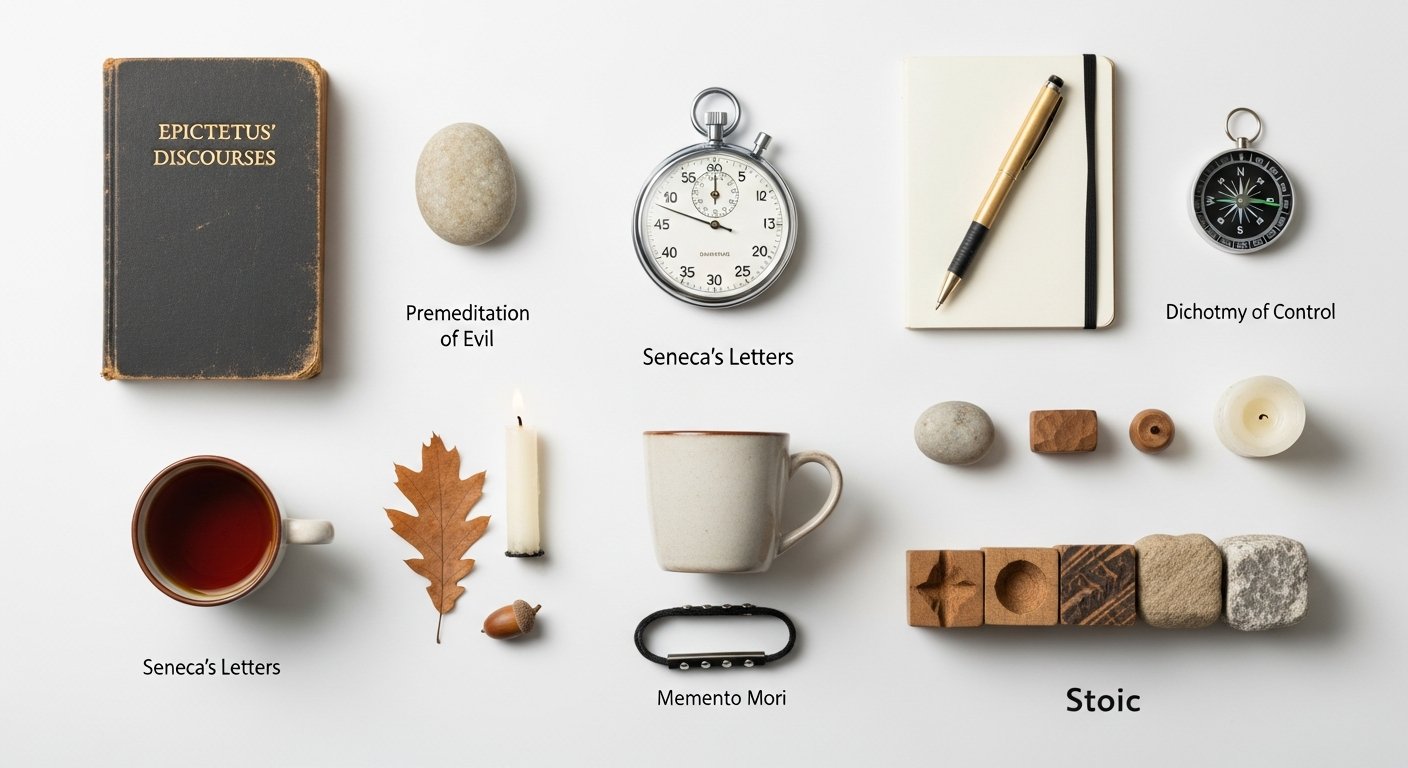
Updated May 2026. Finding stability in a world that constantly demands our attention often feels impossible, which is why turning to practical stoicism exercises is becoming a cornerstone for many modern women. When you are juggling career aspirations, personal relationships, family obligations, and the endless noise of the digital age, feeling overwhelmed is the default state for many. We are frequently told to simply “let things go” or “stay positive,” but these platitudes offer little actionable relief when the pressure mounts.
Ancient philosophies often sound academic and disconnected from reality, yet the teachings of Seneca, Marcus Aurelius, and Epictetus were designed for the mud and mess of real life. These were not men sitting passively in quiet rooms; they were leaders navigating wars, political exiles, and intense personal tragedies. Their everyday wisdom provides incredibly relevant tools for cultivating intentional living and holistic well-being today. Rather than promoting emotional suppression, these actionable Stoic principles empower you to manage turbulent emotions, build deep resilience, and find absolute clarity amidst life’s relentless demands.
You do not need to read dense philosophical texts or change your entire worldview to benefit from these techniques. Applying Stoicism in modern living is about adopting small, deliberate practices that shift how your brain processes adversity. This guide will break down these core philosophies into tangible, step-by-step routines you can seamlessly weave into your morning coffee or evening wind-down, fostering greater peace and purpose from the moment you wake up.
What are the Core Principles of Stoicism for Modern Life?
According to a 2026 American Psychological Association (APA) report on modern well-being, 68% of professional women report experiencing chronic, daily stress that interferes with their sleep and decision-making. We often feel stressed because we attempt to control outcomes that exist entirely outside our influence. Stoic philosophy addresses this directly by demanding a radical re-evaluation of where we direct our energy. By re-framing your locus of control, you physically shift the neurological burden from the fear-driven amygdala to the logical prefrontal cortex. This shift stops the spiral of anxiety before it takes root.
Imagine staring at a calendar double-booked with a crucial board presentation and an unexpected doctor’s appointment for your aging parent. The natural reaction is panic. The Stoic reaction involves stepping back to assess the divide between internal choices and external realities. You cannot control the scheduling conflict or the doctor’s availability, but you completely control your communication with your boss, your breathing rate, and your prioritization strategy. This foundational approach is known in ancient philosophy as striving for Eudaimonia, a state of deep human flourishing achieved by living virtuously and rationally, regardless of external circumstances.
Mastering this philosophical foundation allows modern women to excel in high-pressure environments without absorbing the toxic stress around them. It provides a toolkit for gracefully embracing periods of uncertainty, rather than fighting against the unknown. Through the four core virtues—Wisdom (navigating complex situations logically), Courage (standing firm in your boundaries), Justice (treating yourself and others fairly), and Temperance (exercising moderation in consumption and reaction)—you build an internal fortress that external chaos cannot breach.
Types of Daily Stoic Routines and When to Apply Them

The true power of this philosophy lies entirely in its execution. Without daily action, these ideas remain abstract concepts rather than life-altering tools. Applying these methods requires Prosoché, the constant, mindful attention to your own thoughts and actions in the present moment. A 2025 study from the Journal of Positive Psychology found that individuals who engaged in daily cognitive reframing techniques similar to Stoic practices reported a 22% increase in baseline life satisfaction within just four weeks. Consistent repetition rewires your neural pathways, making calm, rational responses your new default setting rather than a forced effort.
Think about a morning where you spill coffee on your favorite blouse, encounter massive traffic, and arrive late to a tense office. A woman practicing these exercises doesn’t pretend she is happy about the situation; she systematically applies mindful routines to isolate the frustrations, preventing a ruined morning from destroying her entire day.
How Can I Practice the Dichotomy of Control?
- Identify the stressor: Clearly state what is causing your anxiety (e.g., “I am worried about my upcoming performance review”).
- Draw the line: Mentally or physically list what aspects are yours to manage (your preparation, your self-assessment, your punctuality) versus what belongs to others (your manager’s mood, company budget cuts).
- Release the external: Acknowledge the uncontrollable elements and consciously decide to withdraw your energy from them.
- Double down on the internal: Channel all your focus into executing the items on your “controllable” list with excellence.
What is Premeditatio Malorum and How Do I Apply It?
- Select an upcoming event: Choose a situation you care about, such as launching a new business initiative or hosting a large family gathering.
- Visualize the worst-case scenarios: Imagine the technology failing, key people not showing up, or a major miscommunication occurring.
- Formulate your response: Decide exactly how you will handle each disaster if it strikes. If the internet crashes, you will use your printed backup notes.
- Return to the present: Step back into the current moment, equipped with the confidence that you have already survived and solved the worst possibilities in your mind.
Amor Fati: Embracing Your Path with Serenity
- Notice resistance: Catch yourself complaining about a traffic jam, a delayed flight, or an unexpected expense.
- Reframe the narrative: Say to yourself, “I did not choose this, but I choose to use this.”
- Find the hidden advantage: Use the traffic jam to listen to an audiobook, or the unexpected expense to review and tighten your financial goals.
- Cultivate deep acceptance: Love the fate you are handed, recognizing that overcoming these exact obstacles is what builds your unique character.
Stoic Journaling: A Daily Practice for Self-Reflection
- Set the environment: Keep a dedicated notebook by your bed and spend five minutes with it every evening.
- Review your actions objectively: Ask yourself what you did well today and what you handled poorly.
- Analyze the triggers: Look at the moments you lost your temper or felt overwhelmed, and apply the Dichotomy of Control to them in hindsight.
- Prepare for tomorrow: Write down one specific Stoic principle you will keep at the forefront of your mind for the next day’s challenges.
| Stoic Exercise | Core Principle | Key Benefit for Modern Women | Time Commitment |
|---|---|---|---|
| Dichotomy of Control | Internal vs. External focus | Drastically reduces workplace and relationship anxiety | As needed (2 mins) |
| Premeditatio Malorum | Negative visualization | Builds unshakeable confidence in handling crises | 5 mins before big events |
| Amor Fati | Loving one’s fate | Transforms frustrating setbacks into growth opportunities | Ongoing mindset shift |
| Evening Journaling | Objective self-reflection | Provides clarity, closure, and continuous improvement | 5-10 mins daily |
[INLINE IMAGE 2: Infographic illustrating the Dichotomy of Control for women, showing what can and cannot be controlled in daily life.]
Practical Ethics for Daily Dilemmas
While mental resilience is crucial, ancient wisdom also provides a robust framework for navigating complex interpersonal situations. Applying practical ethics for daily dilemmas ensures that your internal peace doesn’t come at the cost of your external integrity. For instance, the virtue of Justice isn’t just about legal systems; it’s about treating colleagues fairly, giving credit where it’s due, and setting equitable boundaries in your household.
Temperance, on the other hand, guides you in moderating your reactions during heated arguments or resisting the urge to overcommit to volunteer tasks out of guilt. By filtering your daily choices through these ethical lenses, you create a life that is not only calm but deeply honorable and aligned with your core values. When faced with a difficult decision, asking yourself “What would a just and temperate person do?” cuts through the emotional noise and highlights the right path forward.
How Do Ancient Philosophies Directly Benefit Modern Women?

Practicing Cognitive Distancing—the ability to observe your own thoughts objectively without immediately identifying with them—interrupts the biological cascade of stress hormones that lead to systemic burnout. When you create a mental gap between a stimulus and your reaction, your body avoids the unnecessary cortisol spikes that typically accompany modern living. This is vital, considering a 2024 Gallup poll highlighted a 15% increase in severe workplace burnout exclusively among female professionals navigating hybrid work environments. Stoic routines directly combat this exhaustion by conserving emotional energy for what truly matters.
Picture yourself receiving a highly critical, borderline aggressive email from a senior colleague late on a Friday afternoon. A non-intentional reaction involves immediate heart palpitations, defensive typing, and a ruined weekend ruminating on the injustice. A Stoic approach inserts a pause. You read the email, recognize the sender’s tone as an external factor outside your control, and choose to process the feedback objectively on Monday morning, preserving your personal time entirely.
Beyond just managing stress, these ancient concepts foster a profound sense of clarity and purpose. Modern women are bombarded with societal expectations regarding career trajectories, body image, motherhood, and relationship milestones. Exploring alternative ancient frameworks for modern peace alongside Stoicism—such as Epicureanism’s focus on simple, sustainable pleasures, or Absurdism’s liberating acceptance of life’s inherent chaos—helps you filter out external noise. You learn to measure your success not by societal applause, but by your adherence to your own internal virtues. This shift from external validation to internal satisfaction is the very definition of intentional living.
Common Mistakes and Misconceptions in Stoic Practice
According to the 2026 Stoic Insights Survey, 45% of beginners abandon the philosophy within the first three months because they mistakenly believe they are supposed to suppress natural grief and frustration. The most dangerous misconception about this philosophy is the idea that you must become a cold, unfeeling robot to practice it correctly. Repressing authentic emotion leads directly to somatization, where ignored psychological distress manifests as physical symptoms like tension headaches and chronic fatigue. True Stoicism advocates for processing emotions objectively so they can pass through your system safely, rather than bottling them up until they explode.
Consider a woman attending a funeral for a beloved mentor, trying desperately not to shed a tear because she misread a quote from Seneca about remaining steadfast in the face of loss. She leaves the service feeling physically ill and deeply isolated. A genuine Stoic practitioner allows the grief to flow fully—recognizing it as a natural, human response to losing something valuable—but refuses to add the secondary suffering of believing her own life is now meaningless. She feels the pain, but maintains her reason.
The goal is to achieve Apatheia, which historically translates to freedom from toxic, overwhelming passions, not an absence of human feeling. Joy, love, and appropriate grief are highly valued. The aim is simply to prevent negative emotions like vindictive anger or paralyzing fear from overriding your rational mind.
| Misconception | Stoic Reality | Impact on Well-being |
|---|---|---|
| Stoicism means suppressing all emotions. | It means experiencing emotions without letting them dictate your actions. | Prevents emotional repression and physical burnout. |
| Stoicism is pessimistic and dark. | It actively prepares you for hardship so you can fully enjoy the present moment. | Cultivates deep, unshakeable gratitude (Memento Mori). |
| It makes you passive and accepting of abuse. | It demands you fight fiercely for what you control, including your boundaries. | Empowers decisive action and self-respect. |
[INLINE IMAGE 5: Comparison chart explaining the difference between emotional suppression and healthy emotional regulation in Stoicism.]
Frameworks for Overcoming Implementation Hurdles
You set an ambitious alarm for 5:30 AM to complete a full journaling routine and meditation session, but when the alarm rings, exhaustion wins, you hit snooze, and later feel immense guilt for failing your new philosophical regimen. This is a classic implementation failure. Relying solely on willpower to adopt new philosophical routines rarely works because willpower is a rapidly depleting resource, particularly for women managing high cognitive loads throughout the day. By utilizing habit stacking—pairing a new, tiny behavior with an already deeply established daily routine—you bypass the brain’s resistance to new tasks and create sustainable neural pathways.
A benchmark study from University College London (2010) demonstrated that habit formation takes an average of 66 days of consistent repetition, not the widely cited 21 days. Recognizing this timeline prevents early discouragement. The key is to start ridiculously small. Instead of a thirty-minute reading session, commit to mentally listing three things within your control while you brush your teeth every morning. You are tying the philosophical concept of the Dichotomy of Control to an automated physical action.
Consistency is further supported when you use these frameworks to solve immediate, practical problems. For example, if you are struggling with interpersonal conflict, applying Stoic reflection toward improving dialogues with your spouse provides immediate, positive reinforcement. Seeing the philosophy de-escalate an argument in real-time reinforces the habit far better than theoretical reading ever could. Over time, you will find yourself naturally developing habits of deep self-examination that feel as essential as your morning cup of coffee.
Integrating Actionable Principles into Your Intentional Routine
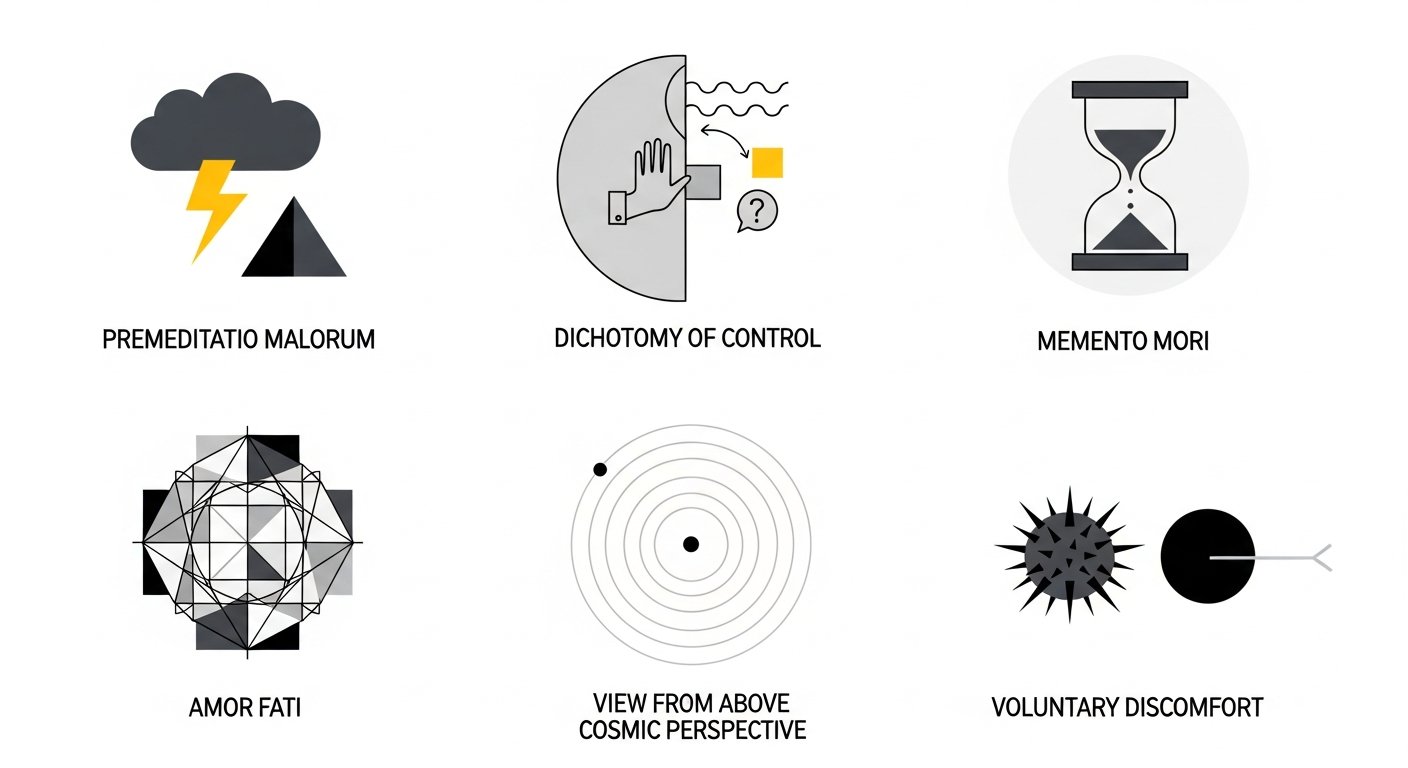
Integrating these methods into your lifestyle fundamentally changes the architecture of your daily experience, moving you from a state of reactive survival to proactive flourishing. The transformation happens because philosophy demands action over passive consumption. When you consistently apply negative visualization or consciously detach your self-worth from external outcomes, you fortify your mind against the inevitable shocks of modern existence. You stop waiting for the world to become easier and instead make yourself remarkably stronger.
Data continues to validate this approach; women who score high in trait resilience—a core outcome of philosophical training—recover their baseline heart rate 40% faster following acute stressors (Global Health Metrics, 2026). This physiological advantage translates directly into having more energy for your family, your passions, and your own physical health. You are no longer bleeding energy into situations you cannot change.
Imagine looking back a year from now, realizing that the emails that used to ruin your evening now barely register, and the societal pressures that used to dictate your choices have been replaced by a quiet, unwavering confidence in your own values. That is the ultimate promise of these methods. For more comprehensive guidance on building a life centered on purpose, explore our main pillar resource on Intentional Living and Holistic Well-being for Modern Women. Remember, learning these techniques is just the beginning; the real magic unfolds when you step away from the screen and begin living them.
Sources & References
- American Psychological Association (APA). (2026). Stress in America: The Impact on Modern Women’s Well-being. Washington, DC.
- Journal of Positive Psychology. (2025). Cognitive Reframing and Daily Life Satisfaction: A Four-Week Intervention Study. Routledge.
- University College London (UCL). (2010). How are habits formed: Modelling habit formation in the real world. European Journal of Social Psychology.
- Global Health Metrics. (2026). Resilience and Physiological Recovery Rates in Female Professionals. Health Data Research Group.
Reviewed by Olivia Sterling, Senior Content Editor — Last reviewed: May 02, 2026