


icon

Creating a life you love

Search
Share

how to maintain personal identity

how to maintain personal identity

How to Maintain Personal Identity: A Guide to Staying True to Yourself in Relationships and Social Circles

Have you ever looked in the mirror after months of a new relationship or a shift in your social circle and wondered where “you” went? It is a common phenomenon: we become so immersed in the lives, preferences, and rhythms of others that our own colors begin to fade into the background. While human connection is essential for a fulfilling life, the loss of personal identity is a silent thief of long-term happiness. Maintaining your identity isn’t about being “lonely” or “selfish”; it is about self-differentiation—the ability to remain connected to others while staying firmly rooted in your own values, interests, and boundaries. As we navigate the complex social landscapes of 2026, the pressure to conform has never been higher, making the pursuit of self-preservation a vital skill. This guide explores how to balance the “we” with the “I,” ensuring that your relationships enhance your life without consuming your soul.

Understanding the Importance of Self-Differentiation in 2026

In the modern era, our identities are constantly being tugged at by digital influences, social expectations, and the intimate demands of our closest relationships. Self-differentiation is a psychological concept that refers to the ability to maintain your sense of self while being emotionally connected to others. In 2026, where the lines between public and private life are increasingly blurred, mastering this balance is the key to mental health and relationship longevity.

When you lack self-differentiation, you become a “chameleon.” You might find yourself adopting the political views of your partner, the hobbies of your best friend, or the communication style of your colleagues, all while losing touch with what you actually think or feel. This lack of a solid “core” leads to burnout and resentment. To maintain your identity, you must first recognize that you are a complete entity on your own. Your relationships should be a partnership of two whole individuals, not two halves trying to make a whole. By staying differentiated, you bring more value to your social circles because you offer a unique perspective rather than a mere echo of everyone else’s opinions.

Establishing Boundaries as a Framework for Identity

Boundaries are often misunderstood as walls meant to keep people out. In reality, boundaries are the gates that define where you end and where someone else begins. To maintain your personal identity, you must establish clear physical, emotional, and temporal boundaries. This is especially true for adults looking to improve their social skills, as the fear of rejection often leads to “people-pleasing,” which is the fastest route to losing one’s identity.

Start by identifying your “non-negotiables.” These are the activities or values that make you feel like yourself. Perhaps it is your Sunday morning yoga, your commitment to a specific career goal, or your need for eight hours of sleep. When someone asks you to compromise these things, a healthy identity allows you to say “no” without guilt. Communicating these boundaries clearly and kindly is a high-level social skill. Instead of saying, “You’re taking up too much of my time,” try, “I love spending time with you, but I’ve committed my Tuesday nights to my painting class because it helps me stay grounded.” This reinforces who you are while maintaining the connection. Remember, those who truly value you will respect your boundaries; those who don’t are often the ones who benefited from you having none.

Cultivating Individual Passions and the Power of Solitude

One of the most effective ways to keep your identity intact is to maintain interests that have absolutely nothing to do with your partner or your primary social group. In the rush of a new romance or a demanding social life, it is easy to let your individual hobbies slide. However, these passions are the anchors of your personality. Whether it is coding, hiking, historical research, or playing an instrument, these activities provide a sense of mastery and joy that is independent of external validation.

Furthermore, we must embrace the power of solitude. In 2026, constant connectivity can make us feel like we always need to be “on” for someone else. Spending time alone allows you to process your thoughts and emotions without the influence of others. It gives you the space to ask yourself, “What do I actually want?” rather than “What do they want from me?” If you find that you have become “enmeshed” with your social circle, start small: take yourself on a solo “date” once a week. Whether it’s a coffee shop visit or a walk in the park, use this time to reconnect with your own inner monologue. This practice strengthens your self-concept, making you more resilient when you return to social settings.

Navigating Social Dynamics Without Losing Your Voice

Social mimicry is a natural human instinct; we often subconsciously mirror the body language and speech patterns of those we like. While this can help build rapport, it can also lead to a diluted sense of self if taken too far. To maintain your identity in social settings, practice “authentic engagement.” This means contributing your true thoughts to a conversation even if they diverge from the group consensus.

Improving your social skills doesn’t mean becoming more likeable by agreeing with everyone; it means becoming more effective at expressing your unique self. When you agree with a group just to avoid conflict, you are effectively erasing a piece of your identity. Practice the art of the “respectful dissent.” You can say, “I see why you feel that way, but I’ve actually had a different experience,” or “That’s an interesting point, though I tend to value [X] more in this situation.” This not only preserves your identity but also makes you a more interesting and respected member of the group. People are drawn to those who have a clear sense of self and the courage to stand by it.

The Role of Continuous Self-Exploration and Growth

Identity is not a static destination; it is a fluid process of growth. Many people lose their identity because they are clinging to an old version of themselves or because they have stopped growing altogether. To stay true to yourself, you must be committed to lifelong self-exploration. This involves regularly auditing your values and goals to ensure they still align with who you are today.

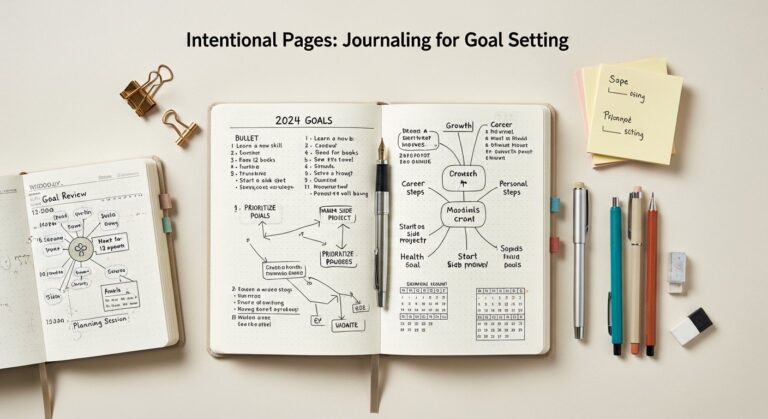
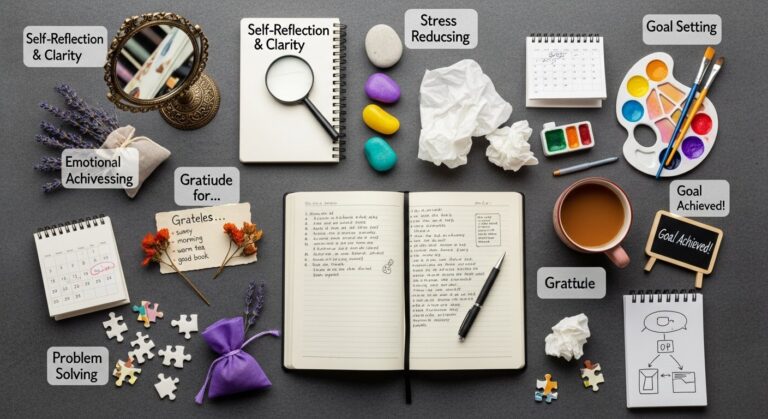
Journaling remains one of the most powerful tools for this. By writing down your reflections, you create a paper trail of your evolving self. Ask yourself deep questions: “What did I do this week that felt truly ‘me’?”, “Where did I compromise my values to fit in?”, and “What new things am I curious about?” As we move through 2026, the world is changing rapidly, and your identity will likely change with it. Embracing growth doesn’t mean you are losing yourself; it means you are refining yourself. By being the primary architect of your own evolution, you ensure that you are changing for your own reasons, rather than being shaped by the whims of your social environment.

Balancing Intimacy and Autonomy: The “We” vs. “I” Equilibrium

The ultimate challenge in maintaining personal identity lies in the balance between intimacy and autonomy. We are social creatures who thrive on “we-ness,” but we perish without “I-ness.” In healthy relationships—whether romantic, platonic, or familial—there is a constant ebb and flow between connection and independence. This is often called “interdependence,” which is the healthy middle ground between codependence (losing yourself in the other) and hyper-independence (refusing to let anyone in).

To achieve this equilibrium, practice “checking in” with yourself during social interactions. If you feel a sense of “identity fatigue,” it is a sign that the balance has shifted too far toward the “we.” Give yourself permission to pull back and recharge your “I.” Conversely, if you feel isolated, lean back into the “we.” Share your individual experiences with your partner or friends. Instead of doing everything together, do things separately and then come together to share the stories of your day. This creates a dynamic where your individuality actually fuels the relationship, providing fresh energy and new topics of conversation. Your identity is the gift you bring to your relationships; don’t let it be the price you pay for them.

FAQ: Maintaining Personal Identity

#

1. What is the first sign that I am losing my identity in a relationship?
The most common early sign is “emotional mirroring,” where your mood becomes entirely dependent on the mood of the other person. Other signs include losing interest in hobbies you once loved, feeling anxious when making decisions without consulting someone else, and realizing that your “future plans” no longer include any goals that are solely your own.

#

2. Can I regain my identity after years of being in a codependent dynamic?
Absolutely. Identity is resilient. Regaining it starts with small, intentional acts of autonomy. Begin by reclaiming one hobby or one hour of your day that is exclusively yours. Therapy can also be incredibly helpful in untangling your identity from others and addressing the underlying fears that led to the codependency in the first place.

#

3. How do I tell my friends or partner I need more “me time” without hurting them?
The key is to frame it as a “pro-relationship” move rather than a “pro-separation” move. Use “I” statements: “I’ve realized that I’m much better company when I’ve had some time to recharge on my own. I want to start taking Saturday mornings for my own projects so I can be fully present when we hang out later.”

#

4. Is it selfish to prioritize my own growth over social obligations?
No, it is self-stewardship. If you do not prioritize your own growth, you eventually become a hollow version of yourself, which benefits no one. By being a well-developed, growing individual, you have more wisdom, energy, and authenticity to offer your social circles.

#

5. How does technology in 2026 impact our ability to stay true to ourselves?
Technology creates a “comparison trap” and a “constant presence.” With advanced social media and communication tools, we are often performing for an audience or reacting to notifications. Maintaining identity in 2026 requires “digital boundaries”—specific times where you disconnect from the collective “noise” to listen to your own inner voice.

Conclusion

Maintaining a personal identity in an interconnected world is an act of courage. It requires the self-awareness to know who you are, the strength to set boundaries, and the wisdom to know that true connection only happens between two distinct individuals. By cultivating your own passions, embracing solitude, and communicating your needs clearly, you don’t just “save” yourself—you improve the quality of every relationship you have. As you navigate the social landscape of 2026, remember that you are the protagonist of your own life, not a supporting character in someone else’s. Your uniqueness is your greatest asset; protect it, nurture it, and never be afraid to let it shine. When you stay true to yourself, you give others the implicit permission to do the same, creating a social circle built on authenticity, respect, and genuine connection.

THE LATEST

Hi, I’m Thea.

I started this brand as a personal online publication after graduating from Boston University with a degree in Marketing and Design. Originally from San Francisco, I was thousands of miles from family and friends, and needed an outlet for exploring my passions and connecting with others. My goal has always been to show others the beauty in enjoying life’s simple pleasures and to encourage others to look inward for self fulfillment.

Thousands of readers later, The Contextual Life has become a resource for anyone wanting a sense of community and a source of inspiration throughout their journey of life. It’s a place where readers can find suggestions on where to travel, what to eat, what to wear, and what to shop for, from experts who are almost like personal friends.

The Contextual Life brings our mission to life through news, products, experiences, and design. We are dedicated to providing the latest information to help you live a lifestyle that you love. Thank you for being here. Stay awhile.

thea-signature
Im-thea