

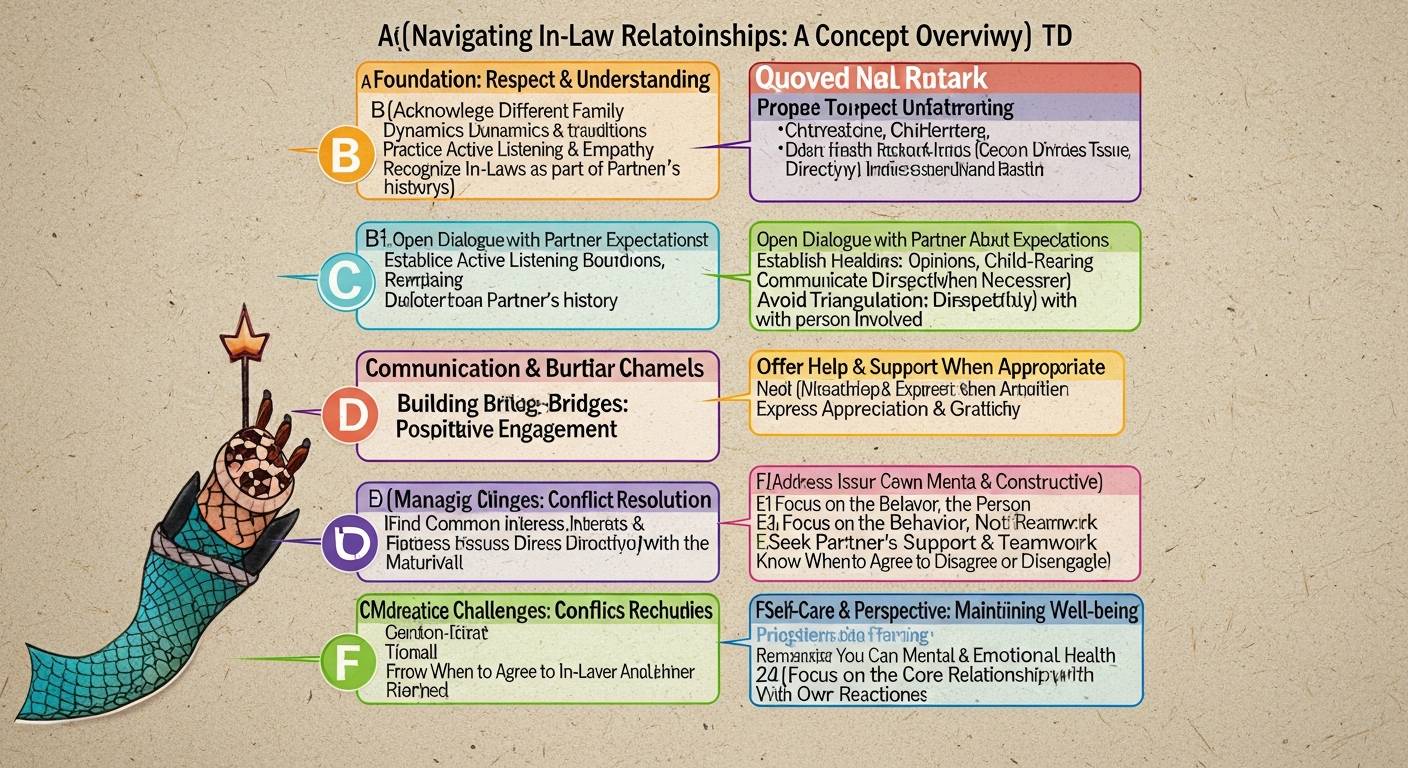
Building a life aligned with your deepest values often requires conscious effort in every sphere, especially within your relationships. For many women, this journey of intentional living frequently intersects with the often-complex world of family, and specifically, navigating in-law relationships. These connections, while potentially rich and supportive, can also present unique challenges that impact your peace, energy, and overall holistic well-being. This article is your comprehensive guide to understanding, managing, and ultimately thriving within your extended family dynamics, all while prioritizing your own self-preservation and empowerment. We’ll explore actionable strategies, communication techniques, boundary setting, and resilience-building practices to help you cultivate harmony and protect your inner calm.
Before we dive into specific strategies, here’s a quick overview of the key areas we’ll cover to empower your journey:
| Aspect of In-Law Relationships | Key Takeaway for Well-being | Core Strategy |
|---|---|---|
| Understanding Dynamics | Recognize patterns to reduce personal blame. | Identify personality types and common issues. |
| Effective Communication | Foster clarity and reduce misunderstandings. | Practice “I” statements, active listening. |
| Setting Boundaries | Protect your energy, time, and personal values. | Define and assert limits respectfully and consistently. |
| Managing Expectations | Minimize conflict arising from differing views. | Align with your spouse, communicate openly. |
| Conflict Resolution | Address issues constructively, maintain peace. | Employ intentional, calm problem-solving. |
| Cultivating Resilience | Build inner strength against external pressures. | Prioritize self-care, mindfulness, and self-compassion. |
Why Are Healthy In-Law Relationships Essential for Your Well-being?
The quality of your connections with your spouse’s family extends far beyond mere politeness; it profoundly influences your holistic well-being. When these relationships are strained or conflict-ridden, they can become a significant source of stress, anxiety, and emotional drain, directly impacting your mental, emotional, and even physical health. Conversely, healthy in-law bonds can offer immense support, enrich your family life, and contribute to a more peaceful home environment. Women, in particular, often bear the brunt of managing family dynamics, making it crucial to approach these connections with intentionality to safeguard their energy and happiness. Recognizing this foundational link empowers you to view investing in these relationships not as an obligation, but as an essential act of self-care and a cornerstone of your intentional life.
See our detailed guide on [CLUSTER LINK: The Impact of In-Law Relationships on a Woman’s Holistic Well-being] for a deeper exploration of this topic.
Understanding Common In-Law Dynamics and Challenges
Before you can effectively manage any relationship, you must first understand its inherent dynamics and potential challenges. In-law relationships are inherently complex, often bringing together individuals with different family traditions, communication styles, and expectations. Recognizing common patterns can help you depersonalize issues and approach them with greater objectivity. Challenges can range from subtle disagreements over holiday plans to more significant conflicts regarding parenting choices, financial involvement, or differing cultural values. Identifying these recurring issues is the first step toward developing proactive strategies rather than reacting impulsively. This understanding allows you to anticipate potential friction points and develop tools to navigate them with grace and resilience, protecting your well-being.
What Are the Different Types of In-Law Personalities?
In-law personalities are as varied as people themselves, but identifying common archetypes can provide valuable insight. You might encounter the “Over-Involved” in-laws who offer unsolicited advice on everything from your finances to your child-rearing, or the “Critical” in-laws whose comments often feel like judgments. There are also the “Distant” in-laws who rarely engage, leaving you feeling excluded, and the “Competitive” ones who may vie for your spouse’s attention. Understanding these types isn’t about labeling, but about predicting potential interaction styles and adjusting your approach accordingly. Recognizing the underlying motivations—whether it’s love, anxiety, or a desire for control—can foster empathy and help you tailor your responses, rather than taking everything personally. This awareness is vital for maintaining emotional equilibrium and making intentional choices about how you engage.
[INLINE IMAGE 1: diagram showing different types of in-law relationships and their dynamics, illustrating categories like ‘Over-Involved,’ ‘Distant,’ ‘Critical,’ and ‘Supportive’ with associated behaviors]
Effective Communication Strategies for Harmonious In-Law Interactions
Clear, empathetic, and assertive communication is the bedrock of harmonious in-law relationships and a crucial skill for women seeking intentional living. Misunderstandings often arise from unspoken expectations or passive aggression, leading to resentment and increased stress. Proactive communication involves not just speaking, but also active listening—truly hearing and acknowledging their perspective, even if you don’t agree. This creates a foundation of respect. Beyond that, learning to express your own needs and feelings calmly and directly can prevent minor issues from escalating into major conflicts. Mastering these communication techniques empowers you to advocate for your well-being while maintaining respectful dialogue, ensuring your voice is heard without sacrificing your peace.
How Can “I” Statements Transform In-Law Conversations?
“I” statements are a powerful tool for expressing your feelings and needs without sounding accusatory or judgmental, making them invaluable in delicate in-law interactions. Instead of saying, “You always criticize my parenting,” which can immediately put someone on the defensive, an “I” statement reframes it: “I feel hurt when my parenting choices are questioned in front of the children, because I value feeling supported as a mother.” This shifts the focus from blame to your personal experience and emotional response. By owning your feelings, you invite understanding and cooperation rather than confrontation. Consistently using “I” statements can de-escalate tension, open pathways for empathetic dialogue, and allow you to assert your needs in a way that respects both yourself and your in-laws. This subtle linguistic shift can lead to significantly more productive and less stressful conversations, preserving your emotional energy.
For an in-depth exploration of communication techniques, refer to our article on [CLUSTER LINK: Mastering Effective Communication with In-Laws].
Setting Healthy Boundaries with In-Laws: A Pillar of Self-Preservation
Setting healthy boundaries is arguably the most crucial strategy for a woman’s holistic well-being when navigating in-law relationships. Without clear boundaries, your personal space, time, energy, and even your parenting decisions can be encroached upon, leading to resentment, exhaustion, and a diminished sense of self. Boundaries are not about keeping people out; they are about defining what is acceptable and unacceptable in your interactions to protect your core self. This act of self-preservation ensures that you maintain control over your life and your family unit, allowing you to live intentionally without constantly feeling overwhelmed or disrespected. Establishing and enforcing boundaries consistently communicates your value system and teaches others how to treat you, fostering healthier, more respectful connections in the long run.
What Do Respectful Boundaries Look Like in Practice?
Respectful boundaries are clear, communicated calmly, and consistently enforced. In practice, this could mean defining limits around unsolicited advice (e.g., “Thank you for your thoughts, we’ve decided to handle it this way.”), time commitments (e.g., “We can visit for two hours on Saturday, but then we need to leave for our family time.”), or financial involvement (e.g., “We appreciate the offer, but we prefer to manage our finances independently.”). It also extends to parenting choices (e.g., “We have a specific approach to discipline, and we’d appreciate it if you could respect that when the children are with you.”). The key is to be assertive without being aggressive, using “I” statements and offering alternatives where possible. What success looks like: A woman who implements clear boundaries around holiday visits might report a 25% reduction in weekly stress during peak family seasons and an increase in personal time by 3 hours, allowing her to recharge and focus on her well-being. What failure looks like: A woman who consistently defers to in-law expectations regarding childcare arrangements finds herself depleted, experiencing a 40% increase in fatigue and reporting feeling “lost” in her own parenting decisions, leading to marital strain. Remember, boundaries are a dynamic process, often requiring re-evaluation and reinforcement over time to remain effective and support your evolving needs for well-being.
[INLINE IMAGE 2: infographic illustrating healthy boundaries in various relationship contexts, depicting visual examples for personal space, time management, financial discussions, and parenting decisions.]
To learn more about effective boundary setting, please read our dedicated article on [CLUSTER LINK: Setting Healthy Boundaries with In-Laws].
Managing Expectations: Yours, Theirs, and Your Spouse’s
Unmet expectations are a frequent source of friction in in-law relationships. These can stem from differing cultural backgrounds, family traditions, or simply individual preferences on everything from holiday celebrations to communication frequency. As a woman striving for intentional living, it’s vital to recognize your own expectations, realistically assess your in-laws’ likely expectations, and most importantly, align with your spouse. Your partner serves as the crucial bridge between you and their family, and their support in managing expectations is paramount. Openly discussing these points with your spouse, setting a united front, and then communicating those shared expectations (or limitations) to your in-laws can prevent many misunderstandings and disappointments. This proactive approach ensures that everyone is on the same page, reducing potential conflict and safeguarding your emotional well-being.
For more detailed strategies on aligning with your partner, see our guide on [CLUSTER LINK: Aligning with Your Spouse on In-Law Matters].
When Conflict Arises: Intentional Approaches to Resolution
Despite your best efforts, conflict is an inevitable part of any close relationship, and in-law dynamics are no exception. The key for women committed to intentional living isn’t to avoid conflict entirely, but to approach it with thoughtful, constructive strategies that prioritize resolution and preserve well-being. This means moving beyond immediate emotional reactions and engaging in active problem-solving. Intentional conflict resolution involves choosing the right time and place for discussion, focusing on the specific issue rather than personal attacks, and being willing to compromise when appropriate. De-escalation tactics, such as taking a break when emotions run high or inviting a neutral third party (like your spouse) to mediate, can prevent disagreements from spiraling. By adopting these approaches, you transform potential stressors into opportunities for growth and deeper understanding, ultimately maintaining your peace.
Explore more in-depth conflict resolution techniques in our article [CLUSTER LINK: Resolving In-Law Conflicts with Grace and Intentionality].
Common Mistakes Women Make When Handling In-Laws
While every situation is unique, certain pitfalls commonly undermine a woman’s efforts to manage in-law relationships effectively and protect her well-being. Recognizing these can help you avoid unnecessary stress and cultivate healthier interactions:
- Expecting Your Spouse to Be a Mind Reader: Assuming your partner instinctively knows your feelings or what you need them to do regarding their family can lead to resentment and unmet needs.
- Ventilating Excessively to Your Spouse: While discussing issues is healthy, constant negative talk about their family can strain your marital bond and put your spouse in an uncomfortable position.
- Avoiding Conflict Entirely: While admirable to seek peace, avoiding necessary conversations about boundaries or grievances often leads to simmering resentment that eventually boils over, creating larger problems.
- Taking Everything Personally: Not all in-law comments or behaviors are intentionally malicious. Sometimes, they stem from ingrained habits, cultural differences, or their own anxieties. Personalizing everything drains your emotional energy.
- Trying to Be a “People Pleaser”: Constantly sacrificing your own needs, preferences, and boundaries to keep your in-laws happy will inevitably lead to burnout, resentment, and a loss of self.
- Competing for Your Spouse’s Attention: Viewing in-laws as rivals for your spouse’s affection or time can create unnecessary tension and insecurity within your marriage.
- Failing to Set Clear Boundaries Early On: It’s much harder to establish limits after years of allowing certain behaviors. Early and consistent boundary setting is key.
Cultivating Resilience: Prioritizing Your Well-being Amidst In-Law Stress
Even with the most effective strategies, in-law dynamics can sometimes be a source of stress. For women committed to intentional living and holistic well-being, cultivating resilience isn’t just a coping mechanism—it’s an active practice of self-care. Resilience allows you to bounce back from difficult interactions, maintain your inner peace, and prevent external pressures from derailing your emotional balance. This involves establishing strong self-care rituals, whether it’s daily meditation, journaling, spending time in nature, or engaging in hobbies that recharge you. It also means developing emotional detachment where necessary, understanding that you cannot control others’ actions, only your reactions. Prioritizing your well-being through these practices ensures that you remain grounded and empowered, regardless of the challenges in your extended family.
How Can Mindfulness Support Your Emotional Well-being with In-Laws?
Mindfulness is an incredibly potent tool for managing the emotional toll of in-law relationships. By practicing mindfulness, you cultivate an awareness of the present moment without judgment. This means observing your thoughts and feelings about in-law interactions as they arise, without getting swept away by them. For example, before a family gathering, a mindful practice might involve taking a few deep breaths and setting an intention for calm presence. During an uncomfortable conversation, mindfulness allows you to notice the tension in your body or the urge to react defensively, giving you a precious pause to choose a more intentional response. This practice can reduce reactive patterns, increase emotional regulation, and help you create mental space between an event and your reaction, ultimately preserving your peace and energy.
Discover more resilience-building techniques in our article: [CLUSTER LINK: Building Emotional Resilience for Women].
Seeking External Support: When and How to Get Help
While many in-law challenges can be managed with intentional strategies and personal growth, there are times when external support becomes essential for a woman’s well-being. This isn’t a sign of failure, but rather an act of self-awareness and strength. If in-law dynamics are consistently causing severe stress, impacting your mental health, straining your marriage, or exhibiting toxic patterns (e.g., manipulation, disrespect, constant negativity), it’s time to consider professional help. A qualified therapist or relationship counselor can provide unbiased perspectives, teach advanced communication skills, and facilitate difficult conversations, sometimes even involving your spouse or in-laws directly if appropriate. Knowing when and how to access this support is a critical component of holistic well-being and ensures you’re not bearing the emotional burden alone.
For guidance on finding the right professional, see our resource on [CLUSTER LINK: Finding Professional Support for Relationship Challenges].
| Common In-Law Scenario | Unintentional Response (Impact on Well-being) | Intentional Response (Benefit to Well-being) | Key Strategy |
|---|---|---|---|
| Unsolicited Parenting Advice | Nodding politely but feeling resentful; increased anxiety about competence. | “Thank you for your input, but we’ve found X approach works best for our family.” (Preserved peace, empowered parenting.) | Clear Boundaries, “I” Statements |
| Overbearing Visits/Calls | Feeling overwhelmed and drained; loss of personal time and marital intimacy. | “We’d love to see you, but Tuesdays/Thursdays work better for us, or we’re free for a call this weekend.” (Reclaimed time, reduced resentment.) | Time Boundaries, Assertiveness |
| Differing Holiday Expectations | Stressing over pleasing everyone; feeling spread thin and exhausted. | “This year, we’ll be hosting at our place, or we’re visiting on [specific day].” (Reduced stress, preserved family traditions.) | Managing Expectations, United Front with Spouse |
| Financial Pressure/Expectations | Feeling guilty or obligated; financial strain and marital conflict. | “We appreciate the offer/thought, but we need to manage our finances independently right now.” (Financial autonomy, reduced marital tension.) | Financial Boundaries, Direct Communication |
| Critical or Judgmental Comments | Internalizing negativity; feeling insecure or defensive; emotional drain. | “I hear your concern, but that’s not how I see it,” or changing the subject. (Protected self-esteem, maintained peace.) | Emotional Boundaries, Detachment |
Frequently Asked Questions About Navigating In-Law Relationships
Here are some quick answers to common questions about managing these vital family connections:
- How do I deal with a difficult mother-in-law?
Focus on consistent boundaries, empathetic listening, and “I” statements. Involve your spouse as a united front, and don’t take everything personally. Prioritize your well-being above trying to gain her approval.
- What if my spouse isn’t supportive of my in-law boundaries?
This is a critical marital issue. Seek couples counseling to align on expectations and boundary strategies. Your marital unit must come first, and a united front is essential for managing external family dynamics.
- Is it okay to distance myself from in-laws if they’re toxic?
Yes. Protecting your mental and emotional health is paramount. While complete estrangement is a last resort, reducing contact, setting strict boundaries, and practicing emotional detachment are healthy self-preservation strategies when toxicity persists.
- How can I build a better relationship with my in-laws?
Show genuine interest in their lives, find common ground, offer small gestures of kindness, and communicate openly. Respect their traditions, but also assert your own family’s needs. Consistency and patience are key.
- What if my in-laws constantly offer unsolicited advice?
Acknowledge their intention (“Thank you for your concern/advice”) then gently pivot (“We’ve got it handled,” or “We’re going to try it this way”). You don’t need to justify your choices, just assert them.
Sources & References
- Gottman, J. M., & Silver, N. (2015). The Seven Principles for Making Marriage Work: A Practical Guide from the Country’s Foremost Relationship Expert. Harmony Books.
- Cloud, H., & Townsend, J. (2011). Boundaries: When to Say Yes, How to Say No To Take Control of Your Life. Zondervan.
- Rosenberg, M. B. (2015). Nonviolent Communication: A Language of Life. PuddleDancer Press.
- Nedra Glover Tawwab. (2021). Set Boundaries, Find Peace: A Guide to Reclaiming Yourself. Penguin Random House.
About the Author
Amara Diallo, Wellness & Empowerment Coach — I’m dedicated to guiding women towards joyful, balanced lives through mindful practices and empowering self-discovery.
Reviewed by Olivia Sterling, Senior Content Editor — Last reviewed: April 06, 2026