


icon

Creating a life you love

Share

How To Build A Skincare Routine From Scratch For Beginners

Let’s be real: stepping into the world of skincare can feel like trying to decipher an ancient, mystical language. Rows of gleaming bottles promise miracles, social media feeds are awash with complicated routines, and every ‘expert’ seems to contradict the last. For many of us, the sheer volume of information can be so overwhelming that we throw our hands up in frustration, opting for a quick face wipe and hoping for the best. You’re not alone if you’ve ever thought, “I just want someone to tell me exactly how to build a skincare routine from scratch for beginners, without all the jargon!”

Here at The Contextual Life, we believe in empowering you with knowledge that’s not just effective but also approachable and sustainable. You deserve a skincare routine that feels like a loving ritual, not a chore or a scientific experiment. This comprehensive guide is designed for you, the modern woman ready to invest in her skin’s health, but who needs a clear, grounded path to start. We’re going to strip away the confusion, debunk common myths, and give you the foundational steps to create a skincare routine that truly works for you, from the very first cleanser to the final, protective layer of SPF.

Consider this your ultimate roadmap to achieving a healthy, glowing complexion with confidence. We’ve done the research, sifted through the noise, and distilled it into actionable advice. By the end of this article, you’ll understand your skin better, know exactly which products are essential, and feel empowered to embark on your unique skincare journey. No more guesswork, just real results and a deeper connection to your skin’s needs.

Understanding Your Skin: The Foundation of Any Routine

Before you even think about buying a single product, the most crucial first step in building a skincare routine is understanding the canvas you’re working with: your skin. Just like you wouldn’t buy clothes without knowing your size, you shouldn’t invest in skincare without identifying your skin type and primary concerns. This knowledge is your superpower, guiding every product choice you make.

How to Identify Your Skin Type

Your skin type is primarily determined by genetics, but it can also be influenced by factors like hormones, climate, and lifestyle. There are typically five main categories:

  • Oily Skin: If your skin often looks shiny, especially in the T-zone (forehead, nose, chin), produces excess sebum, and is prone to breakouts or enlarged pores, you likely have oily skin. You might also find your makeup slides off quickly.
  • Dry Skin: Dry skin often feels tight, flaky, rough, or itchy. You might notice fine lines more prominently and rarely experience breakouts. It produces less natural oil (sebum) than other skin types.
  • Combination Skin: This is one of the most common types. If your T-zone is oily (shiny, larger pores) while your cheeks and other areas are normal to dry, you have combination skin. It requires a balanced approach.
  • Normal Skin: Congratulations if you have normal skin! It’s well-balanced, neither too oily nor too dry, with small pores and a radiant complexion. Breakouts are rare, and it generally feels comfortable.
  • Sensitive Skin: Sensitive skin is often dry, but its hallmark is reactivity. It tends to sting, itch, redden, or break out in rashes when exposed to certain ingredients, fragrances, or environmental factors. It requires gentle, soothing products.
✨ Wellness Tip

The “Wash & Wait” Test: The simplest way to determine your skin type at home is to wash your face with a gentle cleanser, pat it dry, and then wait for an hour without applying any products. Observe how your skin feels and looks:
  • Shiny all over, especially T-zone: Oily
  • Tight, flaky, uncomfortable: Dry
  • Shiny T-zone, tight/normal cheeks: Combination
  • Comfortable, balanced, no shine or tightness: Normal
  • Red, itchy, irritated by the wash: Sensitive (and likely dry)

Identifying Your Primary Skin Concerns

Beyond your skin type, what are the specific issues you want to address? These are your “concerns” and they will influence the specific active ingredients you choose to incorporate. Common concerns include:

  • Acne & Breakouts: Pimples, blackheads, whiteheads.
  • Aging Concerns: Fine lines, wrinkles, loss of firmness.
  • Hyperpigmentation: Dark spots, sun spots, post-inflammatory hyperpigmentation (leftover marks from acne).
  • Dullness: Lack of radiance, uneven skin tone.
  • Dehydration: Skin that feels thirsty, looks lackluster, or has a crepey texture (different from dry skin, which lacks oil).
  • Redness: General facial redness, rosacea.

Understanding both your skin type and your concerns creates a personalized blueprint for your routine, ensuring you’re choosing products that truly serve your skin’s unique needs.

The Core Four: Essential Steps for Every Beginner’s Routine

When you’re first figuring out how to build a skincare routine from scratch for beginners, the best approach is to simplify. Forget the 10-step K-beauty routines for now. We’re going to focus on the absolute essentials – the non-negotiables that form the backbone of healthy skin. These four steps are universal, regardless of your skin type, and provide the foundation upon which you can build more advanced routines later.

  1. Cleanser: The Fresh Start

    What it does: Cleansing is the first and arguably most important step. It removes dirt, oil, makeup, impurities, and pollution that accumulate on your skin throughout the day and night. Skipping this step can lead to clogged pores, breakouts, and hinder the effectiveness of subsequent products.

    What to look for:

    • For Oily/Acne-Prone Skin: Look for gel or foaming cleansers that contain ingredients like salicylic acid (a BHA) to gently exfoliate and control oil.
    • For Dry/Sensitive Skin: Creamy, hydrating, or oil-based cleansers that don’t strip your skin of its natural moisture are ideal. Avoid harsh sulfates.
    • For Normal/Combination Skin: A gentle foaming or gel cleanser that cleanses effectively without leaving your skin feeling tight or greasy is perfect.

    How to use: Use lukewarm water (hot water can strip skin), gently massage a dime-sized amount onto damp skin for 30-60 seconds, then rinse thoroughly. Pat your face dry with a clean towel.

  2. Treatment/Serum (Optional but Recommended): Targeted Support

    What it does: Serums are concentrated formulations designed to deliver specific active ingredients deep into the skin to address particular concerns. While not strictly “essential” for a beginner’s bare-bones routine, incorporating one can significantly boost results.

    What to look for (choose ONE to start):

    • Vitamin C Serum: (Morning) A powerful antioxidant that brightens skin, protects against environmental damage, and helps with hyperpigmentation. Great for almost all skin types.
    • Hyaluronic Acid Serum: (Morning or Evening) A humectant that draws moisture into the skin, providing intense hydration. Excellent for dry or dehydrated skin.
    • Niacinamide (Vitamin B3) Serum: (Morning or Evening) Helps reduce inflammation, minimize pores, improve skin barrier function, and regulate oil production. Great for oily, acne-prone, or sensitive skin.
    • Gentle Retinoid (PM only): For anti-aging or acne, start with a low-dose retinol or a gentler retinoid like bakuchiol. This is a powerful ingredient that requires careful introduction.

    How to use: Apply a few drops to clean, damp skin after cleansing. Gently press it into your face and neck until absorbed. If using a potent active like Vitamin C or Retinoids, introduce it slowly (2-3 times a week) to avoid irritation.

  3. Moisturizer: The Hydrating Hug

    What it does: Moisturizer locks in hydration, prevents water loss from the skin, and strengthens your skin’s natural barrier. It keeps your skin soft, supple, and protected. Even oily skin needs moisturizer!

    What to look for:

    • For Oily Skin: Look for lightweight, oil-free, non-comedogenic (won’t clog pores) gel or lotion formulas.
    • For Dry Skin: Richer creams with ingredients like ceramides, hyaluronic acid, shea butter, or squalane are beneficial.
    • For Sensitive Skin: Opt for fragrance-free, hypoallergenic formulas with minimal ingredients.
    • For Normal/Combination Skin: A balanced lotion or cream that provides hydration without feeling heavy.

    How to use: Apply a generous amount to your face and neck after your serum (if using) or cleansing. Gently massage upwards. Use morning and night.

  4. Sunscreen (SPF): The Ultimate Protector

    What it does: This is the single most important anti-aging and skin health product you can use. Sunscreen protects your skin from harmful UVA (aging) and UVB (burning) rays, preventing premature aging, hyperpigmentation, and significantly reducing your risk of skin cancer. Non-negotiable, every single day, rain or shine.

    What to look for:

    • Broad-spectrum: Protects against both UVA and UVB rays.
    • SPF 30 or higher: Provides adequate protection for daily use.
    • Formula preference: Mineral (zinc oxide, titanium dioxide) for sensitive skin or chemical for a sheerer finish.

    How to use: This should always be the very last step in your morning routine. Apply a generous amount (about a quarter-sized dollop for your face and neck) 15-20 minutes before sun exposure. Reapply every two hours if you’re outdoors, sweating, or swimming.

“Think of your basic skincare routine like brushing your teeth. You wouldn’t skip it, and consistency is key for long-term health and results.”

Building Your AM Routine: Protection & Prevention

Your morning skincare routine is all about preparing your skin for the day ahead: protecting it from environmental aggressors and preventing damage. It should be efficient, hydrating, and always end with SPF.

Step-by-Step AM Routine for Beginners:

  1. Cleanse (Gentle Wake-Up Call):

    Your skin doesn’t get as dirty overnight as it does during the day, so your morning cleanse can be lighter. For dry or sensitive skin, a splash of water might be enough. For oily or combination skin, a gentle, non-foaming cleanser can help remove any excess oil or nighttime products. The goal is to refresh, not strip.

    • Action: Rinse face with lukewarm water or use a gentle, low-lathering cleanser. Pat dry.
  2. Treatment/Serum (Your Daily Boost):

    If you’ve chosen to incorporate a treatment, this is where it goes. For daytime, an antioxidant serum like Vitamin C is an excellent choice. It works synergistically with your sunscreen to provide enhanced protection against free radical damage caused by pollution and UV rays, while also brightening your complexion.

    • Action: Apply 2-3 drops of your chosen serum (e.g., Vitamin C or Hyaluronic Acid) to slightly damp skin. Gently press into your face and neck until absorbed.
  3. Moisturizer (Hydration Lock):

    Even if you have oily skin, moisturizer is crucial in the morning. It keeps your skin barrier healthy, which in turn helps regulate oil production and keeps your skin feeling comfortable throughout the day. Opt for a lighter texture in the morning, especially if you’ll be layering SPF on top.

    • Action: Apply a dime-sized amount of your chosen moisturizer to your face and neck. Gently massage in.
  4. Sunscreen (The Non-Negotiable Shield):

    This is the grand finale and the most critical step. Your SPF is your daily armor against sun damage, which is responsible for up to 90% of visible skin aging. Don’t skip it, even on cloudy days or if you’re staying indoors (UVA rays can penetrate windows).

    • Action: Apply a generous amount (about a quarter-sized portion for face and neck) of broad-spectrum SPF 30+ sunscreen. Ensure even coverage and allow it to absorb before applying makeup.

Tip for beginners building a skincare routine: Give each product a minute or two to absorb before moving to the next step. This prevents pilling and ensures maximum efficacy.

Crafting Your PM Routine: Repair & Rejuvenation

Your nighttime routine is where the magic happens – it’s all about repair, renewal, and deep treatment. As you sleep, your skin goes into recovery mode, making it the perfect time to apply products that help rejuvenate and address specific concerns.

Step-by-Step PM Routine for Beginners:

  1. Double Cleanse (Especially if you wear makeup/SPF):

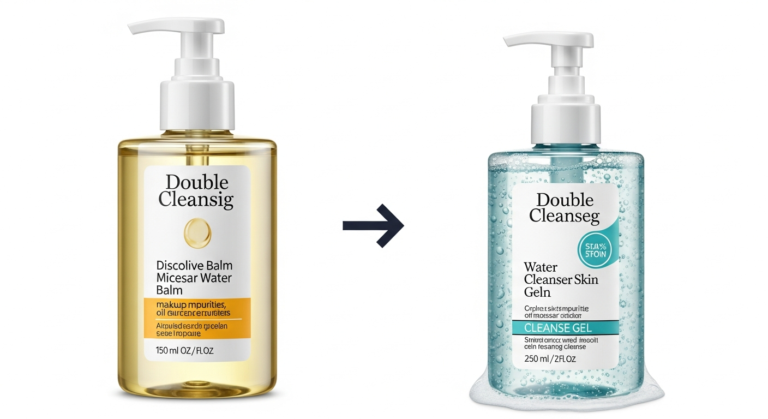
    If you wear makeup or a robust SPF, a single cleanse often isn’t enough to truly clean your skin. The “double cleanse” involves using an oil-based cleanser first to break down makeup, sunscreen, and excess oil, followed by a water-based cleanser to clean the skin itself.

    • Action: Massage an oil cleanser, cleansing balm, or micellar water onto dry skin for 60 seconds. Add a little water to emulsify, then rinse. Follow with your regular water-based cleanser (gel, cream, foam). Rinse thoroughly and pat dry.
  2. Treatment/Serum (Targeted Powerhouse):

    This is your prime opportunity to use powerful active ingredients that work best overnight. This is a key step when you’re learning how to build a skincare routine from scratch for beginners, as it allows you to start gently targeting specific concerns.

    • For Anti-Aging/Acne: Introduce a gentle retinoid (like bakuchiol or a low-dose retinol) 2-3 nights a week. Start with once a week and gradually increase frequency. Apply to dry skin after cleansing.
    • For Hydration: A hyaluronic acid serum can be used nightly to draw moisture into the skin.
    • For Brightening/Pore Reduction: Niacinamide can be used nightly for these benefits.

    Important Note for Retinoids: Always start slow. If using a retinoid, skip other strong actives (like Vitamin C or exfoliating acids) on the same night. Listen to your skin – redness, flaking, or irritation means you’re using too much too often.

    • Action: Apply 2-3 drops of your chosen evening serum to clean, dry or slightly damp skin.
  3. Moisturizer (Nourish & Seal):

    Your evening moisturizer can be richer and more occlusive than your daytime one, helping to seal in all the goodness from your serums and prevent transepidermal water loss while you sleep. This is especially important for dry or mature skin.

    • Action: Apply a generous amount of your chosen moisturizer to your face and neck. Gently massage until absorbed.
🌞 Life Insight

Tip for beginners: If you’re introducing a new active ingredient (especially retinoids or exfoliating acids), use the “sandwich method” if you have sensitive skin: apply a thin layer of moisturizer, then your active, then another layer of moisturizer. This can help buffer the active and reduce irritation.

Beyond the Basics: Introducing Advanced Treatments (When You’re Ready)

Once you’ve consistently mastered your core four steps (cleanser, moisturizer, SPF) and perhaps a beginner-friendly serum, you might start thinking about integrating more specialized products. This is the stage where you can truly customize and optimize your skincare routine to address persistent concerns. Remember, though, less is often more, especially for beginners.

Exfoliants: Unveiling Radiant Skin

Exfoliation removes dead skin cells from the surface, revealing brighter, smoother skin, and allowing your other products to penetrate more effectively. It’s crucial not to overdo it.

  • Chemical Exfoliants (AHAs & BHAs): These are generally preferred over physical scrubs for most skin types as they are less abrasive.
    • AHAs (Alpha Hydroxy Acids): Glycolic acid, lactic acid. Best for surface exfoliation, brightening, and improving skin texture. Great for dry, dull, or sun-damaged skin.
    • BHAs (Beta Hydroxy Acids): Salicylic acid. Oil-soluble, so it can penetrate into pores to dissolve sebum and dead skin cells. Excellent for oily, acne-prone skin, blackheads, and whiteheads.

    How to use: Start with a low concentration 1-2 times a week in your PM routine after cleansing (and before serum/moisturizer). Never use on the same night as a retinoid. Always use SPF daily when using AHAs/BHAs, as they can increase sun sensitivity.

  • Physical Exfoliants (Scrubs): These use small particles to physically buff away dead skin.

    Caution: Many can be too harsh and cause micro-tears in the skin, especially those with large, uneven particles like crushed nuts or fruit pits. If you choose to use one, opt for gentle formulas with very fine, uniform particles (like jojoba beads) and use sparingly (once a week at most).

Masks: A Targeted Boost

Masks are an excellent way to give your skin an intensive dose of ingredients to address specific needs. They’re a weekly treat, not a daily necessity.

  • Hydrating/Soothing Masks: Often contain hyaluronic acid, ceramides, aloe vera, or colloidal oatmeal. Great for dry, sensitive, or dehydrated skin.
  • Clay/Purifying Masks: Contain ingredients like bentonite or kaolin clay to draw out impurities and absorb excess oil. Excellent for oily or acne-prone skin.
  • Brightening Masks: May contain Vitamin C, AHAs, or enzymes to improve radiance and even skin tone.

How to use: Apply a mask to clean skin 1-2 times a week, leave on for the recommended time (usually 10-20 minutes), then rinse off. Follow with your regular serum and moisturizer.

Eye Creams: Gentle Care for a Delicate Area

The skin around your eyes is thinner and more delicate than the rest of your face, making it more prone to dryness, fine lines, and dark circles.

  • What they do: Eye creams are formulated specifically for this sensitive area, providing targeted hydration and sometimes active ingredients to address specific concerns like dark circles (caffeine, Vitamin C), puffiness (caffeine, peptides), or fine lines (peptides, gentle retinoids).
  • When to use: If you have specific concerns, apply a pea-sized amount using your ring finger (to ensure gentle application) after your serums but before your facial moisturizer. Pat gently, don’t rub.
Remember: When introducing new products, especially actives, always do so one at a time, allowing your skin at least 2-4 weeks to adjust before adding another. This helps you identify what works and what might be causing issues.

Common Skincare Mistakes to Avoid (And How to Fix Them)

Even with the best intentions, it’s easy to fall into common traps when building a skincare routine. Learning how to build a skincare routine from scratch for beginners isn’t just about what to do, but also what not to do. Avoiding these pitfalls will save your skin (and your wallet!) from unnecessary irritation and disappointment.

  1. Over-Exfoliating: This is perhaps the most common mistake. In the quest for smooth, glowing skin, many beginners go overboard with acids, scrubs, or even harsh cleansing brushes.
    • Why it’s bad: It compromises your skin’s natural barrier, leading to redness, irritation, sensitivity, dryness, and even more breakouts.
    • The Fix: Stick to chemical exfoliants 1-3 times a week at most. If using a scrub, choose a gentle one and use once a week. Listen to your skin – if it feels tight, itchy, or stings, dial back on exfoliation.
  2. Not Using SPF Daily: We’ve said it before, but it bears repeating. Skipping sunscreen is like building a beautiful house and forgetting the roof.
    • Why it’s bad: Sun damage is the leading cause of premature aging (wrinkles, dark spots) and significantly increases your risk of skin cancer.
    • The Fix: Make broad-spectrum SPF 30+ a non-negotiable part of your morning routine, every single day, come rain or shine.
  3. Changing Products Too Often (The “Product Hopper”): It’s tempting to jump from one trending product to another, especially when you don’t see immediate results.
    • Why it’s bad: Most skincare products, especially those targeting concerns like acne or aging, need time to show results (often 4-12 weeks). Constantly introducing new ingredients can confuse your skin and make it impossible to tell what’s working or causing issues.
    • The Fix: Give new products at least 4-6 weeks of consistent use before deciding if they’re effective. Introduce one new product at a time.
  4. Ignoring Patch Testing: Just because a product works for someone else, doesn’t mean it will work for you.
    • Why it’s bad: Applying a new product to your entire face without testing can lead to a full-blown allergic reaction or breakout.
    • The Fix: When trying a new product, especially an active ingredient, apply a small amount to an inconspicuous area (like behind your ear or on your inner forearm) for a few days to check for any adverse reactions before applying to your face.
  5. Using Too Many Active Ingredients at Once: Layering multiple potent ingredients (e.g., Vitamin C, Retinol, and AHAs) can be a recipe for irritation, especially for beginners.
    • Why it’s bad: It overwhelms your skin, damages the barrier, and can lead to redness, flaking, and sensitivity.
    • The Fix: Keep it simple. As a beginner, focus on one primary active ingredient for a concern. If you introduce more, use them on alternating nights or mornings (e.g., Vitamin C in AM, Retinol in PM, AHA 2x/week on non-retinol nights).
  6. Not Being Consistent: Skincare isn’t a quick fix; it’s a marathon.
    • Why it’s bad: Intermittent use of products won’t yield the desired results.
    • The Fix: Develop a simple, manageable routine you can stick to every morning and night. Consistency is far more important than complexity.

By being mindful of these common mistakes, you’re already ahead of the game and setting your skin up for success.

Patience, Consistency, and Listening to Your Skin

Embarking on your skincare journey is a marathon, not a sprint. The most valuable lessons you’ll learn are patience and consistency, coupled with the critical skill of truly listening to what your skin is telling you. This is the authentic core of how to build a skincare routine from scratch for beginners.

Managing Expectations: No Overnight Miracles

We live in a world of instant gratification, but skincare doesn’t work that way. Very few products will show dramatic results overnight. You’re building healthy skin, cell by cell, and that takes time. Pigmentation changes, acne healing, and fine line reduction can take weeks, even months, of consistent application before visible improvements appear.

  • Acne: Can take 6-8 weeks to see significant improvement.
  • Hyperpigmentation: Often takes 8-12 weeks, sometimes longer, to fade.
  • Anti-aging: Subtle improvements in fine lines and texture can be noticed after 3-6 months.

Set realistic expectations. Focus on the process and the incremental improvements. Your skin health is a journey, not a destination.

The Power of Consistency

A simple, consistent routine will always outperform a complex, intermittent one. Finding products that you enjoy using and that fit seamlessly into your daily life is key. If your routine feels like a chore, you’re less likely to stick with it.

  • Make it a Habit: Place your products where you’ll see them. Treat your routine as a moment of self-care.
  • Don’t Skip: Even on busy days, try to do at least the core steps: cleanse, moisturize, and SPF in the morning; cleanse and moisturize at night.

Listening to Your Skin: Your Ultimate Guide

Your skin is a dynamic organ, constantly changing in response to hormones, stress, diet, weather, and the products you use. What works perfectly one month might not work as well the next. Learning to interpret your skin’s signals is paramount.

  • Pay Attention to Texture: Is your skin feeling rough, tight, or unusually oily?
  • Observe Redness or Irritation: Is there a new product causing a reaction?
  • Monitor Breakouts: Are they increasing, decreasing, or changing in location?
  • Adjust as Needed: If your skin is feeling dry, reach for a richer moisturizer. If it’s oily, opt for a lighter one. During travel or hormonal changes, your skin might need different care.

When to Consult a Professional

While this guide provides a solid foundation, some skin concerns warrant professional help. Don’t hesitate to consult a dermatologist if you experience:

  • Severe or persistent acne that doesn’t respond to over-the-counter treatments.
  • Chronic redness, itching, or inflammation.
  • Sudden changes in moles or new, suspicious skin growths.
  • Skin conditions like rosacea, eczema, or psoriasis.
  • If you feel overwhelmed and need personalized product recommendations for specific, complex issues.

They can offer tailored advice, prescription-strength treatments, and in-office procedures that can significantly improve your skin health.

You now have all the tools and knowledge to confidently build your beginner skincare routine. This isn’t about perfection; it’s about progress, self-care, and developing a loving relationship with your skin. Be kind to yourself, enjoy the process, and remember that consistent, mindful effort yields the most beautiful results. Your skin, and your confidence, will thank you.

Frequently Asked Questions

How long does it take for a new skincare routine to show results?
Patience is key! Most skincare products need at least 4-6 weeks of consistent use to show noticeable results. Actives like retinoids or those targeting hyperpigmentation can take 2-3 months. Stick with it!
Do I really need to use both a morning and evening routine?
Yes, absolutely. Your skin has different needs throughout the day. Your morning routine focuses on protection (especially from the sun), while your evening routine prioritizes repair and rejuvenation. Both are crucial for optimal skin health.
Can I use products from different brands in my routine?
Yes! It’s perfectly fine to mix and match products from different brands. What matters most is that the individual products are suitable for your skin type and concerns, and that their ingredients don’t conflict when layered.
What’s the correct order to apply skincare products?
A good rule of thumb is to apply products from thinnest consistency to thickest. Generally: cleanser > toner (if using) > serum > eye cream (if using) > moisturizer > SPF (in the morning). Allow each product a moment to absorb.
My skin is sensitive. How should I introduce new products?
If you have sensitive skin, introduce new products one at a time, every 2-4 weeks. Start by patch-testing on a small area of your skin. Opt for fragrance-free, hypoallergenic formulas and look for soothing ingredients like ceramides or centella asiatica. Less is often more for sensitive skin.

THE LATEST

Hi, I’m Thea.

I started this brand as a personal online publication after graduating from Boston University with a degree in Marketing and Design. Originally from San Francisco, I was thousands of miles from family and friends, and needed an outlet for exploring my passions and connecting with others. My goal has always been to show others the beauty in enjoying life’s simple pleasures and to encourage others to look inward for self fulfillment.

Thousands of readers later, The Contextual Life has become a resource for anyone wanting a sense of community and a source of inspiration throughout their journey of life. It’s a place where readers can find suggestions on where to travel, what to eat, what to wear, and what to shop for, from experts who are almost like personal friends.

The Contextual Life brings our mission to life through news, products, experiences, and design. We are dedicated to providing the latest information to help you live a lifestyle that you love. Thank you for being here. Stay awhile.

thea-signature
Im-thea