


Scarcity vs Abundance Mindset: Unlocking Intentional Living & Limitless Personal Growth
Affiliate disclosure: This article may contain affiliate links. Recommendations are independent and editorially driven.
In the intricate tapestry of a woman’s life, where the threads of career, family, personal aspirations, and self-care intertwine, the underlying mindset we cultivate acts as the loom upon which our experiences are woven. It dictates not just what we achieve, but how we perceive our journey, our worth, and the possibilities that lie ahead. At the heart of this internal architecture lies a fundamental dichotomy: the scarcity vs abundance mindset.
For women committed to intentional living, a slow lifestyle, and profound personal growth, understanding this distinction is not merely an academic exercise; it is a transformative revelation. The perspective we adopt—whether we view life through a lens of ‘not enough’ or ‘more than enough’—profoundly shapes our decisions, our emotional landscape, and ultimately, the reality we co-create. It influences how we approach our health, our relationships, our finances, and even our capacity for joy and resilience.
This comprehensive guide from thecontextuallife delves deep into the essence of both the scarcity and abundance mindsets, exploring their origins, their pervasive impact on a woman’s life, and, most crucially, offering actionable strategies to consciously shift towards a mindset of boundless possibility. We will explore the neuroscience behind these mental frameworks, provide practical tools for daily integration, and illuminate how an abundance mindset can redefine every facet of your intentional life journey. Prepare to dismantle limiting beliefs and embrace a future rich with opportunity, connection, and profound personal fulfillment.
The Foundational Difference: What Are Scarcity and Abundance Mindsets?
Before we can embark on a journey of transformation, it’s essential to clearly define the terrain. The concepts of scarcity and abundance mindsets are often discussed, but their true depth and pervasive influence can be underestimated. They are not merely fleeting thoughts or temporary moods; they are deeply ingrained belief systems that operate as default settings within our subconscious, framing our entire perception of reality.
Defining the Scarcity Mindset
At its core, a scarcity mindset is the belief that there isn’t enough to go around. This ‘not enough’ mentality can manifest in countless ways: not enough time, not enough money, not enough love, not enough recognition, not enough talent, not enough opportunities. It’s a perception born from a fear of lack, leading to a constant sense of worry, competition, and a feeling of being deprived. When operating from scarcity, resources are finite, and success for one often means loss for another. This worldview fosters comparison, envy, and a guarded approach to life.
- Key Characteristics: Fear of missing out (FOMO), competitiveness, hoarding resources (material or emotional), chronic anxiety, comparison to others, resistance to sharing, belief in zero-sum games, resentment towards others’ success, difficulty trusting.
- Origins: Often rooted in early life experiences of actual lack, societal conditioning, cultural narratives of competition, or even evolutionary survival instincts. Trauma, insecurity, and repeated negative experiences can further entrench this mindset.
Defining the Abundance Mindset
Conversely, an abundance mindset is the unwavering belief that there is always enough, and often more than enough, for everyone. It’s a perspective grounded in trust, generosity, and an expansive view of possibilities. Individuals with an abundance mindset see resources—be they love, money, opportunities, or time—as renewable and expanding. They understand that success for one can inspire and create success for others, fostering collaboration and mutual upliftment. This mindset is characterized by gratitude, optimism, and a deep sense of security and contentment.
- Key Characteristics: Gratitude, generosity, optimism, creativity, collaboration, belief in endless possibilities, celebration of others’ success, willingness to take calculated risks, resilience in the face of setbacks, a sense of inner peace.
- Origins: While not everyone is raised in an abundant environment, this mindset can be consciously cultivated through practices like gratitude, mindfulness, positive reframing, personal development work, and intentional exposure to inspiring perspectives.
Why Your Mindset Matters More Than You Think
Your mindset is not just a passive filter; it’s an active creator of your experience. It dictates:
- Your Perceptions: How you interpret events, challenges, and opportunities.
- Your Emotions: Whether you frequently feel anxiety, fear, and jealousy, or peace, joy, and gratitude.
- Your Decisions: The choices you make regarding your career, relationships, finances, and personal growth.
- Your Actions: Whether you act from a place of fear and limitation or courage and expansion.
- Your Reality: The opportunities you attract, the people you connect with, and the overall quality of your life.
For women striving for intentional living, recognizing the profound power of their mindset is the first step toward consciously designing a life that aligns with their deepest values and aspirations, rather than being dictated by unconscious fears.
The Shadow of Scarcity: How It Manifests in a Woman’s Life
The insidious nature of a scarcity mindset often means it operates beneath the surface, subtly influencing our daily lives without our conscious awareness. For women, who often navigate unique societal pressures and expectations, the scarcity mindset can manifest in particularly challenging ways, impacting everything from self-perception to professional ambition.
[INLINE IMAGE 1: place after second H2 | alt=”scarcity vs abundance mindset concept illustration”]
Common Symptoms and Behaviors
A scarcity mindset isn’t just a feeling; it drives specific behaviors and patterns that can be detrimental to our well-being and growth. Recognizing these symptoms is crucial for initiating change:
- Comparison and Envy: Constantly measuring your worth against other women’s achievements, appearances, or relationships, leading to feelings of inadequacy or resentment.
- Chronic Busyness and Overwhelm: Believing there’s not enough time, leading to over-scheduling, multitasking to an unhealthy degree, and a persistent feeling of being behind.
- Perfectionism and Fear of Failure: The belief that there’s only one shot at success, leading to paralysis, procrastination, or an inability to complete tasks unless they are ‘perfect.’
- Difficulty Receiving: Struggling to accept compliments, help, or gifts, feeling unworthy, or suspecting ulterior motives.
- Hoarding and Accumulating: Clinging to material possessions, money, or even emotional energy, driven by the fear that it won’t be available later.
- Self-Sacrifice and People-Pleasing: Constantly prioritizing others’ needs over your own, believing your worth comes from being indispensable or that setting boundaries will lead to loss of love or acceptance.
- Reluctance to Invest in Self: Hesitating to spend money, time, or energy on personal development, education, or self-care, seeing it as a luxury rather than a necessity.
The Root Causes of Scarcity Thinking
Understanding where these beliefs come from can help us unroot them. Scarcity thinking is often a learned response:
- Childhood Experiences: Growing up in an environment where resources (emotional, financial, or physical) were genuinely limited, or where competition was emphasized.
- Societal Conditioning: Cultural narratives that promote competition, highlight wealth disparities, or reinforce gender stereotypes about women’s roles and limitations.
- Media Influence: Constant exposure to idealized lifestyles, unattainable beauty standards, or news cycles that focus on crises and shortages.
- Past Traumas and Disappointments: Experiences of betrayal, loss, or significant setbacks can solidify a belief that good things are finite or hard to come by.
- Lack of Self-Worth: A foundational belief that one is not deserving of good things can perpetuate a scarcity loop, where opportunities are missed or sabotaged.
Impact on Relationships and Self-Worth
The scarcity mindset deeply erodes the quality of our relationships and our sense of self. In relationships, it can lead to:
- Jealousy and Insecurity: Fearing your partner’s attention will be diverted, or that friends will find someone ‘better.’
- Controlling Behaviors: Attempting to control others or situations out of a fear of loss.
- Communication Breakdown: Difficulty expressing needs or trusting others to meet them, leading to resentment.
- Toxic Comparison: Comparing your relationship to others’, leading to dissatisfaction.
Regarding self-worth, scarcity breeds:
- Imposter Syndrome: Doubting your achievements and fearing exposure as a fraud.
- Chronic Self-Criticism: A relentless inner voice that highlights flaws and shortcomings.
- Burnout: Pushing yourself relentlessly out of a belief that you’re never doing enough.
Financial Fear and Resource Hoarding
Perhaps one of the most tangible manifestations of a scarcity mindset is in our relationship with money and resources. This isn’t just about having less; it’s about the fear of having less, even when there is plenty. This can lead to:
- Anxiety about Money: Constant worry about financial security, even with stable income.
- Reluctance to Spend on Experiences: Prioritizing saving over enriching experiences that could foster personal growth.
- Hoarding and Frugality to an Extreme: Refusing to let go of old items, fearing they might be needed, or extreme penny-pinching that detracts from quality of life.
- Difficulty Investing: Being too risk-averse to invest in one’s future or in opportunities that could yield greater returns.
- Undervaluation of Services: Hesitating to charge what you’re worth in business or employment, fearing no one will pay.
Recognizing these patterns is the vital first step. By shining a light on the shadow of scarcity, we begin to weaken its grip and open ourselves to the possibility of a different way of being.
Embracing Abundance: Pathways to a Fuller Existence
While the scarcity mindset can cast a long shadow, the abundance mindset offers a radiant alternative – a pathway to a life rich with fulfillment, connection, and purposeful growth. Embracing abundance isn’t about magical thinking or ignoring challenges; it’s about cultivating a profound belief in possibility, resilience, and the interconnectedness of all things. It’s an active choice to perceive the world through a lens of ‘more than enough’ and to align our actions with this expansive worldview.
Characteristics of an Abundant Life
What does an abundant life truly look like? It’s far more expansive than material wealth, although financial security can certainly be a component. An abundant life, viewed through the lens of intentional living, encompasses a richness in all dimensions:
- Deep Gratitude: A consistent awareness and appreciation for what is present, rather than focusing on what is lacking. This extends to small joys, relationships, health, and opportunities.
- Generosity and Collaboration: A natural inclination to share resources, knowledge, and support, understanding that helping others often creates more for everyone.
- Optimism and Resilience: The ability to see challenges as opportunities for growth and to bounce back from setbacks with a hopeful outlook.
- Creativity and Innovation: A belief that solutions are always available, fostering a flexible and imaginative approach to problem-solving.
- Strong, Meaningful Connections: Relationships built on trust, mutual respect, and genuine support, free from the constraints of jealousy or competition.
- Inner Peace and Contentment: A deep sense of satisfaction with one’s life, not dependent on external circumstances, but on an internal state of well-being.
- Purpose and Flow: Engaging in activities that align with one’s values and passions, leading to a sense of meaning and effortless progress.
An abundant woman doesn’t just wish for good things; she believes in her capacity to create them and to receive them, actively participating in the co-creation of her desired reality.
Benefits Beyond Material Wealth
The gifts of an abundance mindset extend far beyond the tangible. While it can certainly pave the way for financial prosperity, its most profound benefits are often found in the intangible qualities that enrich the soul:
- Enhanced Mental Well-being: Reduced stress, anxiety, and fear, replaced by feelings of calm, joy, and optimism.
- Improved Physical Health: Lower stress levels contribute to better immune function, sleep, and overall vitality.
- Stronger Relationships: Greater trust, empathy, and open communication foster deeper, more supportive connections.
- Increased Resilience: The ability to navigate life’s inevitable challenges with grace and a belief in one’s capacity to overcome them.
- Greater Creativity and Innovation: A mind unburdened by fear is free to explore new ideas, take calculated risks, and find novel solutions.
- Profound Sense of Purpose: Aligning actions with core values brings a deep sense of meaning and fulfillment.
- Empowerment and Self-Confidence: Believing in your own worth and capacity to manifest your desires.
This holistic flourishing is central to thecontextuallife’s philosophy of intentional living. An abundance mindset allows us to experience life not as a series of hurdles to overcome, but as a rich tapestry of experiences to embrace and learn from.
Cultivating a Growth-Oriented Perspective
Central to the abundance mindset is a growth mindset – the belief that abilities and intelligence can be developed through dedication and hard work. For women, especially, this shift is critical for personal growth and breaking free from societal limitations. Here’s what it entails:
- Embracing Learning: Viewing every experience, positive or negative, as an opportunity to learn and evolve.
- Valuing Effort Over Innate Talent: Understanding that perseverance and dedication are more significant predictors of success than inherent abilities.
- Seeking Challenges: Actively pursuing new experiences and stepping outside comfort zones, knowing they lead to expansion.
- Learning from Feedback: Seeing constructive criticism not as a personal attack but as valuable information for improvement.
- Inspiring Self and Others: Celebrating personal progress and being inspired by the success of others, rather than threatened by it.
By consciously adopting a growth-oriented perspective, we transform potential roadblocks into stepping stones, fueling a continuous journey of personal and collective advancement. This is where true abundance takes root and flourishes.
The Science of Mindset: Rewiring Your Brain for Prosperity
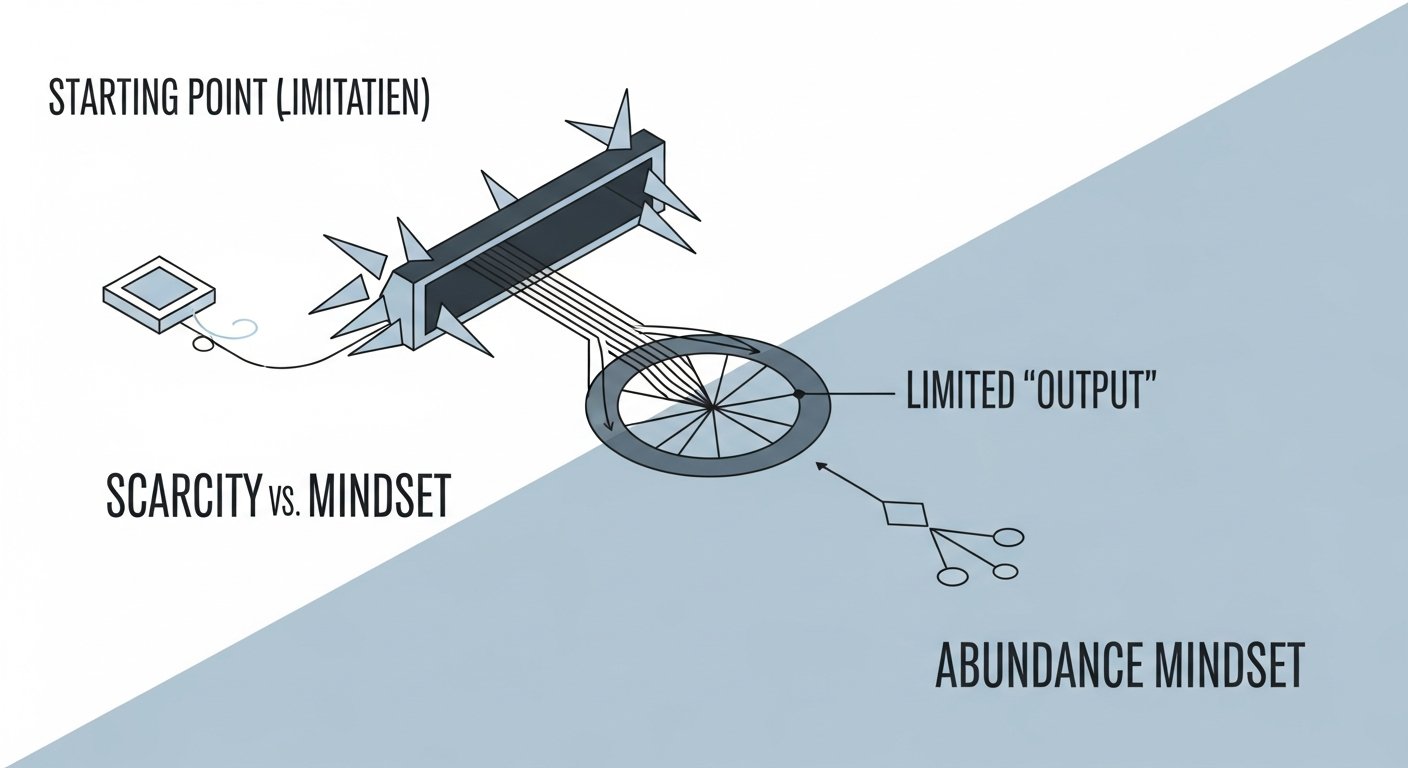
The journey from a scarcity to an abundance mindset isn’t merely a philosophical shift; it’s a physiological one. Modern neuroscience offers compelling evidence that our thoughts and beliefs have the power to literally reshape our brains. Understanding this scientific basis provides a powerful incentive and a roadmap for intentional change.
[INLINE IMAGE 2: place after fourth H2 | alt=”scarcity vs abundance mindset comparison illustration”]
Neuroplasticity and Mindset Shifts
At the heart of our capacity for change lies neuroplasticity – the brain’s remarkable ability to reorganize itself by forming new neural connections throughout life. Every thought we think, every emotion we feel, every action we take strengthens specific neural pathways. When we consistently engage in scarcity-driven thoughts (e.g., worry, fear, comparison), we reinforce those pathways, making it easier for our brains to default to that mode. Conversely, when we actively cultivate abundant thoughts and feelings, we begin to build and strengthen new, more positive neural networks.
- Neural Pathways: Think of your brain as a forest. If you always walk the same path (scarcity thinking), that path becomes a well-worn trail. If you start walking a new path (abundance thinking), over time, it too can become a well-worn trail, while the old one may become overgrown.
- Reticular Activating System (RAS): This part of your brain acts as a filter, highlighting what you deem important. If your mindset is focused on scarcity, your RAS will actively seek out evidence of lack, problems, and threats, reinforcing your belief. When shifted to abundance, your RAS will notice opportunities, resources, and reasons for gratitude.
- Prefrontal Cortex: Involved in decision-making and planning, the prefrontal cortex can be overwhelmed by stress and fear induced by scarcity. An abundance mindset, by reducing chronic stress, allows this area to function more optimally, leading to clearer thinking and better choices.
This scientific understanding empowers us: our mindset is not fixed, but a dynamic system we can actively influence and sculpt.
The Role of Gratitude and Positive Affirmations
Two powerful tools for rewiring the brain are gratitude and positive affirmations. These aren’t just feel-good practices; they have tangible neurological effects:
Gratitude
- Neurotransmitter Release: Practicing gratitude stimulates the release of dopamine and serotonin, neurotransmitters associated with pleasure, happiness, and well-being. This creates a positive feedback loop.
- Cortisol Reduction: Regular gratitude practices have been shown to lower cortisol levels, the stress hormone, reducing the physiological impact of scarcity-driven anxiety.
- Shifting Focus: Gratitude forces your brain to focus on what you have, rather than what you lack, activating the “reward circuit” in your brain and literally changing your perception.
- Actionable Practice: Start a daily gratitude journal. List 3-5 things you are genuinely grateful for each morning or evening. Explore the profound benefits of daily gratitude journaling for mindset transformation.
Positive Affirmations
- Reptition and Belief: Affirmations are positive statements repeated consistently to challenge and replace negative, scarcity-based beliefs. When repeated, they can literally create new neural pathways.
- Self-Talk Transformation: They interrupt the cycle of negative self-talk, which is a hallmark of the scarcity mindset, replacing it with empowering narratives.
- Amygdala Modulation: Positive affirmations can help to calm the amygdala, the brain’s “fear center,” reducing anxiety and promoting a sense of safety and calm.
- Actionable Practice: Identify a limiting belief (e.g., “I’m not good enough”). Create a positive counter-affirmation (e.g., “I am capable, worthy, and deserving of success and abundance”). Repeat it daily, especially when that limiting belief surfaces.
Breaking Free from Limiting Beliefs
Limiting beliefs are the core tenets of the scarcity mindset. They are often unconscious, deeply ingrained statements we hold about ourselves, others, and the world that restrict our potential (e.g., “Money is hard to come by,” “I don’t deserve good things,” “I’m not creative enough”).
To break free, we must:
- Identify Them: Pay attention to your self-talk, especially when you feel stuck, anxious, or resistant to growth. What underlying belief is driving that feeling?
- Challenge Their Validity: Ask yourself: Is this belief 100% true? Where did it come from? Does it serve me? What evidence do I have against it? Often, these beliefs are inherited or formed in childhood and are no longer relevant or accurate.
- Reframe and Replace: Consciously choose a new, empowering belief. Instead of “I can’t afford that,” try “How can I create the resources to afford that?” Instead of “There aren’t enough opportunities,” think “New opportunities are constantly emerging.”
- Take Action Consistent with the New Belief: The most powerful way to rewire your brain is to act as if your new belief is already true. Small, consistent actions reinforce the new neural pathways.
The science is clear: your brain is a dynamic organ capable of profound change. By intentionally cultivating gratitude, practicing affirmations, and challenging limiting beliefs, you are not just thinking differently; you are actively remodeling your brain for a life of greater abundance.
Practical Strategies for Shifting: From ‘Not Enough’ to ‘More Than Enough’
Understanding the difference between scarcity and abundance is the first step; the next, and most crucial, is actively implementing strategies to foster the latter. This shift is not a one-time event but a continuous practice, especially for women dedicated to an intentional and slow lifestyle. It requires consistent effort, self-compassion, and a willingness to challenge long-held patterns.
Mindful Awareness and Self-Observation
The foundation of any mindset shift is awareness. We cannot change what we do not acknowledge. Practicing mindfulness allows us to observe our thoughts and emotions without judgment, creating a crucial space between stimulus and response.
- Daily Check-ins: Take moments throughout your day to pause and ask yourself: “What mindset am I operating from right now? Am I feeling expansive or constricted? Am I focused on lack or possibility?”
- Journaling: Regular journaling is a powerful tool for self-observation. Write down instances where you felt scarcity, what triggered it, and how you reacted. Conversely, note moments of abundance, gratitude, and generosity. This builds a clear picture of your current mindset landscape.
- Meditation: Even 5-10 minutes of daily mindfulness meditation can significantly enhance your ability to observe your thoughts rather than being consumed by them. Focus on your breath and let thoughts pass like clouds, gently redirecting your attention back to the present.
Actionable Steps for Daily Practice
Integrating abundance into your daily routine means adopting small, consistent habits that reinforce positive neural pathways.
- Start Your Day with Gratitude: Before checking your phone or to-do list, spend a few minutes reflecting on things you’re grateful for. This sets an abundant tone for your day.
- Practice Generosity: Look for opportunities to give – whether it’s your time, a compliment, a helping hand, or a small gift. Generosity is a powerful signal to your subconscious that you have enough to share.
- Celebrate Small Wins: Acknowledge and celebrate your progress, no matter how minor. This reinforces a sense of accomplishment and capacity.
- Use Abundant Language: Pay attention to the words you use. Replace scarcity-driven phrases like “I can’t afford it” with “How can I create the resources for that?” or “I don’t have time” with “How can I prioritize this?”
- Visualize Abundance: Spend time each day vividly imagining your life filled with the abundance you desire – whether it’s thriving relationships, financial freedom, creative flow, or vibrant health. Feel the emotions associated with these outcomes.
Building an Abundance Support System
Your environment plays a significant role in shaping your mindset. Consciously curating your influences is a key strategy:
- Surround Yourself with Abundant Thinkers: Seek out friends, mentors, and communities who embody an abundance mindset. Their perspective can be contagious and inspiring.
- Limit Exposure to Scarcity-Minded Influences: This might mean reducing time with chronically negative people, limiting social media that triggers comparison, or curating your news intake.
- Engage with Uplifting Content: Read books, listen to podcasts, and watch documentaries that inspire growth, possibility, and gratitude.
- Find an Accountability Partner: Share your mindset goals with a trusted friend and check in regularly on your progress and challenges.
Journaling for Mindset Transformation
Beyond simple gratitude lists, structured journaling prompts can uncover and reframe deep-seated beliefs:
- Scarcity Spotting: “When did I feel a sense of lack today? What specific thought triggered it? What underlying belief does this reveal?”
- Abundance Inventory: “What resources, opportunities, or support do I currently have that I might be overlooking?”
- Future Self Letter: “Write a letter from your future, abundant self to your present self, offering guidance, encouragement, and insights.”
- “What If?” Thinking: “Instead of ‘What if it doesn’t work out?’, ask ‘What if it works out even better than I imagined?’ and explore those possibilities.”
The consistent act of writing helps to solidify new thought patterns and provides a tangible record of your progress.
Discover transformative journal prompts for women seeking deeper personal growth.
Embracing Imperfection and Resilience
A scarcity mindset often manifests as perfectionism, the fear that anything less than flawless is a failure. An abundance mindset, however, embraces imperfection as an inherent part of growth and learning. This includes:
- Practice Self-Compassion: Treat yourself with the same kindness and understanding you would offer a dear friend, especially when you make mistakes or face setbacks.
- View Failure as Feedback: Understand that “failures” are simply opportunities to learn, adjust, and try again with greater wisdom. They are not indicators of your worth or capacity.
- Cultivate Resilience: Recognize that setbacks are inevitable. The abundant mindset isn’t about avoiding challenges, but about trusting your ability to navigate them and emerge stronger.
- Let Go of Control: While intentional living means directing your life, an abundance mindset also involves trusting the process and letting go of the need to control every outcome.
Shifting from scarcity to abundance is a journey of continuous refinement, a dance between active creation and trusting surrender. By consistently applying these strategies, you cultivate an internal environment where abundance can naturally flourish, impacting every aspect of your life.
Abundance Across Life’s Tapestry: Applying the Mindset in Key Areas
An abundance mindset isn’t confined to a single aspect of life; it’s a holistic lens through which we view and engage with the world. For women seeking an intentional and fulfilling life, applying this mindset across various domains—relationships, finances, career, and well-being—can unlock unparalleled growth and satisfaction. It’s about seeing infinite possibilities and opportunities, rather than limitations and competition, in every thread of our life’s tapestry.
Nurturing Abundant Relationships
In relationships, a scarcity mindset often breeds jealousy, fear of abandonment, and competition. An abundance mindset, conversely, fosters deep connection, mutual support, and joyful collaboration.
- Family & Friends:
- Give Freely: Offer your time, listening ear, or support without expecting immediate reciprocation. Trust that love and kindness are infinitely renewable resources.
- Celebrate Others’ Success: Genuinely rejoice in the achievements and happiness of your loved ones, understanding that their joy doesn’t diminish yours.
- Practice Forgiveness: Let go of grudges and resentment, understanding that holding onto them only constricts your own emotional well-being.
- Communicate with Vulnerability: Trust that authentic sharing builds deeper bonds, rather than exposing you to loss.
- Romantic Partnerships:
- Assume Good Intent: Give your partner the benefit of the doubt, understanding that you are on the same team.
- Focus on Contribution: Ask “How can I contribute to this relationship?” rather than “What am I getting?”
- Recognize Infinite Love: Understand that love is not a finite resource; expressing love to others doesn’t diminish the love for your partner.
Financial Freedom Through an Abundance Lens
This is often the area where the scarcity vs abundance mindset is most starkly contrasted. It’s not about having endless money, but about a healthy, empowered relationship with wealth.
| Aspect | Scarcity Mindset Approach | Abundance Mindset Approach |
|---|---|---|
| Saving & Investing | Hoarding money out of fear, delaying investments, extreme frugality that hinders quality of life. | Conscious saving and investing for growth, seeing money as a tool for security and impact, investing in self. |
| Spending Habits | Guilt over spending, deprivation, buying based on fear of missing out or keeping up with others. | Intentional spending on values-aligned experiences and quality, mindful of value and purpose. |
| Income Generation | Belief that opportunities are limited, fear of asking for raises/higher rates, clinging to unsatisfying jobs. | Seeking creative ways to generate income, confident in one’s value, open to new ventures, continuous learning. |
| Debt Management | Overwhelm and avoidance of debt, seeing it as a permanent burden. | Strategic debt management, viewing debt as leverage for growth (e.g., mortgage) or a temporary challenge to overcome. |
| Giving & Philanthropy | Reluctance to give, fear of having less if you share. | Generous giving, understanding that contribution creates more, seeing giving as an act of trust and gratitude. |
An abundant financial mindset empowers women to become active stewards of their wealth, making choices that align with their values and long-term goals, rather than reacting from fear.
Career Fulfillment and Creative Flow
Your professional life is a fertile ground for either scarcity or abundance. An abundance mindset transforms work from a chore into a source of purpose and growth.
- Opportunities: Instead of seeing limited roles or fierce competition, an abundant woman sees a vast landscape of possibilities, creating her own niche, or finding innovative solutions.
- Learning & Skill Development: Invest in yourself. Take courses, learn new skills, read books. See this as an expansion of your capacity, not an expense or a burden of time.
- Collaboration over Competition: Seek out partnerships, mentorships, and collaborative projects. Understand that collective success often surpasses individual efforts.
- Value Your Worth: Confidently negotiate for fair compensation, promotions, or project rates. Believe in the value you bring to the table.
- Creative Expression: Whether in a traditional job or a creative pursuit, approach your work with a sense of play, exploration, and the belief that your unique contribution is valuable and needed.
Holistic Well-being and Self-Care
An abundance mindset is foundational to prioritizing your holistic well-being—physical, mental, emotional, and spiritual health. Scarcity often leads to neglecting self-care, seeing it as indulgent or a luxury.
- Time for Self-Care: Recognize that time for rest, movement, nutrition, and mindfulness is not a drain on your productivity but an essential investment that replenishes your energy and enhances your capacity to give and create. There is always “enough” time when you prioritize your well-being.
- Body Positivity: Embrace your body with gratitude for what it can do, rather than constantly striving for an idealized, often unattainable, image. There is an abundance of unique beauty in all forms.
- Emotional Resilience: Allow yourself to feel a full range of emotions, trusting your capacity to process them and move through them. Don’t hoard or suppress emotions out of fear.
- Spiritual Connection: Cultivate a sense of connection to something larger than yourself, whether through nature, meditation, or community. This fosters a deep sense of belonging and meaning, combating feelings of isolation or insignificance.
By intentionally applying an abundance mindset to these core areas, women can weave a life that is not only successful by external measures but also deeply rich, meaningful, and aligned with their innermost desires for growth and fulfillment.
Navigating Challenges: Overcoming Obstacles on Your Mindset Journey
The journey from a scarcity to an abundance mindset, while profoundly rewarding, is not always a linear path. There will be moments of doubt, setbacks, and triggers that pull you back towards familiar scarcity patterns. Recognizing these common obstacles and developing strategies to navigate them is crucial for sustained growth and resilience.
Confronting Imposter Syndrome and Self-Doubt
Many women, regardless of their achievements, grapple with imposter syndrome – the persistent feeling that you are a fraud and don’t deserve your success. This is a classic manifestation of scarcity, undermining your belief in your own capacity and worth.
- Acknowledge the Feeling, Don’t Indulge It: Recognize imposter syndrome when it arises. “Ah, there’s that familiar feeling.” But then consciously choose not to let it dictate your actions.
- Gather Evidence of Your Competence: Keep a “win journal” or a folder of positive feedback, testimonials, and accomplishments. Refer to it when self-doubt creeps in.
- Normalize the Experience: Realize that many successful individuals, particularly women, experience imposter syndrome. You are not alone or uniquely unqualified.
- Focus on Contribution, Not Perfection: Shift your focus from “Am I good enough?” to “How can I contribute my unique talents and value?”
- Talk About It: Share your feelings with a trusted mentor or friend. Voicing your doubts can diminish their power.
Dealing with External Scarcity Triggers
Even if you’re actively cultivating an abundance mindset, external factors can trigger scarcity responses. These might include economic downturns, social media comparison traps, negative news cycles, or critical feedback from others.
- Mindful Media Consumption: Be intentional about what you consume. Limit exposure to news or social media that fuels fear, comparison, or a sense of lack. Curate your feed to include uplifting and inspiring content.
- Establish Energetic Boundaries: If certain people consistently drain your energy or perpetuate a scarcity mindset, gently create more distance or set clear boundaries in your interactions.
- Reframe Challenges: When faced with an external challenge (e.g., job loss, unexpected expense), consciously reframe it as an opportunity for new learning, creative problem-solving, or redirection. Ask, “What is the hidden gift or lesson here?”
-
Scarcity vs Abundance Mindset: Unlocking Intentional Living & Limitless Personal Growth
Affiliate disclosure: This article may contain affiliate links. Recommendations are independent and editorially driven.
In the intricate tapestry of a woman’s life, where the threads of career, family, personal aspirations, and self-care intertwine, the underlying mindset we cultivate acts as the loom upon which our experiences are woven. It dictates not just what we achieve, but how we perceive our journey, our worth, and the possibilities that lie ahead. At the heart of this internal architecture lies a fundamental dichotomy: the scarcity vs abundance mindset.
For women committed to intentional living, a slow lifestyle, and profound personal growth, understanding this distinction is not merely an academic exercise; it is a transformative revelation. The perspective we adopt—whether we view life through a lens of ‘not enough’ or ‘more than enough’—profoundly shapes our decisions, our emotional landscape, and ultimately, the reality we co-create. It influences how we approach our health, our relationships, our finances, and even our capacity for joy and resilience.
This comprehensive guide from thecontextuallife delves deep into the essence of both the scarcity and abundance mindsets, exploring their origins, their pervasive impact on a woman’s life, and, most crucially, offering actionable strategies to consciously shift towards a mindset of boundless possibility. We will explore the neuroscience behind these mental frameworks, provide practical tools for daily integration, and illuminate how an abundance mindset can redefine every facet of your intentional life journey. Prepare to dismantle limiting beliefs and embrace a future rich with opportunity, connection, and profound personal fulfillment.
The Foundational Difference: What Are Scarcity and Abundance Mindsets?
Before we can embark on a journey of transformation, it’s essential to clearly define the terrain. The concepts of scarcity and abundance mindsets are often discussed, but their true depth and pervasive influence can be underestimated. They are not merely fleeting thoughts or temporary moods; they are deeply ingrained belief systems that operate as default settings within our subconscious, framing our entire perception of reality.
Defining the Scarcity Mindset
At its core, a scarcity mindset is the belief that there isn’t enough to go around. This ‘not enough’ mentality can manifest in countless ways: not enough time, not enough money, not enough love, not enough recognition, not enough talent, not enough opportunities. It’s a perception born from a fear of lack, leading to a constant sense of worry, competition, and a feeling of being deprived. When operating from scarcity, resources are finite, and success for one often means loss for another. This worldview fosters comparison, envy, and a guarded approach to life.
- Key Characteristics: Fear of missing out (FOMO), competitiveness, hoarding resources (material or emotional), chronic anxiety, comparison to others, resistance to sharing, belief in zero-sum games, resentment towards others’ success, difficulty trusting.
- Origins: Often rooted in early life experiences of actual lack, societal conditioning, cultural narratives of competition, or even evolutionary survival instincts. Trauma, insecurity, and repeated negative experiences can further entrench this mindset.
Defining the Abundance Mindset
Conversely, an abundance mindset is the unwavering belief that there is always enough, and often more than enough, for everyone. It’s a perspective grounded in trust, generosity, and an expansive view of possibilities. Individuals with an abundance mindset see resources—be they love, money, opportunities, or time—as renewable and expanding. They understand that success for one can inspire and create success for others, fostering collaboration and mutual upliftment. This mindset is characterized by gratitude, optimism, and a deep sense of security and contentment.
- Key Characteristics: Gratitude, generosity, optimism, creativity, collaboration, belief in endless possibilities, celebration of others’ success, willingness to take calculated risks, resilience in the face of setbacks, a sense of inner peace.
- Origins: While not everyone is raised in an abundant environment, this mindset can be consciously cultivated through practices like gratitude, mindfulness, positive reframing, personal development work, and intentional exposure to inspiring perspectives.
Why Your Mindset Matters More Than You Think
Your mindset is not just a passive filter; it’s an active creator of your experience. It dictates:
- Your Perceptions: How you interpret events, challenges, and opportunities.
- Your Emotions: Whether you frequently feel anxiety, fear, and jealousy, or peace, joy, and gratitude.
- Your Decisions: The choices you make regarding your career, relationships, finances, and personal growth.
- Your Actions: Whether you act from a place of fear and limitation or courage and expansion.
- Your Reality: The opportunities you attract, the people you connect with, and the overall quality of your life.
For women striving for intentional living, recognizing the profound power of their mindset is the first step toward consciously designing a life that aligns with their deepest values and aspirations, rather than being dictated by unconscious fears.
The Shadow of Scarcity: How It Manifests in a Woman’s Life
The insidious nature of a scarcity mindset often means it operates beneath the surface, subtly influencing our daily lives without our conscious awareness. For women, who often navigate unique societal pressures and expectations, the scarcity mindset can manifest in particularly challenging ways, impacting everything from self-perception to professional ambition.
[INLINE IMAGE 1: place after second H2 | alt=”scarcity vs abundance mindset concept illustration”]
Common Symptoms and Behaviors
A scarcity mindset isn’t just a feeling; it drives specific behaviors and patterns that can be detrimental to our well-being and growth. Recognizing these symptoms is crucial for initiating change:
- Comparison and Envy: Constantly measuring your worth against other women’s achievements, appearances, or relationships, leading to feelings of inadequacy or resentment.
- Chronic Busyness and Overwhelm: Believing there’s not enough time, leading to over-scheduling, multitasking to an unhealthy degree, and a persistent feeling of being behind.
- Perfectionism and Fear of Failure: The belief that there’s only one shot at success, leading to paralysis, procrastination, or an inability to complete tasks unless they are ‘perfect.’
- Difficulty Receiving: Struggling to accept compliments, help, or gifts, feeling unworthy, or suspecting ulterior motives.
- Hoarding and Accumulating: Clinging to material possessions, money, or even emotional energy, driven by the fear that it won’t be available later.
- Self-Sacrifice and People-Pleasing: Constantly prioritizing others’ needs over your own, believing your worth comes from being indispensable or that setting boundaries will lead to loss of love or acceptance.
- Reluctance to Invest in Self: Hesitating to spend money, time, or energy on personal development, education, or self-care, seeing it as a luxury rather than a necessity.
The Root Causes of Scarcity Thinking
Understanding where these beliefs come from can help us unroot them. Scarcity thinking is often a learned response:
- Childhood Experiences: Growing up in an environment where resources (emotional, financial, or physical) were genuinely limited, or where competition was emphasized.
- Societal Conditioning: Cultural narratives that promote competition, highlight wealth disparities, or reinforce gender stereotypes about women’s roles and limitations.
- Media Influence: Constant exposure to idealized lifestyles, unattainable beauty standards, or news cycles that focus on crises and shortages.
- Past Traumas and Disappointments: Experiences of betrayal, loss, or significant setbacks can solidify a belief that good things are finite or hard to come by.
- Lack of Self-Worth: A foundational belief that one is not deserving of good things can perpetuate a scarcity loop, where opportunities are missed or sabotaged.
Impact on Relationships and Self-Worth
The scarcity mindset deeply erodes the quality of our relationships and our sense of self. In relationships, it can lead to:
- Jealousy and Insecurity: Fearing your partner’s attention will be diverted, or that friends will find someone ‘better.’
- Controlling Behaviors: Attempting to control others or situations out of a fear of loss.
- Communication Breakdown: Difficulty expressing needs or trusting others to meet them, leading to resentment.
- Toxic Comparison: Comparing your relationship to others’, leading to dissatisfaction.
Regarding self-worth, scarcity breeds:
- Imposter Syndrome: Doubting your achievements and fearing exposure as a fraud.
- Chronic Self-Criticism: A relentless inner voice that highlights flaws and shortcomings.
- Burnout: Pushing yourself relentlessly out of a belief that you’re never doing enough.
Financial Fear and Resource Hoarding
Perhaps one of the most tangible manifestations of a scarcity mindset is in our relationship with money and resources. This isn’t just about having less; it’s about the fear of having less, even when there is plenty. This can lead to:
- Anxiety about Money: Constant worry about financial security, even with stable income.
- Reluctance to Spend on Experiences: Prioritizing saving over enriching experiences that could foster personal growth.
- Hoarding and Frugality to an Extreme: Refusing to let go of old items, fearing they might be needed, or extreme penny-pinching that detracts from quality of life.
- Difficulty Investing: Being too risk-averse to invest in one’s future or in opportunities that could yield greater returns.
- Undervaluation of Services: Hesitating to charge what you’re worth in business or employment, fearing no one will pay.
Recognizing these patterns is the vital first step. By shining a light on the shadow of scarcity, we begin to weaken its grip and open ourselves to the possibility of a different way of being.
Embracing Abundance: Pathways to a Fuller Existence
While the scarcity mindset can cast a long shadow, the abundance mindset offers a radiant alternative – a pathway to a life rich with fulfillment, connection, and purposeful growth. Embracing abundance isn’t about magical thinking or ignoring challenges; it’s about cultivating a profound belief in possibility, resilience, and the interconnectedness of all things. It’s an active choice to perceive the world through a lens of ‘more than enough’ and to align our actions with this expansive worldview.
Characteristics of an Abundant Life
What does an abundant life truly look like? It’s far more expansive than material wealth, although financial security can certainly be a component. An abundant life, viewed through the lens of intentional living, encompasses a richness in all dimensions:
- Deep Gratitude: A consistent awareness and appreciation for what is present, rather than focusing on what is lacking. This extends to small joys, relationships, health, and opportunities.
- Generosity and Collaboration: A natural inclination to share resources, knowledge, and support, understanding that helping others often creates more for everyone.
- Optimism and Resilience: The ability to see challenges as opportunities for growth and to bounce back from setbacks with a hopeful outlook.
- Creativity and Innovation: A belief that solutions are always available, fostering a flexible and imaginative approach to problem-solving.
- Strong, Meaningful Connections: Relationships built on trust, mutual respect, and genuine support, free from the constraints of jealousy or competition.
- Inner Peace and Contentment: A deep sense of satisfaction with one’s life, not dependent on external circumstances, but on an internal state of well-being.
- Purpose and Flow: Engaging in activities that align with one’s values and passions, leading to a sense of meaning and effortless progress.
An abundant woman doesn’t just wish for good things; she believes in her capacity to create them and to receive them, actively participating in the co-creation of her desired reality.
Benefits Beyond Material Wealth
The gifts of an abundance mindset extend far beyond the tangible. While it can certainly pave the way for financial prosperity, its most profound benefits are often found in the intangible qualities that enrich the soul:
- Enhanced Mental Well-being: Reduced stress, anxiety, and fear, replaced by feelings of calm, joy, and optimism.
- Improved Physical Health: Lower stress levels contribute to better immune function, sleep, and overall vitality.
- Stronger Relationships: Greater trust, empathy, and open communication foster deeper, more supportive connections.
- Increased Resilience: The ability to navigate life’s inevitable challenges with grace and a belief in one’s capacity to overcome them.
- Greater Creativity and Innovation: A mind unburdened by fear is free to explore new ideas, take calculated risks, and find novel solutions.
- Profound Sense of Purpose: Aligning actions with core values brings a deep sense of meaning and fulfillment.
- Empowerment and Self-Confidence: Believing in your own worth and capacity to manifest your desires.
This holistic flourishing is central to thecontextuallife’s philosophy of intentional living. An abundance mindset allows us to experience life not as a series of hurdles to overcome, but as a rich tapestry of experiences to embrace and learn from.
Cultivating a Growth-Oriented Perspective
Central to the abundance mindset is a growth mindset – the belief that abilities and intelligence can be developed through dedication and hard work. For women, especially, this shift is critical for personal growth and breaking free from societal limitations. Here’s what it entails:
- Embracing Learning: Viewing every experience, positive or negative, as an opportunity to learn and evolve.
- Valuing Effort Over Innate Talent: Understanding that perseverance and dedication are more significant predictors of success than inherent abilities.
- Seeking Challenges: Actively pursuing new experiences and stepping outside comfort zones, knowing they lead to expansion.
- Learning from Feedback: Seeing constructive criticism not as a personal attack but as valuable information for improvement.
- Inspiring Self and Others: Celebrating personal progress and being inspired by the success of others, rather than threatened by it.
By consciously adopting a growth-oriented perspective, we transform potential roadblocks into stepping stones, fueling a continuous journey of personal and collective advancement. This is where true abundance takes root and flourishes.
The Science of Mindset: Rewiring Your Brain for Prosperity
The journey from a scarcity to an abundance mindset isn’t merely a philosophical shift; it’s a physiological one. Modern neuroscience offers compelling evidence that our thoughts and beliefs have the power to literally reshape our brains. Understanding this scientific basis provides a powerful incentive and a roadmap for intentional change.
[INLINE IMAGE 2: place after fourth H2 | alt=”scarcity vs abundance mindset comparison illustration”]
Neuroplasticity and Mindset Shifts
At the heart of our capacity for change lies neuroplasticity – the brain’s remarkable ability to reorganize itself by forming new neural connections throughout life. Every thought we think, every emotion we feel, every action we take strengthens specific neural pathways. When we consistently engage in scarcity-driven thoughts (e.g., worry, fear, comparison), we reinforce those pathways, making it easier for our brains to default to that mode. Conversely, when we actively cultivate abundant thoughts and feelings, we begin to build and strengthen new, more positive neural networks.
- Neural Pathways: Think of your brain as a forest. If you always walk the same path (scarcity thinking), that path becomes a well-worn trail. If you start walking a new path (abundance thinking), over time, it too can become a well-worn trail, while the old one may become overgrown.
- Reticular Activating System (RAS): This part of your brain acts as a filter, highlighting what you deem important. If your mindset is focused on scarcity, your RAS will actively seek out evidence of lack, problems, and threats, reinforcing your belief. When shifted to abundance, your RAS will notice opportunities, resources, and reasons for gratitude.
- Prefrontal Cortex: Involved in decision-making and planning, the prefrontal cortex can be overwhelmed by stress and fear induced by scarcity. An abundance mindset, by reducing chronic stress, allows this area to function more optimally, leading to clearer thinking and better choices.
This scientific understanding empowers us: our mindset is not fixed, but a dynamic system we can actively influence and sculpt.
The Role of Gratitude and Positive Affirmations
Two powerful tools for rewiring the brain are gratitude and positive affirmations. These aren’t just feel-good practices; they have tangible neurological effects:
Gratitude
- Neurotransmitter Release: Practicing gratitude stimulates the release of dopamine and serotonin, neurotransmitters associated with pleasure, happiness, and well-being. This creates a positive feedback loop.
- Cortisol Reduction: Regular gratitude practices have been shown to lower cortisol levels, the stress hormone, reducing the physiological impact of scarcity-driven anxiety.
- Shifting Focus: Gratitude forces your brain to focus on what you have, rather than what you lack, activating the “reward circuit” in your brain and literally changing your perception.
- Actionable Practice: Start a daily gratitude journal. List 3-5 things you are genuinely grateful for each morning or evening. Explore the profound benefits of daily gratitude journaling for mindset transformation.
Positive Affirmations
- Reptition and Belief: Affirmations are positive statements repeated consistently to challenge and replace negative, scarcity-based beliefs. When repeated, they can literally create new neural pathways.
- Self-Talk Transformation: They interrupt the cycle of negative self-talk, which is a hallmark of the scarcity mindset, replacing it with empowering narratives.
- Amygdala Modulation: Positive affirmations can help to calm the amygdala, the brain’s “fear center,” reducing anxiety and promoting a sense of safety and calm.
- Actionable Practice: Identify a limiting belief (e.g., “I’m not good enough”). Create a positive counter-affirmation (e.g., “I am capable, worthy, and deserving of success and abundance”). Repeat it daily, especially when that limiting belief surfaces.
Breaking Free from Limiting Beliefs
Limiting beliefs are the core tenets of the scarcity mindset. They are often unconscious, deeply ingrained statements we hold about ourselves, others, and the world that restrict our potential (e.g., “Money is hard to come by,” “I don’t deserve good things,” “I’m not creative enough”).
To break free, we must:
- Identify Them: Pay attention to your self-talk, especially when you feel stuck, anxious, or resistant to growth. What underlying belief is driving that feeling?
- Challenge Their Validity: Ask yourself: Is this belief 100% true? Where did it come from? Does it serve me? What evidence do I have against it? Often, these beliefs are inherited or formed in childhood and are no longer relevant or accurate.
- Reframe and Replace: Consciously choose a new, empowering belief. Instead of “I can’t afford that,” try “How can I create the resources to afford that?” Instead of “There aren’t enough opportunities,” think “New opportunities are constantly emerging.”
- Take Action Consistent with the New Belief: The most powerful way to rewire your brain is to act as if your new belief is already true. Small, consistent actions reinforce the new neural pathways.
The science is clear: your brain is a dynamic organ capable of profound change. By intentionally cultivating gratitude, practicing affirmations, and challenging limiting beliefs, you are not just thinking differently; you are actively remodeling your brain for a life of greater abundance.
Practical Strategies for Shifting: From ‘Not Enough’ to ‘More Than Enough’
Understanding the difference between scarcity and abundance is the first step; the next, and most crucial, is actively implementing strategies to foster the latter. This shift is not a one-time event but a continuous practice, especially for women dedicated to an intentional and slow lifestyle. It requires consistent effort, self-compassion, and a willingness to challenge long-held patterns.
Mindful Awareness and Self-Observation
The foundation of any mindset shift is awareness. We cannot change what we do not acknowledge. Practicing mindfulness allows us to observe our thoughts and emotions without judgment, creating a crucial space between stimulus and response.
- Daily Check-ins: Take moments throughout your day to pause and ask yourself: “What mindset am I operating from right now? Am I feeling expansive or constricted? Am I focused on lack or possibility?”
- Journaling: Regular journaling is a powerful tool for self-observation. Write down instances where you felt scarcity, what triggered it, and how you reacted. Conversely, note moments of abundance, gratitude, and generosity. This builds a clear picture of your current mindset landscape.
- Meditation: Even 5-10 minutes of daily mindfulness meditation can significantly enhance your ability to observe your thoughts rather than being consumed by them. Focus on your breath and let thoughts pass like clouds, gently redirecting your attention back to the present.
Actionable Steps for Daily Practice
Integrating abundance into your daily routine means adopting small, consistent habits that reinforce positive neural pathways.
- Start Your Day with Gratitude: Before checking your phone or to-do list, spend a few minutes reflecting on things you’re grateful for. This sets an abundant tone for your day.
- Practice Generosity: Look for opportunities to give – whether it’s your time, a compliment, a helping hand, or a small gift. Generosity is a powerful signal to your subconscious that you have enough to share.
- Celebrate Small Wins: Acknowledge and celebrate your progress, no matter how minor. This reinforces a sense of accomplishment and capacity.
- Use Abundant Language: Pay attention to the words you use. Replace scarcity-driven phrases like “I can’t afford it” with “How can I create the resources for that?” or “I don’t have time” with “How can I prioritize this?”
- Visualize Abundance: Spend time each day vividly imagining your life filled with the abundance you desire – whether it’s thriving relationships, financial freedom, creative flow, or vibrant health. Feel the emotions associated with these outcomes.
Building an Abundance Support System
Your environment plays a significant role in shaping your mindset. Consciously curating your influences is a key strategy:
- Surround Yourself with Abundant Thinkers: Seek out friends, mentors, and communities who embody an abundance mindset. Their perspective can be contagious and inspiring.
- Limit Exposure to Scarcity-Minded Influences: This might mean reducing time with chronically negative people, limiting social media that triggers comparison, or curating your news intake.
- Engage with Uplifting Content: Read books, listen to podcasts, and watch documentaries that inspire growth, possibility, and gratitude.
- Find an Accountability Partner: Share your mindset goals with a trusted friend and check in regularly on your progress and challenges.
Journaling for Mindset Transformation
Beyond simple gratitude lists, structured journaling prompts can uncover and reframe deep-seated beliefs:
- Scarcity Spotting: “When did I feel a sense of lack today? What specific thought triggered it? What underlying belief does this reveal?”
- Abundance Inventory: “What resources, opportunities, or support do I currently have that I might be overlooking?”
- Future Self Letter: “Write a letter from your future, abundant self to your present self, offering guidance, encouragement, and insights.”
- “What If?” Thinking: “Instead of ‘What if it doesn’t work out?’, ask ‘What if it works out even better than I imagined?’ and explore those possibilities.”
The consistent act of writing helps to solidify new thought patterns and provides a tangible record of your progress.
Discover transformative journal prompts for women seeking deeper personal growth.
Embracing Imperfection and Resilience
A scarcity mindset often manifests as perfectionism, the fear that anything less than flawless is a failure. An abundance mindset, however, embraces imperfection as an inherent part of growth and learning. This includes:
- Practice Self-Compassion: Treat yourself with the same kindness and understanding you would offer a dear friend, especially when you make mistakes or face setbacks.
- View Failure as Feedback: Understand that “failures” are simply opportunities to learn, adjust, and try again with greater wisdom. They are not indicators of your worth or capacity.
- Cultivate Resilience: Recognize that setbacks are inevitable. The abundant mindset isn’t about avoiding challenges, but about trusting your ability to navigate them and emerge stronger.
- Let Go of Control: While intentional living means directing your life, an abundance mindset also involves trusting the process and letting go of the need to control every outcome.
Shifting from scarcity to abundance is a journey of continuous refinement, a dance between active creation and trusting surrender. By consistently applying these strategies, you cultivate an internal environment where abundance can naturally flourish, impacting every aspect of your life.
Abundance Across Life’s Tapestry: Applying the Mindset in Key Areas
An abundance mindset isn’t confined to a single aspect of life; it’s a holistic lens through which we view and engage with the world. For women seeking an intentional and fulfilling life, applying this mindset across various domains—relationships, finances, career, and well-being—can unlock unparalleled growth and satisfaction. It’s about seeing infinite possibilities and opportunities, rather than limitations and competition, in every thread of our life’s tapestry.
Nurturing Abundant Relationships
In relationships, a scarcity mindset often breeds jealousy, fear of abandonment, and competition. An abundance mindset, conversely, fosters deep connection, mutual support, and joyful collaboration.
- Family & Friends:
- Give Freely: Offer your time, listening ear, or support without expecting immediate reciprocation. Trust that love and kindness are infinitely renewable resources.
- Celebrate Others’ Success: Genuinely rejoice in the achievements and happiness of your loved ones, understanding that their joy doesn’t diminish yours.
- Practice Forgiveness: Let go of grudges and resentment, understanding that holding onto them only constricts your own emotional well-being.
- Communicate with Vulnerability: Trust that authentic sharing builds deeper bonds, rather than exposing you to loss.
- Romantic Partnerships:
- Assume Good Intent: Give your partner the benefit of the doubt, understanding that you are on the same team.
- Focus on Contribution: Ask “How can I contribute to this relationship?” rather than “What am I getting?”
- Recognize Infinite Love: Understand that love is not a finite resource; expressing love to others doesn’t diminish the love for your partner.
Financial Freedom Through an Abundance Lens
This is often the area where the scarcity vs abundance mindset is most starkly contrasted. It’s not about having endless money, but about a healthy, empowered relationship with wealth.
Scarcity vs. Abundance in Financial Management Aspect Scarcity Mindset Approach Abundance Mindset Approach Saving & Investing Hoarding money out of fear, delaying investments, extreme frugality that hinders quality of life. Conscious saving and investing for growth, seeing money as a tool for security and impact, investing in self. Spending Habits Guilt over spending, deprivation, buying based on fear of missing out or keeping up with others. Intentional spending on values-aligned experiences and quality, mindful of value and purpose. Income Generation Belief that opportunities are limited, fear of asking for raises/higher rates, clinging to unsatisfying jobs. Seeking creative ways to generate income, confident in one’s value, open to new ventures, continuous learning. Debt Management Overwhelm and avoidance of debt, seeing it as a permanent burden. Strategic debt management, viewing debt as leverage for growth (e.g., mortgage) or a temporary challenge to overcome. Giving & Philanthropy Reluctance to give, fear of having less if you share. Generous giving, understanding that contribution creates more, seeing giving as an act of trust and gratitude. An abundant financial mindset empowers women to become active stewards of their wealth, making choices that align with their values and long-term goals, rather than reacting from fear.
Career Fulfillment and Creative Flow
Your professional life is a fertile ground for either scarcity or abundance. An abundance mindset transforms work from a chore into a source of purpose and growth.
- Opportunities: Instead of seeing limited roles or fierce competition, an abundant woman sees a vast landscape of possibilities, creating her own niche, or finding innovative solutions.
- Learning & Skill Development: Invest in yourself. Take courses, learn new skills, read books. See this as an expansion of your capacity, not an expense or a burden of time.
- Collaboration over Competition: Seek out partnerships, mentorships, and collaborative projects. Understand that collective success often surpasses individual efforts.
- Value Your Worth: Confidently negotiate for fair compensation, promotions, or project rates. Believe in the value you bring to the table.
- Creative Expression: Whether in a traditional job or a creative pursuit, approach your work with a sense of play, exploration, and the belief that your unique contribution is valuable and needed.
Holistic Well-being and Self-Care
An abundance mindset is foundational to prioritizing your holistic well-being—physical, mental, emotional, and spiritual health. Scarcity often leads to neglecting self-care, seeing it as indulgent or a luxury.
- Time for Self-Care: Recognize that time for rest, movement, nutrition, and mindfulness is not a drain on your productivity but an essential investment that replenishes your energy and enhances your capacity to give and create. There is always “enough” time when you prioritize your well-being.
- Body Positivity: Embrace your body with gratitude for what it can do, rather than constantly striving for an idealized, often unattainable, image. There is an abundance of unique beauty in all forms.
- Emotional Resilience: Allow yourself to feel a full range of emotions, trusting your capacity to process them and move through them. Don’t hoard or suppress emotions out of fear.
- Spiritual Connection: Cultivate a sense of connection to something larger than yourself, whether through nature, meditation, or community. This fosters a deep sense of belonging and meaning, combating feelings of isolation or insignificance.
By intentionally applying an abundance mindset to these core areas, women can weave a life that is not only successful by external measures but also deeply rich, meaningful, and aligned with their innermost desires for growth and fulfillment.
Navigating Challenges: Overcoming Obstacles on Your Mindset Journey
The journey from a scarcity to an abundance mindset, while profoundly rewarding, is not always a linear path. There will be moments of doubt, setbacks, and triggers that pull you back towards familiar scarcity patterns. Recognizing these common obstacles and developing strategies to navigate them is crucial for sustained growth and resilience.
Confronting Imposter Syndrome and Self-Doubt
Many women, regardless of their achievements, grapple with imposter syndrome – the persistent feeling that you are a fraud and don’t deserve your success. This is a classic manifestation of scarcity, undermining your belief in your own capacity and worth.
- Acknowledge the Feeling, Don’t Indulge It: Recognize imposter syndrome when it arises. “Ah, there’s that familiar feeling.” But then consciously choose not to let it dictate your actions.
- Gather Evidence of Your Competence: Keep a “win journal” or a folder of positive feedback, testimonials, and accomplishments. Refer to it when self-doubt creeps in.
- Normalize the Experience: Realize that many successful individuals, particularly women, experience imposter syndrome. You are not alone or uniquely unqualified.
- Focus on Contribution, Not Perfection: Shift your focus from “Am I good enough?” to “How can I contribute my unique talents and value?”
- Talk About It: Share your feelings with a trusted mentor or friend. Voicing your doubts can diminish their power.
Dealing with External Scarcity Triggers
Even if you’re actively cultivating an abundance mindset, external factors can trigger scarcity responses. These might include economic downturns, social media comparison traps, negative news cycles, or critical feedback from others.
- Mindful Media Consumption: Be intentional about what you consume. Limit exposure to news or social media that fuels fear, comparison, or a sense of lack. Curate your feed to include uplifting and inspiring content.
- Establish Energetic Boundaries: If certain people consistently drain your energy or perpetuate a scarcity mindset, gently create more distance or set clear boundaries in your interactions.
- Reframe Challenges: When faced with an external challenge (e.g., job loss, unexpected expense), consciously reframe it as an opportunity for new learning, creative problem-solving, or redirection. Ask, “What is the hidden gift or lesson here?”