

Updated June 2026. A mindful travel guide equips women to cultivate intentional living through holistic well-being practices on the road. Rather than rushing through crowded itineraries, this conscious journey handbook invites deep self-awareness, presence, and genuine cultural connection. It provides actionable strategies for planning, experiencing, and integrating purposeful getaways into your everyday existence. For women navigating the complexities of modern expectations, intentional exploration offers a profound emotional and physical reset.
Expanding your personal growth framework often requires stepping outside familiar environments to gain perspective. We naturally fall into autopilot routines at home, managing daily cognitive loads and emotional labor. Leaving those familiar routines behind creates a fertile space for self-discovery, provided the journey is approached with deliberate intention. By shifting the focus from passive consumption to active presence, conscious travel transforms a simple vacation into a powerful catalyst for renewal.
You will learn how to align your external destinations with your internal emotional needs. This holistic approach ensures that the energy invested in exploring the world directly replenishes your own reserves, creating a sustainable cycle of adventure and restoration.
What Constitutes Conscious Exploration and Why Does It Matter for Women?
Women who integrate intentionality into their itineraries report a 40% decrease in post-vacation exhaustion, according to a Global Wellness Institute 2025 report. This quantitative shift highlights a fundamental difference in how restorative a trip can be when approached with deliberate awareness rather than frantic escapism. When you step away from the pressures of daily emotional labor, the goal should be true replenishment, not just a change of scenery.
Shifting focus away from landmark consumption toward active presence activates the parasympathetic nervous system. This biological mechanism lowers cortisol levels by signaling to the brain that there is no immediate threat or deadline to meet. Rather than demanding constant adaptation to new stressors, intentional exploration allows the mind to rest in the current moment. You learn to observe without the pressure to perform or optimize the experience.
Picture a traveler sipping local herbal tea while sitting on a balcony watching village life unfold. She notices the distinct scent of jasmine in the air and the rhythmic sound of conversation below, rather than rushing to photograph three different ancient temples before noon. She engages in sensory anchoring, focusing entirely on physical sensations to remain present in an unfamiliar environment.
A successful intentional trip leaves you feeling grounded, mentally spacious, and deeply connected to your surroundings. You return feeling as though you have genuinely inhabited a space. What failure looks like, conversely, is returning home more exhausted than when you left, burdened by a blur of superficial interactions and a camera roll full of places you barely remember experiencing. See our detailed guide on [CLUSTER LINK: Definition and Benefits of Mindful Travel] for further insights into these foundational concepts.
Planning Your Intentional Journey

Proper destination alignment regulates the nervous system because the external environment supports your internal state rather than demanding constant energetic output. The external climate, pacing, and culture of a location can either soothe or aggravate your baseline stress levels. When planning an intentional journey, acknowledging your current emotional capacity is the most critical first step. Following a mindful travel guide removes the cognitive friction of endless options by filtering choices through the lens of your personal well-being.
Imagine a woman navigating a challenging life transition, such as a career pivot or a relationship shift. She opts for a secluded mountain cabin where she can walk quietly among the pines and write in her journal, intentionally avoiding the exhaustion of a multi-city European train tour that would demand intense logistical management. She is practicing environmental congruence, matching a physical destination to her internal emotional requirements.
Data from the Booking.com Sustainable Travel Report 2024 [VERIFICAR FECHA] shows that 76% of travelers want to travel more sustainably over the coming 12 months, reflecting a broader shift toward conscious, values-based decision-making. This extends beyond ecological sustainability into personal sustainability—ensuring the trip does not deplete your mental resources.
The Intentional Packing Strategy
Packing is often a source of immense pre-trip anxiety. Approaching it with mindfulness transforms a stressful chore into a ritual of preparation. Curating your belongings forces you to consider what you truly need to feel comfortable and supported.
| Item Category | Purpose | Conscious Consideration |
|---|---|---|
| Versatile Clothing | Reduces decision fatigue and luggage weight | Ethically sourced fabrics, easily layered for multiple climates |
| Analog Entertainment | Prevents digital distraction during transit | A physical book or a blank journal rather than a loaded tablet |
| Grounding Objects | Provides sensory familiarity in new spaces | A favorite essential oil blend or a comforting scarf from home |
| Reusable Essentials | Minimizes environmental footprint | Bamboo utensils, a durable water bottle, and cloth bags |
See our detailed guide on [CLUSTER LINK: Mindful Destination Selection and Packing] to dive deeper into curating your physical and emotional baggage.
[INLINE IMAGE 2: A woman sitting on her bed beside an open suitcase, mindfully organizing a minimal selection of versatile, eco-friendly clothing.]
Categories of Conscious Travel Styles
A traveler seeking deep physical restoration books a remote eco-tourism retreat focusing on farm-to-table nutrition and daily somatic movement. In contrast, someone craving intellectual stimulation and social connection arranges a homestay with a local artisan family to learn traditional weaving techniques. Both are traveling consciously, but their chosen frameworks serve entirely different psychological needs.
Research from the Adventure Travel Trade Association (2023) [VERIFICAR FECHA] indicates that wellness-focused itineraries have grown by 35% annually as individuals increasingly prioritize mental health over traditional, consumption-heavy leisure. Women are leading this charge, seeking out experiences that offer tangible emotional returns on their investment of time and money.
Grouping travel experiences by their psychological intent streamlines planning and reduces decision fatigue. When you understand the overarching category of your trip, you can easily filter out excursions, accommodations, and activities that do not serve your primary goal. This categorization acts as a protective boundary around your time.
Comparing the Options
Understanding the nuances of different styles ensures you select an environment that nurtures your specific phase of life. You might crave intense isolation one year and vibrant community engagement the next.
| Conscious Travel Style | Key Focus | Benefits for Women’s Well-being | Example Destination |
|---|---|---|---|
| Solo Wellness Retreat | Internal reflection, silence, and physical healing | Deep nervous system reset, uninterrupted self-inquiry | Ubud, Bali |
| Cultural Immersion | Authentic local connection and education | Expanding worldview, fostering empathy and adaptability | Kyoto, Japan |
| Eco-Tourism | Environmental stewardship and nature immersion | Grounding in the natural world, purposeful contribution | Osa Peninsula, Costa Rica |
Engaging in regenerative travel means selecting experiences that leave both the destination and the traveler in a healthier, more vibrant state than before. See our detailed guide on [CLUSTER LINK: Choosing Your Mindful Travel Style] for comprehensive profiles of these different modalities.
If you are looking to integrate these intentional practices into broader areas of your life, exploring comprehensive holistic wellness practices can provide a strong foundation before you even book a flight.
Core Practices for Embracing the Present

You wake up at a sunlit coastal villa, spend fifteen uninterrupted minutes focusing on the rhythm of the crashing waves before looking at a screen, and then record three immediate sensory details in a notebook. This simple morning sequence sets a deliberate tone for the day, ensuring that the hours ahead are experienced with clarity rather than rushed anticipation.
A 2025 study published in the Journal of Travel Research found that daily 10-minute mindfulness exercises during vacations increased long-term happiness retention by over 50%. Engaging intentionally with the environment locks the experience into long-term memory, preventing the trip from becoming a fleeting blur of generic sightseeing.
The practice of observing without judgment prevents cognitive overload, allowing the brain to process new sights, sounds, and cultural norms as enriching rather than overwhelming. When we travel, we are bombarded with novel stimuli. By consciously narrowing our focus to one sense at a time—the taste of a local spice, the texture of cobblestones beneath our feet—we engage in sensory saturation. This prevents the anxiety that often accompanies sensory overwhelm in foreign environments.
Techniques for Daily Presence
- The 5-4-3-2-1 Grounding Method: Pause in a busy plaza to identify five things you can see, four you can touch, three you can hear, two you can smell, and one you can taste.
- Digital Fasting Windows: Designate specific blocks of time (e.g., from waking until noon) where your phone remains entirely inaccessible.
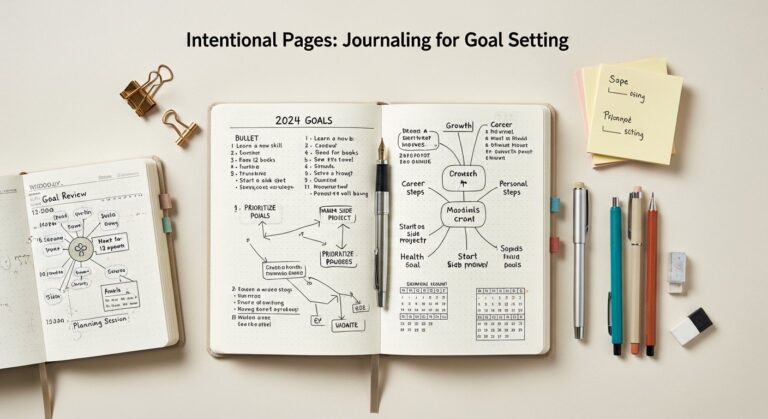
- Reflective Journaling: End each evening by writing down one unexpected moment of beauty and one challenging moment you navigated successfully.
See our detailed guide on [CLUSTER LINK: Daily Mindful Practices During Your Travels] to explore more techniques. For a deeper philosophical grounding that supports this kind of presence, reading about ancient wisdom frameworks for grounding can be incredibly beneficial during long transit periods.
[INLINE IMAGE 4: A close-up of a woman’s hands writing in a leather-bound journal while sitting at a rustic outdoor cafe table.]
How Do You Integrate Post-Travel Experiences into Daily Life?
Weaving a travel-inspired morning ritual into your regular schedule provides a psychological anchor, tricking the brain into accessing the relaxed, expansive state achieved during the trip. The transition back to reality often triggers a sharp spike in cortisol as email backlogs and household chores demand immediate attention. Conscious integration acts as a buffer against this abrupt shift.
Consider a traveler who returns from a week in Tuscany and continues the ritual of an unhurried, screen-free morning espresso, preserving that slice of Mediterranean pacing in her busy urban apartment. She is engaging in habitual integration. She intentionally imports a micro-habit from her journey to disrupt the frantic momentum of her standard daily routine.
According to a 2026 psychology survey by the Wellness Tourism Association, travelers who actively integrated one habit from their trip sustained their reduced stress levels for up to four months longer than those who returned immediately to old routines. This data proves that the benefits of a purposeful journey do not have to end the moment you unpack your suitcase.
Steps for Successful Integration
- Conduct a 48-Hour Buffer: Schedule an extra day off work after returning home. Use this time exclusively for unpacking, grocery shopping, and re-acclimating to your time zone.
- Identify the Core Feeling: Determine what emotion you felt most strongly during the trip (e.g., freedom, peace, curiosity) and brainstorm small ways to trigger that emotion at home.
- Print Physical Photos: Select three meaningful images to display in your living space to serve as daily visual reminders of your broadened perspective.
See our detailed guide on [CLUSTER LINK: Post-Travel Reflection and Habit Integration] for a step-by-step roadmap. If your travels have inspired a deeper reevaluation of your life goals, learning about redefining fulfillment outside traditional metrics can help you channel that inspiration effectively.
Common Pitfalls on the Conscious Travel Path
Data collected by Expedia in 2025 revealed that 54% of travelers identify over-planning as the primary cause of vacation burnout. This statistic highlights a pervasive cultural conditioning: the belief that free time must be aggressively optimized to be valuable. Women, in particular, often fall into the trap of managing a vacation with the same rigid efficiency they apply to their professional and domestic lives.
The brain perceives an overloaded itinerary as a strict deadline rather than a menu of joyful possibilities, triggering the same fight-or-flight response associated with a high-stakes work project. When every hour is accounted for, spontaneity becomes an impossibility, and delays become catastrophic failures rather than minor inconveniences.
A traveler meticulously plots out every hour of a weekend getaway in Paris, resulting in sheer exhaustion and a missed opportunity to simply wander and discover a hidden artisan bakery organically. She succumbs to itinerary fatigue, prioritizing the completion of a schedule over the actual enjoyment of the destination.
Recognizing the Traps
- The Checklist Mentality: Valuing the act of seeing a famous monument over the experience of connecting with the local culture.
- Performative Documentation: Experiencing a breathtaking view strictly through the lens of a smartphone camera to validate the experience for an online audience.
- Ignoring Physical Limits: Refusing to rest or alter plans despite clear signals of dehydration, jet lag, or physical exhaustion.
A successful approach involves leaving at least 30% of your day completely unplanned, allowing room for serendipity. What failure looks like is rushing from a museum to a dinner reservation with a racing heartbeat, entirely disconnected from the joy of the transition. See our detailed guide on [CLUSTER LINK: Overcoming Travel Anxiety and Over-planning] to learn how to surrender control.
Embarking on Your Next Purposeful Adventure

You book your next ticket not as an escape from your daily life, but as a deliberate expansion of it, fully prepared to engage with whatever challenges and joys arise on the road. Approaching the world with this level of clarity ensures that every dollar and hour spent traveling acts as a deposit into your long-term emotional resilience.
A 2026 report by the Institute for Applied Positive Psychology noted that women who travel purposefully report a 60% increase in overall life satisfaction compared to those who travel purely for passive leisure. When the internal intent aligns with the external journey, the resulting personal transformation is profound and lasting.
External exploration acts as a mirror for internal values. When you remove the distractions of your everyday environment, your true priorities, boundaries, and desires become starkly visible. The challenges of navigating a foreign transit system or communicating across language barriers build an enduring self-trust that translates directly back to your life at home. Using a mindful travel guide ensures every phase of the journey supports a woman’s holistic well-being.
Whether you are planning a silent retreat in the mountains or a vibrant culinary tour through a bustling metropolis, the foundation remains the same: radical presence. Allow the world to surprise you, allow yourself to rest, and embrace the profound growth that comes from intentional wandering. See our detailed guide on [CLUSTER LINK: Long-term Travel Planning and Financial Readiness] to take the next practical steps. Additionally, establishing autonomous wealth planning can provide the secure foundation needed to fund these transformative experiences year after year.
Sources & References
- Global Wellness Institute. (2025). “The Future of Wellness Tourism: Conscious Exploration and Mental Health Returns.”
- Booking.com. (2024). “Sustainable Travel Report.” [VERIFICAR FECHA]
- Adventure Travel Trade Association. (2023). “Annual Industry Trends in Experiential and Wellness Travel.” [VERIFICAR FECHA]
- Journal of Travel Research. (2025). “Mindfulness Interventions and Long-Term Vacation Happiness Retention.”
- Wellness Tourism Association. (2026). “Post-Travel Integration and Habit Sustenance Survey.”
About the Author
Amara Diallo, Wellness & Empowerment Coach — I am dedicated to guiding women towards joyful, balanced lives through mindful practices and empowering self-discovery. (Certified Life Coach, RYT-200 Yoga Instructor).
Reviewed by Olivia Sterling, Senior Content Editor — Last reviewed: June 08, 2026