

How to Overcome Perfectionism and Procrastination: A Comprehensive Guide for Women
Key Takeaways for Breaking Free
- Understand that perfectionism and procrastination are often deeply intertwined, stemming from fears of failure or judgment.
- Cultivate self-compassion to counteract your inner critic and allow yourself to make mistakes.
- Break down large tasks into tiny, manageable steps to reduce overwhelm and build momentum.
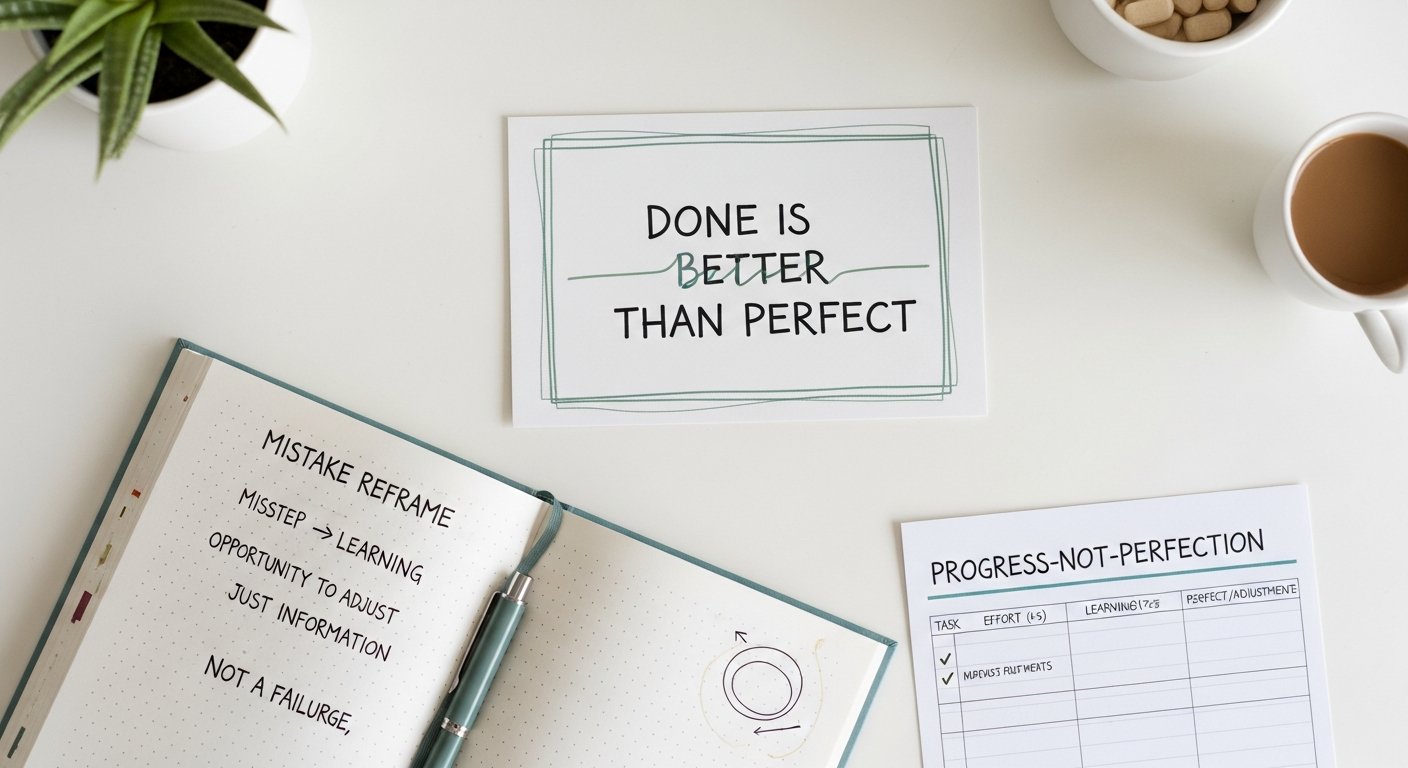
- Embrace the “good enough” principle, recognizing that done is often better than perfect.
- Implement practical time management and habit-building strategies to support consistent action.
In our fast-paced, image-driven world, the pressure to excel in every facet of life – career, relationships, motherhood, self-care, and personal growth – can be immense. This pressure often morphs into a relentless pursuit of perfection, which, ironically, can become the very thing that prevents us from moving forward. This comprehensive guide is designed for you, the ambitious, thoughtful woman in her 20s, 30s, or early 40s, who is ready to shed the heavy cloak of perfectionism and procrastination and step into a life of empowered action and authentic progress. We’ll explore why these two forces are so intertwined, delve into their roots, and equip you with actionable strategies to reclaim your time, energy, and peace of mind. Let’s embark on this journey to embrace imperfect action and unleash your full potential.
Understanding the Intertwined Dance of Perfectionism and Procrastination
At first glance, perfectionism and procrastination might seem like opposing forces. One is about striving for the absolute best, while the other is about avoiding tasks altogether. Yet, for countless women, they are two sides of the same coin, locked in a self-defeating cycle. When you set an impossibly high standard for yourself, the fear of not meeting it can be so paralyzing that you delay starting, or even abandon, the task entirely.
Research consistently highlights this connection. A meta-analysis published in Personality and Individual Differences by Steel and Klingsieck (2016) found a significant positive correlation between perfectionism and procrastination, noting that “maladaptive perfectionism, characterized by excessive self-criticism and concerns over mistakes, is a robust predictor of procrastination.” This isn’t just about wanting things to be good; it’s about an intense fear of failure or negative judgment that prevents you from even trying.
The Inner Critic’s Whisper
Perfectionism often manifests as an unrelenting inner critic. This voice tells you that your work isn’t good enough, that you’re not smart enough, or that any effort short of flawless is a complete failure. This internal pressure creates an immense emotional burden. When faced with a task, your inner critic might bombard you with thoughts like:
- “This needs to be groundbreaking, or it’s not worth my time.”
- “What will people think if this isn’t perfect?”
- “I don’t have enough time to do this *right*, so I’ll just wait.”
The Paralysis of the Perfect
The pursuit of perfection creates an unattainable benchmark. If only a perfect outcome is acceptable, then any step towards that outcome feels inadequate. This leads to what psychologists call “analysis paralysis.” You spend so much time planning, researching, and worrying about every minute detail that you never actually begin the execution phase. The sheer weight of the expected perfection freezes you, making procrastination a seemingly logical, albeit ultimately destructive, coping mechanism. It’s easier to do nothing than to do something that might be judged as imperfect.
Unmasking the Roots of Perfectionism
Understanding where your perfectionistic tendencies come from is a crucial first step in dismantling them. Perfectionism isn’t born overnight; it’s often a deeply ingrained pattern shaped by various experiences and societal influences.
Fear of Failure and Judgment
At its core, perfectionism is often a shield against fear – specifically, the fear of failure, criticism, or not being enough. Dr. Brené Brown, a research professor known for her work on vulnerability, courage, shame, and empathy, often speaks about how perfectionism is a 20-ton shield we carry, believing it will protect us from being hurt. In reality, it prevents us from being seen authentically. If you never put anything out there, it can’t be judged. If you only put out flawless work, then you believe you’re safe from criticism. This fear drives the need for everything to be perfect.
Societal Pressures and Expectations
Women, in particular, face immense societal pressure to be “all things to all people.” We are often expected to be successful in our careers, nurturing mothers, supportive partners, impeccable homemakers, active community members, and perfectly put-together individuals – all while maintaining an effortlessly serene demeanor. Social media exacerbates this, presenting curated highlight reels that set unrealistic benchmarks for comparison. This constant barrage of “perfect” imagery can fuel the belief that anything less than extraordinary is a personal failing.
Childhood Experiences and Upbringing
Your early experiences play a significant role. Growing up with parents or caregivers who had extremely high expectations, offered conditional love based on achievement, or were highly critical, can foster perfectionism. Similarly, if you were praised exclusively for your achievements rather than your effort or inherent worth, you might have internalized the message that your value is tied to being perfect. A study by Frost, Marten, Lahart, and Rosenblate (1990) identified parental criticism and high parental expectations as significant factors contributing to the development of perfectionism in children.
Perfectionism vs. Healthy Striving: A Comparison
| Characteristic | Perfectionism | Healthy Striving |
|---|---|---|
| Motivation | Fear of failure, criticism, shame; desire for external validation. | Desire for mastery, growth, internal satisfaction; passion for the task. |
| Standards | Unrealistic, unattainable; all-or-nothing thinking. | High but achievable; adaptable and flexible. |
| Response to Mistakes | Self-criticism, shame, avoidance, paralysis, giving up. | Learning opportunity, self-compassion, resilience, adjustment. |
| Focus | On avoiding negative outcomes; on flaws and deficiencies. | On achieving positive outcomes; on progress and improvement. |
| Impact on Well-being | Anxiety, depression, burnout, procrastination, low self-esteem. | Engagement, satisfaction, growth, resilience, higher self-esteem. |
The Procrastination Loop: Why We Delay
Procrastination is more than just laziness; it’s a complex behavioral pattern often driven by emotional regulation. When faced with a task that triggers discomfort – whether it’s anxiety about performance, boredom, or frustration – we tend to seek immediate relief. Procrastination offers that temporary relief, but at a significant long-term cost. Dr. Timothy Pychyl, a leading researcher on procrastination, defines it as “the voluntary delay of an intended course of action despite foreseeing negative consequences.”
Task Aversion and Overwhelm
Some tasks are simply unpleasant. They might be boring, difficult, or require sustained effort. If you’re a perfectionist, the combination of an unpleasant task and the pressure to do it flawlessly can create immense aversion. The task feels too big, too complex, or too demanding, leading to a feeling of overwhelm. This feeling often triggers the “fight, flight, or freeze” response, and for many, freezing (i.e., procrastinating) becomes the default.
Lack of Clarity and Direction
Sometimes, procrastination stems from a simple lack of clarity. If you’re unsure where to start, what the next step is, or what the desired outcome looks like, it’s easy to get stuck. The ambiguity itself can be a source of anxiety, leading you to put off the task until you “figure it out.” This often happens with large, undefined projects where the first step isn’t immediately obvious.
Impulsivity and Instant Gratification
In an age of instant gratification, our brains are wired to seek immediate rewards. Procrastination provides a short-term reward: relief from the discomfort of starting a difficult task. Instead of tackling that challenging report, you might scroll through social media, binge-watch a show, or engage in other low-effort, high-reward activities. This gives a temporary dopamine hit, reinforcing the procrastination habit, even though you know it will lead to stress later. This is often explained by the concept of “temporal motivation theory,” where the perceived value of a task decreases as its deadline approaches, and its aversion increases.
Common Procrastination Triggers & Solutions
| Trigger | Description | Practical Solution |
|---|---|---|
| Overwhelm | Task feels too big, complex, or daunting. | Break it down into micro-tasks (5-10 minutes each). Focus on just the first step. |
| Fear of Failure | Worrying about not performing well or meeting high standards. | Embrace “good enough.” Focus on effort, not perfection. Practice self-compassion. |
| Lack of Clarity | Unsure where to start or what the next step is. | Spend 5 minutes planning. Define the first concrete action. Seek clarification if needed. |
| Boredom/Aversion | Task is uninteresting, repetitive, or unpleasant. | Pair it with something enjoyable (e.g., listen to a podcast). Use the Pomodoro Technique to break it up. |
| Distractions | Easy access to social media, notifications, other appealing activities. | Create a dedicated work environment. Turn off notifications. Use focus apps. |
Actionable Strategies to Break Free: Mindset Shifts
Overcoming perfectionism and procrastination requires a fundamental shift in your mindset. It’s about retraining your brain to prioritize progress over perfection and self-compassion over self-criticism.
Embracing “Good Enough”
This is perhaps the most powerful mindset shift. “Good enough” doesn’t mean sloppy or careless; it means completing a task to a satisfactory standard that meets the requirements, without agonizing over every minuscule detail. Ask yourself: “What would be a reasonable, acceptable outcome here?” Not “What would be the absolute best, most flawless outcome?”
Consider the Pareto Principle, also known as the 80/20 rule: 80% of results come from 20% of effort. Often, that last 20% of effort to achieve “perfection” yields only a marginal improvement in outcome but costs 80% of your time and energy. Learning to identify when “good enough” is truly sufficient will liberate immense mental space and time.
Cultivating Self-Compassion
Perfectionists are notoriously hard on themselves. Self-compassion, as championed by Dr. Kristin Neff, involves treating yourself with the same kindness, care, and understanding you would offer a good friend. When you make a mistake or fall short of your own expectations, instead of harsh self-criticism, try:
- Mindfulness: Acknowledge your feelings of inadequacy or frustration without judgment.
- Common Humanity: Remind yourself that imperfection and struggle are part of the human experience; everyone makes mistakes.
- Self-Kindness: Offer yourself comfort and understanding, rather than harsh self-criticism.
Studies have shown that self-compassion is a more effective motivator than self-criticism and is linked to greater emotional resilience and reduced procrastination (Sirois & Pychyl, 2013).
Challenging All-or-Nothing Thinking
Perfectionism often thrives on black-and-white thinking: “If it’s not perfect, it’s a complete failure.” This cognitive distortion is highly detrimental. Challenge this thought pattern by seeking out shades of gray.
- Instead of: “If I can’t exercise for an hour, there’s no point.” Try: “Even 15 minutes of movement is better than none.”
- Instead of: “If my report isn’t brilliant, it’s garbage.” Try: “My report is informative and meets the criteria.”
Recognize that progress is rarely linear and that incremental steps are valuable.
Redefining Success and Failure
Shift your definition of success from achieving a flawless outcome to making consistent effort and learning from your experiences. Failure isn’t the opposite of success; it’s a stepping stone towards it. Every mistake provides valuable data and an opportunity to refine your approach. Embrace an experimental mindset: “I’ll try this and see what happens. If it doesn’t work, I’ll adjust.” This reframing removes much of the pressure associated with perfection.
Practical Tools for Overcoming Procrastination
Mindset shifts are powerful, but they need to be coupled with practical strategies to translate intention into action. Here are some effective tools to help you tackle procrastination head-on.
Breaking Down Tasks (Small Wins)
Large, daunting tasks are primary triggers for overwhelm and procrastination. The solution is to break them down into the smallest possible, actionable steps.
For example, instead of “Write report,” your list might look like:
- Open document and save with title.
- Create outline of main sections.
- Write introduction paragraph (even if it’s a rough draft).
- Find 3 relevant statistics for section 1.
- Write one paragraph for section 1.
Each small win builds momentum and reduces the perceived difficulty of the overall task. This strategy is also known as “chunking” and makes tasks less intimidating.
The Pomodoro Technique and Time Blocking
These are powerful time management tools:
- Pomodoro Technique: Set a timer for 25 minutes and work intensely on one task, with no distractions. When the timer rings, take a 5-minute break. After four “pomodoros,” take a longer 15-30 minute break. This technique leverages urgency and provides structured breaks, making work feel less endless.
- Time Blocking: Dedicate specific blocks of time in your calendar for specific tasks. Treat these blocks like appointments you cannot miss. This helps you allocate time for important work and reduces decision fatigue about what to do next.
Setting Realistic Deadlines
Perfectionists often underestimate how long tasks will take because they unconsciously factor in the time needed for endless revisions. Be realistic about the time required for a “good enough” job, and then add a buffer.
- External Deadlines: If possible, create external accountability by telling a colleague or friend about your deadline.
- Self-Imposed Deadlines: Treat your self-imposed deadlines with the same respect as external ones.
Remember, a deadline should serve as motivation, not a source of extreme pressure.
Creating a Supportive Environment
Your physical and digital environment can significantly impact your ability to focus and avoid procrastination.
- Minimize Distractions: Turn off notifications, close unnecessary tabs, put your phone in another room.
- Dedicated Workspace: If possible, have a specific area for focused work. Even a corner of a room can be designated as your “work zone.”
- Organize: A cluttered space can lead to a cluttered mind. Spend a few minutes organizing your workspace before starting a task.
- Accountability Partners: Share your goals with a friend, mentor, or coach. Regular check-ins can provide motivation and support.
Sustaining Your Progress: Long-Term Habits
Overcoming perfectionism and procrastination isn’t a one-time fix; it’s an ongoing journey of self-awareness and habit building. To sustain your progress, integrate these practices into your routine.
Regular Reflection and Adjustment
Set aside time weekly or monthly to reflect on your progress.
- What strategies worked well?
- What challenges did you face?
- Where did perfectionism or procrastination creep in?
- What adjustments can you make for the next period?
This reflective practice allows you to learn from your experiences without judgment and continuously refine your approach. It’s about iterative improvement, not instant transformation.
Building a Support System
You don’t have to navigate this journey alone. Connect with others who understand your struggles.
- Join a mastermind group or a community focused on personal growth.
- Share your goals and challenges with a trusted friend, partner, or therapist.
- Seek out mentors who exemplify productive, non-perfectionistic approaches to work and life.
External support provides encouragement, different perspectives, and a sense of shared experience, which can be incredibly validating.
Celebrating Imperfection
Actively look for opportunities to practice and celebrate imperfection. Submit something that’s “good enough.” Start a new hobby without the pressure to master it immediately. Give yourself permission to try new things, knowing that awkwardness and mistakes are part of the learning process. The more you expose yourself to “imperfect” action and realize the world doesn’t end, the more you’ll erode the fear that fuels perfectionism. This helps to rewire your brain to associate action, even flawed action, with positive outcomes.
Frequently Asked Questions
Is perfectionism always bad, or can it be a positive trait?
While often seen negatively, perfectionism exists on a spectrum. Healthy striving involves setting high standards, being diligent, and seeking excellence, driven by internal motivation and a desire for mastery. Maladaptive perfectionism, however, is characterized by unrealistic standards, excessive self-criticism, fear of failure, and concerns over mistakes, often leading to anxiety, burnout, and, paradoxically, procrastination. It’s the maladaptive form we aim to overcome.
How can I stop overthinking and just start a task?
The key is to focus on the smallest possible first step. Don’t think about the entire project; just think about what you can do in the next 5-10 minutes. This could be opening a document, writing a single sentence, or finding one piece of information. Use the “5-minute rule”: tell yourself you only have to work on it for 5 minutes. Often, once you start, the momentum will carry you further. Also, try setting a timer for “thinking time” to limit analysis paralysis.
What if I genuinely struggle with time management, not just procrastination?
While related, time management issues can also be distinct. If you struggle with knowing how to allocate your time effectively, consider implementing structured systems like time blocking your calendar, using a robust task management app, or adopting a weekly planning session. Prioritize tasks using methods like the Eisenhower Matrix (Urgent/Important) and learn to say no to commitments that don’t align with your priorities. Effective time management creates the space and clarity to reduce procrastination.
How long does it take to overcome these habits?
Overcoming deeply ingrained habits like perfectionism and procrastination is a journey, not a destination. There’s no fixed timeline, as it depends on individual factors like the severity of the habits, your commitment to change, and consistent practice of new strategies. You’ll likely see small improvements quickly, but significant, lasting change can take months or even years of dedicated effort and self-compassion. Be patient with yourself and celebrate every small victory.
Can therapy help with perfectionism and procrastination?
Absolutely. If your perfectionism and procrastination are severely impacting your mental health, relationships, or career, professional help can be incredibly beneficial. Cognitive Behavioral Therapy (CBT) is particularly effective in identifying and challenging the negative thought patterns that fuel these behaviors. A therapist can provide personalized strategies, help you process underlying fears, and offer a supportive space to develop healthier coping mechanisms.
Conclusion
The journey to overcome perfectionism and procrastination is a profound act of self-love and liberation. It’s about shedding the heavy burden of impossible standards and embracing your perfectly imperfect self. By understanding the deep roots of these behaviors, challenging your inner critic, cultivating self-compassion, and implementing practical, actionable strategies, you can break free from the cycle of paralysis and start moving forward with confidence and grace. Remember, progress, not perfection, is the true measure of a life well-lived. You are capable of amazing things, not despite your imperfections, but often because of the lessons you learn through them. Embrace the messy, beautiful process of creation and growth, and watch as your potential unfolds.
This article was compiled with insights from Dr. Eleanor Vance, Ph.D., a clinical psychologist specializing in cognitive behavioral therapy and women’s self-development.