

Signs of a Toxic Relationship and How to Leave Safely in 2026
Key Takeaways for Navigating Toxic Relationships:
- Educate Yourself: Learn the nuanced signs of toxicity, as they extend beyond overt conflict to include subtle manipulation like gaslighting and love bombing.
- Prioritize Safety: Develop a comprehensive safety plan, especially if you fear escalation, including a safe place to go and an emergency contact.
- Build a Support System: Lean on trusted friends, family, and professionals (therapists, legal aid) who can provide emotional and practical assistance.
- Document Everything: Keep a record of incidents, messages, and financial details, which can be crucial for legal or personal protection later.
- Focus on Healing: Understand that leaving is just the first step. Commit to a healing journey through therapy, self-care, and setting healthy boundaries for your future.
Recognizing a toxic dynamic isn’t always straightforward. It’s rarely about grand, dramatic gestures from the outset; more often, it’s a slow burn, a gradual erosion marked by subtle shifts that leave you feeling confused, drained, and increasingly isolated. This article is your comprehensive guide to understanding the multifaceted signs of a toxic relationship and, crucially, equipping you with the knowledge and tools to leave safely and embark on a path to healing and self-rediscovery. You deserve a love that uplifts, not one that diminishes.
Understanding Toxic Relationships: More Than Just “Bad Fights”
When we talk about toxic relationships, it’s essential to move beyond the simplistic idea of just having “bad fights” or occasional disagreements. All relationships have their ups and downs, but toxicity goes deeper, fundamentally altering the fabric of trust, respect, and mutual well-being. A toxic relationship is characterized by behaviors that are emotionally, psychologically, and sometimes physically damaging to one or both partners. These behaviors create an environment where one person consistently feels devalued, controlled, misunderstood, or drained.
One of the most insidious aspects of toxic relationships is their often-subtle onset. What might begin as intense passion or overwhelming attention, often called “love bombing,” can slowly morph into controlling behavior, manipulation, and emotional abuse. This makes it incredibly difficult to identify, especially if you’re deeply invested or have a history of trauma that makes you more susceptible to such dynamics. Dr. Ramani Durvasula, a clinical psychologist renowned for her work on narcissistic relationships, often highlights how victims can be caught in cycles of idealization and devaluation, making it challenging to see the abuse for what it truly is (Source: Dr. Ramani Durvasula, “Should I Stay or Should I Go?”, 2020).
Statistics underscore the prevalence of these damaging dynamics. According to the National Coalition Against Domestic Violence (NCADV), nearly half of all women (48.4%) have experienced at least one form of psychological aggression by an intimate partner in their lifetime (Source: NCADV, 2023). This includes behaviors like coercive control, gaslighting, and humiliation, which are hallmarks of toxic relationships. The insidious nature of these relationships means that many individuals endure them for years, mistaking manipulation for love or control for care. Understanding that toxicity is a pattern of harmful behaviors, not just isolated incidents, is the first crucial step toward recognizing your reality.
The Red Flags: Unmasking the Signs of a Toxic Relationship
- Constant Criticism and Degradation: Your partner consistently belittles your achievements, opinions, or appearance. They might make “jokes” at your expense, dismiss your feelings, or compare you unfavorably to others. This behavior aims to chip away at your self-esteem, making you feel worthless and dependent on their approval.
- Controlling Behavior: This can manifest in various ways, from subtle to overt. Your partner might monitor your phone, dictate who you can see or where you can go, control your finances, or even choose your clothing. They might isolate you from friends and family, making you increasingly reliant on them.
- Gaslighting: One of the most insidious forms of manipulation, gaslighting makes you question your own reality, memory, and sanity. Your partner might deny things they said or did, twist facts, or convince you that your feelings are irrational. Over time, this can lead to severe confusion, self-doubt, and a profound loss of trust in your own perceptions.
- Lack of Empathy and Respect: A toxic partner often struggles to understand or acknowledge your feelings, needs, or boundaries. They might dismiss your pain, prioritize their own desires above yours, or show a consistent disregard for your personal space and choices.
- Cycles of Intense Conflict and “Making Up”: Toxic relationships often involve dramatic highs and lows. After an intense argument or period of abuse, the partner might engage in “hoovering” – intense apologies, grand romantic gestures, or promises to change – only for the toxic patterns to re-emerge later. This creates a confusing cycle of hope and despair.
- Emotional Manipulation: This includes guilt-tripping, playing the victim, using tears to avoid accountability, or threatening self-harm to control your actions. They leverage your emotions against you, making you feel responsible for their happiness or well-being.
- Jealousy and Possessiveness: While a little jealousy can seem endearing initially, in a toxic dynamic, it escalates to unhealthy possessiveness. Your partner might accuse you of cheating without cause, become enraged if you spend time with others, or demand constant reassurance of your loyalty.
- Financial Abuse: This involves controlling your access to money, preventing you from working, running up debt in your name, or stealing from you. It’s a powerful tool for control, making it difficult for you to leave.
- Physical or Sexual Abuse: Any form of physical violence (hitting, pushing, shoving) or sexual coercion (unwanted sexual acts, pressure to engage in sexual acts) is a definitive sign of an abusive relationship, not merely a toxic one. If this is present, your immediate safety is paramount.
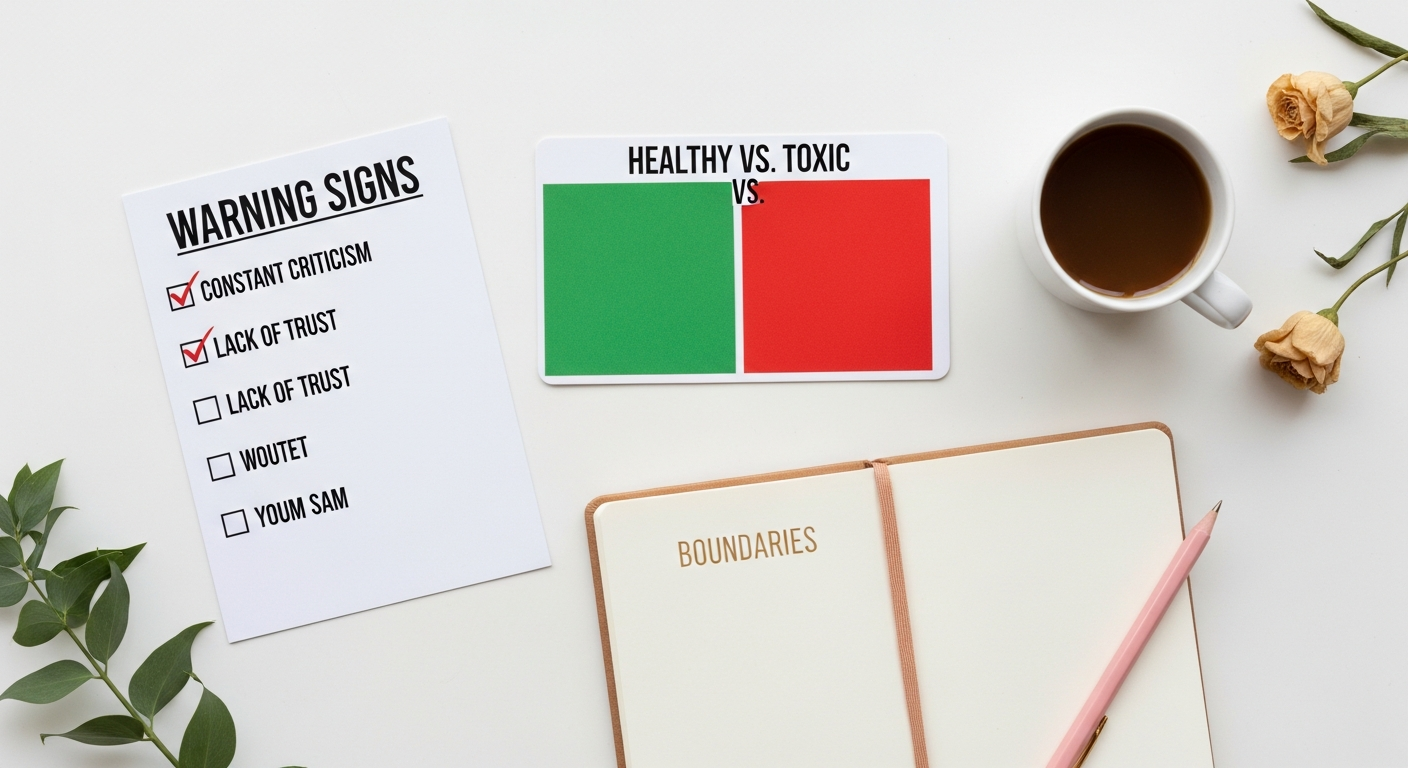
Understanding these signs is crucial, but it’s also important to differentiate between a healthy relationship facing challenges and a truly toxic one. The key lies in the consistency of these patterns and their impact on your overall well-being. Let’s look at a comparison:
| Aspect | Healthy Relationship | Toxic Relationship |
|---|---|---|
| Communication | Open, honest, respectful, active listening, conflict resolution. | Manipulative, dismissive, gaslighting, blame-shifting, stonewalling. |
| Support | Encouragement, celebration of successes, empathy during challenges. | Undermining, jealousy of achievements, lack of empathy, criticism. |
| Boundaries | Respected, clearly communicated, mutual understanding. | Ignored, violated, ridiculed, pressure to cross personal limits. |
| Trust | Built on honesty, reliability, and emotional safety. | Eroded by lies, secrecy, betrayal, and constant suspicion. |
| Independence | Encouraged, individual growth supported, space for personal interests. | Controlled, isolation from others, discouraged personal growth. |
| Self-Worth | Enhanced, feeling valued and loved for who you are. | Diminished, feeling worthless, anxious, or constantly on edge. |
The Devastating Impact: How Toxicity Erodes Your Well-being
Living in a toxic relationship is like slowly being poisoned. The effects are not always visible on the surface, but they deeply penetrate your mental, emotional, and even physical health. The constant stress, fear, and emotional manipulation take a severe toll, leaving you feeling like a shadow of your former self. It’s crucial to understand these impacts, not to scare you, but to validate your experiences and underscore the urgency of seeking safety and healing.
Mental and Emotional Health
- Anxiety and Depression: The unpredictable nature of a toxic partner, coupled with constant criticism, can lead to chronic anxiety, panic attacks, and clinical depression. You might find yourself constantly walking on eggshells, anticipating the next conflict or outburst.
- Low Self-Esteem and Self-Worth: Gaslighting and degradation systematically dismantle your self-confidence. You begin to believe the negative things said about you, questioning your judgment, attractiveness, and capabilities. This can lead to a pervasive feeling of worthlessness.
- Post-Traumatic Stress Disorder (PTSD) or C-PTSD: Prolonged exposure to emotional abuse and manipulation can result in symptoms similar to PTSD, especially if there were periods of intense fear or perceived threat. Complex PTSD (C-PTSD) is particularly common in those who have endured long-term, interpersonal trauma, leading to difficulties with emotional regulation, distorted self-perception, and relationship difficulties (Source: Herman, J. L. (1992). Trauma and Recovery).
- Cognitive Dissonance: You might experience a profound internal conflict between what you know to be true and what your partner tells you, leading to confusion, memory issues, and a distorted sense of reality.
- Increased Isolation: Toxic partners often strategically isolate you from your support network, making you feel alone and trapped, further exacerbating feelings of helplessness.
Physical Health Effects
The mind-body connection is powerful, and chronic emotional stress directly impacts your physical health. Research by institutions like the American Psychological Association (APA) consistently links chronic stress to a range of health problems (Source: APA, “Stress in America” survey, ongoing). In toxic relationships, this can manifest as:
- Chronic Stress and Fatigue: The constant state of alertness and emotional turmoil depletes your energy reserves, leading to persistent fatigue and burnout.
- Weakened Immune System: Chronic stress suppresses the immune system, making you more susceptible to illnesses, from common colds to more serious infections.
- Physical Ailments: Headaches, migraines, digestive issues (IBS), muscle tension, and even cardiovascular problems can be exacerbated by the sustained stress of a toxic relationship.
- Sleep Disturbances: Anxiety and rumination often lead to insomnia, nightmares, or restless sleep, further impacting your physical and mental recovery.
Recognizing these profound impacts is not about dwelling on the pain but about understanding the urgent need for change. Your well-being is not negotiable, and enduring these effects silently is not a testament to your strength, but rather a cry for help that deserves to be answered.
Preparing for Departure: Crafting Your Safe Exit Strategy
Deciding to leave a toxic relationship is an act of immense courage. It’s often the most dangerous time, as abusive partners may escalate their behavior when they perceive a loss of control. Therefore, a meticulously planned and safely executed departure is paramount. This isn’t just about breaking up; it’s about reclaiming your life while protecting yourself.
1. Recognize It’s Time to Leave
The first step is internal: truly acknowledging that the relationship is damaging and that you deserve better. This often involves moving past denial, hope for change, and fear of the unknown. Reflect on the consistent patterns of abuse, the erosion of your well-being, and any threats to your safety. Journaling can be a powerful tool to document your experiences and feelings, helping you solidify your decision.
2. Prioritize Your Safety Plan
Your physical and emotional safety is the number one priority. This plan needs to be discreet and comprehensive.
- Identify a Safe Place: This could be a friend’s house, a family member’s home, a domestic violence shelter, or a hotel. Ensure your partner does not know its location.
- Emergency Bag: Pack a small bag with essentials:
- Important documents (ID, passport, birth certificate, social security card, insurance cards, children’s documents).
- Cash, credit cards (if accessible and safe to use).
- Medications, toiletries, a change of clothes.
- A spare phone or charger.
- Emergency Contacts: Memorize or write down numbers for trusted friends, family, local police, and domestic violence hotlines.
- Communication Plan: If you must communicate with your partner after leaving (e.g., about children), establish safe methods (e.g., through a third party, supervised exchanges).
3. Gather Resources and Evidence
- Financial Independence: If possible, start setting aside money in a separate, secret account. Secure your own bank accounts, credit cards, and ensure your partner doesn’t have access to them. Obtain copies of financial statements, pay stubs, and tax returns.
- Legal Documents: Collect and secure copies of all vital personal documents, legal papers (marriage certificates, divorce decrees, custody agreements), and property deeds.
- Document Incidents: Keep a detailed log of abusive incidents, including dates, times, descriptions of what happened, and any witnesses. Save threatening messages, emails, or voicemails. This evidence can be crucial if you need to seek a restraining order or pursue legal action.
- Professional Help: Connect with a therapist who specializes in trauma or abusive relationships. They can provide emotional support and help you navigate the psychological challenges of leaving. Consult with a lawyer specializing in family law or domestic violence to understand your legal rights and options.
4. Build a Support Network
Discreetly reach out to trusted friends, family members, or colleagues. Let them know what you’re experiencing and your plan to leave. They can offer emotional support, a place to stay, or practical assistance like transportation. If you don’t have a strong personal network, seek out local domestic violence support groups or hotlines; they offer invaluable resources and a sense of community.
5. Mental and Emotional Preparation
Leaving will be incredibly difficult emotionally. Prepare for feelings of guilt, fear, sadness, and even doubt. Remind yourself constantly why you are doing this and focus on the future you deserve. Practice self-compassion and visualize a life free from toxicity. This mental fortitude is as crucial as any logistical preparation.
The Act of Leaving: Navigating the Breakup Safely
The moment you decide to leave is often fraught with anxiety, but with careful planning, you can navigate this critical phase as safely as possible. Remember, your safety is paramount, and there’s no “right” way to leave that fits every situation; customize your approach based on your unique circumstances and your assessment of your partner’s potential reactions.
1. When and Where to Break Up
This is a critical decision. For your safety, consider these options:
- Public Place: If you anticipate an explosive reaction, choosing a public place with other people around (a café, park, or library) can offer a degree of safety and witnesses.
- With a Support Person: Have a trusted friend or family member nearby, perhaps waiting in a car or another room, who can intervene or call for help if needed.
- Remotely: In cases of extreme danger or a history of physical violence, breaking up via phone, email, or even text message might be the safest option. While it may feel impersonal, your safety always comes first. Dr. John Gottman, a renowned relationship researcher, emphasizes that while direct communication is usually best, safety overrides all other considerations in abusive dynamics (Source: The Gottman Institute, ongoing research).
- When They Are Away: If possible, plan your departure when your partner is not home. This allows you to collect your belongings and leave without a direct confrontation.
Avoid breaking up in isolated areas, late at night, or when your partner is under the influence of drugs or alcohol, as these situations can escalate quickly.
2. Minimizing Contact Post-Breakup: The No-Contact Rule
Once you’ve left, establishing a “no-contact” rule is often the most effective way to break free from the cycle of abuse and begin healing. This means:
- Blocking Communication: Block your ex-partner’s number, social media accounts, and email addresses.
- Inform Others: Let mutual friends know you are not to be contacted on your ex-partner’s behalf.
- Return Belongings Safely: Arrange for a third party (e.g., police escort, trusted friend) to facilitate the exchange of any remaining belongings, if necessary.
Be prepared for “hoovering” attempts—when your ex-partner tries to suck you back into the relationship with apologies, promises, or threats. Do not engage. Every interaction can pull you back into the toxic dynamic.
3. Legal Considerations and Restraining Orders
If you fear for your safety, consider obtaining a restraining order (also known as a protective order). This legal document can prohibit your ex-partner from contacting you, coming near your home or workplace, or having any form of communication. Consult with a legal aid organization or a lawyer specializing in domestic violence for guidance on this process.
If you have children, addressing custody and visitation arrangements will be critical. Prioritize your children’s safety and well-being, and work with your lawyer to establish safe and supervised visitation if necessary.
4. Dealing with Potential Retaliation
Abusive partners often escalate their behavior when they lose control. Be prepared for:
- Stalking: Increased vigilance about your surroundings.
- Smear Campaigns: Your ex may spread lies about you to friends, family, or your workplace. Have your support system ready to counter these narratives.
- Threats or Harassment: Document everything and report any threats to the police.
Trust your instincts. If something feels unsafe, it probably is. Don’t hesitate to involve law enforcement or your support network.
| Stage | Key Actions | Safety Considerations |
|---|---|---|
| Pre-Departure |
|
|
| The Departure |
|
|
| Post-Departure & Initial Recovery |
|
|
Healing and Rebuilding: Your Journey to Wholeness
Leaving a toxic relationship is a monumental achievement, but it’s just the beginning of your journey. The real work—the profound and transformative work—lies in healing the wounds, rediscovering yourself, and rebuilding a life filled with genuine connection and joy. This process is not linear; it will have its ups and downs, but with dedication and self-compassion, you can emerge stronger and more resilient than ever.
1. Allow Yourself to Grieve
Even if the relationship was toxic, you’re likely grieving many things: the loss of a partner, the future you imagined, the emotional investment you made, and perhaps even the “good times” that were intertwined with the bad. Allow yourself to feel the full spectrum of emotions—sadness, anger, relief, confusion. There’s no timeline for grief, and suppressing it will only prolong the healing process. Journaling, talking to trusted friends, or therapy can help you process these complex feelings.
2. Seek Professional Help
Therapy, especially with a therapist specializing in trauma, abuse, or narcissistic relationships, is invaluable. A professional can help you:
- Process the trauma you’ve experienced.
- Rebuild your self-esteem and self-worth.
- Identify and challenge distorted thought patterns (e.g., self-blame, gaslighting effects).
- Develop healthy coping mechanisms.
- Set boundaries and learn effective communication skills for future relationships.
Support groups for survivors of domestic violence or emotional abuse can also provide a safe space to share experiences, gain validation, and learn from others who have walked a similar path.
3. Rediscover Your Self-Worth and Identity
Toxic relationships often strip away your sense of self. Now is the time to rediscover who you are outside of that dynamic. Ask yourself:
- What hobbies or interests did I once enjoy that I let go of?
- What were my dreams and goals before this relationship?
- What values are most important to me?
- Who are the people who truly uplift and support me?
Engage in activities that bring you joy, pursue personal goals, and reconnect with friends and family who make you feel seen and valued. This process of self-exploration is vital for rebuilding your identity.
4. Set Healthy Boundaries for Future Relationships
One of the most powerful lessons you’ll learn from this experience is the importance of boundaries. As you heal, reflect on what you will and will not tolerate in future relationships. This includes:
- Emotional Boundaries: Not tolerating gaslighting, criticism, or manipulation.
- Physical Boundaries: Ensuring your physical space and body are respected.
- Time Boundaries: Protecting your personal time and space.
- Communication Boundaries: Demanding respectful and honest communication.
Learning to communicate these boundaries assertively and enforcing them is a crucial skill for preventing future toxic dynamics. Dr. Henry Cloud and Dr. John Townsend, authors of “Boundaries,” emphasize that healthy boundaries are essential for personal well-being and respectful relationships (Source: Cloud, H., & Townsend, J. (1992). Boundaries: When to Say Yes, When to Say No, To Take Control of Your Life).
5. Practice Radical Self-Care
Healing is exhausting work. Prioritize self-care in all its forms:
- Physical: Nourishing food, adequate sleep, regular exercise, mindful movement.
- Emotional: Journaling, meditation, expressing feelings, crying when needed.
- Social: Connecting with supportive people, setting limits on draining interactions.
- Spiritual/Creative: Engaging in activities that connect you to something larger than yourself or express your creativity.
Treat yourself with the kindness, patience, and compassion you would offer a beloved friend. You are worthy of healing, love, and a life free from toxicity.
Frequently Asked Questions
Q: How do I know if I’m being gaslighted?
A: Gaslighting involves your partner consistently denying your reality, twisting events, or making you question your memory, perceptions, and sanity. You might feel constantly confused, doubt your judgment, and repeatedly second-guess yourself. If you often hear phrases like “That never happened,” “You’re too sensitive,” or “You’re crazy,” or if you find yourself constantly apologizing for things you’re not sure you did, you might be experiencing gaslighting. Trust your gut feeling that something is off, even if you can’t logically explain it.
Q: What if I still love my toxic partner?
A: It’s incredibly common to still love someone even if they are toxic or abusive. Love is a powerful emotion, and often, you’re loving the potential you saw in them, the “good times,” or the idealized version of them, rather than the reality of their behavior. It’s also possible that the trauma bond, a strong emotional attachment that develops from cycles of abuse and intermittent positive reinforcement, is keeping you tied. Acknowledge these feelings without letting them dictate your actions. Love isn’t enough to sustain a healthy relationship; respect, safety, and mutual well-being are non-negotiable foundations.
Q: How long does it take to heal after leaving a toxic relationship?
A: The healing journey is unique for everyone and isn’t a linear process. It can take months or even years, depending on the duration and severity of the toxicity, your personal resilience, and the support systems you have in place. Be patient and compassionate with yourself. Focus on small victories, celebrate your progress, and understand that setbacks are a normal part of healing. Consistent therapy, self-care, and establishing healthy boundaries will significantly aid your recovery.
Q: What if I have children with my toxic partner?
A: If children are involved, leaving becomes more complex but no less necessary. Your priority is to ensure both your and your children’s safety. This often requires legal intervention to establish safe custody arrangements, visitation schedules, and communication protocols. A family lawyer specializing in domestic violence can guide you through obtaining protective orders for yourself and your children, ensuring supervised visitation if needed, and safeguarding their well-being. It’s crucial to protect children from exposure to the toxic dynamics, as it can have long-lasting psychological effects on them.
Q: I’m afraid my partner will retaliate if I leave. What should I do?
A: Fear of retaliation is a valid and common concern, as abusers often escalate behavior when they lose