
How to Improve Body Image and Feel Confident: Your Ultimate Guide for 2026
Key Takeaways for Your Body Image Journey
- Embrace Self-Compassion: Treat yourself with kindness, understanding, and non-judgment, just as you would a dear friend.
- Curate Your Digital World: Actively unfollow accounts that trigger comparison or negativity, and seek out diverse, uplifting content.
- Focus on Function, Not Just Form: Appreciate what your body *does* for you, rather than solely how it looks.
- Challenge Internalized Beliefs: Identify and reframe negative thoughts about your body, recognizing them as often rooted in societal pressures.
- Build a Supportive Ecosystem: Surround yourself with people and environments that affirm your worth beyond physical appearance.
At The Contextual Life, we believe that true wellness encompasses not just physical health, but also mental and emotional well-being. This comprehensive guide, crafted with your growth in mind for 2026 and beyond, is designed to empower you with practical strategies, research-backed insights, and a compassionate framework to transform your relationship with your body. We’ll explore how to dismantle harmful beliefs, cultivate self-acceptance, and ultimately, build a foundation of confidence that radiates from within, regardless of what society dictates.
It’s time to reclaim your power, celebrate your uniqueness, and embark on a path towards a more joyful and confident you. Let’s dive in.
Understanding the Roots of Body Image Struggles
Before we can build a healthier body image, it’s crucial to understand where these struggles often originate. It’s rarely a personal failing; rather, it’s a complex interplay of external pressures and internal narratives.
Societal Pressures and Media Influence
From the earliest age, we are immersed in a culture that often equates thinness with beauty, success, and even moral virtue. Magazines, advertisements, movies, and television shows frequently present a narrow, often unrealistic, ideal of the female form. This pervasive messaging can subtly (or not so subtly) shape our perceptions of what is “acceptable” or “desirable.” Research consistently highlights the detrimental impact of exposure to idealized body images. A review published in the Journal of Health Psychology (2021) indicated that media consumption, particularly of content promoting specific body types, significantly correlates with increased body dissatisfaction and disordered eating behaviors among women.
Internalized Beliefs and Past Experiences
The Impact of Social Media
The rise of social media has amplified these challenges exponentially. Platforms like Instagram, TikTok, and Facebook, while offering connection, also present a constant stream of highly curated, often filtered, and surgically enhanced images. This can create a phenomenon known as “social comparison theory,” where individuals constantly compare themselves to others, leading to feelings of inadequacy. A study by the American Psychological Association (2020) found a strong link between increased social media use and negative body image concerns, especially among young women, driven by this relentless comparison and the pursuit of an “ideal” that often doesn’t exist in reality.
Shifting Your Mindset: The Power of Self-Compassion
One of the most transformative tools for improving body image and cultivating confidence is self-compassion. It’s about treating yourself with the same kindness and understanding you would offer a dear friend.
What is Self-Compassion?
Pioneered by researcher Dr. Kristin Neff, self-compassion involves three core components: self-kindness (being warm and understanding toward ourselves when we suffer, fail, or feel inadequate, rather than ignoring our pain or flagellating ourselves with self-criticism); common humanity (recognizing that suffering and personal inadequacy are part of the shared human experience, rather than feeling isolated or abnormal); and mindfulness (holding our painful thoughts and feelings in balanced awareness rather than over-identifying with them). When it comes to body image, self-compassion means acknowledging your struggles without judgment, understanding that many others share similar feelings, and being present with your discomfort without letting it consume you.
Practicing Self-Kindness and Mindfulness
To integrate self-compassion into your daily life, start by noticing your inner dialogue. When you find yourself engaging in negative self-talk about your body, pause. Instead of criticizing, try to offer yourself a comforting phrase, such as “This is a moment of suffering,” or “It’s okay to feel this way, many people do.” Practice mindfulness by bringing your attention to your breath or a sensory experience, grounding yourself in the present moment rather than getting lost in self-critical thoughts. Regular meditation or simply taking a few deep breaths can foster this awareness.
Here’s a comparison to help you reframe your internal dialogue:
| Negative Self-Talk | Self-Compassionate Affirmation |
|---|---|
| “My stomach is too big; I look awful.” | “My body is constantly working to keep me alive and well. I will treat it with kindness.” |
| “I hate my thighs; they’re so flabby.” | “These legs carry me through life; they are strong and capable. I accept them as they are.” |
| “I’ll never be as beautiful as her.” | “My unique beauty is valuable and inherent. I am enough, just as I am.” |
| “I should punish myself for eating that.” | “Food is nourishment and joy. I listen to my body’s needs without judgment.” |
| “I feel so ashamed of my body.” | “It’s okay to feel this way sometimes. I am not alone, and I am worthy of love and acceptance.” |
Detoxing Your Digital Environment for a Healthier You
Given the profound impact of social media, actively managing your digital landscape is a powerful step towards improving body image. This isn’t about avoiding the world, but about curating one that supports your well-being.
Curating Your Feed: Unfollow, Mute, Follow
Take an honest audit of who and what you follow online. If an account consistently leaves you feeling inadequate, envious, or less-than, it’s time to unfollow or mute. This includes influencers promoting unrealistic beauty standards, friends whose posts trigger comparison, or even news feeds that focus on superficial ideals. Actively seek out and follow accounts that promote body positivity, diversity, health at every size, mental wellness, and genuine self-acceptance. Look for creators who share real, unfiltered experiences and celebrate the vast spectrum of human bodies. This intentional curation can significantly reduce exposure to harmful imagery and introduce you to empowering perspectives.
Mindful Consumption of Media
Beyond who you follow, consider *how* you engage with digital content. Practice mindful consumption: before you scroll, ask yourself why you’re opening the app. Are you seeking connection, information, or distraction? As you scroll, pay attention to how certain images or posts make you feel. If you notice a negative emotional response, consciously disengage. Set time limits for social media use, and designate “no-phone zones” or “digital detox hours” throughout your day. This conscious approach helps you regain control over your attention and emotional responses, rather than passively absorbing potentially damaging messages.
Reconnecting with Your Body: Beyond Aesthetics
One of the most profound shifts you can make is to move away from viewing your body solely as an object to be judged, and instead, see it as a vessel for life, experience, and joy.
Focusing on Functionality and Strength
Shift your focus from what your body looks like to what it *does* for you. Your legs carry you, your arms allow you to hug loved ones, your heart beats tirelessly, and your lungs breathe without conscious effort. Start a gratitude practice for your body’s functions. List five things your body enabled you to do today – walk up stairs, laugh with a friend, enjoy a meal, think, create. This practice helps to foster appreciation and respect for your body’s capabilities, moving beyond superficial judgments. Studies in the journal Body Image (2019) have shown that focusing on body functionality is a protective factor against body dissatisfaction and promotes greater self-esteem.
Intuitive Eating and Mindful Movement
Diet culture often dictates what, when, and how much you “should” eat, leading to cycles of restriction and guilt. Intuitive eating, a framework developed by registered dietitians Evelyn Tribole and Elyse Resch, encourages you to tune into your body’s hunger and fullness cues, honor your cravings without judgment, and make peace with food. It’s about listening to your body’s wisdom. Similarly, mindful movement encourages you to engage in physical activity that feels good, joyful, and energizing, rather than as a punishment or a means to change your body. This could be dancing, walking in nature, yoga, or playing a sport – anything that brings you pleasure and connects you to your body’s strength and vitality.
Dressing for Joy and Comfort
Your wardrobe should be a source of comfort and self-expression, not a constant reminder of perceived flaws. Purge clothes that don’t fit, make you feel uncomfortable, or are tied to an aspirational body size. Instead, invest in clothing that fits your current body, feels good against your skin, and expresses your personal style. When you dress in clothes you love and feel good in, it can significantly impact your mood and confidence, helping you to feel more at ease and authentic in your own skin. Remember, your clothes should adapt to your body, not the other way around.
Building a Supportive Inner Circle and External Environment
The people you surround yourself with and the environments you inhabit have a profound impact on your self-perception. Cultivating a supportive ecosystem is vital for fostering positive body image and confidence.
Surrounding Yourself with Positivity
Seek out friends, family, and communities that celebrate you for who you are, not for how you look. Engage with individuals who uplift you, share similar values, and encourage your growth. These are the people who will remind you of your worth when you forget, and who will challenge you to be kinder to yourself. Look for spaces, both online and offline, that promote inclusivity, self-acceptance, and genuine connection. Being part of a community that values inner qualities over external appearance can be incredibly validating and empowering.
Setting Boundaries with Negative Influences
Just as important as seeking out positive influences is setting boundaries with negative ones. This might mean having difficult conversations with loved ones who frequently comment on your weight or appearance, or who engage in excessive body shaming (their own or others’). It could also mean limiting time with individuals who constantly compare themselves to others or promote restrictive diet mentalities. Remember, protecting your mental and emotional health is a form of self-care. It’s okay to distance yourself from people or situations that consistently undermine your self-esteem, even if those relationships are close. Your well-being is paramount.
Practical Strategies for Daily Confidence Building
Confidence isn’t just a feeling; it’s a practice. Integrating specific strategies into your daily routine can help you consistently reinforce positive self-perception and build resilience against self-doubt.
Affirmations and Visualization
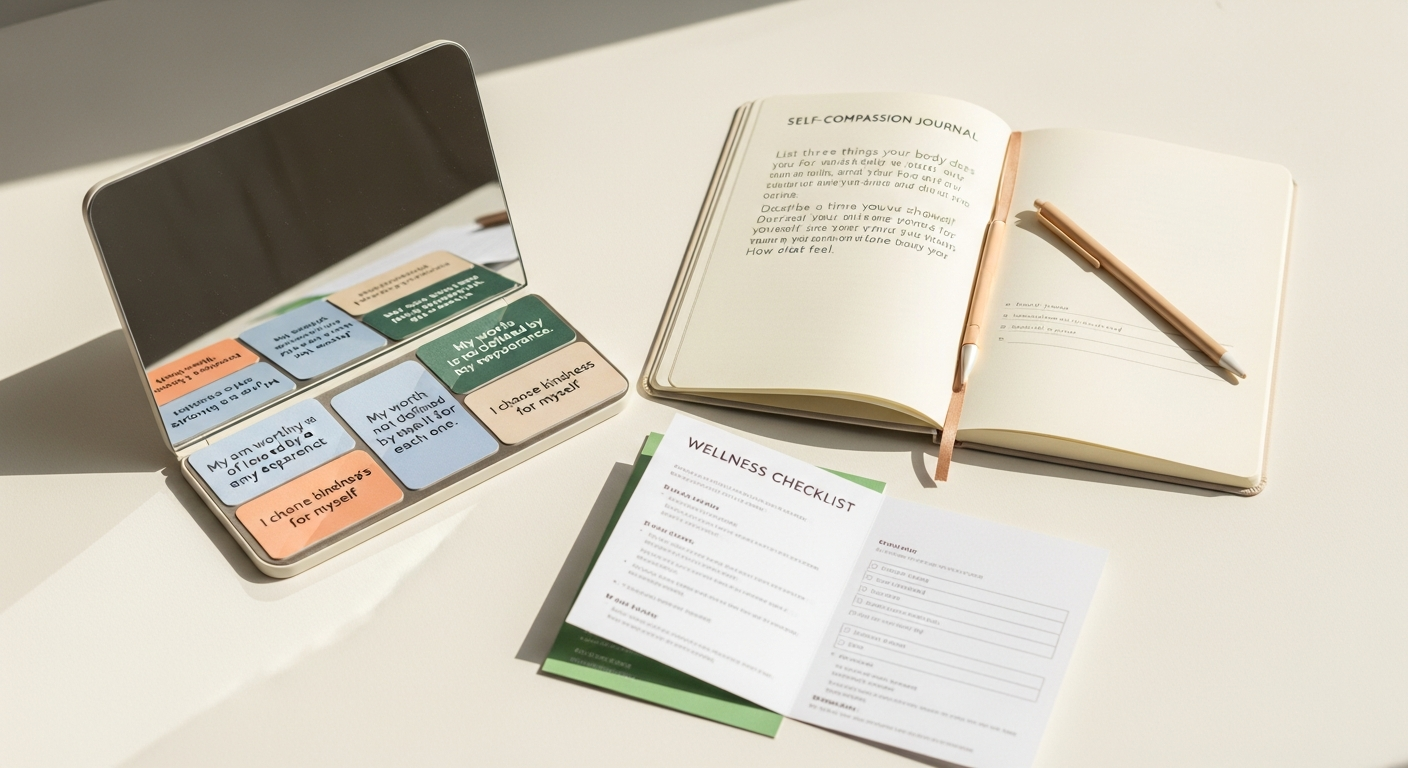
Daily affirmations are powerful tools for rewiring your brain. Statements like “I am worthy of love and respect, just as I am,” “My body is strong and capable,” or “I choose to see my beauty” can counteract years of negative self-talk. Repeat them aloud, write them down, or say them silently throughout your day. Coupled with affirmations, visualization can be incredibly effective. Spend a few minutes each day imagining yourself feeling confident, vibrant, and at peace with your body. See yourself moving through the world with ease, enjoying experiences fully, and radiating self-assurance. This mental rehearsal helps to build new neural pathways for confidence.
Challenging Negative Thoughts (CBT Principles)
When a negative thought about your body arises, don’t just accept it as truth. Instead, challenge it using principles from Cognitive Behavioral Therapy (CBT). Ask yourself:
- Is this thought based on fact or feeling? Often, negative body thoughts are rooted in emotion, not objective reality.
- What’s the evidence for this thought? What’s the evidence against it? You might find the evidence against is stronger.
- Is this thought helpful? Even if a thought feels true, if it’s not serving you, you can choose to reframe it.
- What would I say to a friend who had this thought? Apply that same kindness to yourself.
- What’s a more balanced or compassionate way to view this situation? Practice reframing the thought.
This process helps you gain distance from your thoughts and choose more empowering perspectives.
Engaging in Activities You Love
When you spend time doing things that genuinely light you up, you naturally feel more confident and connected to your authentic self. Whether it’s painting, hiking, reading, cooking, volunteering, or learning a new skill, engaging in activities that bring you joy and a sense of accomplishment shifts your focus away from external appearance and towards your inner strengths and passions. These activities remind you of your value beyond your physical form and contribute to a richer, more fulfilling life, which in turn boosts overall self-esteem and confidence.
Let’s debunk some common myths about body image and replace them with empowering realities:
| Common Body Image Myth | Empowering Reality |
|---|---|
| “I need to look a certain way to be happy/loved.” | “My worth and happiness are inherent and independent of my physical appearance.” |
| “My body is a problem to be fixed.” | “My body is a vessel for life, a source of strength and sensation, deserving of care and respect.” |
| “Everyone else has it all together and loves their body.” | “Most people struggle with body image at some point; it’s a common human experience, and healing is possible.” |
| “If I just diet harder, I’ll finally feel confident.” | “True confidence comes from self-acceptance and a positive relationship with my body, not from achieving a specific size.” |
| “My value is determined by how attractive I am.” | “My value is determined by my character, kindness, intelligence, and contributions to the world.” |
The Long Game: Sustaining Your Journey to Lasting Confidence
Improving body image and building confidence isn’t a destination; it’s an ongoing journey. There will be good days and challenging days, and that’s perfectly normal. The key is to cultivate resilience and a continuous commitment to self-kindness.
Embracing Imperfection and Growth
Life is messy, and so is personal growth. You won’t wake up one day in 2026 and suddenly have a perfect body image forever. There will be moments of doubt, comparison, or frustration. The goal is not perfection, but progress and self-compassion through it all. Embrace the idea that you are a work in progress, constantly learning and evolving. Just like any skill, self-acceptance takes practice. Celebrate your small victories, learn from setbacks without judgment, and remind yourself that every step forward, no matter how small, is meaningful.
Seeking Professional Support When Needed
For some, body image struggles can be deeply entrenched and may border on or contribute to more serious issues like disordered eating, body dysmorphia, or severe anxiety and depression. If you find yourself consistently overwhelmed, unable to implement these strategies effectively, or if your body image concerns are significantly impacting your daily life, please consider seeking professional help. A therapist specializing in body image, eating disorders, or CBT can provide tailored strategies, support, and a safe space to explore deeper issues. Remember, seeking help is a sign of strength, not weakness, and can be a crucial step towards lasting healing and confidence.
Frequently Asked Questions
Q: How long does it take to improve body image?
A: The timeline for improving body image is highly individual. It’s not a quick fix, but a continuous process of learning, unlearning, and practicing self-compassion. Some individuals may notice shifts in weeks or months, while for others, it’s a journey that unfolds over years. Consistency in applying strategies like mindful media consumption, self-compassion, and focusing on functionality can accelerate the process, but patience and persistence are key. Celebrate small victories along the way.
Q: Can I truly love my body if I still want to make changes to it?
A: Absolutely. Body positivity and self-acceptance don’t mean you can’t desire personal growth or healthy changes. The distinction lies in the motivation. If you want to make changes out of self-love, a desire for improved health, or increased energy – rather than from a place of self-hatred, punishment, or societal pressure – then it can be a loving choice. The goal is to separate your worth from your appearance and to engage in choices that nourish your well-being from a place of acceptance, not inadequacy.
Q: What if my friends or family are part of the problem?
A: This is a common and challenging situation. Start by setting gentle boundaries. You might say, “I’m working on accepting my body, so I’d appreciate it if we could avoid comments about weight or appearance.” If the behavior persists, you may need to limit exposure to those individuals or have more direct conversations about the impact of their words. Remember, you have the right to protect your mental health, even within close relationships.
Q: Is it possible to completely stop comparing myself to others?
A: Complete cessation of comparison might be unrealistic, as it’s a natural human tendency. However, you can significantly reduce its frequency and impact. The goal is to become aware when comparison arises, acknowledge the feeling without judgment, and then intentionally redirect your focus back to your own journey, strengths, and unique qualities. Curating your social media feed and practicing self-compassion are powerful tools in managing comparative thoughts.
Q: What if I have a “bad body image day”?
A: “Bad body image days” are normal and part of the human experience. On these days, practice extra self-compassion. Acknowledge your feelings without judgment, remind yourself that this feeling is temporary, and engage in activities that bring you comfort and joy. This might include unplugging from social media, listening to uplifting music, spending time in nature, or connecting with a supportive friend. Treat yourself with kindness, just as you would a friend having a tough day.
As we navigate towards 2026 and beyond, remember that your body is not just a shell; it’s the incredible vessel that carries you through life, allowing you to experience joy, connection, and growth. Cultivating a positive body image and unwavering confidence is an act of radical self-love and a powerful step towards living your most authentic and fulfilling life. It’s a journey that requires patience, persistence, and a deep commitment to treating yourself with the kindness you truly deserve. By embracing self-compassion, curating your environment, and focusing on your body’s incredible functionality, you are building a foundation of confidence that will empower you in every aspect of your life. Start today, and watch yourself blossom.
This guide was thoughtfully compiled by Dr. Anya Sharma, a Clinical Psychologist specializing in self-esteem and body image, with contributions from the wellness experts at The Contextual Life.